 how-to
Cool Your House When AC Is Broken: 7 Steps
Table of Contents
- Why Is My AC Not Cooling and What You Can Do Right Now
- Step 1: Maximize Air Circulation With Fans
- Step 2: Use Cross-Ventilation to Move Cool Air Through Your Home
- Step 3: Block Solar Gain With Window Treatments
- Step 4: Reduce Internal Heat Sources
- Step 5: Try DIY Evaporative Cooling Hacks
- Step 6: Cool Your Body and Stay Hydrated
- When to Call Emergency AC Repair Services
- Frequently Asked Questions
Last Updated: October 1, 2026
Why Is My AC Not Cooling and What You Can Do Right Now
When your air conditioning stops working during a heat wave, panic sets in. Your home temperature climbs fast and you need solutions now. The good news: when your cool house AC broken situation strikes, you can use proven methods that work immediately. Some require zero equipment; others use items you likely have at home. Here's what actually works.
Step 1: Maximize Air Circulation With Fans
Moving air feels cooler than still air. Fans don't lower room temperature, but they create airflow that makes your space feel 5-10 degrees cooler, critical when you're desperate for relief (Fan‐first heat‐health protection). The key is using them strategically.
Ceiling Fan Rotation and Placement
In summer, ceiling fans should rotate counterclockwise to push air down and create a cooling breeze. Check the small switch on your fan's motor housing and flip it to summer setting. Run on medium or high speed and position yourself in the airflow for immediate relief.
Focus ceiling fans on occupied spaces: living areas, bedrooms where you sleep, and kitchens where heat builds up fastest.
Box Fans and Portable Fans
Box fans are your emergency weapon. Position one in a window facing inward to pull cool outside air in, and another facing outward in a different room to push hot air out. On cooler evenings and early mornings, this can drop your home temperature by 10-15 degrees in 30-60 minutes.
Portable fans work anywhere. Put one in your bedroom at night aimed at your body, moving air removes body heat more efficiently than still air.
Step 2: Use Cross-Ventilation to Move Cool Air Through Your Home
Cross-ventilation means opening windows on opposite sides of your home to create airflow. Open windows early morning and late evening when outside temperature drops below your indoor temperature.
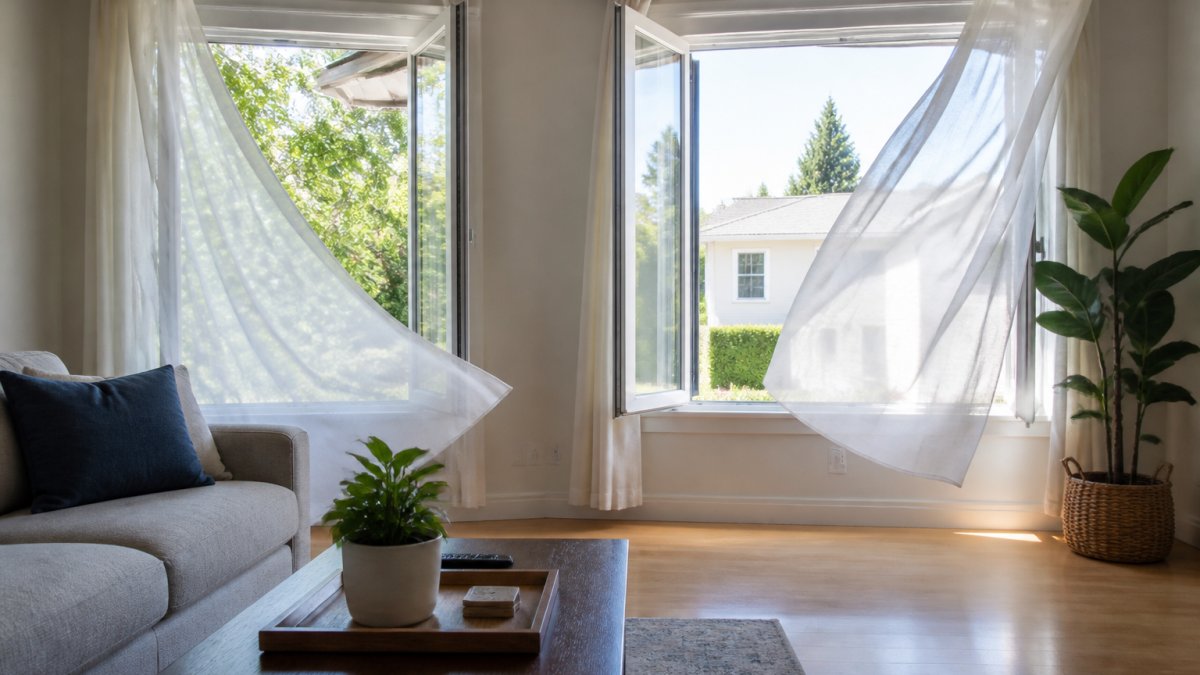
Open windows on the shaded side of your home first. This prevents direct sunlight from heating incoming air. If your home has multiple stories, open lower windows on the cool side and upper windows on the hot side.
Combine cross-ventilation with fans. Place a box fan in a window on the cool side facing inward. This accelerates airflow through your home. You'll feel the difference within minutes.
Step 3: Block Solar Gain With Window Treatments
Direct sunlight can raise room temperature 15-20 degrees in hours. Close blackout curtains or thermal-lined blinds on south and west-facing windows during the day; open them at night to let heat escape. Reflective window film bounces sunlight away but requires installation. Light-colored curtains help if you don't have blackout options.
Close interior doors to rooms you're not using. This concentrates your cooling effort on occupied spaces. A smaller area is easier to keep cool than your entire home.
Step 4: Reduce Internal Heat Sources
Turn off lights you're not using, incandescent and halogen bulbs waste energy as heat. Don't run the oven or stove; use a microwave, toaster oven, or grill outside instead. Avoid the clothes dryer and air-dry clothes instead. Unplug devices you're not actively using, as they generate heat even in standby mode.
Take shorter, cooler showers, hot showers steam up bathrooms and increase humidity, making air feel less comfortable.
Step 5: Try DIY Evaporative Cooling Hacks
Evaporative cooling uses water evaporation to drop air temperature. It's not as effective as real AC, but it works when your AC is broken and you need something fast, especially in low-humidity climates where it can drop perceived temperature by 5-15 degrees.
How Evaporative Cooling Works
When water evaporates, it absorbs heat from the surrounding air, lowering temperature. This process is most efficient when humidity is low (below 40% relative humidity). On dry days, evaporation happens quickly. On humid days, the air already holds moisture, so evaporation slows dramatically and effectiveness drops to nearly zero.
Check your local humidity before trying these methods. If humidity is above 60%, evaporative cooling won't help much. If it's below 50%, these tactics can provide meaningful relief.
DIY Evaporative Cooling Methods
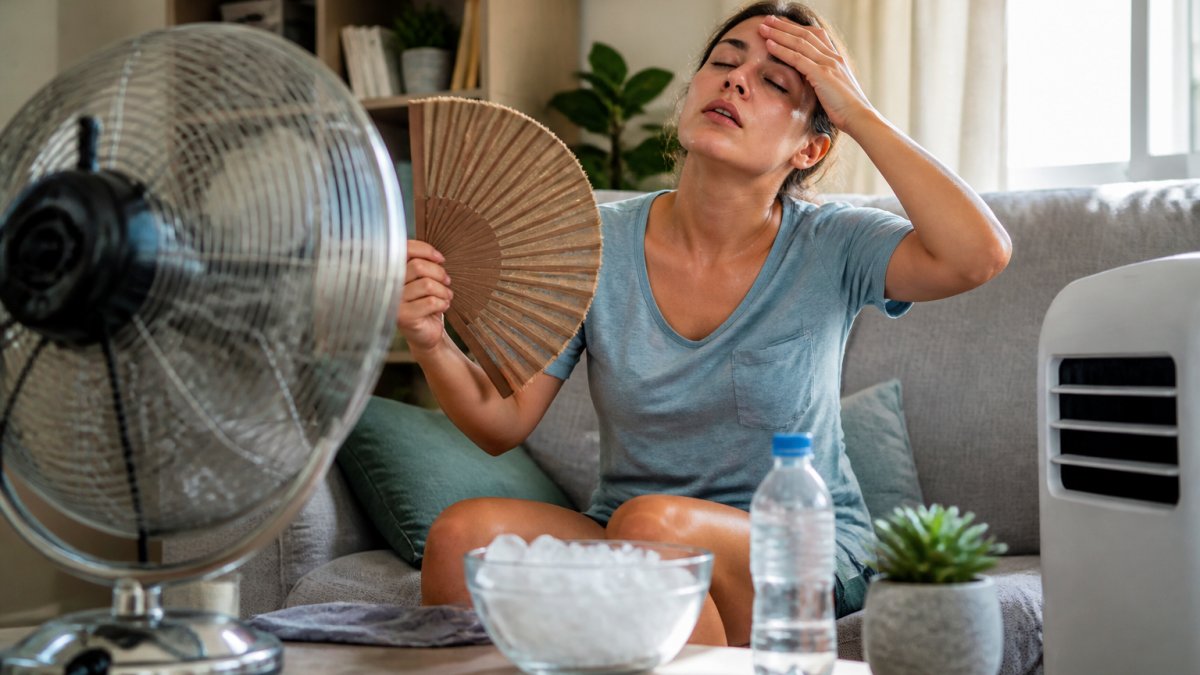
Ice-fan cooling: Place a bowl of ice in front of a fan to cool air before it reaches you. Refill ice every 2-3 hours. Damp sheet method: Hang a damp sheet in front of an open window to cool incoming air; replace as it dries (every 1-2 hours). Body cooling spray: Fill spray bottles with cool water and mist yourself every 15-20 minutes for immediate relief. Wet towel method: Drape damp towels over furniture where you sit or sleep; replace as they dry.
Portable Evaporative Coolers vs. Standard Fans
If you're considering a temporary appliance purchase, understand the difference.
Call (702) 707-4242 for a free estimate →
Portable evaporative coolers cost $150-$400 and work best in rooms under 300 square feet with low humidity. They require a water reservoir you refill daily and perform poorly above 50% humidity.
For emergency AC repair situations, a standard fan is usually the better choice because it works immediately, costs less, and works in any climate.
Step 6: Cool Your Body and Stay Hydrated
When you can't cool your entire home, cool yourself instead. This is your most reliable strategy when your cool house AC broken.
Cooling Yourself During AC Failure
Drink water constantly. Dehydration makes heat feel worse and reduces your body's ability to cool itself through sweating.
Take cool showers or baths. Submerging yourself in cool water drops core body temperature fast. You'll feel relief for hours afterward.
Use ice packs or frozen water bottles on pulse points: wrists, neck, inner elbows, behind knees, and groin area.
Wear light, loose clothing made from natural fabrics like cotton. Tight synthetic clothing traps heat against your skin.
Sleep in the coolest room of your home. Use minimal bedding.
Pet Safety During Heat Emergencies
Pets are more vulnerable to heat than humans. Dogs and cats cannot sweat effectively, they cool themselves through panting and limited paw pad perspiration.
Signs of heat stress in pets: Excessive panting, drooling, lethargy, vomiting, diarrhea, or collapse. Heat stroke is a medical emergency.
Provide fresh, cool water at all times; change bowls every 2-3 hours and add ice cubes. Offer wet food like canned food or broth-based meals.
Never leave pets in cars or enclosed spaces.
When to Call Emergency AC Repair Services
DIY cooling methods are temporary solutions; your AC needs professional repair. Call immediately if you have elderly family members or young children at home, outdoor temperature exceeds 100°F and your home exceeds 85°F, you have heat-sensitive health conditions, or you've been without AC for more than 24 hours.
A broken AC during summer is stressful, but you have options. Start with fans and cross-ventilation today. Block sunlight tomorrow. Cool your body while you wait for repair service. These strategies buy you time and comfort until your system is fixed.
When you're ready for professional repair, RTS Comfort Cooling & Heating provides emergency AC service. Call (702) 707-4242 for a free estimate. We handle everything from emergency repairs to preventative maintenance.
Frequently Asked Questions
How quickly can I cool my house when the AC is broken?
A house typically cools 5-10 degrees within 30-60 minutes using fans, cross-ventilation, and window coverings together. The speed depends on outdoor temperature, humidity, house size, and how many cooling methods you combine. During extreme heat, multiple strategies working together will cool your space faster than any single method alone.
What's the most effective way to circulate air when the AC is out?
Combine ceiling fans running counterclockwise with box fans positioned to pull cool outside air in and push warm air out. Cross-ventilation is critical: open windows on opposite sides of your home to create natural airflow. This combination of mechanical air circulation and convection can significantly reduce ambient temperature and improve thermal comfort throughout your home.
Can DIY cooling methods like ice baths really work?
Ice-based cooling hacks work for personal comfort but won't cool your entire house. Placing bowls of ice in front of fans creates temporary evaporative cooling in a small area. For whole-home cooling, focus on fans, cross-ventilation, and blocking solar gain instead. Ice methods are best used alongside other strategies to help you stay comfortable while waiting for emergency AC repair.
How do I know if I need emergency AC repair services or can wait?
Call for emergency HVAC repair immediately if temperatures exceed 95°F, someone in your home is elderly, very young, or has health conditions, or if your house won't cool below 85°F after trying these methods. During a heatwave, waiting can be dangerous. Professional emergency AC repair services can diagnose whether it's a simple fix or a major system failure that needs immediate attention.