 how-to
How to Reset an AC Unit After a Power Outage (2026)
Table of Contents
- Why Your AC Shuts Off During a Power Outage
- How to Reset an AC Unit After a Power Outage: Step-by-Step
- What to Do When Your AC Circuit Breaker Tripped After a Power Outage
- Why Is My AC Not Cooling After a Power Outage?
- HVAC System Power Surge Protection: Preventing Future Damage
- When to Call a Professional HVAC Technician
- Frequently Asked Questions
Last Updated: September 30, 2026
Why Your AC Shuts Off During a Power Outage
A power outage cuts electricity to your air conditioner, and most systems stay off until someone performs a reset AC unit, a safety design that protects the compressor from restarting into unstable voltage. When power returns, many units have a built-in delay or a tripped breaker that keeps them idle, so the house heats up fast while you wonder if the system is broken or just waiting.
- The circuit breaker trips to protect the compressor
- The thermostat loses its settings or resets
- A safety switch near the unit flips off
- The internal delay timer holds the system down
How to Reset an AC Unit After a Power Outage: Step-by-Step
To reset an AC unit after a power outage, turn off the thermostat, check the breaker, press the reset button, then wait before restoring power. Following this order prevents a hard restart that can damage the compressor. Rushing the sequence is the most common mistake.
Step 1: Turn Off the Thermostat
Set your thermostat to "Off" first so the system doesn't try to start the instant power returns. Give it a minute to fully power down.
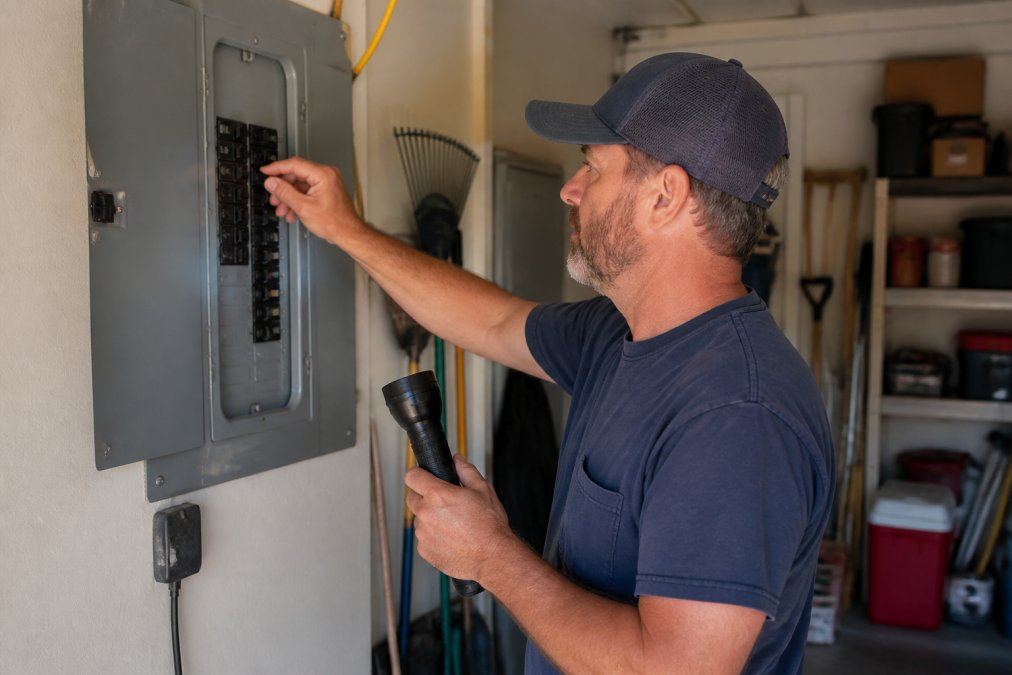
Step 2: Check the Circuit Breaker
Find your main electrical panel. Look for the breaker labeled for the AC or "HVAC." If it's tripped, flip it fully to "Off," then back to "On."
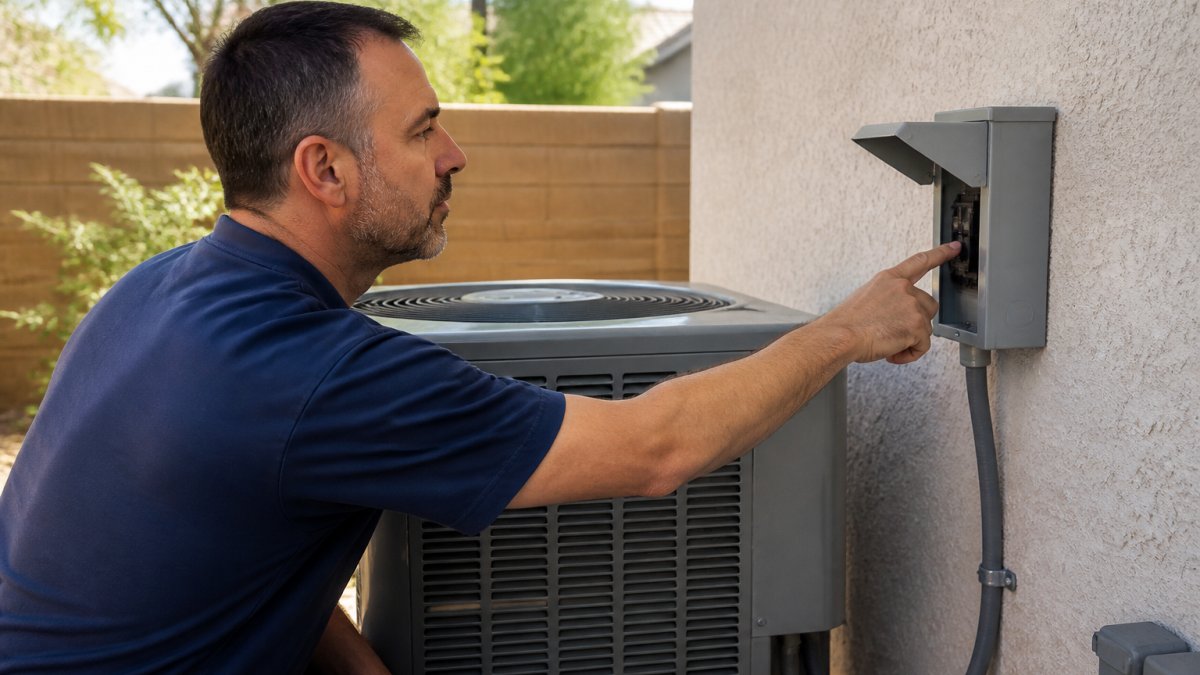
Step 3: Locate and Press the Reset Button
Many outdoor units have a reset button on the control panel. Press it once. Don't hold it down or press it repeatedly, which can flood the system.
Step 4: Wait and Restore Power
Wait at least five minutes before turning the thermostat back on so compressor pressure can settle. Then set it to "Cool" and watch for the fan to start.
What to Do When Your AC Circuit Breaker Tripped After a Power Outage
An AC circuit breaker tripped after power outage is often a normal safety response, not a sign of failure. The breaker cuts power when it senses a surge or overload.
Here's how to handle it:
- Flip the breaker fully off, then on
- Wait 30 minutes and check if it holds
- If it trips again, leave it off and call a technician
- Never tape or force a breaker to stay on
Why Is My AC Not Cooling After a Power Outage?
If your AC is not cooling after a power outage, the system may have power but a stalled component, the fan runs, air moves, but it's not cold. That gap usually points to the compressor, a safety switch, or a control component that took the surge. Diagnose in order, from the cheapest and safest checks to the ones that require a technician.
Step 1: Confirm the thermostat is actually calling for cool
A thermostat that lost its settings during the outage is the most common false alarm. Check that it's set to "Cool," the setpoint is at least 3-5 degrees below room temperature, and the fan is on "Auto" rather than "On." If the fan runs constantly but the outdoor unit never starts, the thermostat is calling for fan-only, a dead giveaway that the cooling call isn't reaching the equipment.
Step 2: Listen at the outdoor unit
Stand next to the condenser and listen:
- A low hum plus fan movement, the compressor is trying to start. If it hums for a few seconds and clicks off, that's a classic failed capacitor or stuck contactor.
- Fan only, no hum, the compressor isn't engaging. Could be a tripped high-pressure switch, a blown contactor, or a control board that lost its low-voltage signal.
- Total silence, power isn't reaching the unit. Recheck the breaker, the disconnect box near the condenser, and any float switch on the indoor drain pan.
Step 3: Check the common post-outage failure points
- Tripped high-pressure switch, needs a manual reset on some units; on others it auto-resets after refrigerant pressure equalizes. Repeated trips mean the system is overcharged or the condenser coil is blocked.
- Blown capacitor, the surge when power returned is the usual culprit. A bulged or leaking capacitor confirms it. This is a common, relatively inexpensive repair.
- Thermostat calibration loss, the unit runs but short-cycles because the thermostat reads the wrong temperature. Recalibration or replacement resolves it.
- Frozen evaporator coil, running with low airflow after an outage can freeze the coil. Turn the system off, let it thaw, and check the air filter before restarting.
- Contactor failure, the relay that sends power to the compressor. Pitted or welded contacts stop the compressor from engaging even when everything else is fine.
Step 4: Know when the diagnosis is out of DIY reach
If the thermostat is calling correctly, the breaker holds, and the outdoor unit still won't produce cold air, the problem is inside the sealed system or the electrical controls. Capacitor and contactor swaps are within reach for a confident DIYer with the power fully off, but refrigerant-side issues, control board faults, and compressor diagnosis require gauges, a multimeter, and licensing.
Call (702) 707-4242 for a free estimate →
A safety note most guides skip
A power surge can damage more than the AC. If you smell burning near the panel or outdoor unit, see scorch marks, or notice the breaker is warm to the touch, stop and call a professional, overheated wiring is a fire risk, not something to troubleshoot by resetting. If your system uses a fossil-fuel furnace and you've had a recent outage, confirm your carbon monoxide detectors are working, since a surge can affect the control board that manages both heating and cooling.
HVAC System Power Surge Protection: Preventing Future Damage
HVAC system power surge protection keeps your equipment safe when the grid fails by blocking the voltage spikes that fry control boards and capacitors. Power outages rarely end cleanly, when electricity returns, it can spike well above normal voltage, and that spike kills sensitive electronics inside your AC.
Options to protect your system:
- Whole-home surge protector installed at the main panel
- Dedicated HVAC surge module wired to the outdoor unit
- Smart thermostat with surge tolerance for the control side
When to Call a Professional HVAC Technician
Call a professional when the breaker won't hold, the compressor won't start, or you smell burning near the unit, signs of problems a reset can't solve, and some are safety issues, not just comfort issues. The harder question is how to decide, especially when the unit is old and you're weighing repair against replacement.
The safety-first triggers: stop now, don't troubleshoot
Some symptoms mean the system is no longer safe to run. Turn it off at the breaker and call for service:
- Burning smell or scorch marks at the panel, disconnect, or outdoor unit
- Breaker warm to the touch or repeatedly tripping within minutes
- Carbon monoxide detector alarming, evacuate, then call 911 and your gas utility before any HVAC technician
- Water pooling around the indoor unit near electrical components
- Loud banging, grinding, or metal-on-metal from the outdoor unit
- Visible sparks or arcing at any connection
The repair-vs-replace decision framework
For non-safety symptoms, the decision comes down to three numbers: the age of the unit, the cost of the repair, and the efficiency you're losing.
What a professional visit should include
When you do call, a proper diagnostic visit should cover:
- Refrigerant pressures and superheat/subcool readings
- Capacitor and contactor testing under load
- Compressor amp draw compared to nameplate rating
- Thermostat and low-voltage control verification
- Condensate drain and float switch check
- Visual inspection of the disconnect and wiring for surge damage
Symptom-to-action quick reference
| Symptom | Likely Cause | What to Do |
|---|---|---|
| Breaker trips right away | Short or failing compressor | Call a technician |
| Fan runs, no cold air | Capacitor or contactor | Schedule a repair |
| Unit totally silent | No power or tripped switch | Recheck breaker and reset |
| Burning smell | Overheated wiring | Turn off and call now |
| Breaker warm to touch | Loose or overloaded connection | Turn off and call now |
| CO detector alarming | Possible combustion leak | Evacuate, call 911, then utility |
Frequently Asked Questions
Why is my AC not turning on after a power outage?
Your AC may not turn on because the circuit breaker tripped, the internal reset button popped, or the thermostat lost its settings. Start by checking the breaker panel and flipping the AC breaker fully off then back on. If the unit still won't start, locate the reset button on the outdoor condenser and press it firmly. When these steps don't restore cooling, a professional HVAC technician can diagnose whether a capacitor, control board, or compressor was damaged by the surge.
How long should I wait to turn my AC back on after a power outage?
Wait at least 5 to 10 minutes after power returns before turning your AC back on. This delay lets refrigerant pressures equalize inside the compressor, which prevents strain on the motor during startup. Rushing the process can cause the compressor to overheat or trip the breaker again. If your system uses a smart thermostat, it may already have a built-in delay of 3 to 5 minutes, but manually waiting is still a safe practice.
Will a power surge damage my HVAC system?
Yes. A power surge can damage the control board, capacitor, blower motor, or compressor in your HVAC system. Even a brief outage followed by a spike when power returns can fry sensitive electronics. Installing a whole-home surge protector or an HVAC-specific surge protection device reduces this risk. If your AC circuit breaker tripped after a power outage and the unit won't restart, a technician can test individual components to find what failed.
When should I call a professional for AC repair after a power outage?
Call a professional if the breaker trips repeatedly, you smell burning, you hear grinding or banging noises, or the unit hums but won't start. These signs point to compressor, motor, or electrical problems that require diagnostic tools and licensed repair. If your AC still isn't cooling after you've reset the breaker and the outdoor reset button, a technician can check refrigerant levels, capacitor health, and control board function to get you back online safely.