 how-to
How to Clean an Outdoor AC Condenser Unit (2026 Guide)
Table of Contents
- Signs of a Clogged AC Condenser (and Why It Matters)
- Safety First: Power and Personal Precautions
- Outdoor AC Unit Cleaning Tools You Actually Need
- Step-by-Step: How to Clean AC Condenser Coils Without Damage
- Choosing a Coil Cleaner and Environmental Precautions
- How Often to Clean AC Condenser Coils in Las Vegas
- Troubleshooting After Cleaning: When to Call an HVAC Technician
- Frequently Asked Questions
Last Updated: October 9, 2026
Signs of a Clogged AC Condenser (and Why It Matters)
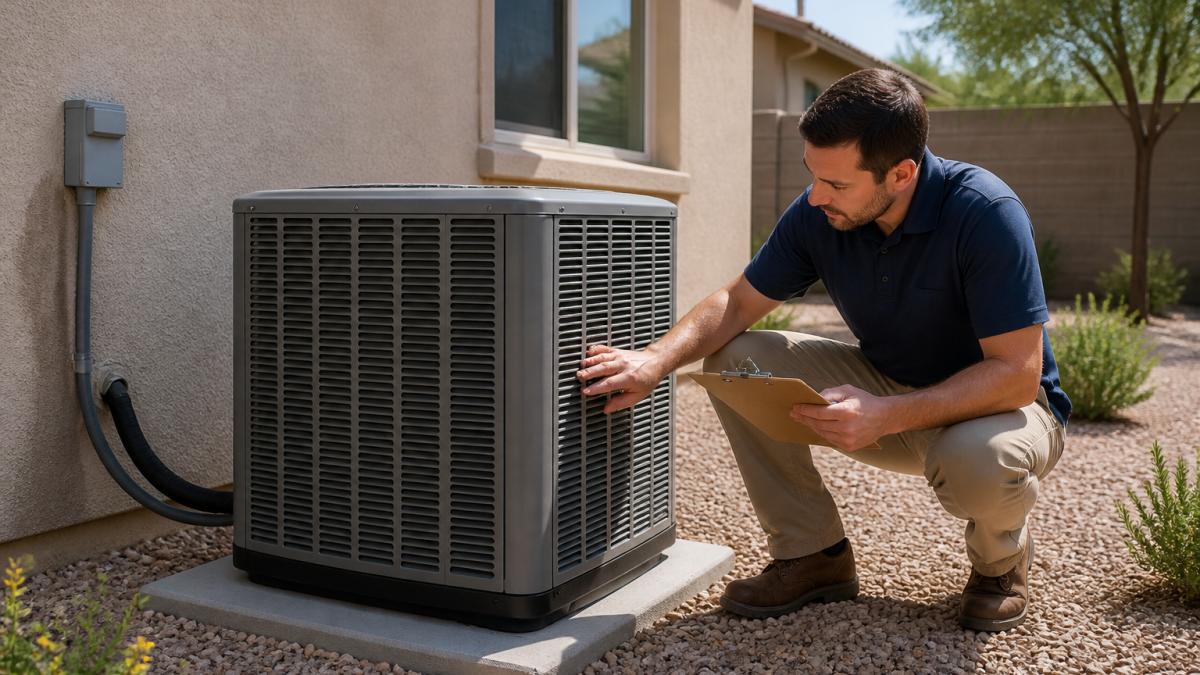
If your outdoor unit is humming but your house never quite cools down, a clogged condenser is a likely culprit. Learning how to clean outdoor ac condenser unit components starts with knowing the warning signs.
The condenser coil is the part of your air conditioner that releases heat to the outside air. When dirt, grass clippings, and pollen coat the coil, heat gets trapped.
Watch for these signs:
- Cooling that feels weak or uneven room to room
- The outdoor fan running nonstop
- Utility bills climbing with no change in habits
How a Clogged Condenser Affects Cooling and Energy Bills
A dirty condenser makes your whole system less efficient. Heat transfer slows down, so the compressor runs longer to hit the same thermostat setting.
The U.S. Department of Energy guidance on air conditioner maintenance notes that regular coil cleaning helps systems run more efficiently. For a Las Vegas home running AC eight months a year, small efficiency losses add up fast.
Safety First: Power and Personal Precautions
Before you touch anything, cut the power. This is the step most homeowners skip, and it is the one that matters most.
Here is how to shut down the unit safely:
- Find the disconnect switch near the outdoor unit and flip it off.
- Go to your main electrical panel and switch off the AC circuit breaker.
- Wait a few minutes so the system fully powers down.
- Confirm the unit is dead before removing any panel.
Personal safety matters too. The condenser fins are sharp enough to slice a hand. Wear work gloves. Never spray water into the electrical compartment. And do not lean over the unit while the fan could still turn.
Outdoor AC Unit Cleaning Tools You Actually Need
You do not need a truck full of equipment. A handful of basic outdoor AC unit cleaning tools will handle the job.
Gather these before you start:
- A soft-bristle brush or a soft brush attachment for a vacuum
- A garden hose with a spray nozzle
- A fin comb for straightening bent coil fins
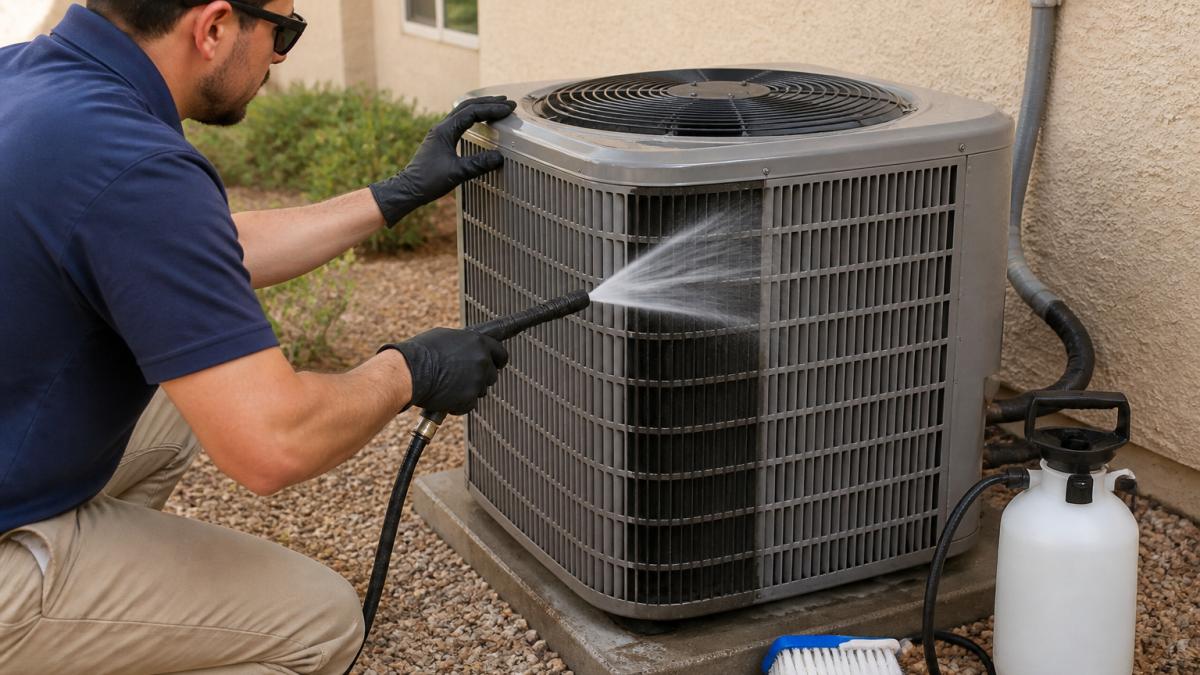
Skip the pressure washer. High water pressure bends the fins and drives dirt deeper into the coil. A gentle spray from a garden hose does the job without damage. Manufacturer instructions for your specific unit should always guide how you clean it.
Step-by-Step: How to Clean AC Condenser Coils Without Damage
Cleaning your condenser coils is a straightforward job when you follow the right order. Rushing any single step is where damage happens, so work through each one carefully.
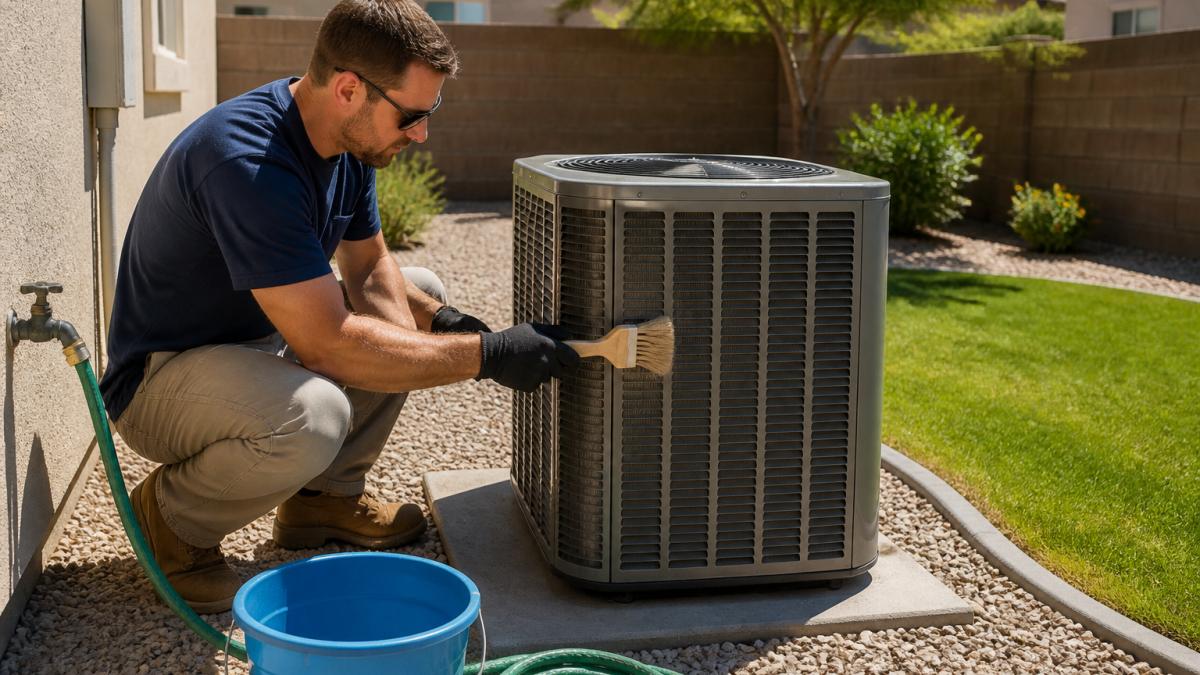
Step 1: Clear Debris and Open the Cabinet
Start outside the unit. Remove leaves, grass clippings, and any vegetation crowding the sides. Clear at least two feet of space around the unit so airflow is not blocked.
Next, remove the outer cover or grille. Most units have screws holding the top grille or side panels.
Once the cabinet is open, vacuum loose dirt from the coil surface using a soft brush attachment. Work gently along the fins, not across them.
Step 2: Clean, Rinse, and Straighten the Coil Fins
Apply your coil cleaner according to the label, then let it sit for the time the product specifies. Most cleaners lift dirt so a gentle rinse carries it away.
Rinse with a garden hose, spraying from the inside of the coil outward where you can reach. Keep the water pressure low and steady. Then inspect the fins for bends. Use a fin comb to straighten any that are crushed, working one row at a time.
Call (702) 707-4242 for a free estimate →
Let the unit dry, then reassemble the cabinet and restore power at the breaker and disconnect switch.
Choosing a Coil Cleaner and Environmental Precautions
Most top-ranking guides tell you to "use a coil cleaner" and move on. That is the gap this section fills: what the products actually are, how they behave on aluminum, and how to keep runoff out of your soil and storm drains.
The three cleaner categories you will see on a shelf
- Water-only cleaning. A garden hose and a soft brush remove loose dust, pollen, and grass clippings. It is the safest option for any coil, including units with factory-applied coatings, and it is usually enough for a unit cleaned on schedule. It will not cut greasy or baked-on grime.
- Foaming no-rinse cleaners. These are formulated for outdoor condenser coils. You spray, the foam lifts dirt, and the coil's own condensate plus a light hose rinse carries it away. They are the most forgiving choice for a homeowner because they are hard to over-apply.
- Rinse-away alkaline or caustic cleaners. These are stronger and common in professional service. They work fast on heavy buildup but can etch bare aluminum if left on too long or mixed too strong, and they are the products most likely to damage plants.
Read the label for these four things
- Coil compatibility. Look for language about aluminum, copper, and coated coils. A cleaner labeled for "all coils" is not the same as one labeled safe for a specific factory coating.
- Dilution. Concentrates are meant to be mixed. A common label instruction is a specific ratio of product to water, and using it straight is a frequent cause of fin damage. Follow the printed ratio, not a guess.
- Dwell time. Most foaming products specify a short wait, often a few minutes, before rinsing. Leaving cleaner on longer does not clean better; on caustic products it corrodes.
- Rinse requirement. "No-rinse" still means the coil should be wet down and the runoff managed. It does not mean the residue disappears.
Environmental precautions that actually matter
Coil cleaner runoff is the part most guides skip. Alkaline and caustic products raise the pH of whatever they touch, and that is what burns grass, shrubs, and painted surfaces.
- Pre-wet and post-flush. Wet the ground and nearby plants before you start, then flush the area with plain water after you finish. Dilution is the simplest protection.
- Block the storm drain. Runoff carrying cleaner should not go straight into a curb inlet or storm drain. Sandbags, a rolled towel, or a temporary berm of soil will divert it onto grass or gravel where it can break down.
- Cover what you cannot move. A tarp or plastic sheet over garden beds, and moving pets and kids inside for the duration, removes the two most common exposure routes.
When in doubt, the owner's manual for your specific unit is the authority on both cleaner type and rinse method.
How Often to Clean AC Condenser Coils in Las Vegas
Twice a year is the baseline for most homes, but local conditions push that number higher. Between dust storms, desert pollen, and year-round landscaping, condenser coils here collect debris faster than in milder climates.
A practical schedule looks like this:
| Season | Task | Why It Matters |
|---|---|---|
| Spring | Full coil cleaning | Clears winter debris before heavy use |
| Early summer | Quick debris check | Peak heat starts, airflow must be clear |
| Late summer | Coil and fin inspection | Dust and pollen build up fastest now |
| Fall | Cleaning before heating season | Keeps the system ready year-round |
If you live near open desert, a construction site, or lots of landscaping, check the unit monthly during summer. A two-minute visual check can catch a clog before it becomes a repair.
Troubleshooting After Cleaning: When to Call an HVAC Technician
You cleaned the unit, restored power, and the house still will not cool. Before you call anyone, run this short sequence. It separates the problems a homeowner can fix from the ones that require a licensed technician, and it tells you exactly where to stop.
First: confirm you actually restored power
This sounds obvious, and it is the most common cause of a "dead" unit after cleaning.
- Check the disconnect switch at the outdoor unit. It should be back in the ON position.
- Check the AC circuit breaker in the main panel. If it tripped, reset it once.
- Confirm the thermostat is set to COOL and below room temperature, and that the indoor air handler is running.
If the breaker trips again immediately after you reset it, stop. Do not reset it a third time. A repeated trip points to an electrical fault, and repeated resets can damage the compressor.
Second: match the symptom to the likely cause
- Outdoor fan not spinning, but you hear a hum. The fan motor or its capacitor may have failed. Capacitors hold a charge even with power off, which is why this is a technician job, not a homeowner one.
- Fan spinning, but the air from the vents is not cool. The compressor may not be running, or the system may be low on refrigerant. Low refrigerant is a sealed-system problem, not a top-off, and handling it requires certification.
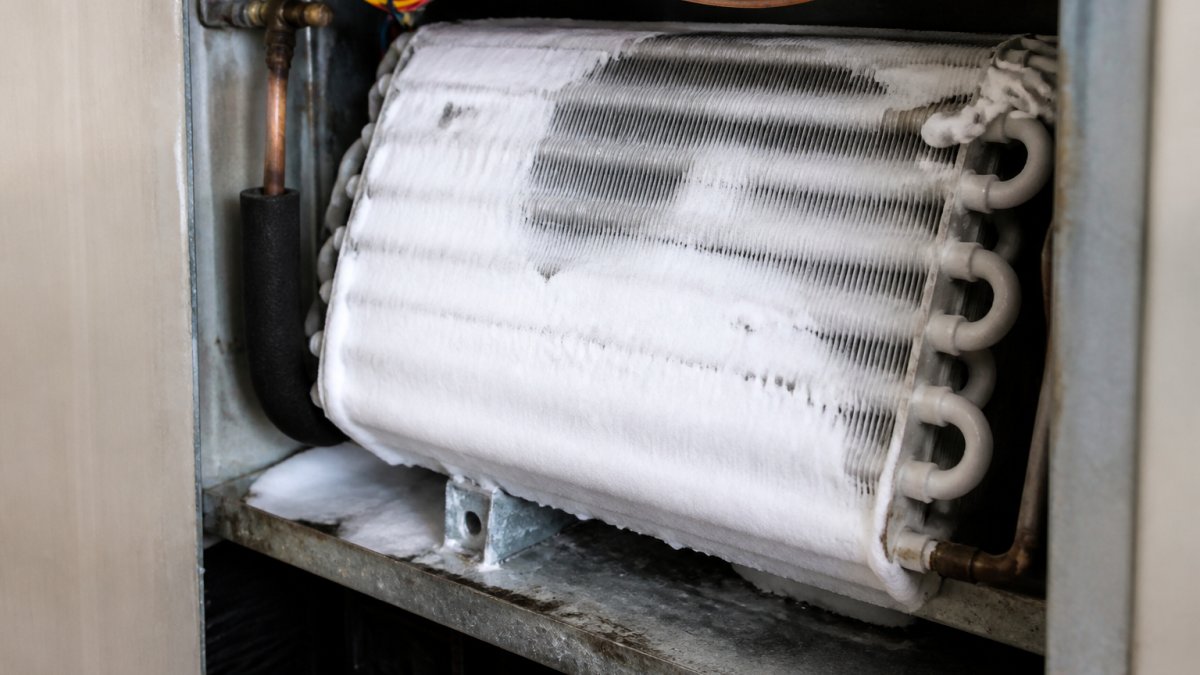
- Ice on the indoor coil or the refrigerant lines. This usually means restricted airflow or a refrigerant charge issue. Turn the system off at the thermostat and let it thaw before anyone diagnoses it. Running it iced can damage the compressor.
Third: know your stop-points
These are the lines a homeowner should not cross, regardless of how confident you feel:
- Anything involving refrigerant. Refrigerant lines, valves, and charging require EPA Section 608 certification. There is no safe homeowner version of this work.
- Anything inside the electrical compartment. Capacitors, contactors, and wiring can hold a lethal charge after the disconnect is off. Panel-off electrical diagnosis belongs to a technician.
- Any repeated breaker trip or burning smell. These are fire and shock hazards, not maintenance items.
What to tell the technician
When you do call, the details you gathered save diagnostic time. Note the thermostat setting, whether the outdoor fan and compressor were both running, whether the breaker tripped, and whether you saw ice or water.
Frequently Asked Questions
Can I spray my outside AC unit with water while it's running?
No. Always turn off power at the disconnect switch or circuit breaker before spraying water on the condenser. Water and live electrical components don't mix, and spraying while the unit runs risks shock and can push debris deeper into the coils. Let the unit sit for a few minutes after shutting it off, then rinse gently with a garden hose. For stubborn dirt, use a coil cleaner made for outdoor AC units, but never a pressure washer, which can bend the fins.
How often does an AC condenser need to be cleaned?
In most U.S. climates, clean the condenser once a year. In dusty areas like Las Vegas, where pollen, dirt, and grass clippings build up fast, plan on twice a year: once in spring before cooling season and again in late summer. If you notice weak airflow or higher energy bills, check the coils sooner. Homeowners with pets or nearby construction may need to clean every three to four months.
How do I know if my AC condenser is clogged?
Common signs of a clogged AC condenser include weak airflow from vents, the outdoor fan running but not cooling, higher-than-normal energy bills, and the unit cycling on and off frequently. You may also see visible dirt, leaves, or grass clippings packed between the fins. If the top of the unit feels hot or you hear unusual noises, the coils are likely blocked. A quick visual inspection of the fins confirms it.
What tools do I need to clean an outdoor AC condenser?
You'll need a garden hose with a spray nozzle, a soft-bristle brush or vacuum with a soft brush attachment, a fin comb for straightening bent fins, and a coil cleaner labeled for outdoor AC units. A screwdriver may be needed to remove the cabinet or grille. Avoid pressure washers and wire brushes, which damage the condenser fins. Gloves and safety glasses are also smart for personal protection.
A clogged condenser is one of the most common reasons a Las Vegas home stops cooling, and it is also one of the easiest problems to prevent with routine maintenance. If your unit still struggles after cleaning, or you would rather leave the job to a pro, RTS Comfort Cooling & Heating can help. We offer 24/7 emergency HVAC service, expert AC repair, and complete system maintenance to keep your home comfortable year-round. Call (702) 707-4242 for a free estimate and get your cooling back on track.