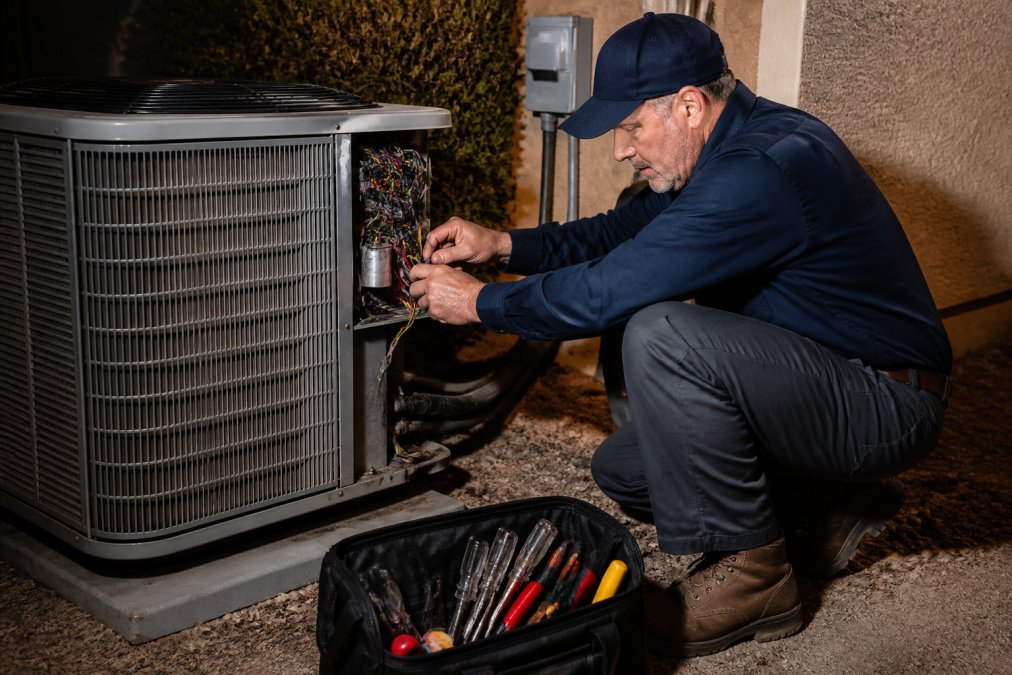
 listicle
5 Signs You Need Emergency AC Repair: Act Fast
Table of Contents
- Sign 1: Complete System Failure or Warm Air Blowing From Vents
- Sign 2: Burning or Electrical Odors From Your HVAC System
- Why Is My AC Not Cooling? Understanding Weak Airflow and Short Cycling
- Sign 4: Signs of AC Refrigerant Leak and Ice Buildup
- Sign 5: Loud Noises, High Humidity, and Frequent Breaker Trips
- Emergency HVAC Repair Cost: What Affects Your Bill and How to Decide Between Repair and Replacement
- What to Do While You Wait for Emergency AC Repair
- Frequently Asked Questions
Last Updated: September 19, 2026
Sign 1: Complete System Failure or Warm Air Blowing From Vents
When your AC stops blowing cold air entirely, or warm air comes from the vents while the thermostat calls for cooling, you need emergency AC repair.
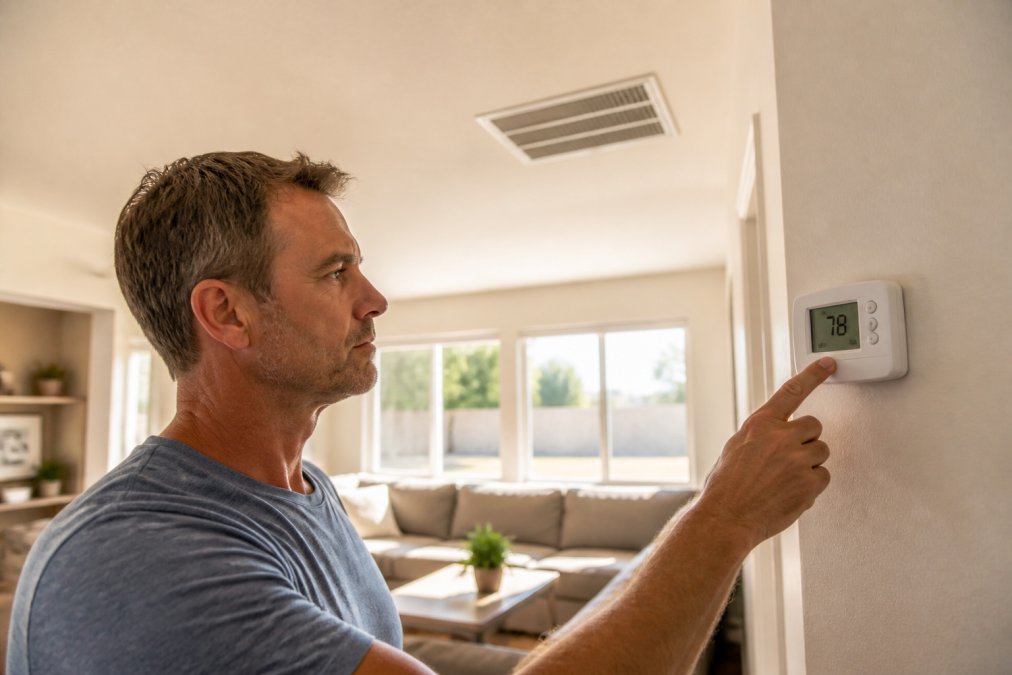
Sign 2: Burning or Electrical Odors From Your HVAC System
A burning smell from your vents is a fire hazard. If you notice burning or electrical odors, shut off your HVAC system at the circuit breaker and call for emergency AC repair immediately.
Common causes include:
- Overheated blower motor
- Electrical wiring that is fraying or shorting
- A failing circuit breaker
- Debris burning on the heating element
Why Is My AC Not Cooling? Understanding Weak Airflow and Short Cycling
Weak airflow and short cycling are two of the most common reasons an AC stops cooling effectively, and both worsen without professional repair. Short cycling is when your AC turns on and off rapidly without completing a full cooling cycle, wearing out the compressor, raising energy consumption, and leaving your home humid and uncomfortable.
Weak airflow usually traces back to:
- A clogged air filter
- Blocked or leaking ductwork
- A failing blower motor
- Frozen evaporator coils
Sign 4: Signs of AC Refrigerant Leak and Ice Buildup
Ice on your evaporator coils or refrigerant lines is a clear sign of an AC refrigerant leak: when refrigerant levels drop, system pressure falls and the coils freeze over.
Watch for these signs of AC refrigerant leak:
- Ice buildup on the indoor unit or copper lines
- Hissing or bubbling sounds near the air handler
- Water pooling around the base of the unit
- Reduced cooling capacity
- Higher-than-normal energy bills
Sign 5: Loud Noises, High Humidity, and Frequent Breaker Trips
Loud noises, rising humidity, and repeated breaker trips are three separate emergencies with different causes, risks, and first moves. Treating them as one problem is how small failures become compressor replacements.
Loud noises: match the sound to the failure
The type of noise tells you what is failing before a technician arrives.
- Grinding or screeching, a failing blower motor bearing or a seizing compressor. Grinding rarely resolves on its own and usually ends in a motor or compressor replacement if ignored.
- Banging or clanking, a loose or broken component inside the outdoor unit, often a bent fan blade or loose compressor mount. Continuing to run it can throw the fan out of balance and damage the coil.
- Hissing or bubbling, refrigerant escaping under pressure, pointing to a leak rather than a mechanical failure.
- Clicking that repeats without the system starting, a failing capacitor, contactor, or control board. A hard-starting compressor draws locked-rotor current, which trips breakers.
High humidity: your system is not running long enough
An AC removes moisture as a byproduct of cooling. When it short cycles or the evaporator coil is frozen, it never runs long enough to pull humidity from the air. Indoor relative humidity above roughly 60% is the threshold most building scientists use to flag conditions that support mold and dust mite growth. High humidity with a running system usually means the system is oversized, the blower is set too high, or the coil is frozen and blocking airflow, none fix themselves.
Frequent breaker trips: an electrical problem, not a nuisance
A breaker that trips once may be a fluke; one that trips repeatedly is doing its job by interrupting a fault. The most common causes in an AC system are:
- A compressor drawing locked-rotor amps because it is failing
- A shorted or grounded compressor winding
- Damaged wiring or a loose connection at the disconnect
- A failing capacitor that prevents the compressor from starting cleanly
- Undersized wiring or a breaker never sized correctly for the unit
The safety triage to run before the technician arrives
Most articles stop at 'call a pro.' Here is what to actually do in the first five minutes:
- Shut the system off at the thermostat if you hear grinding, banging, or see ice.
- Switch the breaker to OFF at the panel if you smell burning, see sparks, or the breaker has tripped more than once. Tag it so no one flips it back on.
- Do not open the outdoor unit. The capacitor holds a lethal charge even with power off, and refrigerant lines run at high pressure.
- Clear a three-foot perimeter around the outdoor condenser for safe technician access.
- Note the sounds, smells, and timing, when it started, what the thermostat read, whether the breaker tripped before or after the noise. That log shortens diagnosis time and often the bill.
Why urgency scales with the weather
In mild weather, a noisy outdoor unit can sometimes wait for a next-day appointment. In a heat wave, the same symptom is an emergency: a home that loses cooling when outdoor temperatures are in the upper 90s can reach unsafe indoor temperatures within hours, and compressor damage from continued operation compounds the repair cost. The urgency is set by the forecast, the age of the occupants, and whether anyone is heat-sensitive.
Emergency HVAC Repair Cost: What Affects Your Bill and How to Decide Between Repair and Replacement
Emergency HVAC repair cost depends on the failure, the parts required, and the time of day you call. Most emergency calls cost more than standard service calls because of after-hours rates. But the more important question is whether the repair is worth doing at all.
What actually drives the bill
| Factor | Impact on Cost |
|---|---|
| Time of call | After-hours, weekend, and holiday rates are higher than standard business hours |
| Part availability | Common parts (capacitors, contactors, filters) are stocked; compressors and coils are often ordered |
| System age | Older systems use discontinued parts and R-22 refrigerant, which is expensive and restricted |
| Repair complexity | A capacitor swap is a same-day fix; a compressor or evaporator coil replacement is a major job |
| Labor time | Attic or crawlspace access, refrigerant recovery, and brazing add hours |
| Refrigerant type | R-410A systems are the current standard; older R-22 systems cost far more to recharge |
The repair-vs-replace framework that actually works
The '50% rule', replace if the repair costs more than half a new system, is a starting point, not a decision. A better framework weighs four inputs:
- Age of the system. The typical service life of a central AC is roughly 12 to 15 years, and heat pumps run similar. A 14-year-old unit that needs a compressor is near end of life; a 6-year-old unit that needs the same compressor is usually worth repairing.
- Repair cost as a share of replacement. If the repair is more than half the installed cost of a new system, the math tilts toward replacement, but only when the unit is also past its midpoint in age.
- Refrigerant type. If the system uses R-22 (phased out in the U.S. under the Montreal Protocol and no longer produced or imported for new equipment), every future recharge is expensive and the supply only shrinks. A refrigerant leak on an R-22 system is often the trigger to replace rather than repair.
- Repair history. One repair in five years is normal. Three repairs in two years is a pattern, and patterns predict the next failure.
The band-aid test
A repair is a band-aid when it fixes the symptom but leaves the cause in place. Three cases:
- Recharging a leaking system without finding the leak. The refrigerant escapes again, and you pay twice.
- Replacing a capacitor on a compressor already drawing high amps. The capacitor was a symptom of a failing compressor, not the problem.
- Replacing a blower motor on a system with a restricted evaporator coil. The new motor works harder and fails sooner.
When replacement is the better emergency decision
Replacement during an emergency is rarely cheapest in the moment, but it can be cheapest over three to five years. It tends to win when:
- The system is past 12 years old and the repair is a compressor, coil, or refrigerant leak
- The system uses R-22
- The repair cost approaches half the installed cost of a new unit
- The home has had two or more emergency repairs in the last 24 months
- The existing system is undersized or oversized, which no repair will fix
What to ask before you approve anything
- The diagnosis in plain language, not just the part name
- A written repair estimate and a written replacement estimate, side by side
- Expected remaining life of the system after the repair
- Whether the repair is covered by any remaining warranty
- Whether the part is in stock or must be ordered, and how that affects the timeline
What to Do While You Wait for Emergency AC Repair
While you wait for the technician, take these steps to stay safe and protect your system:
- Turn off your HVAC system at the thermostat if you smell burning or see ice.
- Switch off the circuit breaker if you suspect an electrical problem.
- Open windows and use fans to keep air moving.
- Move to the lowest floor of your home, where it stays coolest.
- Stay hydrated and check on elderly family members or neighbors.
- Clear the area around your outdoor unit so the technician has access.
Frequently Asked Questions
What is considered an emergency when the AC is not working?
An AC emergency includes total system failure during extreme heat, burning or electrical odors, loud grinding noises, or refrigerant leaks. If indoor temperatures exceed 90°F or vulnerable family members are present, treat it as urgent. Any sign of electrical burning or sparking requires immediate shutdown and professional emergency AC repair.
What is the 3-minute rule for air conditioners?
The 3-minute rule refers to the delay a compressor needs between shutdown and restart. If your system short cycles, turning on and off every few minutes, it may violate this rule, which can damage the compressor. Frequent short cycling often indicates refrigerant issues, a failing thermostat, or airflow restrictions. Call a technician for emergency AC repair before the compressor fails completely.
What is the most common AC problem?
The most common AC problem is airflow restriction, often caused by a dirty air filter. This leads to weak cooling, frozen evaporator coils, and short cycling. Other frequent issues include refrigerant leaks and thermostat calibration errors. Regular filter changes and annual preventative maintenance can prevent many of these problems.
What to check first when AC goes out?
Check your thermostat settings, circuit breaker, and air filter first. Ensure the thermostat is set to cool and the breaker is not tripped. If the filter is clogged, replace it. If the system still does not respond, or if you notice burning odors or loud noises, call for emergency AC repair immediately.
How quickly can an HVAC technician respond to an emergency?
Response times vary by company and time of day. Many providers offer 24/7 emergency service with response windows of 1-4 hours. RTS Comfort Cooling & Heating provides 24/7 emergency HVAC service in the Las Vegas area. Call (702) 707-4242 for immediate assistance.
A failing AC during a heat wave is stressful, but you do not have to face it alone. RTS Comfort Cooling & Heating provides 24/7 emergency HVAC service, expert diagnostics, and honest recommendations on repair versus replacement. The team also offers duct cleaning, attic insulation, and smart thermostat installation to keep your system running efficiently year-round. Call (702) 707-4242 for a free estimate and get your home comfortable again.