 listicle
Benefits of an Annual AC Maintenance Plan
Table of Contents
- Why an Annual AC Maintenance Plan Pays Off in a Desert Climate
- What Does AC Maintenance Include? A Service Checklist
- How an Annual Plan Lowers Energy Bills and Operating Costs
- How Often to Service an Air Conditioner for Peak Performance
- AC Maintenance Plan Cost and What You Get for the Annual Fee
- AC Maintenance Plan vs. One-Time Service: Which Fits Your Home?
- When an Annual AC Maintenance Plan Is Not Worth It
- Frequently Asked Questions
Last Updated: October 8, 2026
Why an Annual AC Maintenance Plan Pays Off in a Desert Climate
An AC maintenance plan is a service agreement covering scheduled inspections, tune-ups, and priority repairs for a recurring fee.
The value of an annual AC maintenance plan has less to do with the tune-up itself than with timing.
We will cover the service checklist, how often to service an air conditioner, what an annual fee buys, and the plan terms that decide whether you win or lose.
What Does AC Maintenance Include? A Service Checklist
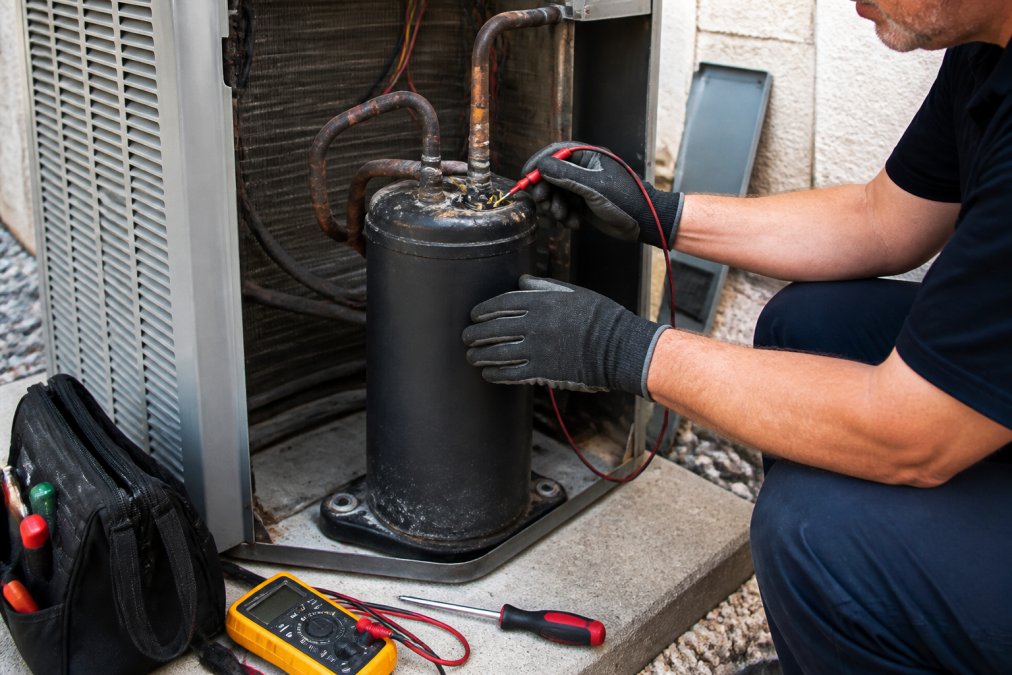
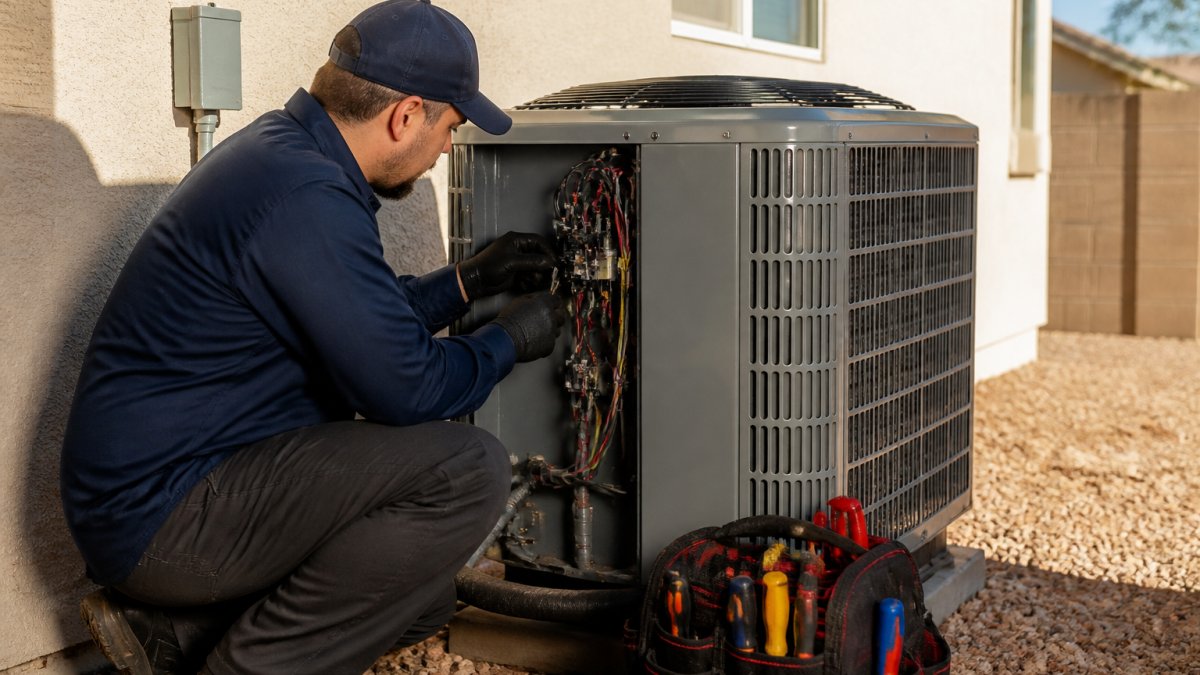
AC maintenance includes a documented inspection and tune-up of the components that most often cause breakdowns: filters, coils, refrigerant charge, drain lines, electrical connections, and the blower assembly, worked through in a set order so nothing gets skipped.

A standard visit covers:
- Replace or clean the air filter
- Wash the outdoor condenser coil
- Check refrigerant charge and look for leaks
- Clear and flush the condensate drain line
The drain line deserves a callout. In dry climates, condensate still forms during cooling, and a clogged drain is one of the most common reasons a system shuts down mid-summer.
The Seasonal Tune-Up: What a Technician Checks
A seasonal tune-up focuses on readiness for the coming season rather than repair. Before summer, that means verifying the cooling side can handle sustained load; before winter, checking the heating side and reversing valve on a heat pump. A spring visit often catches small issues before they become a no-cool call in August.
How an Annual Plan Lowers Energy Bills and Operating Costs
An annual plan lowers operating costs by keeping the system close to its rated efficiency instead of letting it drift. A dirty condenser coil and a low refrigerant charge force the compressor to run longer to hit the same thermostat setting, and longer run times show up on your energy bills.
Efficiency loss is gradual: you will not notice a system losing a few points over a year, but you will notice the bill. Regular service visits reset the system to a clean baseline, which is why energy-conscious homeowners treat maintenance as cost control.
How Often to Service an Air Conditioner for Peak Performance
Service your air conditioner once a year at minimum, and twice a year for coverage on both the cooling and heating sides. That answer does not change based on how new your system is.
Manufacturers commonly tie warranty coverage to documented annual maintenance, so skipping visits can affect more than performance. If you want the specifics for your equipment, check your owner's manual or the manufacturer's warranty terms, such as those published by Trane's residential maintenance plan guide.
For most homes, we recommend:
- One visit in spring, before the cooling season
- A second visit in fall if you run a heat pump or furnace
- Filter changes monthly during heavy use, or as the filter rating allows
A system running nearly year-round in a hot climate accumulates wear faster than one that gets seasonal breaks, which is the practical case for twice-a-year service in desert conditions.
AC Maintenance Plan Cost and What You Get for the Annual Fee
AC maintenance plan cost varies by provider, system type, and number of visits, so no single number fits every home. What we can do is tell you what the annual fee should buy and how to run a break-even estimate on any quote.
Most residential plans in the United States fall into one of three shapes:
- One tune-up per year, no extras. The lowest annual fee. You get a scheduled cleaning and inspection, and you pay full price for any repair.
- One or two tune-ups plus perks. A higher annual fee that typically bundles priority scheduling, a parts discount, and a waived or reduced diagnostic fee.
- Tune-ups plus a repair allowance or labor credit. The highest annual fee, and the one where the exclusions matter most.
| Plan Element | What to Look For | Why It Matters |
|---|---|---|
| Visits per year | One or two scheduled tune-ups | Two visits cover heating and cooling |
| Priority scheduling | Front-of-line status for repairs | Matters most during a heat wave |
| Parts discounts | Percentage off listed parts | Offsets the annual fee over time |
| Diagnostic fees | Waived or reduced | Removes the cost of just getting a look |
| Repair allowance | A stated dollar credit toward repairs | The single biggest swing in plan value |
| Exclusions | Wear items, refrigerant, labor | Determines what you still pay |
| Cancellation | Notice period and refund terms | Protects you if you move or sell |
How to Run a Break-Even Estimate on Any Quote
You do not need a spreadsheet, just four numbers, three of which you can get from the provider in writing.
- The annual plan fee. Ask for the renewal price, not just the first-year promotional price.
- The standalone tune-up price. This is what you would pay for the same visit without a contract.
- The diagnostic fee. Ask what it costs to have a technician come out and look at a problem, with and without the plan.
- The parts discount. Ask for the percentage and whether it applies to the parts you are most likely to need, such as capacitors, contactors, and blower motors.
Then do the math: if the annual fee is close to the standalone tune-up price, the plan is roughly a wash on the tune-up alone and the perks are what you are really buying. If the fee is well above the tune-up price, the plan only pays off if you actually use the priority scheduling, diagnostic waiver, or parts discount.
Call (702) 707-4242 for a free estimate →
What the Annual Fee Should Buy
A fair plan should spell out, in writing:
- The number of visits and the tasks included in each
- Whether refrigerant is covered or billed separately
- Whether repair labor and diagnostic fees are included, waived, or discounted
- The parts discount percentage and any exclusions
Plan Terms, Exclusions, and Cancellation Details to Check
Plan terms decide the real value. Before enrolling, get answers in writing:
- How many visits are included, and can you schedule them when you want?
- Is refrigerant covered, or billed separately if the system is low?
- Are repair labor and diagnostic fees included or discounted?
- What is the cancellation window, and do you get a prorated refund?
- Does the plan transfer if you sell the house?
That last question matters more than people expect: a transferable plan can be a small selling point when you list, while a non-transferable one disappears the day you close.
AC Maintenance Plan vs. One-Time Service: Which Fits Your Home?
An annual plan fits homeowners who want predictable upkeep and priority access. One-time service fits homeowners who prefer to pay as they go and are comfortable scheduling their own visits. Neither is universally better, and the right choice depends on how you handle risk.
Choose a plan if you:
- Have a system more than five years old
- Live somewhere with a long, punishing cooling season
- Want priority scheduling during peak demand
- Prefer a fixed annual cost over unpredictable repair bills
Choose one-time service if you:
- Have a system still under a comprehensive warranty you manage yourself
- Are comfortable tracking your own service schedule
- Plan to replace the system within a year
A middle path works for some homes: one paid tune-up per year with no contract. You get the cleaning and inspection without the commitment.
When an Annual AC Maintenance Plan Is Not Worth It
An annual AC maintenance plan is not worth it when the equipment is near the end of its life, when the plan excludes the repairs you are most likely to need, or when you will not use the included visits. Paying an annual fee for a system you plan to replace in six months is money you will not get back.
Situations where skipping the plan is the better call:
- A very new system under a strong manufacturer warranty. You still want annual service to keep that warranty valid, but you may not need the extra perks a paid plan adds. A single paid tune-up per year often satisfies the warranty requirement.
- A plan with no priority scheduling. If the main draw is front-of-line access and the contract does not promise it, the value drops sharply.
- A system you plan to replace within a year. The plan's long-term benefits, such as extended equipment life, do not have time to pay off.
- A lightly used system. If you run the AC only a few weeks a year, the wear-and-tear case for annual service is weaker.
- A DIY-capable owner. If you already change your own filters, keep the outdoor unit clear, and flush the condensate drain, you are covering part of what a basic plan does.
A Simple Decision Framework
Ask three questions before you enroll:
- How old is the system? Under five years, a single tune-up may be enough. Over ten years, the case for a plan gets stronger because breakdown risk rises.
- How hard does it work? A system running nearly year-round in a hot climate accumulates wear faster than one that gets seasonal breaks.
- What does the plan actually cover? If the exclusions wipe out the repairs you are most likely to need, the plan is a tune-up subscription, not protection.
If you answer "new system, light use, broad exclusions," skip the plan. If you answer "older system, heavy use, narrow exclusions," the plan is likely worth it.
Questions to Ask Before You Enroll
If a plan is worth considering, use this checklist to compare providers rather than relying on vague benefit claims:
- What are the technician's qualifications and licenses?
- What appointment windows are offered, and how far out are they booked?
- Which tasks are included in each visit, and which cost extra?
- What are the emergency or after-hours fees?
- Is there a service guarantee, and what does it cover?
If you are unsure whether your system needs replacement or just attention, an inspection is the cheapest way to find out. RTS Comfort Cooling & Heating offers free estimates.
Frequently Asked Questions
Is yearly AC maintenance worth it?
For most homeowners, yes. An annual AC maintenance plan typically includes a seasonal tune-up, priority scheduling, and discounts on parts, which can offset the annual fee over time. Regular service visits help prevent costly repairs and keep your system running efficiently. If your system is older or you've skipped maintenance for years, the value is even higher because a technician can catch developing problems before they become emergencies.
What does annual AC maintenance include?
A typical annual AC maintenance visit covers a thorough system inspection, coil cleaning, refrigerant level check, condensate drain clearing, filter replacement or cleaning, electrical connection tightening, and thermostat calibration. Some plans also include duct cleaning or indoor air quality checks. The goal is to catch wear and tear early, improve cooling performance, and extend equipment lifespan. Ask for a written checklist so you know exactly what's covered.
Can regular AC maintenance help lower energy use?
Yes. A dirty condenser coil, low refrigerant, or a clogged filter forces your system to work harder, which drives up monthly energy bills. During a seasonal tune-up, a technician cleans components and checks refrigerant levels so the system runs at its designed efficiency. While savings vary by home and system age, maintaining your AC is one of the most reliable ways to control cooling expenses in a hot climate.
Does an AC maintenance plan include repairs?
Most annual AC maintenance plans cover the tune-up and inspection, not the cost of parts or labor for repairs. However, many plans offer discounts on repair costs or waive diagnostic fees for plan members. Before enrolling, ask specifically what happens if the technician finds a problem during the visit, whether repairs are billed separately, and whether any parts are included. Understanding exclusions upfront prevents surprises.