 ultimate-guide
How to Choose an HVAC Contractor: A 2026 Guide
Table of Contents
- Why Choosing the Right HVAC Contractor Matters
- Verify HVAC Contractor License and Insurance
- Review References and Past Project History
- Questions to Ask Your HVAC Contractor
- Request Written Estimates and Spot Red Flags in Quotes
- Signs of a Bad HVAC Contractor to Avoid
- Evaluate Home Assessment and Equipment Sizing
- Final Steps Before Hiring Your HVAC Contractor
- Frequently Asked Questions
Last Updated: September 1, 2026
Why Choosing the Right HVAC Contractor Matters
Selecting the right HVAC contractor is one of the most important decisions you'll make for your home's comfort and your wallet. A poor choice can cost you thousands in unnecessary repairs, inflated service calls, or worse, a system that breaks down during the hottest or coldest days of the year. The difference between a contractor who delivers and one who doesn't often comes down to a few key questions asked upfront and proper verification before you sign anything.
This guide walks you through exactly how to choose an HVAC contractor with confidence. We'll cover the verification steps that matter, the questions that separate professionals from amateurs, and the red flags that should send you looking elsewhere. By the end, you'll know what to look for and what to avoid when hiring someone to install, repair, or maintain your heating and cooling system.
Verify HVAC Contractor License and Insurance
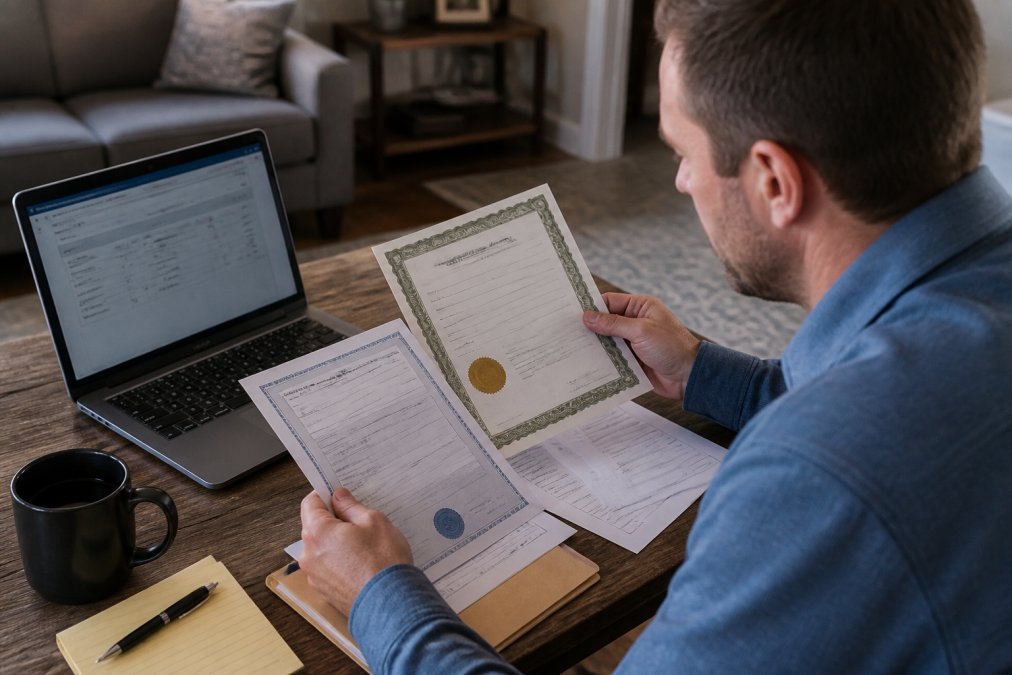
Before anything else, verify that your contractor is legally licensed and properly insured. This is non-negotiable. A licensed contractor has passed exams, maintains continuing education, and is accountable to regulatory bodies. Insurance protects you if something goes wrong during the work.
Check State Licensing Records
Every state requires HVAC contractors to hold a valid license to perform heating and cooling work (the CDC). The specific requirements vary by state, but the process is consistent: contact your state's licensing board or department of professional regulation and search their database by the contractor's name or license number.
Most states make this search free and available online. Look for the contractor's current license status, any disciplinary history, and the scope of work they're licensed to perform. Some contractors hold multiple licenses, one for installation, another for service. Verify the license matches the work you need done.
A contractor who hesitates to provide their license number or can't tell you where to verify it is a red flag. Licensed professionals are proud of their credentials and expect to be checked.
Confirm Insurance Coverage
Ask for proof of general liability insurance and workers' compensation insurance. General liability covers damage to your home or property during the work. Workers' compensation covers injuries to technicians working on your property, without it, you could be liable if someone gets hurt.
Request a certificate of insurance directly from the contractor's insurance agent, not a copy the contractor provides. Call the insurance company to confirm the policy is active. Check the coverage limits; most contractors carry between $1 million and $2 million in general liability.
If a contractor works alone without employees, they may not carry workers' compensation, but they should carry general liability at minimum. Never hire someone without it.
Review References and Past Project History
References reveal how a contractor actually performs on real jobs. Ask for at least three references from projects completed in the last two years. Ideally, ask for references from jobs similar to yours, a heating installation if you're installing a furnace, or an air conditioning repair if that's what you need.
When you call references, ask specific questions: Did the contractor show up on time? Was the work completed as promised? Did they clean up afterward? Were there any surprises or hidden costs? Did they explain what they were doing? Would you hire them again?
Pay attention to how the reference answers. Enthusiastic, detailed responses are a good sign. Short, hesitant answers suggest the homeowner had a mediocre experience but is being polite.
Also ask the contractor for a portfolio of past projects or access to online reviews on Google, Yelp, or the Better Business Bureau. Look for patterns in feedback. A contractor with dozens of five-star reviews and no complaints is more trustworthy than one with mixed reviews or defensive responses to criticism.
Questions to Ask Your HVAC Contractor
The questions you ask reveal whether a contractor understands your system and your needs. The best contractors welcome detailed questions and answer them clearly without rushing.
Technical and Service Questions
Start with the fundamentals. Ask: "How many years have you been in the HVAC business?" Experience matters, especially for complex installations or older systems. Ask if they're NATE certified (North American Technician Excellence). NATE certification requires passing rigorous exams and demonstrates technical competency.
Ask about their approach to your specific problem. If you need a new system installed, ask: "Will you perform a load calculation before recommending equipment?" A proper load calculation, often called a Manual J calculation, determines the correct size for your home (ashrae.org). Too small, and your system won't keep up. Too large, and you waste money on oversized equipment that cycles on and off inefficiently.
For repairs, ask: "What's your diagnostic process?" A professional contractor will explain how they identify the problem before quoting a price. They shouldn't charge you for a diagnostic if the repair is straightforward, but complex diagnostics may carry a fee.
Ask about maintenance. "What maintenance do you recommend, and how often?" A contractor focused on long-term customer relationships will recommend preventative maintenance, typically a spring tune-up for air conditioning and a fall tune-up for heating.
Warranty and Maintenance Questions
Ask about warranties on both equipment and labor. "What warranty does the equipment come with, and what does it cover?" Manufacturers typically warrant equipment for 5 to 10 years, but some cover only parts, not labor (the FTC). "What's your warranty on the installation work itself?" A reputable contractor typically warrants their labor for 1 to 5 years.
Ask how they handle warranty claims. Some contractors handle claims directly with the manufacturer; others leave it to you. Direct handling is more convenient.
Ask about the service agreement. "Do you offer a maintenance plan?" Many contractors offer annual or semi-annual service agreements that include inspections, filter changes, and priority emergency service. Understanding what's included helps you budget for ongoing care.
Request Written Estimates and Spot Red Flags in Quotes
Never hire based on a phone estimate. Always request a written estimate that details the work to be performed, equipment specifications, labor costs, and total price. Compare at least two or three estimates from different contractors.
Red flags in quotes are common. Watch for vague descriptions like "system repair" without specifying what's being repaired. Reputable contractors itemize every component and explain what each does.
Be wary of estimates that are significantly lower than others. Lowball quotes often signal the contractor plans to cut corners, use inferior equipment, or add hidden charges later through change orders. A price that seems too good to be true usually is.
Also watch for estimates that include work you didn't ask for. If you requested an air conditioning repair and the estimate includes a full system replacement, ask why. A good contractor explains their reasoning. A pushy contractor may be upselling unnecessary services.
Ask about change orders. "If we discover additional work during installation, how will you handle it?" The contractor should explain that any work beyond the written estimate requires your written approval and a change order before proceeding. This protects you from surprise charges.
Call (702) 707-4242 for a free estimate →
Signs of a Bad HVAC Contractor to Avoid
Certain behaviors signal trouble before you hire. Avoid contractors who pressure you to decide immediately. Legitimate contractors understand you need time to compare options and think it over.
Avoid anyone who won't provide references or licensing information. Transparency is a basic expectation. If a contractor gets defensive when asked to verify credentials, that's a warning.
Avoid contractors who quote prices over the phone without visiting your home. A proper quote requires assessing your system, home size, ductwork condition, and specific needs. Phone estimates are guesses.
Avoid contractors who guarantee results they can't control. For example, no one can guarantee your energy bills will drop by a specific amount. Too many variables affect energy use. A contractor who promises specific savings is either exaggerating or setting you up for disappointment.
Avoid contractors who use high-pressure sales tactics, especially for add-on services. Duct cleaning, insulation upgrades, and air purification systems are legitimate services, but they should be presented as options you can consider, not necessities you must buy today.
Also avoid contractors who refuse to put agreements in writing. Everything, the scope of work, price, timeline, and warranty, should be documented. Verbal agreements create disputes.
Evaluate Home Assessment and Equipment Sizing
A thorough home assessment is where quality installations begin. During the assessment, the contractor should evaluate your home's layout, insulation, ductwork, and current system condition. They should ask about your comfort complaints: Are some rooms too hot or cold? Do you have hot spots or cold spots? How old is your current system?
Manual J Load Calculation
A Manual J load calculation is the industry standard for determining the right equipment size for your home. This calculation accounts for your home's square footage, insulation level, window type and orientation, local climate, and occupancy patterns. The result is a precise heating and cooling capacity requirement measured in BTU (British Thermal Units).
Many contractors skip this step or perform it incorrectly, leading to oversized or undersized systems. Oversized systems are expensive and cycle on and off too frequently, reducing efficiency and lifespan. Undersized systems struggle to maintain comfort on extreme weather days.
Ask the contractor if they perform Manual J calculations as part of their assessment. A contractor who does this work demonstrates they're serious about proper installation. If they say they don't do load calculations, ask them to explain how they size equipment. If they can't explain a logical process, that's a red flag.
Post-Installation Inspection Checklist
After installation, a professional contractor should perform a thorough inspection before considering the job complete. This inspection verifies the system operates correctly and safely. Key points to check include:
- System cycles on and off smoothly without short cycling
- All electrical connections are secure and properly sized
- Refrigerant charge is correct (for air conditioning systems)
- Airflow through all vents is balanced and adequate
- Thermostat is properly calibrated and responsive
- Ductwork connections are sealed and secure
- Equipment is level and properly mounted
- All safety controls function correctly
- Permits have been obtained and inspections passed
Before signing off on the work, ask the contractor to walk you through the inspection results. They should explain what they checked and why it matters. This conversation also gives you a chance to ask how to operate your new system and what maintenance you'll need to perform.
Final Steps Before Hiring Your HVAC Contractor
Once you've verified licensing, reviewed references, asked your questions, and compared estimates, you're ready to make your decision. Choose the contractor who demonstrated the most knowledge, transparency, and professionalism, not necessarily the lowest price.
Before signing the contract, confirm all details one final time. Verify the start date, expected completion date, payment terms, and warranty coverage. Make sure the contract includes a clear scope of work, equipment specifications, and a breakdown of costs.
Ask about their emergency service availability. If something goes wrong after hours or on weekends, will they respond? RTS Comfort Cooling & Heating offers 24/7 emergency service, which is valuable when your system fails during extreme weather.
Finally, discuss the maintenance schedule. A good contractor will recommend regular tune-ups to keep your system running efficiently and catch problems early. Preventative maintenance extends equipment life and prevents costly emergency repairs down the road.
Choosing an HVAC contractor takes time, but it's time well invested. A professional contractor delivers quality work, stands behind their service, and becomes a trusted partner for your home's climate control needs. When you need reliable heating and cooling installation, repair, or maintenance, call RTS Comfort Cooling & Heating at (702) 707-4242 for a free estimate. Our team is licensed, insured, and ready to ensure your system performs at its best.
Choosing an HVAC contractor is a significant decision that affects your home's comfort and your budget for years to come. The steps outlined above, verifying credentials, asking the right questions, reviewing estimates carefully, and evaluating the contractor's approach to assessment and installation, give you the framework to make a confident choice. RTS Comfort Cooling & Heating offers comprehensive services including duct cleaning and smart thermostat installation, and 24/7 emergency availability to every project. Get started with a free estimate by calling (702) 707-4242 and experience the difference professional HVAC service makes.
Frequently Asked Questions
How do I verify an HVAC contractor's license and insurance?
Contact your state's licensing board to confirm the contractor holds a valid HVAC license. Ask the contractor directly for proof of liability insurance and workers' compensation coverage, and verify these policies are current. Request the contractor's license number and insurance policy numbers, then independently confirm them with the issuing agencies. A reputable contractor will provide this information without hesitation.
What questions should I ask before hiring an HVAC contractor?
Ask about their experience with your specific system type, whether they perform Manual J load calculations, what warranties they offer on labor and equipment, their response time for emergencies, and if they handle permits. Request references from recent projects and ask about their NATE certification status. Inquire about their service agreement terms and whether they offer preventative maintenance plans. These questions reveal whether the contractor takes a professional, thorough approach.
What are the signs of a bad HVAC contractor?
Red flags include refusing to provide written estimates, pressuring you to decide immediately, quoting prices significantly lower than competitors, avoiding questions about licensing, and offering to skip permits. Avoid contractors who guarantee specific energy bill savings, won't discuss equipment sizing, lack online reviews or references, or charge excessive emergency fees. Professional contractors communicate clearly, provide detailed estimates, and respect your decision-making timeline.
Should I get multiple quotes before hiring an HVAC technician?
Yes. Obtaining 2-3 written estimates allows you to compare pricing, equipment recommendations, and warranty terms. However, don't automatically choose the lowest bid, contractors with suspiciously low prices may cut corners or add hidden charges later. Compare what each contractor includes: equipment quality, labor warranty length, permit handling, and post-installation support. This comparison ensures you're paying fairly for quality work.
What does Manual J calculation mean for HVAC system sizing?
Manual J is the industry standard load calculation that determines the correct HVAC system size for your home. It accounts for your home's square footage, insulation, window placement, and climate to prevent oversizing or undersizing. An undersized system won't cool or heat adequately; an oversized system wastes energy and money. Professional contractors perform Manual J calculations before recommending equipment, ensuring your system operates efficiently and meets your comfort needs.
How do I know if an HVAC contractor is NATE-certified?
NATE (North American Technician Excellence) certification demonstrates that technicians have passed rigorous exams in HVAC knowledge and skills. Ask the contractor if their technicians hold NATE certification and request to see their credentials. You can also verify NATE certification status through the NATE website. While not all qualified contractors are NATE-certified, this credential indicates a commitment to professional standards and ongoing training in the industry.
What's the difference between maintenance and repair, and why does it matter?
Maintenance includes routine inspections, filter changes, and system tune-ups to prevent breakdowns and extend equipment life. Repair addresses problems after they occur, often at higher cost and inconvenience. A contractor offering preventative maintenance plans helps you avoid emergency calls and expensive repairs. Ask potential contractors about their maintenance programs and what's included, regular maintenance can extend your HVAC system's lifespan by years and improve efficiency.
This article was written using GrandRanker