 ultimate-guide
Benefits of Regular HVAC Maintenance for Homeowners
Table of Contents
- Lower Energy Bills and Operating Costs
- How Often to Service Your HVAC System
- Your Annual HVAC Maintenance Checklist
- HVAC Maintenance Cost and Return on Investment
- What Happens If You Don't Service Your AC
- Longer Equipment Lifespan and Fewer Costly Repairs
- Better Indoor Air Quality and Consistent Home Comfort
- Conclusion: Protect Your HVAC System Year-Round
- Frequently Asked Questions
Last Updated: October 13, 2026
Lower Energy Bills and Operating Costs
A well-maintained heating and cooling system uses less energy to reach the same temperature, and that difference shows up on your monthly statement. When filters are clogged, coils are dirty, or refrigerant is low, your system runs longer to do the same job. Longer run times mean higher energy consumption and higher utility bills.
Many homeowners find that routine maintenance pays for itself through lower operating costs alone. Department of Energy notes that heating and cooling account for the largest share of a typical home's energy use, which is why energy.gov guidance on home heating and cooling consistently points to maintenance as a first step for reducing consumption.
The benefits of regular HVAC maintenance for homeowners start with this simple reality: a clean, properly charged system moves air efficiently and cycles off sooner.
How Often to Service Your HVAC System
The short answer: service your HVAC system twice a year, once in spring before cooling season and once in fall before heating season. Most manufacturers and contractors recommend this schedule because your air conditioner and furnace each carry their own wear. But that baseline is a starting point, not a universal rule, the right frequency depends on your equipment, your climate, and how hard your system works.
The baseline schedule, by system type
- Central air conditioner + gas furnace (split system): Two visits per year, one for the AC in spring, one for the furnace in fall. Each piece of equipment gets its own tune-up.
- Heat pump: Two visits per year, and they matter more. A single unit handles both heating and cooling, so it runs year-round and accumulates wear faster than a system that sits idle half the year.
- Ductless mini-split: One to two visits per year. Each indoor head has its own filter and coil, so a multi-zone home takes longer to service than a single-zone one.
- Packaged unit: Two visits per year, same as a split system, but the technician services both the heating and cooling sections in the same cabinet.
What shifts the schedule
- Climate: In a hot, dry climate with a long cooling season, the AC may run eight or nine months a year. In a cold climate, the furnace carries the load. The equipment that works hardest deserves the closer look, and some contractors recommend a mid-season filter check on top of the two annual visits.
- Pets: A home with one or two shedding pets can load a filter in weeks. Households with multiple pets or heavy shedding often need filter changes every 30 days during peak season, not every 90.
- Dust and renovation: Living near active construction, unpaved roads, or wildfire smoke season means more particulate in the air and faster filter loading.
- Occupancy and usage: A household that runs the thermostat aggressively, uses a smart thermostat's aggressive setback schedule, or keeps windows open in mild weather will see different wear than a household that sets it and forgets it.
- System age: A unit past the midpoint of its expected service life benefits from closer monitoring. A technician can flag declining performance before it becomes a failure.
A practical frequency guide
| Task | Frequency | Who Does It |
|---|---|---|
| Check and replace air filters | Every 1-3 months (monthly with pets, dust, or heavy use) | Homeowner |
| Professional tune-up, AC | Annually, in spring | Technician |
| Professional tune-up, furnace | Annually, in fall | Technician |
| Professional tune-up, heat pump | Twice per year | Technician |
| Ductwork inspection | Annually, or after any renovation | Technician |
| Thermostat review and calibration | Annually | Technician |
| Outdoor unit clearance check | Monthly during cooling season | Homeowner |
Timing matters as much as frequency
Book spring service before the first heat wave, not during it. Contractors' schedules fill first, and a system that fails on the hottest day of the year means an emergency call at emergency rates. The same logic applies to fall furnace service, get on the schedule before the first cold snap.
Your Annual HVAC Maintenance Checklist
An annual HVAC maintenance checklist splits cleanly into what you can handle and what needs a licensed technician.
What you can do yourself:
- Replace air filters on schedule
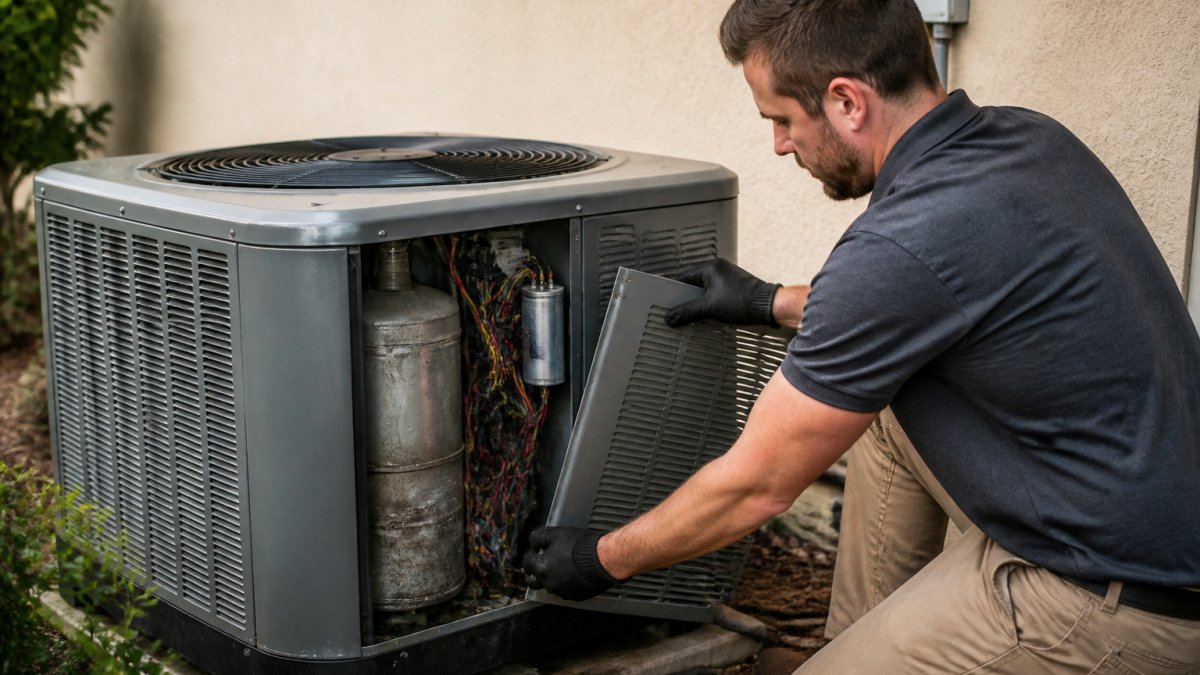
- Keep outdoor units clear of leaves and debris
- Check that vents and registers are unobstructed
- Confirm your thermostat settings match your routine
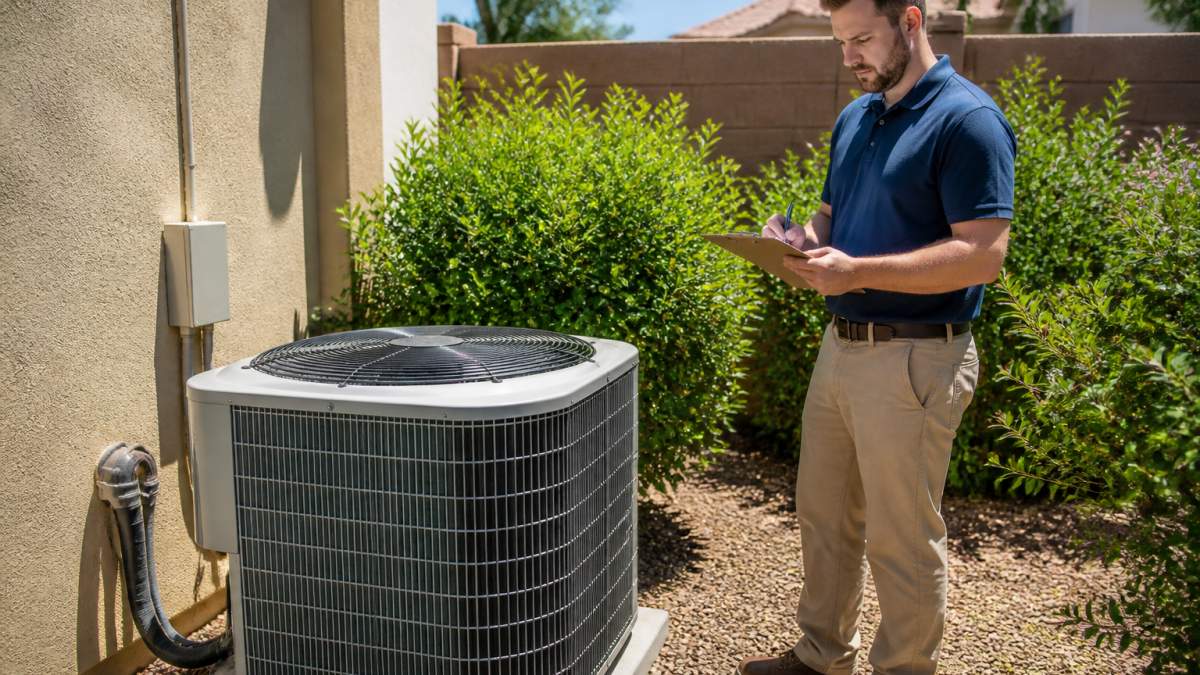
What a Professional Tune-Up Includes
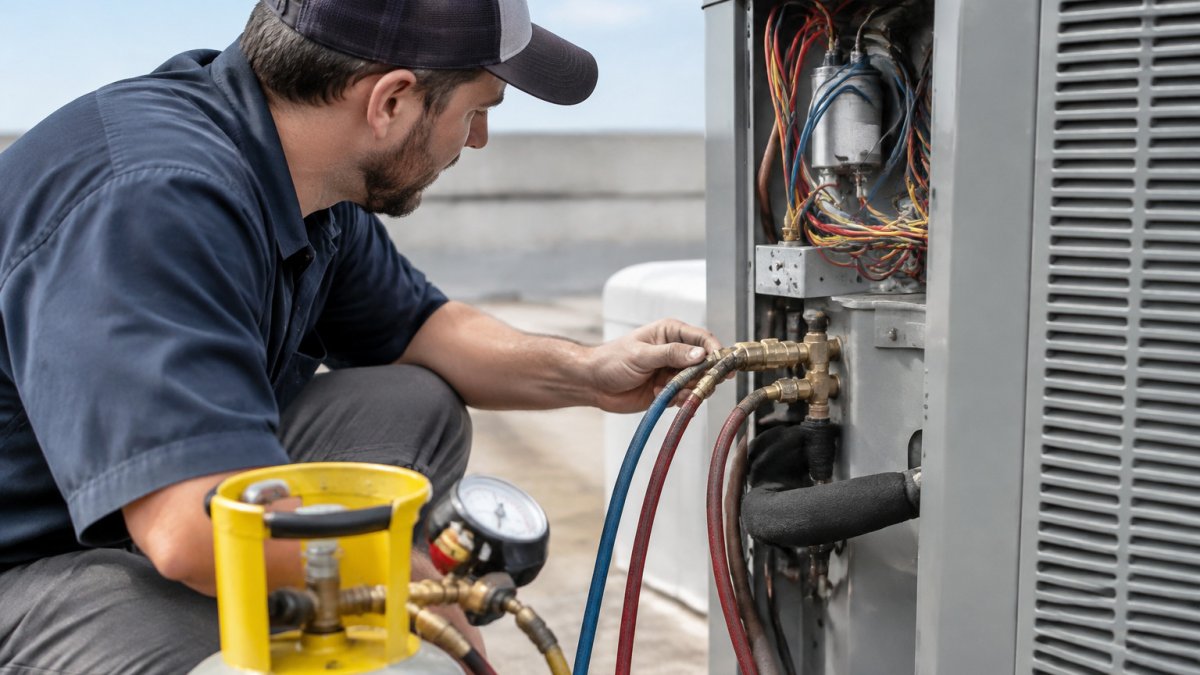
A professional tune-up goes well beyond a filter swap. A thorough visit typically covers:
- Cleaning evaporator and condenser coils
- Checking and topping refrigerant levels
- Tightening electrical connections
- Lubricating moving parts
- Testing thermostat calibration
- Inspecting ductwork for leaks and blockages
- Measuring airflow and temperature differential
HVAC Maintenance Cost and Return on Investment
Most homeowners want a number before they book. Here is the honest version: pricing depends on your system type, home size, and what the visit includes, so the only accurate figure comes from a quote. But you can still understand the shape of the math before you call.
What maintenance typically costs
A single-system residential tune-up generally falls in the range of a routine service call, think of it as a modest annual expense, not a major purchase. A maintenance plan that covers two visits per year (one for heating, one for cooling) usually costs less than booking those visits separately, and many plans include priority scheduling and discounts on repairs. Duct cleaning, if you add it, is priced separately and depends on the number of vents and the length of the runs.
Rather than anchor on a single number, ask any contractor for a written quote that itemizes:
- What the tune-up includes (coil cleaning, refrigerant check, electrical inspection, airflow measurement)
- Whether filters are included or billed separately
- Whether the plan covers both heating and cooling
- What the repair discount is, if any
- Whether emergency service is included or surcharged
The return comes in three places
**1. Department of Energy notes that heating and cooling account for the largest share of a typical home's energy use, which is why energy.gov guidance on home heating and cooling consistently points to maintenance as a first step for reducing consumption.
2. Fewer repair costs. Regular maintenance helps you avoid the two most expensive outcomes: premature equipment replacement and emergency repairs during peak season.
3. More years before replacement. A system that is cleaned, lubricated, and correctly charged experiences less stress on its compressor and motors. That translates into additional years of service before you face a full replacement, which is the single largest cost in the equation.
How to evaluate the trade-off
The math is not "maintenance cost versus zero." It is "maintenance cost versus the expected cost of neglect." Neglect shows up as higher energy bills, more frequent repairs, and a shorter replacement timeline. For most homeowners, the annual maintenance expense is a fraction of what a single major repair or an early replacement costs.
For homeowners weighing the trade-off, ENERGY STAR guidance on maintaining HVAC equipment frames maintenance as a way to preserve efficiency and extend equipment life.
What Happens If You Don't Service Your AC
Skipping maintenance does not save money. It defers a small cost and replaces it with larger ones.
Call (702) 707-4242 for a free estimate →
Here is what typically happens when an air conditioner goes unserviced:
- Filters clog, restricting airflow and straining the blower motor
- Dirty coils reduce efficiency, raising energy consumption
- Refrigerant leaks go undetected, forcing the compressor to overwork
- Small electrical issues escalate into component failures
- The system breaks down, often during the hottest week of the year
The pattern is predictable. Neglected systems fail earlier, cost more to repair, and deliver less consistent comfort in the meantime.
Longer Equipment Lifespan and Fewer Costly Repairs
Consistent maintenance is the single biggest factor in how long your equipment lasts. Wear and tear is unavoidable, but neglect accelerates it. A system that is cleaned, lubricated, and correctly charged experiences less stress on its compressor and motors.
Fewer breakdowns also mean fewer emergency service calls. Homeowners in our service area know that a mid-summer failure means an urgent call and a premium rate. Preventive maintenance replaces that scramble with a scheduled visit on your terms.
Better Indoor Air Quality and Consistent Home Comfort
Your HVAC system does more than control temperature. It filters and circulates the air your family breathes, which makes indoor air quality a maintenance issue as much as a comfort one.
When filters and ducts are dirty, that contamination recirculates through your home. Clean components mean better airflow, more even temperature control, and improved humidity regulation. Homes with allergy concerns often see the biggest difference from duct cleaning and filter discipline, though results vary by home.
At RTS Comfort Cooling & Heating, we handle duct cleaning and indoor air quality services alongside standard tune-ups, so airflow and filtration get checked in the same visit.
Conclusion: Protect Your HVAC System Year-Round
The benefits of regular HVAC maintenance for homeowners come down to control: lower energy bills, fewer costly repairs, longer equipment lifespan, and more consistent comfort. The homeowners who avoid emergency calls are usually the ones who scheduled routine service before anything went wrong.
RTS Comfort Cooling & Heating offers 24/7 emergency service, comprehensive maintenance, duct cleaning, attic insulation, and smart thermostat installation for homes across the Las Vegas area. Our team keeps your heating and cooling system running at its best, season after season.
Call (702) 707-4242 for a free estimate and get your system on a maintenance schedule today.
Frequently Asked Questions
Does HVAC need yearly maintenance?
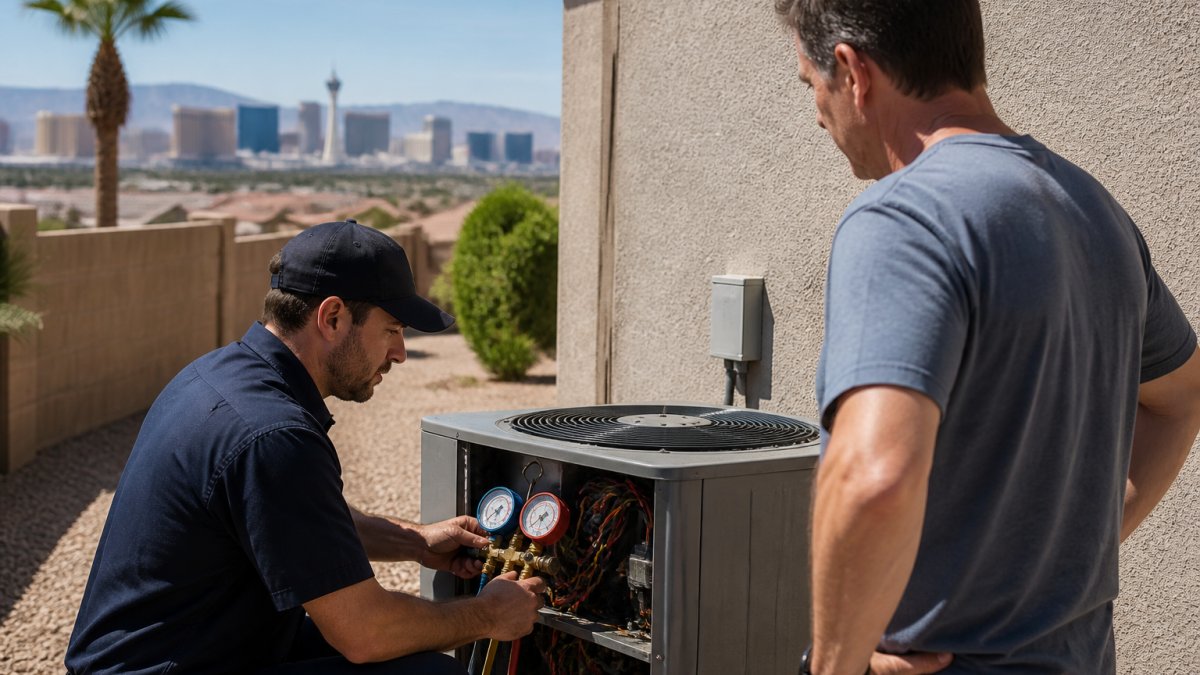
Yes. Manufacturers and HVAC professionals recommend servicing your heating and cooling system at least once a year. In hot climates like Las Vegas, twice a year is better: once in spring before cooling season and once in fall before heating season. Yearly HVAC maintenance keeps the system running efficiently, prevents breakdowns, and can extend equipment lifespan by years.
How often should homeowners schedule HVAC maintenance?
Most homeowners should schedule professional HVAC maintenance once per year. If you live in an area with extreme heat or heavy use, twice a year is recommended. The ideal timing is spring for the air conditioner and fall for the furnace or heat pump. Regular tune-ups keep the system efficient and catch small issues before they become costly repairs.
What happens if you don't service your AC?
Skipping AC maintenance leads to dirty filters, clogged coils, and worn electrical connections. The system works harder, uses more energy, and your utility bills rise. Over time, neglect causes frequent breakdowns, costly repairs, and premature replacement. In extreme heat, an unserviced AC may fail entirely when you need it most.
Can regular HVAC maintenance lower energy bills?
Yes. A well-maintained HVAC system runs more efficiently. Clean filters and coils improve airflow, and proper refrigerant levels reduce strain on the compressor. Homeowners typically see lower energy consumption and reduced utility bills after a professional tune-up. The savings add up month after month, especially during peak cooling season.
What does a professional HVAC maintenance visit include?
A professional tune-up includes inspecting and cleaning the air conditioner and furnace, checking refrigerant levels, tightening electrical connections, lubricating moving parts, testing the thermostat, and examining ductwork for leaks. Technicians also measure airflow and temperature differential to confirm the system is performing correctly. You receive a report on any issues found.
Does HVAC maintenance help a system last longer?
Yes. Regular maintenance reduces wear and tear on components like the compressor, fan motor, and heat exchanger. When these parts are cleaned, lubricated, and adjusted, they last longer. A well-maintained system can last 15 years or more, while a neglected one may need premature replacement after 8 to 10 years. The cost of maintenance is far less than a new system.