 ultimate-guide
How to Improve Indoor Air Quality: 2026 Guide
Table of Contents
- Signs of Poor Indoor Air Quality You Shouldn't Ignore
- How to Improve Indoor Air Quality: Source Control First
- HVAC Maintenance for Air Quality: What Las Vegas Homeowners Need to Know
- Ventilation Strategies and Humidity Control
- Best Air Purifiers for Home Use: What to Look For
- Natural Ways to Improve Air Quality Indoors
- Smart Home Integration and Budget-Friendly Air Quality Testing
- Conclusion
Last Updated: August 10, 2026
Poor indoor air quality is one of the most overlooked health hazards in American homes. According to the EPA's indoor air quality guidance, indoor air can be two to five times more polluted than outdoor air. Most people spend the majority of their time inside, making this a critical health concern. At RTS Comfort Cooling & Heating, we work with Las Vegas homeowners who are surprised to learn their HVAC system plays a central role in the air their families breathe.
Signs of Poor Indoor Air Quality You Shouldn't Ignore
Indoor air quality is the condition of the air inside your home as it relates to occupant health and comfort, measured by pollutants, particulate matter, humidity levels, and ventilation adequacy. Your home and body give clear warning signs before problems become serious.
Physical Symptoms That Point to Airborne Irritants
If symptoms improve when you leave the house and return when you come back, airborne irritants are likely the cause. Common physical symptoms include persistent coughing, sneezing, throat irritation, watery or itchy eyes, headaches that ease outdoors, fatigue, difficulty concentrating, and worsening asthma or allergy symptoms despite medication. These reactions are triggered by mold spores, pet dander, volatile organic compounds, or elevated particulate matter. The American Lung Association's air quality health guidance notes that long-term exposure to indoor pollutants is linked to serious respiratory health issues.
Visual and Odor Clues Inside Your Home
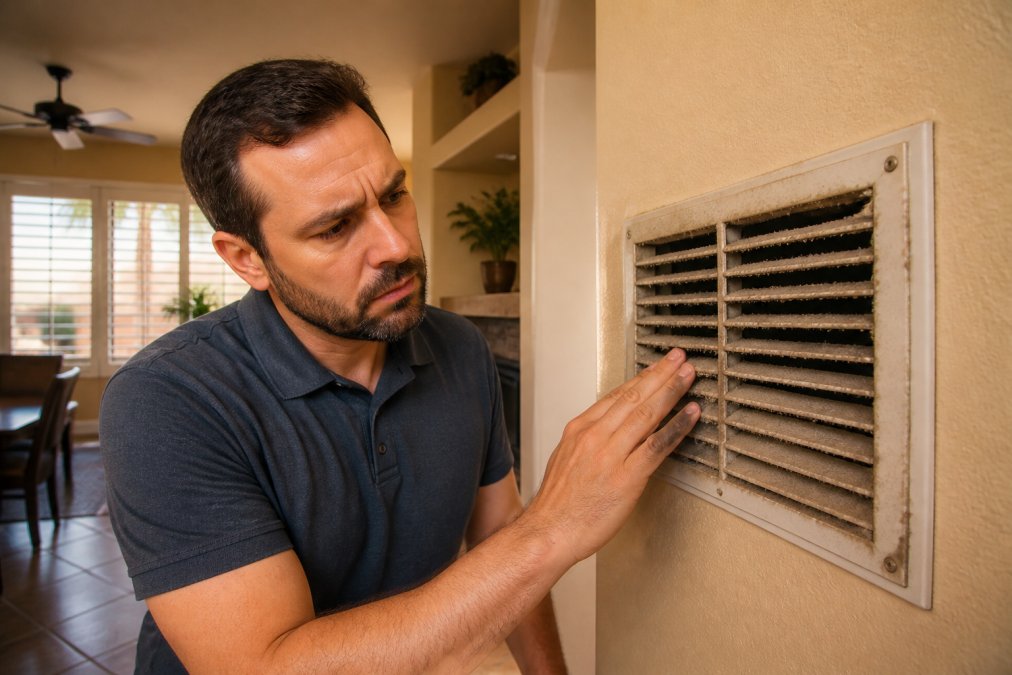
Musty or stale odors near HVAC vents typically indicate mold growth or stagnant air. Chemical smells after new furniture arrives point to off-gassing of volatile organic compounds. Watch for visible dust buildup on vents, dark staining around vent openings, condensation on windows, and visible mold growth. If your home shows more than two of these signs simultaneously, the air quality problem is systemic rather than isolated.
How to Improve Indoor Air Quality: Source Control First
The most effective strategy for improving indoor air quality is eliminating pollutant sources before trying to filter or dilute them. Source control is the foundation; everything else is support.
Volatile Organic Compounds and Off-Gassing
Volatile organic compounds (VOCs) are gases emitted from paints, cleaning supplies, pesticides, building materials, and furnishings. To reduce VOC exposure:
- Choose low-VOC or zero-VOC paints, adhesives, and finishes when renovating
- Air out new furniture, rugs, and mattresses in a garage or outdoors before bringing them inside
- Store chemical products in sealed containers away from living spaces
- Increase ventilation after painting or applying finishes
- Replace older pressed-wood furniture, which can off-gas formaldehyde for years
The Consumer Product Safety Commission's VOC and household chemical guidance provides a detailed list of common household products that contribute to indoor VOC levels.
Carbon Monoxide, Mold Spores, and Pet Dander
Carbon monoxide is produced by fuel-burning appliances including furnaces, water heaters, and gas ranges. Every home with a fuel-burning appliance should have a working carbon monoxide detector on each occupied floor, tested monthly and replaced according to manufacturer schedules.
Mold spores thrive wherever moisture accumulates. Controlling relative humidity below 50% is the single most effective mold prevention strategy. Fix leaks promptly and use exhaust fans in bathrooms and kitchens.
Pet dander embeds in carpets, upholstery, and HVAC ductwork. Reduce dander exposure through regular grooming outdoors, vacuuming with a HEPA-filter vacuum twice weekly, washing pet bedding weekly in hot water, and keeping pets out of bedrooms.
| Pollutant Source | Primary Risk | Most Effective Fix |
|---|---|---|
| VOCs from products | Respiratory irritation, headaches | Switch to low-VOC alternatives |
| Carbon monoxide | Poisoning, fatality | Install CO detectors; service appliances annually |
| Mold spores | Allergies, respiratory illness | Control humidity below 50%; fix leaks |
| Pet dander | Allergic reactions, asthma | HEPA vacuuming; restrict pet access to bedrooms |
| Particulate matter | Lung irritation | Air purification; regular filter changes |
HVAC Maintenance for Air Quality: What Las Vegas Homeowners Need to Know
Las Vegas presents a specific challenge for indoor air quality. The combination of extreme heat, desert dust, and near-constant AC use means HVAC systems work harder and accumulate particulate matter faster than systems in milder climates. Neglecting HVAC maintenance here actively degrades the air your family breathes.
Filter Replacement and HEPA Filtration
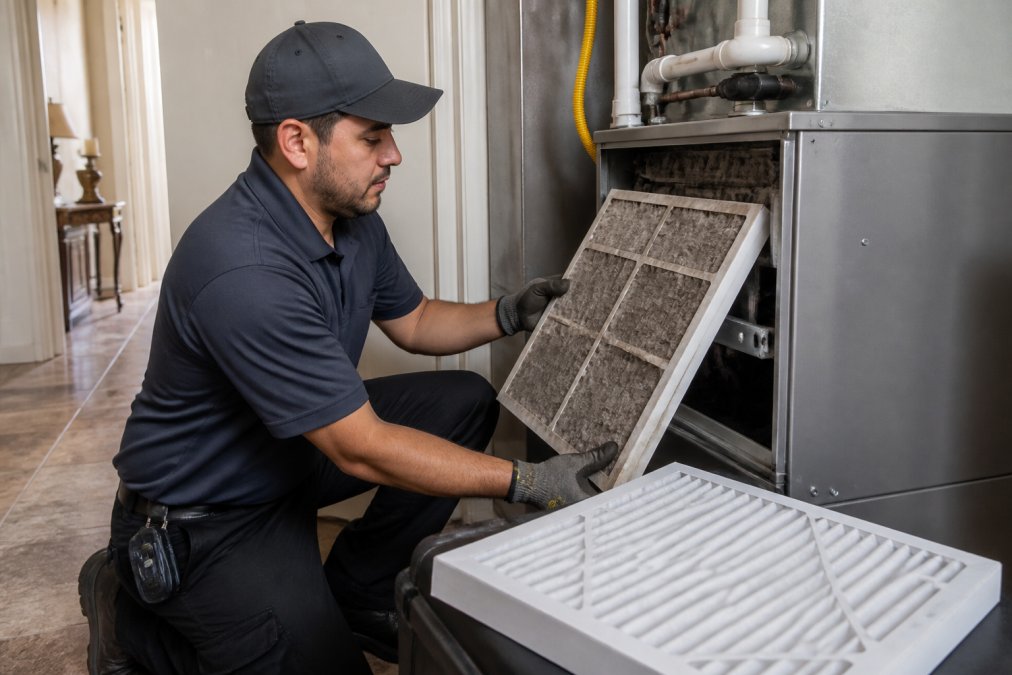
Air filters are the first line of defense against airborne contaminants. A clogged or low-quality filter restricts airflow and forces your system to work harder, increasing wear and energy consumption.
For Las Vegas homes, standard 1-inch filters should be replaced every 30 to 45 days during peak cooling season. Thicker 4-inch media filters can last up to 6 months but still need regular inspection. The MERV rating (Minimum Efficiency Reporting Value) indicates filtration efficiency: higher MERV ratings capture smaller particles, including mold spores, dander, and fine particulate matter.
HEPA filtration (High-Efficiency Particulate Air) captures particles as small as 0.3 microns with very high efficiency. True HEPA filters are the gold standard for allergen reduction and are particularly valuable for households with asthma or allergy sufferers.
Duct Cleaning and Air Exchange Rate
Ductwork is the distribution network for everything your HVAC system circulates, including dust, dander, mold spores, and other airborne contaminants. Over time, ducts accumulate debris that gets redistributed throughout the home.
The air exchange rate refers to how often the air volume in your home is replaced with fresh air. Low air exchange rates allow pollutants to concentrate. Signs your ducts may need professional cleaning include visible dust or debris at supply registers, musty odor when the system runs, uneven airflow between rooms, and recent renovation work that generated significant dust.
RTS Comfort Cooling & Heating provides professional duct cleaning services for Las Vegas homeowners, including inspection and cleaning of the full duct system to restore proper airflow and reduce airborne contaminants.
Ventilation Strategies and Humidity Control
Ventilation is the process of replacing stale indoor air with fresh outdoor air to dilute indoor pollutants. Most homes rely on a combination of natural ventilation (windows and doors) and mechanical ventilation (exhaust fans, HVAC systems). In Las Vegas, natural ventilation is only practical during cooler months.
Practical ventilation strategies for Las Vegas homes:
- Run bathroom exhaust fans during and for 20 minutes after showers
- Use kitchen range hoods vented to the exterior when cooking
- Consider an energy recovery ventilator (ERV) if your home feels consistently stale
- Open windows during early morning hours in spring and fall to flush indoor pollutants
Humidity control is equally important. The ideal indoor relative humidity is between 30% and 50%. Las Vegas's dry desert climate typically keeps humidity low, but bathroom steam, cooking, and breathing can create localized moisture problems. A whole-home humidifier or dehumidifier integrated with your HVAC system provides the most consistent control.
Call (702) 707-4242 for a free estimate →
Best Air Purifiers for Home Use: What to Look For
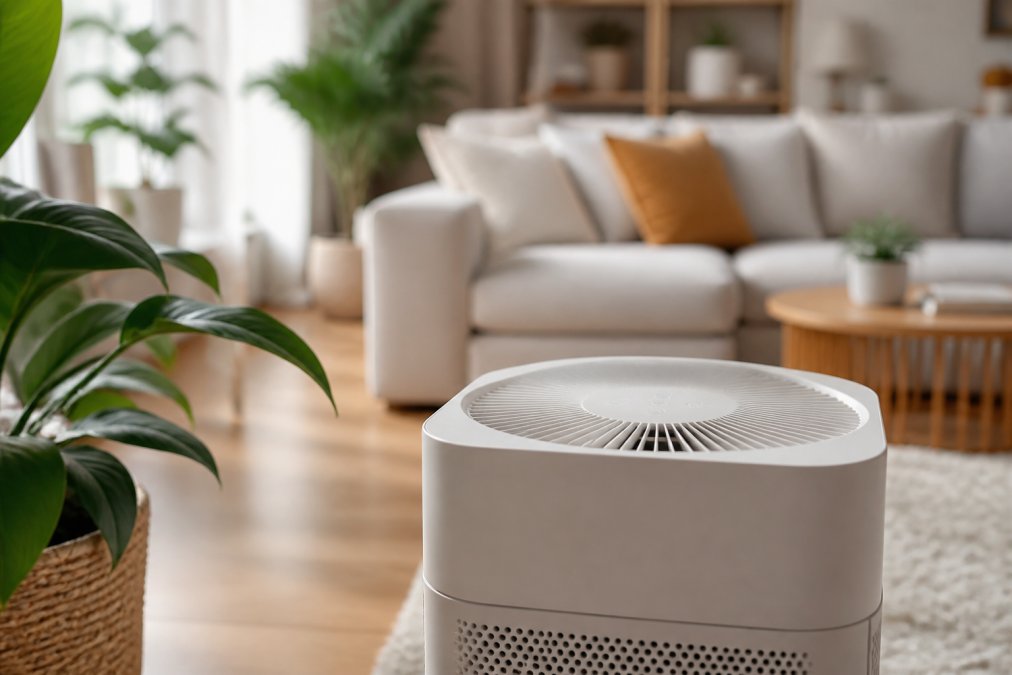
The best air purifiers combine true HEPA filtration with an activated carbon stage to address both particulate matter and gaseous pollutants like VOCs.
When evaluating air purifiers, focus on these specifications:
- CADR rating (Clean Air Delivery Rate): Higher numbers mean faster air cleaning. Match the CADR to your room size.
- True HEPA vs. "HEPA-type": Only true HEPA filters meet the standard for capturing particles at 0.3 microns.
- Activated carbon filter: Essential for capturing VOCs, odors, and chemical off-gassing.
- Noise level: Units that run loudly get turned off. Look for a low-noise setting for bedroom use.
- Filter replacement cost: Factor ongoing filter costs into your decision.
For pet owners, look for purifiers with a pre-filter stage to capture larger hair and dander particles before they clog the HEPA filter.
Natural Ways to Improve Air Quality Indoors
Natural methods complement mechanical solutions but don't replace them. The most effective natural approaches target source reduction and air circulation.
Houseplants absorb some VOCs, but the effect in a typical home is modest. Plants are useful for psychological wellbeing and adding humidity to dry Las Vegas air. Spider plants, peace lilies, and snake plants are among the most studied for air quality benefits.
Other natural strategies that make a measurable difference:
- Beeswax candles instead of paraffin, which releases VOCs when burned
- Natural fiber rugs and furnishings to reduce off-gassing from synthetic materials
- Activated charcoal bags in closets and small spaces to absorb odors and some VOCs
- Eliminating smoking indoors entirely, as tobacco smoke is one of the most concentrated sources of indoor airborne irritants
- Removing shoes at the door to prevent tracking in pesticides, pollen, and outdoor particulate matter
The NIH National Institute of Environmental Health Sciences guidance on indoor air notes that source reduction consistently outperforms air cleaning as a primary strategy.
Smart Home Integration and Budget-Friendly Air Quality Testing
Smart home integration has made continuous air quality monitoring genuinely accessible for everyday homeowners, changing how you respond to indoor air problems.
Budget-Friendly DIY Testing
Consumer-grade air quality monitors now measure particulate matter, VOCs, CO2, relative humidity, and temperature in real time. Many connect to smartphone apps that track trends over days and weeks.
A practical testing approach for Las Vegas homeowners:
- Place a monitor in the main living area for one week and note baseline readings
- Run your HVAC system normally and observe how readings change when the system cycles
- Test after cooking, cleaning, or using chemical products to identify your biggest VOC sources
- Check readings before and after filter replacement to confirm the improvement
Smart Home Integration
Smart thermostats do more than manage temperature. When integrated with compatible HVAC systems, they can adjust air exchange rates based on indoor air quality readings, schedule ventilation during optimal outdoor conditions, and send alerts when filter replacement is due.
RTS Comfort Cooling & Heating installs smart thermostats for Las Vegas homeowners as part of a comprehensive approach to indoor air quality. For those starting with a limited budget, the priority order is straightforward:
| Step | Action | Estimated Frequency |
|---|---|---|
| 1 | Replace HVAC filter | Every 30-45 days in Las Vegas |
| 2 | Test with a consumer air monitor | One-time setup, ongoing monitoring |
| 3 | Add a true HEPA air purifier to main living area | One-time purchase |
| 4 | Schedule professional duct cleaning | Every 3-5 years, or after renovation |
| 5 | Install smart thermostat with air quality integration | One-time professional installation |
The biggest mistake homeowners make is investing in expensive air purifiers while neglecting dirty ducts and clogged HVAC filters. Fix the foundation first.
Poor indoor air quality in Las Vegas homes is a real and solvable problem, but it requires addressing the right things in the right order. Source control, proper HVAC maintenance, and adequate ventilation form the foundation. RTS Comfort Cooling & Heating offers duct cleaning, air quality assessments, smart thermostat installation, and comprehensive HVAC services for Las Vegas homeowners. Call (702) 707-4242 for a free estimate and let our team assess what your home actually needs.
Frequently Asked Questions
What are the symptoms of poor air quality in a house?
Common symptoms include persistent sneezing, coughing, watery eyes, headaches, and fatigue that improve when you leave home. In more serious cases, residents report dizziness or worsened asthma. These reactions are often triggered by airborne irritants like mold spores, pet dander, volatile organic compounds, or particulate matter circulating through an unmaintained HVAC system. If multiple household members share these symptoms, indoor air quality is likely the cause.
What causes poor indoor air quality?
Poor indoor air quality typically stems from multiple pollutant sources: off-gassing from furniture and paints, mold growth from excess humidity, pet dander, dust buildup in ductwork, and carbon monoxide from combustion appliances. In Las Vegas, desert dust and extreme heat push residents to keep windows shut, reducing natural air exchange and allowing indoor pollutants to concentrate. Infrequent HVAC filter changes and dirty ducts make the problem worse over time.
Is it worth buying an air purifier for my home?
For most homeowners, yes. A quality air purifier with true HEPA filtration captures airborne particles as small as 0.3 microns, including dust, pollen, mold spores, and pet dander. The benefit is greatest in bedrooms and main living areas. That said, an air purifier works best alongside proper ventilation and regular HVAC maintenance, it filters what's already in the air but won't fix the source of contamination on its own.
How do I naturally purify the air in my home?
Natural ways to improve air quality include increasing ventilation by opening windows during cooler Las Vegas mornings, using exhaust fans in bathrooms and kitchens, keeping relative humidity between 30% and 50% to discourage mold growth, and choosing low-VOC paints and cleaning products. Certain houseplants have shown modest air-filtering properties, though their impact on pollutant levels in a full-sized room is limited compared to mechanical ventilation or air purification.
How often should HVAC filters be changed to maintain good indoor air quality?
Most manufacturers recommend changing standard filters every 1 to 3 months. In Las Vegas, where desert dust and high HVAC usage are common, monthly changes are often more appropriate. Homes with pets or allergy sufferers benefit from higher-efficiency filters changed on the shorter end of that range. A clogged filter reduces filtration efficiency and forces the system to work harder, which raises energy bills and worsens airborne contaminant levels.
Can duct cleaning actually help with allergies?
Dirty ducts can harbor dust, mold spores, and pet dander that get pushed into living spaces every time the HVAC system runs. Professional duct cleaning removes that buildup, which can reduce allergen levels circulating through your home. It won't eliminate allergies entirely, but for households where symptoms are tied to HVAC operation, worsening when the system kicks on, duct cleaning combined with a quality filter upgrade is a practical first step.
This article was written using GrandRanker