 ultimate-guide
How to Save on Energy Bills: A 2026 Guide
Table of Contents
- What Actually Drives Your Energy Bill Up
- How to Save on Energy Bills With Your HVAC System
- Insulation, Weatherization, and Reducing Air Leakage
- Lighting, Appliances, and Water Heating
- Home Energy Audit Checklist: Find the Waste First
- Energy Efficient Home Upgrades With Real ROI
- How to Save on Energy Bills Through Utility Bill Assistance Programs
- Conclusion
Last Updated: August 11, 2026
Your energy bill is one of the most controllable household expenses, yet most homeowners treat it as fixed. The RTS Comfort Cooling & Heating team works with Las Vegas-area homeowners who are shocked by utility bills caused by small inefficiencies compounding across heating, cooling, lighting, and standby power. This guide breaks down exactly how to save on energy bills, from quick behavioral fixes to upgrades with measurable return on investment.
What Actually Drives Your Energy Bill Up
Understanding where kilowatt-hours go is the first step toward meaningful savings.
Heating and Cooling: The Biggest Drain
Heating and cooling account for the largest share of home energy consumption for most American households, according to U.S. Energy Information Administration residential energy data. The core problem is thermal envelope failure: conditioned air escapes through gaps, poorly insulated walls, and leaky ductwork, forcing your HVAC system to run longer cycles to compensate. Addressing the root cause rather than just running the AC longer is where real savings begin.
Standby Power and Vampire Appliances
Vampire appliances are devices that draw wattage continuously even when off. Televisions, gaming consoles, phone chargers, microwaves with digital displays, and cable boxes all pull standby power around the clock. Plugging these devices into a smart power strip, which cuts power completely when devices aren't in use, is one of the cheapest ways to reduce standby power waste. According to Department of Energy guidance on standby power, standby power can account for a meaningful portion of a home's total electricity use.
How to Save on Energy Bills With Your HVAC System
The HVAC system is where most homeowners have the greatest opportunity to save on energy bills.
Smart Thermostats and Programmable Scheduling
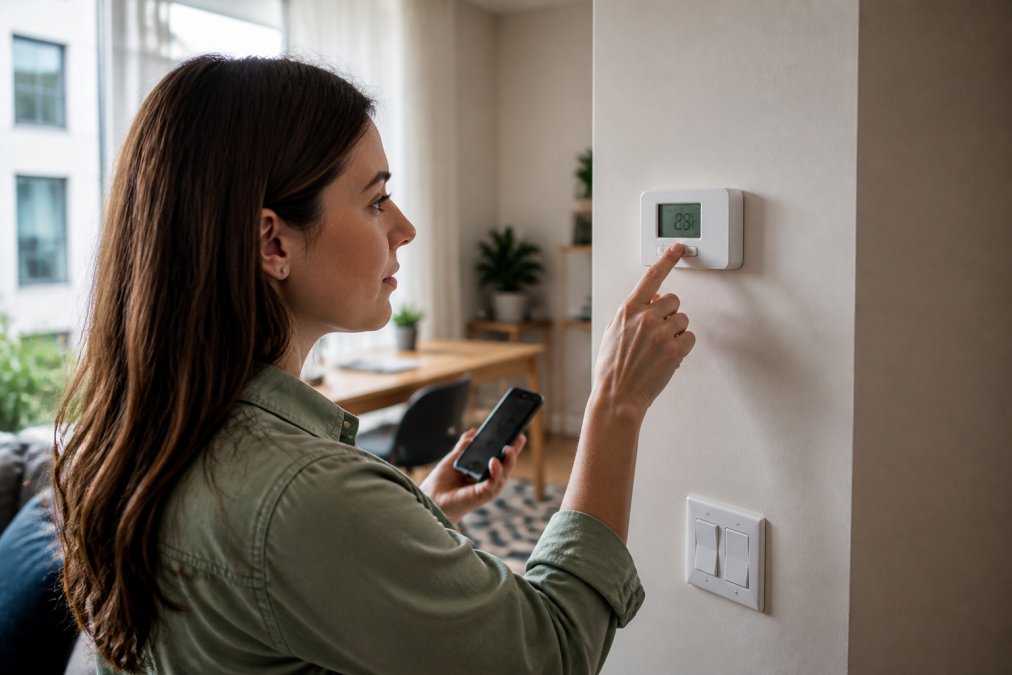
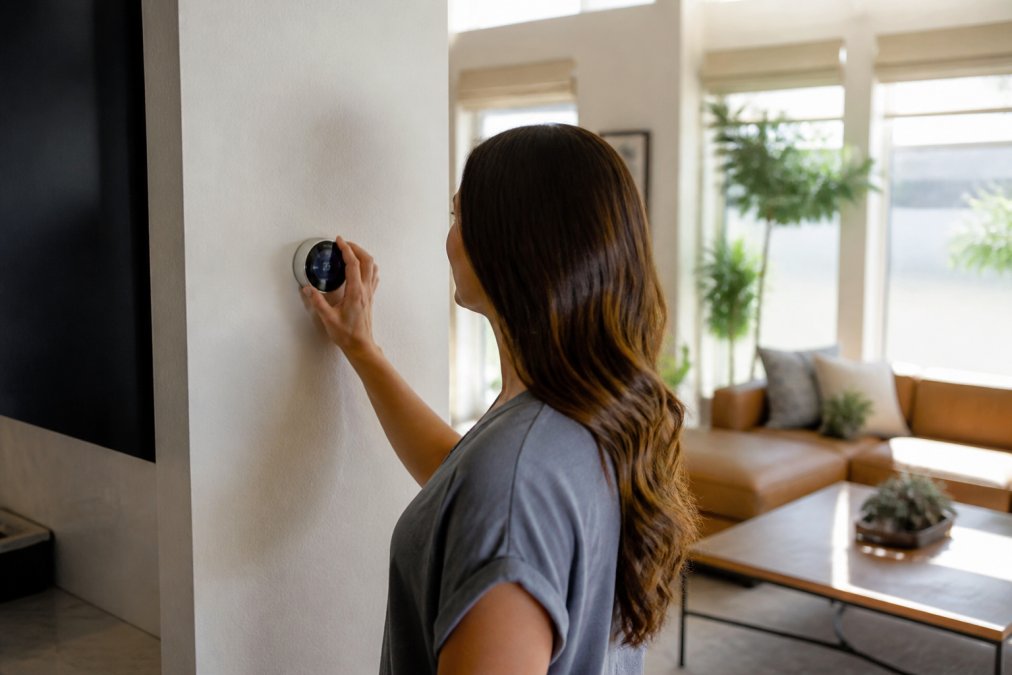
A programmable thermostat is one of the highest-ROI upgrades available. Stop conditioning a home to comfortable temperatures when nobody is there. Setting the thermostat to ease off during work hours and pre-cool or pre-heat before occupants return can reduce HVAC runtime substantially. Smart thermostats learn your schedule, detect occupancy, and adjust based on weather forecasts. Many utility companies offer rebates on smart thermostat purchases. Professional installation matters, particularly in older homes where incorrect wiring can cause malfunction.
HVAC Maintenance and Filter Replacement
A clogged air filter forces your system to work harder, increasing energy consumption and accelerating wear. Replace filters every one to three months depending on filter type and household conditions. Annual professional HVAC maintenance checks refrigerant levels, cleans coils, inspects ductwork for leaks, and verifies the system operates at rated efficiency. Skipping this maintenance costs more to operate every day the system runs.
Insulation, Weatherization, and Reducing Air Leakage
Most guides underweight this category, yet it's often where the biggest savings hide.
Weather Stripping and Draft Reduction
Air leakage is the silent efficiency killer. Gaps around doors, windows, electrical outlets, and pipe penetrations allow conditioned air to escape and outdoor air to infiltrate. Weather stripping around doors and caulking around window frames are low-cost fixes homeowners can handle without professional help, with payback measured in weeks. To find leaks, hold a lit incense stick near window frames and door edges on a windy day. Smoke movement indicates air infiltration.
Attic Insulation and the Thermal Envelope
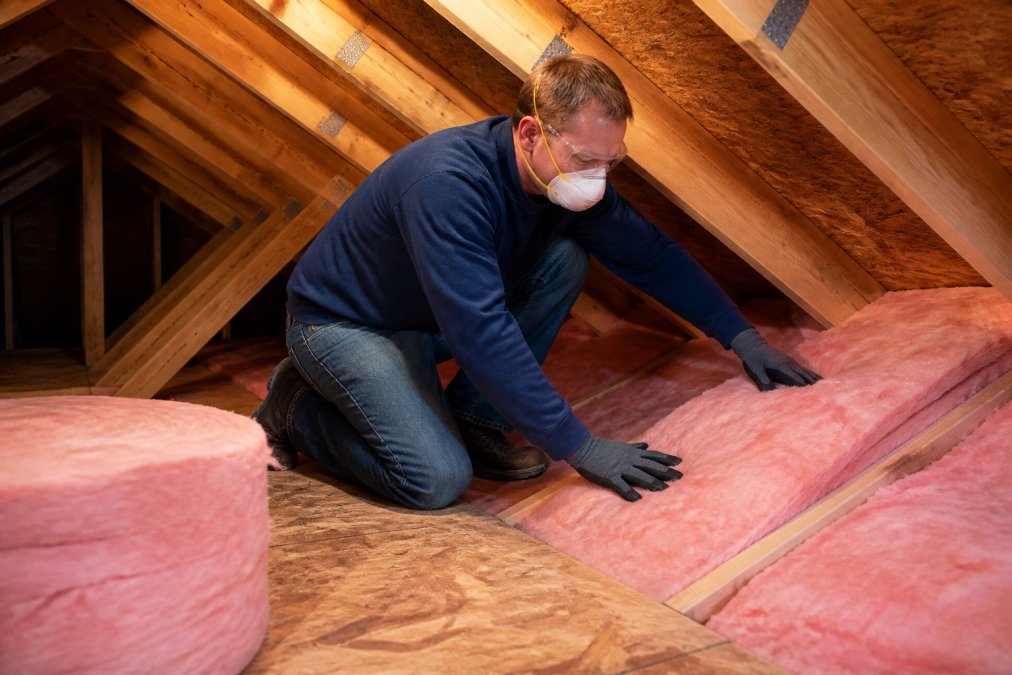
The thermal envelope is the barrier between your conditioned living space and the outdoors. Attic insulation is its most critical component. Heat rises, and in summer, an under-insulated attic becomes a furnace that radiates heat downward into living spaces, forcing the AC to run constantly. Adding attic insulation to meet current building code recommendations is one of the highest-return home performance investments available. Many utility companies offer rebates for insulation upgrades. The ENERGY STAR program guidelines for home insulation provides region-specific recommendations based on climate zone.
Lighting, Appliances, and Water Heating
LED Lighting and Dimmer Switches
Switching from incandescent or halogen bulbs to LED lighting reduces lighting energy consumption dramatically. LEDs use a fraction of the wattage and last significantly longer. Pairing LEDs with dimmer switches adds another layer of control. Running lights at 70% brightness instead of 100% reduces energy use and extends bulb life. Note: not all LED bulbs are dimmable. Check packaging before purchasing for dimmer circuits.
| Upgrade | Estimated Payback | Renter-Friendly | Requires Professional |
|---|---|---|---|
| LED bulb replacement | Weeks to months | Yes | No |
| Smart power strip | Weeks | Yes | No |
| Programmable thermostat | 1-2 years | Varies | Recommended |
| Weather stripping | Weeks to months | Yes (removable) | No |
| Attic insulation | 2-5 years | No | Yes |
| Smart thermostat | 1-3 years | Varies | Recommended |
Water Heater Temperature and Laundry Best Practices
Many water heaters are factory-set higher than necessary. The Department of Energy recommends 120°F for most households, reducing standby heat loss without sacrificing comfort. Switching to cold water washing is one of the easiest behavioral changes with immediate impact, most wash cycle energy goes toward heating water, not running the machine. Modern detergents work effectively in cold water. Running full loads in both dishwasher and washing machine, and using the air-dry setting on the dishwasher, further reduces energy consumption per cycle.
Home Energy Audit Checklist: Find the Waste First
A home energy audit systematically identifies where your home loses energy.
DIY Home Energy Audit Checklist:
- Check all exterior door seals for visible gaps or daylight
- Test windows for air movement on windy days using the incense method
- Inspect attic insulation depth (aim for at least R-38 in hot climates)
- Identify all vampire appliances on standby continuously
- Check water heater temperature setting (target 120°F)
- Review your utility bill for peak demand charges and usage patterns
- Inspect HVAC air filter condition
- Check ductwork in unconditioned spaces for visible gaps or disconnections
- Note any rooms consistently harder to heat or cool than others
- Identify lighting fixtures still using incandescent or halogen bulbs
A professional energy audit uses blower door testing, thermal imaging, and duct leakage diagnostics. Many utility companies offer subsidized or free professional audits to residential customers.
Call (702) 707-4242 for a free estimate →
Energy Efficient Home Upgrades With Real ROI
The most effective strategy is to sequence investments by payback period, starting with the lowest-cost, fastest-returning changes.
ROI Framework for Energy Investments:
- Behavioral changes first (no cost): Cold water washing, full loads, thermostat scheduling, unplugging vampire appliances. Immediate savings.
- Low-cost weatherization (under $200): Weather stripping, door sweeps, outlet gaskets, caulking. Payback within one heating or cooling season.
- Lighting and power management (under $500): LED conversion, smart power strips, dimmer switches. Payback within months.
- Thermostat upgrades (varies): Smart or programmable thermostats. Check for utility rebates.
- Insulation and air sealing (larger investment): Attic insulation, duct sealing. Payback measured in years.
- HVAC system upgrades (largest investment): High-efficiency equipment. Evaluate when existing equipment is aging or failing.
Renters-Specific Energy Hacks That Require No Permission
Renters face barriers to major improvements, but many high-impact changes don't require permission.
Renter-approved energy hacks:
- Use draft snakes or door draft stoppers (removable, no installation required)
- Apply removable window insulation film for winter months
- Use thick curtains or thermal blinds to reduce heat gain in summer and heat loss in winter
- Replace all bulbs with LEDs (take them when you move)
- Use smart power strips to eliminate standby power from entertainment systems
- Run a portable fan strategically to reduce AC reliance during mild weather
- Wash all laundry in cold water
- Request a utility bill history from your landlord before signing a lease
Reframe energy saving: you pay the bill, not the landlord. Every kilowatt-hour you save stays in your wallet.
How to Save on Energy Bills Through Utility Bill Assistance Programs
Utility bill assistance programs are underused resources available to homeowners and renters alike.
Types of programs to look for:
- LIHEAP (Low Income Home Energy Assistance Program): A federally funded program administered at the state level that helps eligible households with heating and cooling costs. Check eligibility through your state's social services agency.
- Utility company rebate programs: Most major utilities offer rebates for energy-efficient appliances, smart thermostats, LED lighting, and insulation upgrades.
- Weatherization Assistance Program (WAP): A federal program providing free weatherization services to income-eligible households, including insulation, air sealing, and HVAC tune-ups.
- State and local programs: Many states offer additional incentives beyond federal programs. Check your state energy office website.
The LIHEAP program information and eligibility is the official federal resource for low-income energy assistance. Your utility company's website is the fastest starting point for rebates specific to your service area. Understanding your utility bill components, energy charges, delivery charges, and peak demand charges, tells you where to focus conservation efforts. Shifting high-energy tasks like running the dishwasher or doing laundry to off-peak hours can reduce peak demand charges meaningfully.
Energy Saving Quick-Reference Summary
| Category | Quick Win | Bigger Investment |
|---|---|---|
| Heating and cooling | Thermostat scheduling | Smart thermostat + annual HVAC tune-up |
| Standby power | Smart power strips | Whole-home energy monitoring |
| Lighting | LED bulb swap | Dimmer switches + occupancy sensors |
| Water heating | Set to 120°F | Heat pump water heater |
| Air leakage | Weather stripping + caulking | Professional air sealing |
| Insulation | Attic insulation top-up | Full home insulation assessment |
| Assistance programs | Utility rebates | LIHEAP or WAP enrollment |
Reducing your energy bills requires working through the list systematically. The biggest gains come from addressing heating and cooling efficiency first, then eliminating standby power waste, then weatherizing the building envelope. If you're ready to tackle the HVAC side with professional help, RTS Comfort Cooling & Heating offers smart thermostat installation, attic insulation services, and comprehensive HVAC maintenance that directly addresses the largest sources of energy waste in your home. Call (702) 707-4242 for a free estimate and find out exactly where your system is losing efficiency.
Frequently Asked Questions
What runs up your electric bill the most?
Heating and cooling account for roughly half of a typical household's energy consumption, making your HVAC system the single largest driver of high utility bills. Water heating, large appliances like refrigerators and dryers, and standby power from electronics all add up behind it. Addressing your HVAC system first, through proper maintenance, smart thermostat scheduling, and attic insulation, delivers the biggest reduction in kilowatt-hour usage before you tackle anything else.
How can I identify energy vampires in my household?
Vampire appliances draw standby power even when switched off. Common culprits include cable boxes, gaming consoles, older televisions, phone chargers left plugged in, and desktop computers in sleep mode. Plug a smart power strip or an inexpensive watt meter into any outlet to measure wattage in real time. Devices pulling more than 1-2 watts at rest are worth unplugging or putting on a switched power strip. Eliminating standby power across a home can shave a noticeable amount off your monthly utility bill.
Does adjusting the thermostat really make a significant impact on utility costs?
Yes. Setting your thermostat back 7-10 degrees for 8 hours a day, during work hours or overnight, can reduce heating and cooling costs meaningfully over a full year. A programmable thermostat automates this so you never forget. Smart thermostats go further by learning your schedule and adjusting based on occupancy. For homes in hot climates where air conditioning runs heavily, consistent thermostat management is one of the fastest ways to save on energy bills without any physical upgrades.
Are government tax credits available for energy-efficient home upgrades?
Yes. The Inflation Reduction Act extended and expanded federal tax credits for energy efficient home upgrades. Homeowners can claim credits for qualifying insulation, heat pumps, smart thermostats, and other improvements through the Energy Efficient Home Improvement Credit (25C). Credits can cover a percentage of costs up to annual caps. Utility rebates from your local provider may stack on top of federal credits. Always check IRS guidance and your utility's rebate portal for current eligibility rules, as amounts and qualifying products change annually.
What is the difference between peak and off-peak energy usage?
Utility companies charge higher rates during peak demand hours, typically late afternoon through early evening on weekdays, when the grid is under the most stress. Off-peak hours, usually overnight and early morning, carry lower rates. Running your dishwasher, washing machine, or dryer during off-peak windows, a practice called load shifting, can reduce what you pay per kilowatt-hour. Some utilities offer time-of-use rate plans that make these savings more substantial. Check your utility bill or provider's website to see if a time-of-use plan is available in your area.
What are the most effective ways to improve home insulation for energy savings?
Attic insulation delivers the highest return because heat rises and escapes through the roof in winter, while radiant heat penetrates through an under-insulated attic in summer. After the attic, focus on sealing air leakage around windows, doors, and electrical outlets with weather stripping and caulk. Wall insulation is harder to retrofit but matters in older homes. A professional energy audit can pinpoint exactly where your thermal envelope is failing so you address the gaps that will save on energy bills most, rather than guessing.
This article was written using GrandRanker