 ultimate-guide
Professional AC Installation Service: 2026 Guide
Table of Contents
- What a Professional AC Installation Service Actually Includes
- AC Unit Sizing Guide for Homes: Getting the BTUs Right
- Average Cost of AC Replacement: What Shapes Your Quote
- How to Choose an HVAC Contractor You Can Actually Trust
- Desert Climate Challenges and AC Installation Timeline Expectations
- DIY vs. Professional AC Installation: The Real Risks
- Signs You Need a New AC Installation Service, Not Just a Repair
- Conclusion
Last Updated: August 12, 2026
What a Professional AC Installation Service Actually Includes
A professional AC installation service is far more than swapping out one unit for another. The difference between a system that runs efficiently for 15 years and one that fails in three often comes down to what happened on installation day.
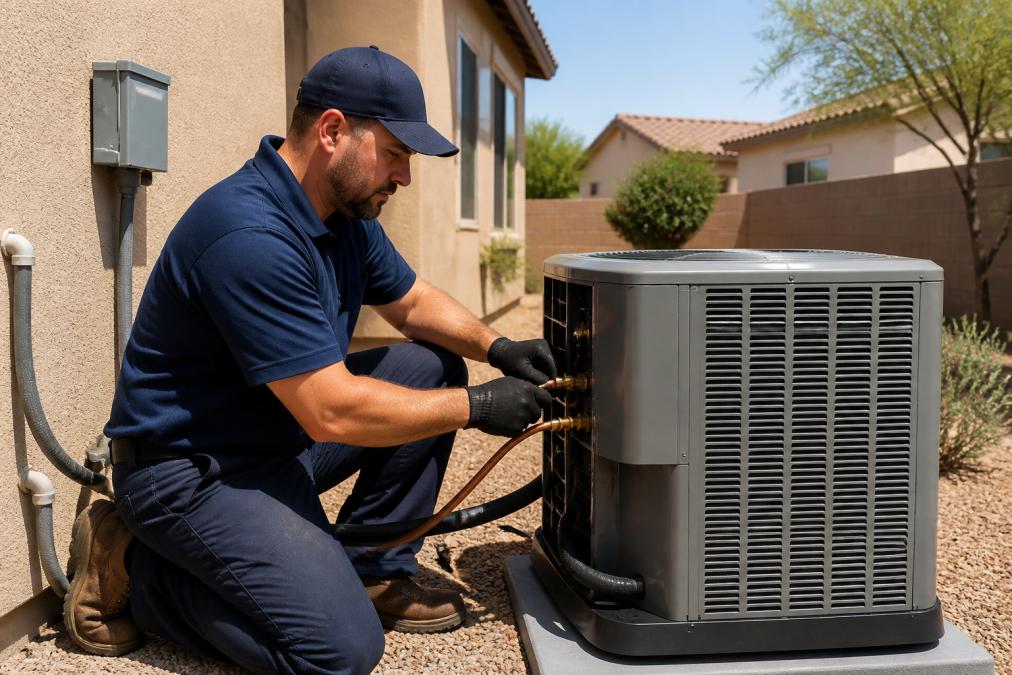
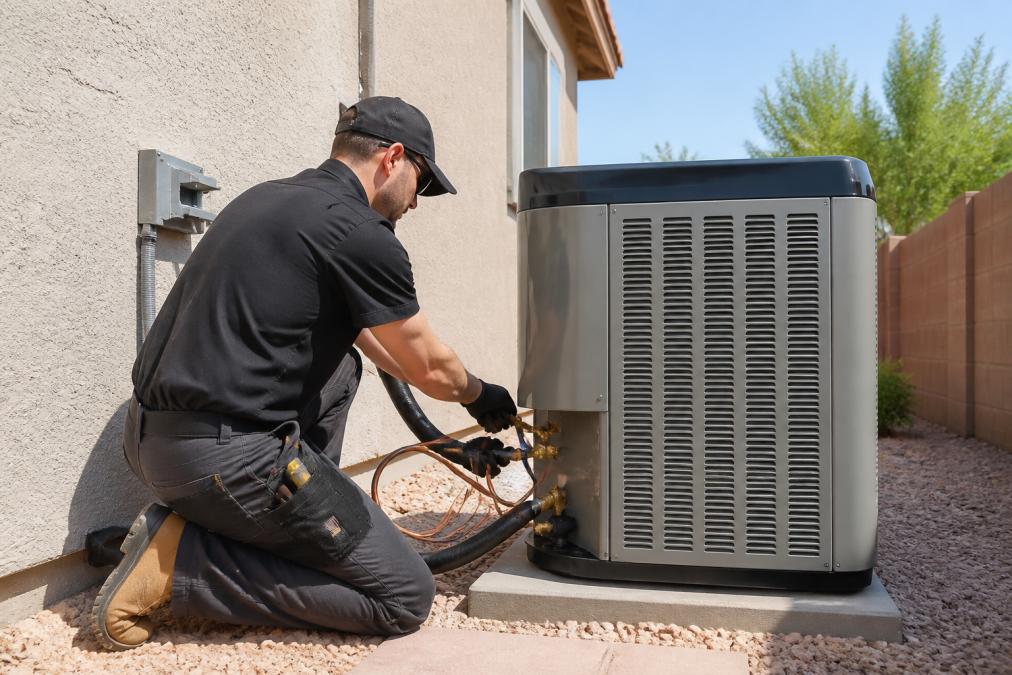
A complete AC installation covers system selection, site preparation, equipment staging, refrigerant line installation, electrical connections, ductwork integration, thermostat calibration, and full system startup testing. Each step has code requirements attached to it.
Load Calculation and System Sizing
The biggest mistake most homeowners don't know to ask about is load calculation. Contractors who skip this step simply guess at unit size based on square footage alone. A proper load calculation accounts for ceiling height, insulation quality, window placement, sun exposure, and occupancy. NATE-certified technicians use software-based BTU calculation tools following ACCA Manual J protocols to size the system correctly before ordering parts.
An oversized system short-cycles and never runs long enough to dehumidify properly. An undersized system runs constantly and never catches up on the hottest days. Neither is acceptable.
Permits, Refrigerant Handling, and Code Compliance
Pulling an HVAC permit is not optional. According to U.S. Environmental Protection Agency refrigerant handling regulations, technicians who handle refrigerants must be EPA Section 608 certified. Local jurisdictions require permits for new installations and replacements to ensure code compliance.
Unpermitted work creates real problems: insurance claims can be denied, home sales delayed, and you may be required to redo the installation at your own cost. A legitimate AC installation service pulls the permit, schedules the inspection, and provides documentation when complete.
AC Unit Sizing Guide for Homes: Getting the BTUs Right
Cooling capacity is measured in BTUs per hour, and the right number depends on your specific home. Here's a practical framework:
| Home Size (sq ft) | Estimated BTU Range | Cooling Tons | Key Variables That Shift This |
|---|---|---|---|
| Under 1,000 | 18,000 - 21,000 | 1.5 tons | Insulation, ceiling height |
| 1,000 - 1,500 | 21,000 - 24,000 | 1.5 - 2 tons | Sun exposure, window area |
| 1,500 - 2,000 | 24,000 - 30,000 | 2 - 2.5 tons | Attic insulation quality |
| 2,000 - 2,500 | 30,000 - 34,000 | 2.5 tons | Occupancy, duct condition |
| 2,500 - 3,000 | 34,000 - 42,000 | 3 - 3.5 tons | Heat gain from west-facing walls |
These ranges assume average construction quality. Homes with poor attic insulation, single-pane windows, or significant west-facing exposure need more capacity. A proper load calculation is the only way to confirm the right number. The evaporator coil and air handler must also be matched to the condenser unit to avoid efficiency loss and warranty voidance.
Average Cost of AC Replacement: What Shapes Your Quote
The average cost of AC replacement varies based on system size, SEER2 rating, ductwork condition, electrical panel capacity, and local labor rates. Contact RTS Comfort Cooling & Heating directly for a free estimate tailored to your home.
What drives the number up or down:
- System efficiency (SEER2 rating): Higher-efficiency units cost more upfront but reduce monthly energy consumption. The current federal minimum SEER2 standard for residential split systems in the Southwest, per U.S. Department of Energy residential AC efficiency standards, is 14.3 SEER2.
- Ductwork condition: Leaky or damaged ductwork requires sealing, repair, or replacement, adding to project cost.
- Electrical upgrades: Older homes may need panel upgrades or dedicated circuits.
- Equipment tier: Entry-level, mid-tier, and premium systems carry different prices and warranties.
Energy Rebates and Incentives That Lower Your Out-of-Pocket Cost
The Inflation Reduction Act created federal tax credits for high-efficiency HVAC equipment. Per ENERGY STAR federal tax credits for energy efficiency, homeowners may qualify for a tax credit up to 30% of qualifying heat pumps and central air conditioning systems, subject to annual caps. Many utility companies also offer rebates for systems meeting specific SEER2 thresholds. A contractor current on available incentives can help you choose qualifying equipment.
How to Choose an HVAC Contractor You Can Actually Trust
Start with licensing and certification. Every HVAC contractor in Nevada must hold a valid state contractor's license. NATE certification (North American Technician Excellence) means the technician passed independent testing on HVAC installation and service knowledge. Ask for both before proceeding.
Evaluate the estimate process:
- Do they perform a load calculation, or quote based on the old unit's size?
- Do they inspect existing ductwork before quoting?
- Do they explain SEER2 ratings and efficiency tiers?
- Do they provide a written, itemized quote including permits?
- Do they offer manufacturer warranty registration?
A contractor rushing the estimate and pressuring same-day signing is not acting in your interest. Word-of-mouth referrals and verified online reviews are reliable quality signals. Look for patterns: consistent praise for punctuality, clear communication, and post-installation follow-through matter more than five-star ratings alone.
Desert Climate Challenges and AC Installation Timeline Expectations
Installing a split system AC in extreme desert climate presents unique challenges. Ambient temperatures above 110°F affect refrigerant line charging. Ductwork in homes built before the mid-1990s often runs through unconditioned attic spaces exceeding 140°F in summer, degrading insulation and creating airflow losses. Professional installation should include ductwork inspection as standard.
Typical residential replacement timeline:
Call (702) 707-4242 for a free estimate →
- Day 1 - Site assessment and load calculation: 1-2 hours
- Equipment ordering and permit application: 2-5 business days
- Installation day: 4-8 hours depending on complexity
- Inspection scheduling: 1-5 business days post-installation
- Final commissioning: Same day as inspection clearance
Total elapsed time typically runs 5-10 business days for standard replacements. Complex jobs involving ductwork repair, electrical upgrades, or special equipment ordering extend this timeline. Any contractor promising same-day installation without a prior site visit should raise a flag.
DIY vs. Professional AC Installation: The Real Risks
DIY AC installation is not a gray area. Handling refrigerant without EPA Section 608 certification is a federal violation. Installing without a permit voids the manufacturer's warranty and creates liability.
Technical risks are significant:
- Incorrect refrigerant charge: Damages the compressor, the system's most expensive component.
- Improper electrical connections: Creates fire risk.
- Duct mismatches: Reduces system efficiency substantially.
- Warranty voidance: Most manufacturers require professional installation.
The only scenario where DIY makes sense is a ductless mini-split with a pre-charged line set designed for non-professional installation. For central split systems, professional installation is the only rational choice.
Signs You Need a New AC Installation Service, Not Just a Repair
A common benchmark is the "5,000 rule": multiply the system's age in years by the estimated repair cost. If the result exceeds replacement cost, replacement is typically better financially.
Signs pointing toward replacement:
- System age over 12-15 years: Efficiency degrades significantly; R-22 systems are increasingly expensive to service.
- Frequent breakdowns: Two or more significant repairs in one season indicates end of life.
- Rising energy bills: System losing efficiency consumes more energy for same cooling.
- Inconsistent cooling: May indicate compressor decline or duct problems.
- Refrigerant leaks: Repeated recharging is expensive and signals unrepairable leaks.
If your system is under 10 years old and the repair is a single component failure, repair makes more sense. If it's the compressor on a system over 10 years old, replacement usually is the right call.
Emergency AC Service and 24/7 Response
System failure at 11 PM in summer is a genuine necessity. When evaluating emergency service, ask:
- Is the 24/7 number staffed by a live dispatcher?
- Are emergency calls handled by the same technicians as daytime calls?
- Is there transparent after-hours pricing?
RTS Comfort Cooling & Heating provides 24/7 emergency HVAC service with immediate response. Response time and first-visit repair capability matter most during heat events.
AC Installation Service Summary: What to Expect at Each Stage
| Stage | What Happens | Who's Responsible | Typical Duration |
|---|---|---|---|
| Load calculation | BTU sizing, duct assessment | Contractor | 1-2 hours |
| Permit application | Filed with local jurisdiction | Contractor | 2-5 business days |
| Equipment staging | Unit delivery and site prep | Contractor | Day of install |
| Installation | Refrigerant lines, electrical, air handler | Licensed technician | 4-8 hours |
| Thermostat calibration | Smart thermostat setup and testing | Technician | 30-60 minutes |
| Inspection | Code compliance verification | Local inspector | 1-2 hours |
| Final commissioning | Full system startup and performance test | Technician | 1 hour |
Choosing the wrong contractor for AC installation is a mistake that follows you for the system's life. Poor sizing, skipped permits, and rushed startups create problems no maintenance can fully correct.
RTS Comfort Cooling & Heating delivers comprehensive AC installation service backed by 24/7 emergency response, NATE-certified technicians, and complete ductwork assessment on every job. Call (702) 707-4242 for a free estimate and find out exactly what your home needs.
Frequently Asked Questions
How much does it cost to replace an AC unit?
AC replacement costs vary based on system size, SEER2 rating, ductwork condition, and the complexity of the installation. A straightforward swap of a central split system in a mid-size home will cost less than a full system overhaul that includes new ductwork or an air handler. Because every home's cooling load and existing infrastructure differ, the most accurate way to get a real number is to request a free in-home estimate. Call RTS Comfort Cooling & Heating at (702) 707-4242 to schedule yours.
What is the $5,000 rule for AC replacement?
The $5,000 rule is a rough decision guideline: multiply your system's age in years by the estimated repair cost. If that number exceeds $5,000, replacement usually makes more financial sense than repair. For example, a 10-year-old unit needing a $600 repair scores 6,000, suggesting replacement is worth evaluating. It is a starting point, not a final answer. A licensed HVAC technician can assess your system's actual condition, efficiency rating, and remaining lifespan before you decide.
How long does a professional AC installation typically take?
A standard central AC installation on a home with existing, functional ductwork generally takes four to eight hours. Larger homes, systems requiring new ductwork, or installations that involve upgrading the electrical panel can extend the timeline to a full day or more. Scheduling matters too: peak summer demand can push lead times out by several days. Booking your installation in spring, before temperatures spike, typically means faster scheduling and a smoother installation day.
What should I look for when hiring an HVAC installation company?
Verify that the contractor holds a current state HVAC license and carries liability insurance and workers' compensation coverage. Look for NATE-certified technicians, which confirms hands-on competency testing beyond basic licensing. Ask whether they pull the required HVAC permit, perform a Manual J load calculation before sizing your system, and offer written warranty coverage on both equipment and labor. A contractor who skips any of these steps is cutting corners that will cost you more over the life of your system.
This article was written using GrandRanker