 how-to
7 Steps to Fix Weak Airflow From Vents Fast
Last Updated: October 27, 2026
Quick Summary
Weak airflow from vents usually comes from a dirty air filter, closed or blocked vents, or furniture covering registers. Start by checking and replacing the filter, then open vents and clear obstructions. If airflow stays weak, test whether the problem affects the whole house or one room to narrow the cause.
- Hold the filter up to a light; if you cannot see light through it, replace it.
- Keep a few inches of clear space around every vent so air can move freely.
- Weak airflow at every vent points to a central restriction, while one weak room points to a branch problem.
- Replace filters every one to three months, more often with pets or heavy dust.
- If you see ice on the coil, turn the system off and call a licensed technician.
Table of Contents
- Why Weak Airflow From Vents Happens
- Step 1: Check and Replace the Air Filter
- Step 2: Open Blocked Air Vents and Clear Obstructions
- Step 3: Test Whether Weak Airflow Affects the Whole House or One Room
- Step 4: Inspect Supply and Return Vents and Visible Ductwork
- Step 5: Check for a Frozen Evaporator Coil
- Heating Mode Versus Cooling Mode: What Changes in Your Checks
- When to Stop DIY and Call a Licensed Technician in Las Vegas
- Frequently Asked Questions
Why Weak Airflow From Vents Happens
Weak airflow from vents is one of the most common HVAC complaints, and it usually has a simple cause. Most cases trace to a short list of causes you can check yourself.
Weak airflow means less conditioned air reaches your rooms than the system should deliver.
The most common causes include:
- A dirty or clogged air filter
- Closed or blocked supply and return vents
- Furniture, rugs, or curtains covering vents
Some of these are quick fixes; others point to a bigger issue that needs a licensed technician.
Step 1: Check and Replace the Air Filter
A dirty air filter is the first thing to check because it is cheap, easy, and a frequent cause of weak airflow.
To check the filter:
- Turn the system off at the thermostat.
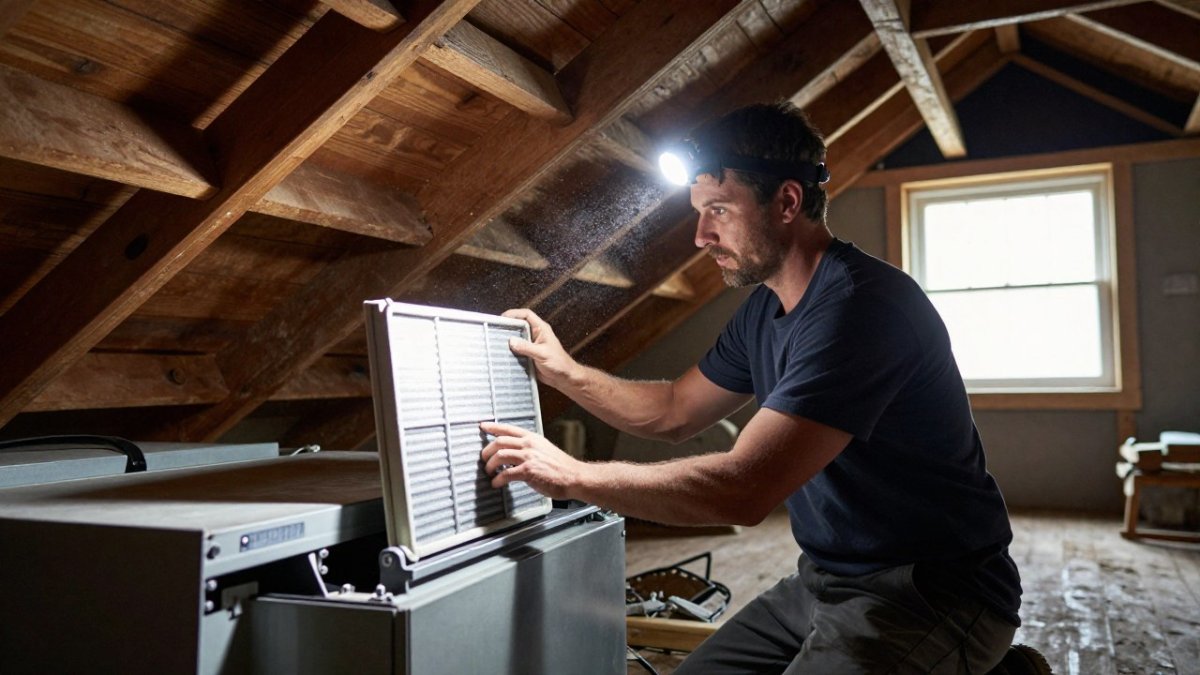
- Locate the filter at the return air grille or inside the air handler.
- Hold the filter up to a light. If you cannot see light through it, replace it.
- Note the size printed on the frame and buy a matching replacement.
- Install the new filter with the airflow arrow pointing toward the blower.
Watch out: A filter that looks clean on the surface can still be clogged with fine dust inside. Check it against a light rather than judging by appearance.
Most homes need a new filter every one to three months, and homes with pets or heavy dust may need changes more often. Writing the change date on the frame helps you stay on schedule.
Step 2: Open Blocked Air Vents and Clear Obstructions
Closed or blocked vents are another easy fix. Many homeowners close vents in unused rooms thinking it saves energy, but in most central systems closing vents raises duct pressure and can actually reduce airflow.
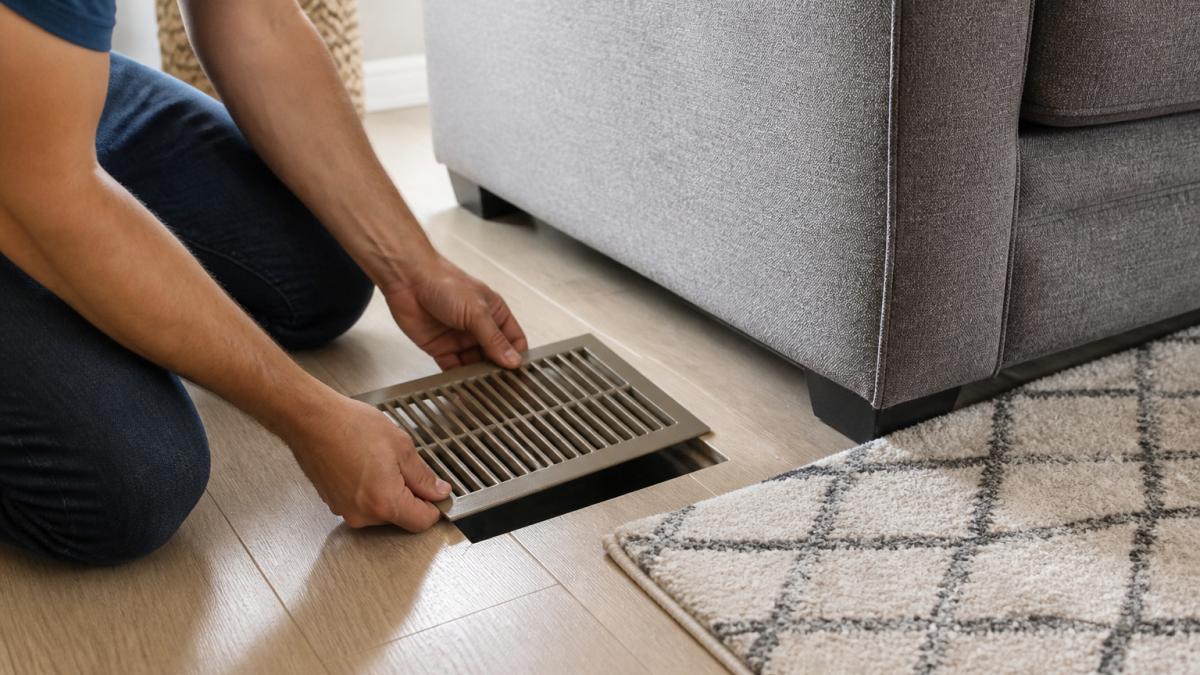
Walk through your home and check each supply vent and return grille:
- Make sure every supply register is fully open.
- Move furniture, rugs, and curtains away from floor and wall vents.
- Remove dust and pet hair from the grille surfaces.
Keep at least a few inches of clear space around every vent so air can move freely.
Step 3: Test Whether Weak Airflow Affects the Whole House or One Room
This is the single most useful test in the process, because it splits the problem into two very different repair paths. Weak airflow at every vent points to a central restriction, the filter, blower, evaporator coil, or main trunk duct. Weak airflow at one or two vents points to a branch-level problem, a closed damper, crushed flex run, disconnected joint, or blocked register.
Run the comparison test
- Turn the system on and let it run for at least 10 minutes so the blower reaches steady speed.
- Pick three or four supply registers in different rooms, ideally one close to the air handler, one in the middle of the home, and one at the farthest end of the duct run.
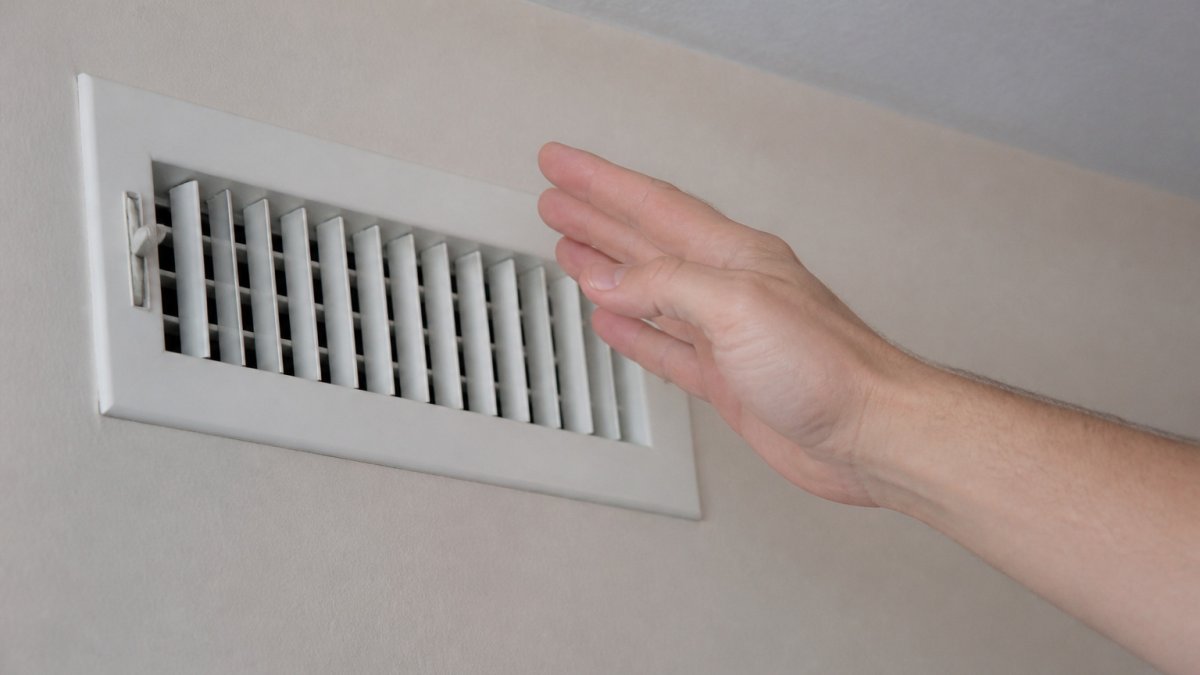
- Hold a thin strip of tissue or a piece of light paper about 1 inch from each grille and note how far it deflects. A strong, steady bend suggests normal flow; a limp flutter or no movement suggests a restriction.
- Repeat at the return grilles. A weak return pulls less air back to the system and starves every supply vent downstream.
- Write down which vents are strong, weak, or dead. The pattern is the diagnosis.
Read the pattern
- All vents weak, including returns: the restriction is central. Go back to the filter, then check the blower compartment and the evaporator coil. A dirty blower wheel is a common culprit that filter changes alone will not fix.
- All supply vents weak but returns strong: the problem is on the supply side, a main trunk damper, a crushed trunk duct, or a failing blower.
- One room weak, rest normal: the problem is in that room's branch run. Check the register, the branch damper, and the visible flex duct between the trunk and the boot.
A quick airflow sanity check
Residential cooling systems are typically designed to move about 400 cubic feet per minute (CFM) per ton of cooling capacity, a 3-ton system is nominally sized for roughly 1,200 CFM across all supply vents. You cannot measure CFM accurately with a tissue, but you can spot a large imbalance: if one room's vent moves noticeably less air than a similar-sized vent on the same trunk, that branch is restricted.
Check the return path before you blame the supply
A common oversight is focusing only on supply registers. Every room with a supply vent needs a path for air to leave, either through a return grille or a transfer grille above the door.
The pattern of weak vents points to either a central restriction or a single branch problem, so the table below maps each pattern to its likely cause.
| Pattern | Likely cause | Next check |
|---|---|---|
| All vents weak, including returns | Central restriction | Filter, then blower and coil |
| Supply weak, returns strong | Supply-side problem | Main trunk damper or crushed trunk |
| One room weak, rest normal | Branch run problem | Register, branch damper, flex duct |
| Weak room and weak return | Blocked return path | Closed or blocked return |
| Strong at start, then fading | Freezing coil or overheating blower | See Step 5 |
Step 4: Inspect Supply and Return Vents and Visible Ductwork
Once the vents are clear, inspect the ductwork you can see. Problems hidden in walls or the attic are harder to reach, but accessible sections often reveal the cause.
Check these areas:
Call (702) 707-4242 for a free estimate →
- Supply ducts in the attic or crawl space: Look for kinks, crushed sections, and joints that have pulled apart.
- Return ducts: Confirm they connect to the air handler and are not sealed off.
- Insulation: Loose or displaced insulation can signal that ducts have shifted.
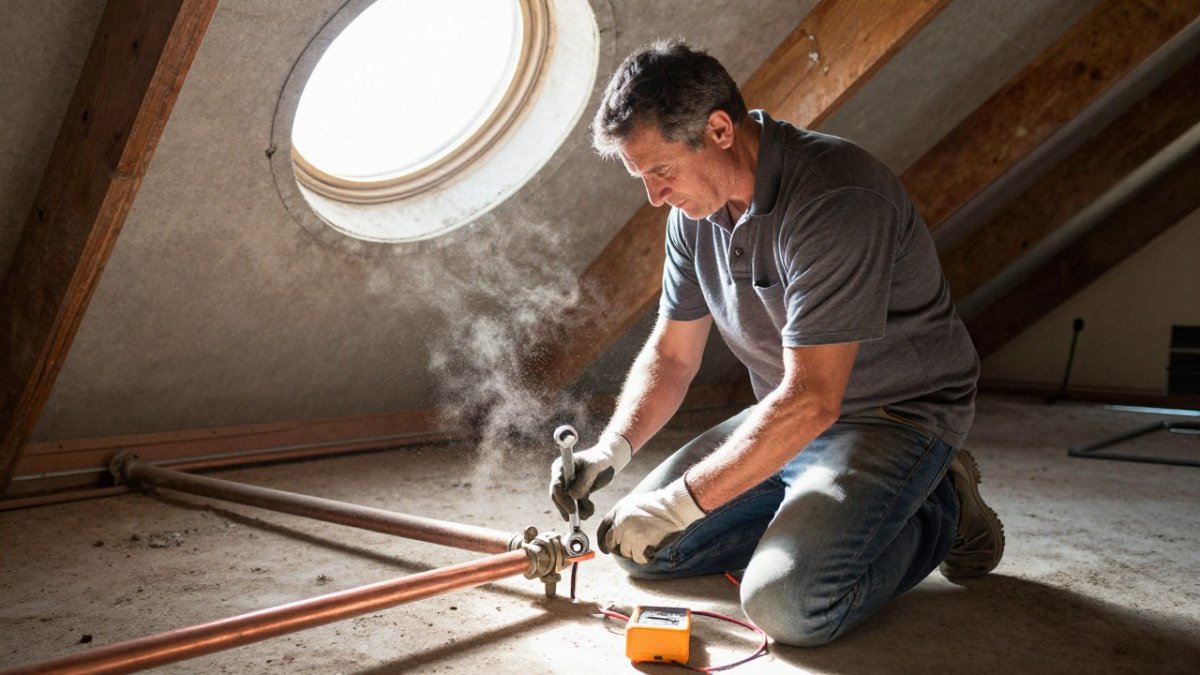
Only inspect ductwork you can reach safely. Attic temperatures in Las Vegas can climb far above outdoor temperatures in summer, so limit time up there and never step on ceilings.
Step 5: Check for a Frozen Evaporator Coil
A frozen evaporator coil blocks airflow and is a serious problem. Ice builds up when airflow drops or refrigerant levels are off, and the ice then makes weak airflow even worse.
Warning signs include:
- Ice or frost on the refrigerant lines or indoor coil
- Weak airflow that gets worse over time
- Warm air coming from the vents while the system runs
If you see ice, turn the system off. Running the system with a frozen coil can damage the compressor. Let the ice melt completely, check and replace the filter, and then restart the system.
Heating Mode Versus Cooling Mode: What Changes in Your Checks
Weak airflow shows up differently depending on whether the system is cooling or heating. Many homeowners notice it in summer when the AC runs hard, but weak airflow also affects winter heating.
In cooling mode, the most common culprits are the filter and evaporator coil, since restricted airflow can freeze the coil.
Run each check in the mode that gives you the problem.
When to Stop DIY and Call a Licensed Technician in Las Vegas
The checks in this guide are deliberately limited to what a homeowner can do safely: filter changes, vent clearing, visual duct inspection, and the comparison test. Everything past that involves electricity, refrigerant, gas, or sealed ductwork, the boundaries where DIY stops being a money-saver and starts being a hazard.
The DIY-versus-professional line
Safe for most homeowners:
- Replacing the air filter
- Opening registers and clearing furniture, rugs, and curtains
- Vacuuming dust from grille surfaces
Stop and call a licensed technician:
- Opening the air handler or furnace cabinet to reach the blower
- Anything involving the electrical panel, capacitors, or control boards
- Refrigerant lines, the evaporator coil, or the condenser
Warning signs that mean call today, not next week
Some symptoms are safe to watch; others signal damage that gets more expensive by the hour.
- Ice on the indoor coil or refrigerant lines: turn the system off at the thermostat and call. Running a frozen system can damage the compressor, which is the single most expensive component in the system.
- Burning smell, grinding, or screeching: shut the system down at the breaker if you can do so safely, and call. These point to motor bearings, a failing blower, or an electrical fault.
- Short cycling: the system turns on and off every few minutes. This often traces to an oversized system, a failing thermostat, or a refrigerant charge issue.
What to expect on the service visit
A technician diagnosing weak airflow will typically check static pressure across the air handler, measure temperature split between return and supply, inspect the blower wheel and evaporator coil, and use a flow hood at the registers. High static pressure means the blower is pushing against a restriction, and the fix is often duct sizing or sealing rather than a part replacement.
Urgency and cost context
Airflow problems fall into three urgency tiers. A clogged filter or closed vent is a same-day fix at the cost of a filter. A frozen coil or failing blower is a call-today problem because continued operation causes secondary damage. A chronic one-room weak-airflow issue can wait for a standard appointment. Repair costs vary widely by cause, so ask for a diagnostic visit with a written estimate before authorizing work rather than guessing from a phone quote.
Prevention that actually moves the needle
- Change the filter every one to three months; more often with pets or heavy dust.
- Keep a few inches of clearance around every supply and return grille.
- Do not close registers in unused rooms in a central system, it raises duct pressure and can reduce airflow everywhere.
For prompt help, RTS Comfort Cooling & Heating offers HVAC repair across the Las Vegas area. If you are dealing with a system that has stopped running, RTS Comfort Cooling & Heating offers 24/7 emergency HVAC service. Call (702) 707-4242 for a free estimate.
Frequently Asked Questions
Why is the airflow from my vents so weak?
Weak airflow usually comes from one of a few causes: a clogged air filter, closed or blocked supply vents, obstructions like furniture or rugs over registers, a leaky or kinked duct, or a dirty evaporator or condenser coil. Start with the simplest check, the air filter and vent positions, before moving to ductwork. If the weakness persists after those checks, the cause is likely in the equipment or ducts and needs a technician to measure it.
Can a dirty air filter cause weak airflow?
Yes. A dirty air filter is one of the most common causes of weak airflow. As the filter loads with dust and debris, it restricts the air the blower can pull through the system, which reduces the volume reaching every vent. Check the filter monthly and replace it when it looks gray or clogged, or on the schedule the filter manufacturer recommends. If airflow improves right after a new filter goes in, the filter was the problem.
Could weak airflow mean there is a problem with my ductwork?
It can. If airflow is weak at every vent, the problem is more likely the equipment or main ductwork than a single register. Look for visible damage, disconnected duct joints, or kinked flexible duct. Ducts in attics or crawl spaces are the most common trouble spots. Sealing or reconnecting ducts requires a licensed technician when the work is inside walls, ceilings, or the attic, so call one if you find damage you cannot safely reach.
When should I call an HVAC technician for weak airflow?
Call a licensed HVAC technician if you have checked the filter and vents and airflow is still weak, if the system runs but the house does not reach the set temperature, if you smell burning or hear unusual noises, or if you see ice on the refrigerant lines or evaporator coil. Do not open the electrical panel or remove the access panel on the air handler unless you are trained to do so. For urgent problems, RTS Comfort Cooling & Heating offers 24/7 emergency service. Call (702) 707-4242 for a free estimate.
Weak airflow from vents is usually fixable with simple checks, and the steps above will catch most causes. Start with the filter and vents, work through the ductwork, and call a professional when the problem goes beyond what you can safely check. For a related look at causes behind poor cooling, read why your AC is not cooling and the eight common causes.