 how-to
HVAC Service Schedule: How Often Systems Need Maintenance
Last Updated: November 8, 2026
Quick Summary
Most HVAC systems should be serviced at least once a year, with a professional tune-up timed before the cooling or heating season. Homes with heavy use, such as those in hot climates, often benefit from two visits a year, one in spring and one in fall. Always confirm the exact hvac service schedule in your equipment manual and warranty.
- Most systems need at least one professional inspection and tune-up each year.
- Systems that run hard, such as in hot climates, often need two visits yearly.
- Heat pumps usually need two visits, since they run in both heating and cooling modes.
- Keep service invoices, since warranties may require documented regular maintenance.
- Schedule an earlier visit if you notice unusual noise, weak airflow or rising bills.
Table of Contents
- How Often Should HVAC Systems Be Serviced?
- Annual Versus Twice-Yearly Maintenance: Which Fits Your System
- How Often Should Air Conditioning Units Be Serviced Compared to Heat Pumps and Mini-Splits
- Annual HVAC Maintenance Checklist by Season
- What a Professional Maintenance Visit Includes and What It Costs
- DIY Tasks Versus Work That Needs a Licensed Technician
- When Maintenance Is Not Enough: Signs It Is Time to Replace Your System
- Book Your Next Tune-Up With RTS Comfort Cooling & Heating
- Frequently Asked Questions
Most homeowners only think about their HVAC system when it stops working, and by then a simple problem has often become an expensive one. For most U.S. homes, the standard answer to how often HVAC systems should be serviced is once a year, with many households doing it in both spring and fall. Summer heat puts heavy strain on cooling equipment in hot climates such as Las Vegas.
How Often Should HVAC Systems Be Serviced?
Most HVAC systems should get a professional inspection and tune-up at least once a year. Many homeowners schedule one visit before the cooling season and another before the heating season. Both approaches help equipment run efficiently and catch small faults early.
Here is a simple way to think about the timing:
- Once a year: A good minimum for most systems, usually in spring or early summer.
- Twice a year: Common for systems that run hard, such as those in hot climates or large homes.
- After problems: Schedule a visit sooner if you notice unusual noise, weak airflow, or rising energy bills.
Check your equipment manual or warranty too. Some manufacturers specify a service interval, and skipping it can affect coverage.
Annual Versus Twice-Yearly Maintenance: Which Fits Your System
A single annual visit works well for many homes. A twice-yearly plan makes more sense when your system does more work.
Annual maintenance fits when:
- Your home is small or moderately sized.
- Your system is newer and in good condition.
- You live in a mild climate with light use.
Twice-yearly maintenance fits when:
- Your air conditioner runs for most of the summer.
- You rely on a heat pump for both heating and cooling.
- You have pets, dust, or allergy concerns.
In hot climates, the cooling load can be heavy for much of the year, so a spring tune-up before the heat arrives is often the most important visit. A fall visit then prepares any heating equipment for winter.
The right visit count depends on how much work your system does, as summarised below.
| Situation | Suggested visits | Why |
|---|---|---|
| Small or moderately sized home | Annual | Lighter use and a newer system |
| Mild climate with light use | Annual | Lower cooling and heating load |
| Air conditioner runs most of summer | Twice yearly | Heavy seasonal runtime |
| Heat pump for heating and cooling | Twice yearly | Runs in both modes |
| Pets, dust or allergy concerns | Twice yearly | More airborne debris to manage |
How Often Should Air Conditioning Units Be Serviced Compared to Heat Pumps and Mini-Splits
A single annual recommendation does not fit every system. The right interval depends on how the equipment works, how many seasons it runs, and what the manufacturer requires. Use the schedule below as a starting point, then confirm the exact interval in your owner's manual.
- Central air conditioners: One professional visit per year, timed before the cooling season. The priority tasks are condenser and evaporator coil cleaning, refrigerant charge verification, condensate drain clearing, and electrical connection checks. A system that runs from May through September in a hot climate accumulates more runtime hours than one in a mild climate, so some technicians recommend a mid-season filter and airflow check even when the full tune-up is annual.
- Furnaces (gas, oil, or electric): One visit per year, before the heating season. Gas furnaces need combustion analysis, heat exchanger inspection, burner cleaning, and flue vent checks, tasks that address carbon monoxide risk and are not homeowner work. Oil furnaces typically need annual nozzle and filter service plus a combustion test. Electric furnaces still need sequencer, element, and blower inspection.
- Heat pumps: Two visits per year is the common recommendation because the equipment runs in both heating and cooling modes. The spring visit focuses on the cooling cycle, refrigerant charge, indoor coil, and condensate, while the fall visit focuses on the heating cycle, including defrost board operation, reversing valve function, outdoor coil condition, and auxiliary heat strips. Skipping the fall visit often shows up as a system that ices over or blows cold air in January.
- Ductless mini-splits: One professional inspection per year per indoor head is a reasonable baseline, but filter cleaning is a homeowner task that should happen every two to four weeks during heavy use. Multi-zone systems with several heads may need staggered visits so each indoor unit and its line set is checked. Outdoor unit coil cleaning matters more in dusty or leafy locations.
- Packaged systems (rooftop or pad-mounted): One to two visits per year depending on climate and runtime. Because the evaporator coil, condenser coil, blower, and drain pan share one cabinet, a single clogged drain or dirty coil affects the whole system. Technicians also check the roof curb, cabinet seals, and economizer where present.
- Boilers: One annual visit before heating season, covering burner or element inspection, expansion tank and pressure relief valve checks, circulator pump operation, and water treatment where required.
Watch out: Manufacturer warranty language often requires "regular" or "annual" professional maintenance and may require documented service records. Keep invoices and note the date and tasks performed.
To set your own interval, check three things: the owner's manual service table, the warranty terms (often a separate document), and your runtime pattern. A heat pump in a climate with long, humid summers and cold winters is doing roughly twice the annual work of a cooling-only unit, which is why the two-visit schedule is standard for that equipment type.
Annual HVAC Maintenance Checklist by Season
A seasonal checklist helps you know what to look for between professional visits.
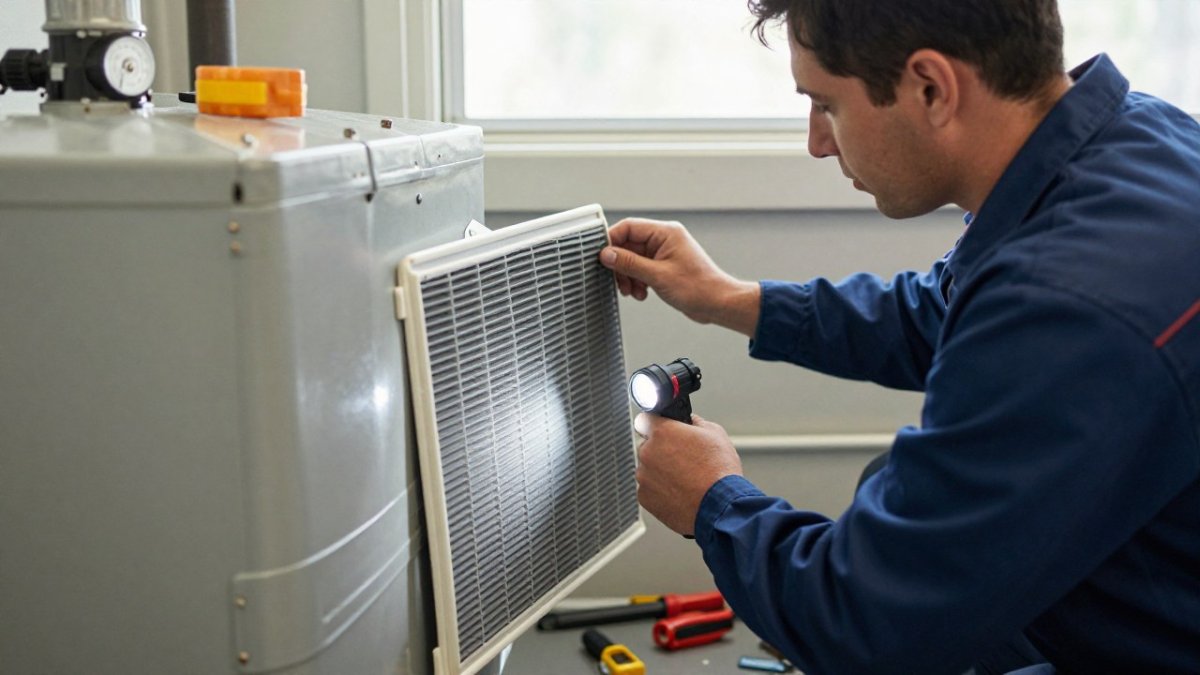
Spring (before cooling season):
- Replace or clean the air filter.
- Clear debris and vegetation from the outdoor unit.
- Test the thermostat and confirm it responds correctly.
- Check that the condensate drain flows freely.
- Schedule a professional tune-up for refrigerant levels and coils.
Summer (during cooling season):
- Check the air filter monthly, especially with pets in the home. For a full set of summer maintenance steps, follow the detailed seven-step guide.
- Keep the outdoor unit at least two feet clear of plants and debris.
- Watch for ice on refrigerant lines or indoor coils.
Fall (before heating season):
- Test the heating system before the first cold snap.
- Inspect vents and returns for blockages.
- Schedule a professional inspection of the furnace or heat pump.
Winter (during heating season):
- Replace the air filter as needed.
- Listen for unusual sounds, such as banging or squealing.
What a Professional Maintenance Visit Includes and What It Costs
A proper maintenance visit covers more than a quick look. A technician should typically:
- Inspect and clean the condenser and evaporator coils.
- Check refrigerant levels and look for leaks.
- Test electrical connections and controls, including capacitors and contactors.
- Clear the condensate drain line and check the drain pan.
- Measure airflow and inspect the blower wheel and motor.
- Inspect the heat exchanger, burners, and flue on combustion equipment.
- Review system performance and flag any wear.
What affects the price. A tune-up is priced by labor time and scope, not by a single national rate. The biggest drivers are:
- System type and count: A single central air conditioner is the simplest visit. A heat pump, a two-stage or variable-speed system, or a multi-zone mini-split takes longer because there are more components and modes to test.
- Scope of the visit: A basic filter-and-inspect visit costs less than a full tune-up that includes coil cleaning, combustion analysis, and refrigerant charge verification. Ask what is included before booking.
- Access and condition: Rooftop packaged units, attic air handlers, and cramped mechanical closets add time. A system that has not been serviced in years may need a longer first visit.
- Parts: Standard tune-ups usually do not include parts. Capacitors, contactors, filters, and belts are commonly billed separately.
- Region and season: Labor rates can vary by market, and scheduling timing can affect cost.
How to read a maintenance plan. Plans often bundle one or two visits, and some include discounts on repairs or priority scheduling. To see how annual maintenance plan pricing is determined, review the main cost factors before comparing offers. You can also review a side-by-side maintenance plan cost comparison to see how these options stack up.
Watch out: Ask for the task list in writing and confirm it matches the manufacturer's recommended maintenance items.
For current pricing and a quote tailored to your equipment, contact RTS Comfort Cooling & Heating directly.
DIY Tasks Versus Work That Needs a Licensed Technician
Some HVAC tasks are safe for homeowners. Others involve electricity, refrigerant, or gas, and should be left to a licensed technician.
Safe for homeowners:
- Replacing or cleaning air filters.
- Keeping outdoor units free of leaves and debris.
- Clearing vents and returns of furniture or rugs.
- Checking the thermostat settings and batteries.
Leave to a licensed technician:
- Any refrigerant work, including adding or recovering refrigerant.
- Electrical repairs, capacitor or contactor replacement.
- Gas furnace repairs and burner adjustments.
- Cleaning inside indoor or outdoor coils in a way that could damage fins.
Handling refrigerant or gas without training can be dangerous and may void warranties.
When Maintenance Is Not Enough: Signs It Is Time to Replace Your System
Regular service extends equipment life, but it cannot fix everything. Consider replacement when:
- The system is roughly 10 to 15 years old and needs frequent repairs.
- Repair costs approach the price of a new unit.
- Energy bills keep climbing despite regular service.
- The system struggles to keep rooms at a comfortable temperature.
- It uses an older refrigerant that is costly to service.
A technician can help you compare repair and replacement options for your home.
Book Your Next Tune-Up With RTS Comfort Cooling & Heating
Staying on top of your HVAC service schedule is the simplest way to avoid surprise breakdowns in peak weather. If your system is due for a spring or fall tune-up, or if something seems off, RTS Comfort Cooling & Heating can help. Call (702) 707-4242 for a free estimate and schedule your next maintenance visit before the season changes.
Frequently Asked Questions
How often should an HVAC system be serviced?
Most homeowners should have a professional service visit once a year, and many choose two visits: one in spring before cooling season and one in fall before heating season. Heat pumps and systems that run year-round benefit from the twice-yearly schedule. Manufacturer warranties often require documented maintenance, so keep records of every visit. Systems in dusty homes, homes with pets, or homes that run constantly may need more frequent attention. Check your owner's manual for the schedule your specific equipment requires.
What does an annual HVAC service include?
A typical annual visit includes inspecting and cleaning the condenser and evaporator coils, checking refrigerant levels, testing electrical connections and capacitors, clearing the condensate drain line, inspecting the blower and airflow, and testing thermostat operation. The technician will also check the furnace burners and heat exchanger on gas systems. Ask for a written summary of findings so you can track changes over time and share it with your warranty provider if needed.
How long does an HVAC maintenance visit take?
A routine maintenance visit usually takes between one and two hours for a standard residential system, though larger homes, multiple units, or systems needing minor repairs can take longer. Make sure the technician walks you through the findings before leaving. If the visit is taking far longer than expected, ask what is being found so you can make an informed decision about any additional work.
What are the signs that an HVAC system needs service sooner?
Watch for reduced airflow, unusual noises such as grinding or squealing, uneven temperatures between rooms, rising energy bills without a clear cause, frequent cycling on and off, and musty odors from vents. Water pooling near the indoor unit can signal a clogged condensate drain. Any of these symptoms justifies scheduling a service visit rather than waiting for the next routine appointment.