 ultimate-guide
Modern HVAC for Older Homes: A Complete Guide
Table of Contents
- Can Older Homes Have Modern HVAC Systems?
- Challenges of Installing HVAC in Historic Homes
- Ductless Mini-Split Systems and Installation Cost
- High-Velocity Small-Duct and Retrofit Solutions
- Professional AC Installation Service for Older Homes
- Heat Pumps and Energy Efficiency for Older Buildings
- Permitting, Codes, and Preserving Architectural Integrity
- Conclusion
Last Updated: August 30, 2026
Can Older Homes Have Modern HVAC Systems?
Yes, older homes can absolutely have modern HVAC systems installed, though the process requires careful planning and specialized expertise. Modern HVAC systems for older homes range from ductless mini-split units to high-velocity small-duct systems and heat pumps designed for retrofitting. The real complexity emerges when you factor in building codes, historic preservation guidelines, and the need to integrate with existing infrastructure like radiator systems or outdated wiring.
What makes retrofitting older homes different is that you're not working with a blank slate. Your home likely has limited attic space, unconventional wall cavities, structural considerations around load-bearing walls, and possibly asbestos or knob-and-tube wiring that must be addressed before any HVAC work begins.
Challenges of Installing HVAC in Historic Homes
Installing modern HVAC in older homes presents several interconnected challenges that don't exist in newer construction. The most obvious is space constraints. Older homes were built without central ductwork, meaning your walls, attic, and basement have never been designed to accommodate the large ducts that traditional forced-air systems require.
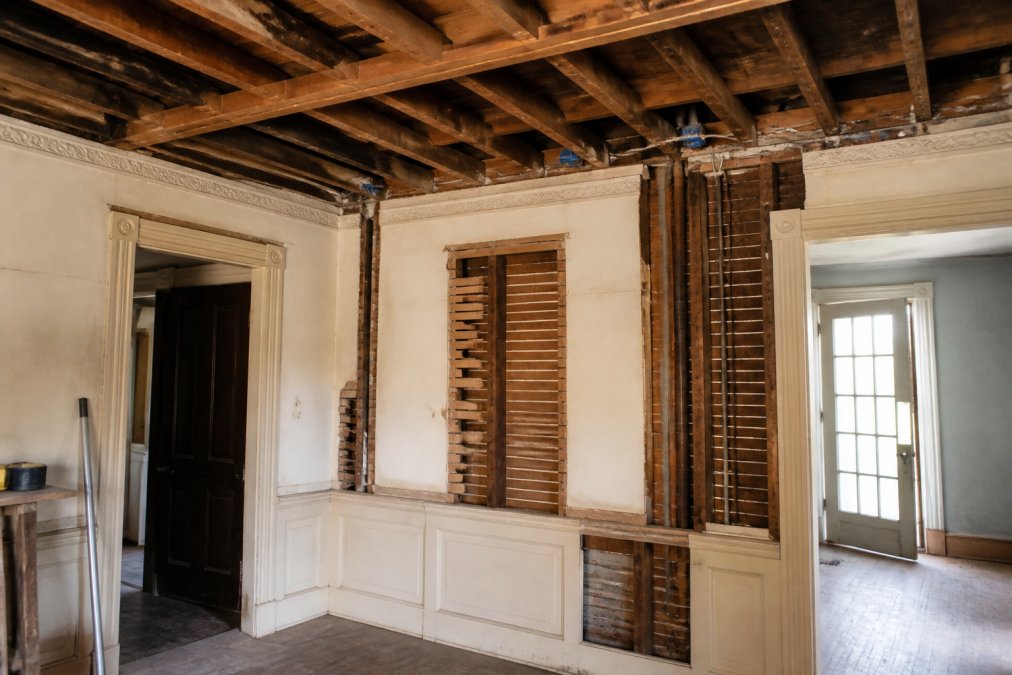
Beyond physical space, the building envelope itself is typically compromised. Older homes often lack proper insulation, have single-pane windows, and suffer from air leakage around doors, windows, and foundation areas. This means heat or cooling escapes easily, forcing any HVAC system to work harder and longer.
Structural integrity adds another layer. Historic homes frequently contain materials that complicate installation: plaster walls that crack when disturbed, asbestos in insulation or pipe wrap that must be professionally abated before work begins, and knob-and-tube wiring in walls that limits where you can safely route new electrical lines. Any HVAC work in these homes requires coordination with specialists beyond your HVAC contractor.
Preservation requirements create legal constraints. If your home is in a historic district or listed on the National Register of Historic Places, local preservation boards may restrict where you can place outdoor condenser units, what materials you can use, and how visible the installation can be from the street (nps.gov). Finally, there's the integration challenge. Older homes often already have heating systems, radiators fed by a boiler, baseboard heaters, or steam pipes. Modern HVAC must coexist or be phased out strategically.
Ductless Mini-Split Systems and Installation Cost
A ductless mini-split system is one of the most practical solutions for older homes because it bypasses the biggest installation hurdle: ductwork. Instead of routing large ducts through walls and attic spaces, a mini-split uses thin refrigerant lines and electrical conduit to connect an outdoor condenser unit to indoor wall-mounted air handlers. Each indoor unit serves one or more rooms and operates independently, giving you zoning capability without the complexity of traditional ductwork.
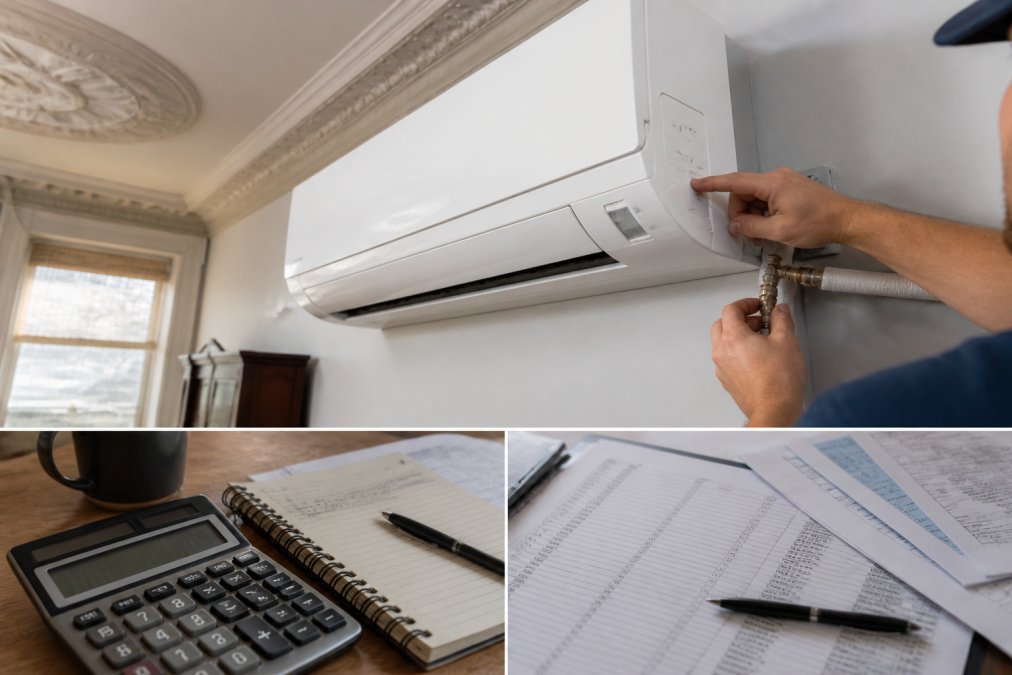
The advantages for older homes are significant. Installation is less invasive, you're drilling small holes for refrigerant lines rather than carving out space for large ducts. This means less damage to walls, ceilings, and the structural character of your home. Mini-splits also provide excellent dehumidification and air quality control.
The trade-off is that mini-splits are visible. The indoor wall units are typically white or cream-colored boxes mounted 6-8 feet high on exterior or interior walls. If your home is in a historic district, placement may be restricted to side walls or rear elevations to minimize street-facing visibility.
Professional installation is essential for mini-splits. The refrigerant lines must be properly sized, insulated, and sealed. Electrical connections require a qualified electrician familiar with 208-240V circuits. Improper installation leads to refrigerant leaks, reduced efficiency, and potential system failure. Pricing for ductless mini-split installation varies based on the number of indoor units, the distance between the outdoor condenser and indoor handlers, and local labor rates, so requesting a free estimate from a qualified contractor like RTS Comfort Cooling & Heating is the best way to understand your actual costs.
High-Velocity Small-Duct and Retrofit Solutions
High-velocity HVAC systems offer a middle ground between traditional large-duct forced-air systems and ductless mini-splits. These systems use small-diameter ducts (about 2 inches) instead of the 6-12 inch ducts typical of conventional systems. The smaller ducts fit more easily into existing wall cavities, attic spaces, and crawlspaces without requiring major structural modifications.
High-velocity systems work by forcing air through the small ducts at higher velocity, which creates a mixing effect that distributes air more evenly throughout rooms. The ducts can follow existing pathways, alongside electrical wiring, through wall cavities, or under floors, minimizing visible changes to the home's interior.
The installation process for high-velocity retrofit systems is more involved than mini-splits but less invasive than traditional ductwork. A professional HVAC contractor evaluates your home's layout, identifies potential routing paths, and designs a system that works within your existing structure. One consideration with high-velocity systems is noise, the higher air velocity can create audible rushing sounds in rooms, though modern systems with sound-dampening components have reduced this issue significantly.
Professional AC Installation Service for Older Homes
Professional installation is non-negotiable for modern HVAC in older homes. Your home's unique challenges, structural quirks, and preservation requirements demand expertise that general contractors don't possess.
A qualified HVAC contractor for older homes performs several critical steps before recommending a system. First, they conduct a thorough load calculation that accounts for your home's actual thermal efficiency, a detailed analysis of your insulation levels, air leakage, window performance, and sun exposure. An accurate load calculation prevents oversizing or undersizing.
Second, they assess what's currently in your home. Do you have asbestos that needs abatement? Knob-and-tube wiring that limits where new lines can run? An existing boiler system that will remain? RTS Comfort Cooling & Heating includes this assessment in the initial consultation, identifying potential complications before work begins.
Third, they handle permitting and code compliance. Your contractor should manage this process, ensuring the system meets current energy codes and local preservation guidelines. Finally, professional installation includes proper system commissioning. After the system is installed, the contractor tests refrigerant charge, verifies electrical connections, calibrates thermostats, and ensures all components operate correctly.
Call (702) 707-4242 for a free estimate →
Heat Pumps and Energy Efficiency for Older Buildings
Heat pumps represent one of the most significant advances for older homes seeking energy efficiency. A heat pump moves heat rather than generating it, making it dramatically more efficient than traditional furnaces or electric resistance heating. In winter, it extracts heat from outdoor air and moves it indoors. In summer, it reverses the cycle to provide cooling.
For older homes, heat pumps offer multiple advantages. They eliminate the need for separate heating and cooling systems, reducing complexity and cost. They pair well with ductless mini-split configurations, allowing you to add cooling to individual rooms while improving heating efficiency. Modern heat pumps have SEER2 and HSPF2 ratings that reflect their efficiency under real-world conditions (energystar.gov).
Heat pumps perform best in homes with adequate insulation and airtightness. A heat pump in a poorly sealed, uninsulated older home works harder and loses some of its efficiency advantage. Modern cold-climate heat pumps operate effectively down to 5-15 degrees Fahrenheit, making them viable even in northern regions (energy.gov). Understanding your specific climate and how a heat pump will perform in your location is part of the professional assessment.
Permitting, Codes, and Preserving Architectural Integrity
Permitting for HVAC installation in older homes is more complex than in newer construction because multiple regulatory frameworks may apply. Building codes govern the HVAC system itself, ensuring it's properly sized, installed, and vented. Energy codes specify minimum efficiency levels for equipment. And if your home is in a historic district, preservation guidelines add another layer of requirements.
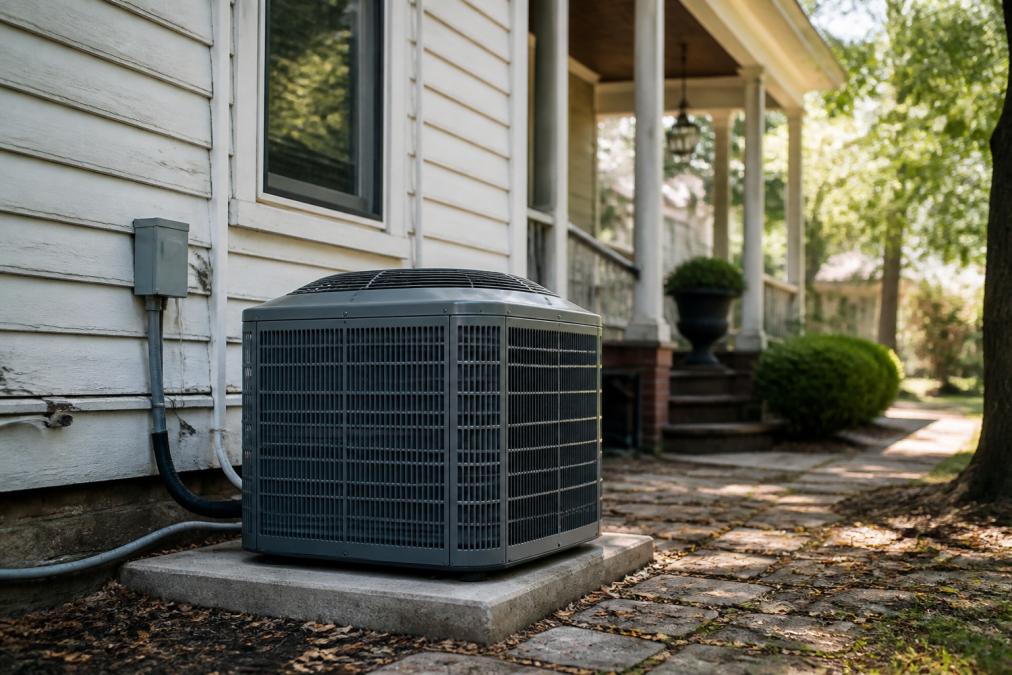
Historic preservation codes typically focus on visible exterior changes. An outdoor condenser unit for a mini-split or heat pump may need to be screened, painted to match the home's exterior, or placed in a location not visible from the street. Indoor installation is usually unrestricted, which is why some homeowners opt for ductless systems with the indoor units in less-visible areas.
Building permits serve a practical purpose: they ensure the installation meets code, electrical work is done safely, and the system is properly sized for your home. Permits also create a paper trail. If you ever sell your home, buyers and their lenders want proof that major systems were installed to code. Unpermitted work can complicate sales and may require expensive remediation.
The best approach is to work with a contractor who understands both HVAC requirements and historic preservation guidelines. They know which permitting offices to contact, what documentation is needed, and how to design a system that satisfies both efficiency and preservation standards.
Conclusion
Modern HVAC for older homes is entirely feasible when you approach it with the right strategy and expertise. The key is matching the technology to your home's specific constraints, whether that's a ductless mini-split system for minimal invasiveness, a high-velocity retrofit for better integration with existing structures, or a heat pump for maximum energy efficiency.
The common mistake is treating an older home's HVAC needs like a standard new-construction installation. Your home's unique layout, preservation requirements, and existing systems demand a professional assessment that goes beyond a generic quote. RTS Comfort Cooling & Heating specializes in exactly this kind of detailed evaluation, identifying the most practical and cost-effective solution for your specific home. We handle permitting, coordinate with preservation boards when needed, and ensure the installation works seamlessly with your home's existing infrastructure.
If you're ready to explore modern HVAC options for your older home, call (702) 707-4242 for a free estimate. We'll assess your home's actual needs, explain which systems make sense for your situation, and provide transparent guidance on costs and benefits.
| HVAC System Type | Best For | Key Advantage | Primary Consideration |
|---|---|---|---|
| Ductless Mini-Split | Minimal ductwork disruption | Least invasive installation | Visible indoor wall units |
| High-Velocity Small-Duct | Retrofit with some ductwork space | Fits existing cavities | Requires skilled installation |
| Heat Pump (any type) | Energy efficiency priority | Efficient heating and cooling | Works best with good insulation |
| Hybrid (heat pump + existing boiler) | Gradual system replacement | Maintains backup heat source | More complex integration |
Frequently Asked Questions
What is the $5,000 rule for HVAC replacement?
The $5,000 rule is a decision framework: if your system is over 10 years old and repair costs exceed $5,000, replacement is often more economical than repair. However, this applies mainly to standard systems. Older homes may benefit from modern alternatives like heat pumps or ductless mini-splits, which can have different cost-benefit calculations. Contact a professional for a detailed assessment of your specific situation.
Can you install central air in a house built before 1950?
Yes, but it requires careful planning. Homes built before 1950 often lack existing ductwork and have tight spaces. Options include retrofitting custom ductwork through walls, using high-velocity small-duct systems, or installing ductless mini-splits. Each approach has different costs and structural impacts. Professional assessment is essential to determine feasibility without compromising the building's integrity or violating historic preservation codes.
What is the best type of HVAC system for older homes?
The best system depends on your home's condition, layout, and goals. Ductless mini-split systems are popular because they require minimal structural changes and offer zoning flexibility. Heat pumps work well in insulated older homes for both heating and cooling. High-velocity small-duct systems fit tight spaces better than traditional ductwork. Professional AC installation service can evaluate your specific building envelope, insulation R-value, and electrical load to recommend the right fit.
How do heat pumps perform in older, less insulated homes?
Heat pumps are most efficient in well-insulated homes with good airtightness. In older homes with poor insulation, they still function but may require supplemental heating during extreme cold. Improving your thermal envelope through attic insulation and sealing air leaks significantly boosts heat pump efficiency. Many homeowners combine heat pump installation with insulation upgrades to maximize performance and lower operating costs.
What permits and codes apply to HVAC installation in historic homes?
Historic homes may fall under local historic preservation codes that restrict visible exterior modifications. You'll need standard mechanical permits for any HVAC work. Some jurisdictions require historic preservation board approval before installing condenser units or making structural changes. Professional installation services familiar with local codes ensure compliance and help navigate the approval process, preventing costly rework.
Should I replace my 20-year-old HVAC system?
A 20-year-old system is near or past its typical lifespan (15-20 years). Replacement makes sense if repairs are frequent, efficiency has declined, or your energy bills have risen. Modern systems offer better SEER2 and HSPF2 ratings, reducing operating costs. For older homes, upgrading also gives you the opportunity to install a system better suited to your building's layout and preservation needs.
This article was written using GrandRanker