 ultimate-guide
Benefits of Heat Pump Systems in Desert Climates
Table of Contents
- How Heat Pumps Work in Desert Heat
- Energy Efficiency and SEER2 Ratings in Extreme Temperatures
- Heat Pump vs Central Air Conditioning: Which Fits Your Home?
- How to Save on Energy Bills with a Heat Pump System
- Maintaining HVAC Systems in Dry Heat: Dust, Coils, and Longevity
- Heat Pumps vs Evaporative Coolers: Desert Performance Compared
- Incentives, Thermostat Optimization, and Air Quality Benefits
- Frequently Asked Questions
Last Updated: September 26, 2026
How Heat Pumps Work in Desert Heat
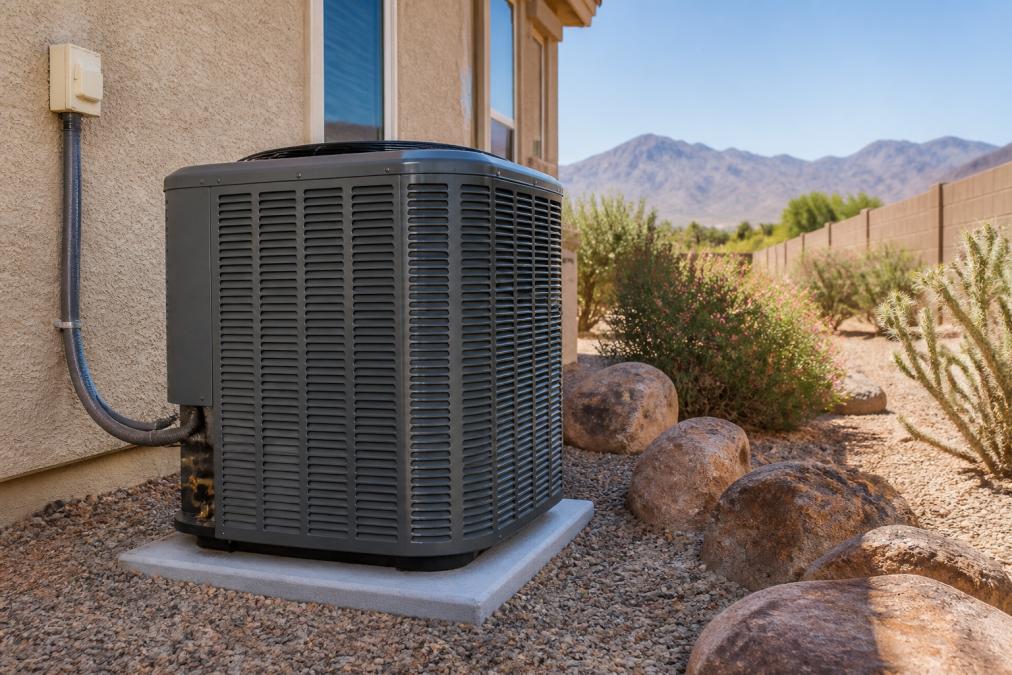
A heat pump is a climate control system that moves heat rather than generating it, which is exactly why the benefits of heat pump systems in desert climates are so pronounced. According to the U.S. Department of Energy heat pump overview, heat pumps transfer thermal energy between indoor and outdoor air using a refrigerant cycle, and this heat transfer approach makes them far more efficient than systems that burn fuel to create heat.
Here's the part most guides gloss over: a heat pump doesn't fight desert heat, it relocates it. In cooling mode, the system absorbs heat from indoor air and releases it outside through the condenser coils. In heating mode, it reverses the flow, pulling warmth from outdoor air even when temperatures drop. This is why the technology handles both sides of a desert climate, from 110°F afternoons to chilly winter nights, with one all-in-one solution.
At RTS Comfort Cooling & Heating, we install and service these systems across the Las Vegas Valley.
Energy Efficiency and SEER2 Ratings in Extreme Temperatures
SEER2 ratings measure how efficiently a cooling system converts electricity into cooling output, and higher ratings mean lower energy consumption. The ENERGY STAR SEER2 guidance explains that SEER2 replaced the older SEER standard in 2023 with updated testing procedures that better reflect real-world conditions.
Desert homeowners should pay attention to two numbers:
- SEER2 for cooling efficiency during long, hot summers
- HSPF2 for heating efficiency during winter nights
Heat Pump vs Central Air Conditioning: Which Fits Your Home?
The core difference: central air conditioning only cools, while a heat pump cools and heats. For desert homeowners, that distinction decides whether you need one system or two.
| Feature | Heat Pump | Central AC |
|---|---|---|
| Cooling | Yes | Yes |
| Heating | Yes, reverses refrigerant cycle | No, needs separate furnace |
| Efficiency | High (moves heat) | Moderate (cools only) |
| Best For | Year-round comfort, one system | Cooling-only climates |
| Maintenance | One system to service | Two systems to service |
How to Save on Energy Bills with a Heat Pump System
Lower utility costs come from three levers: efficient equipment, a well-sealed home, and smart controls. A heat pump addresses the first lever, but the other two determine how much you actually save.
Maintaining HVAC Systems in Dry Heat: Dust, Coils, and Longevity
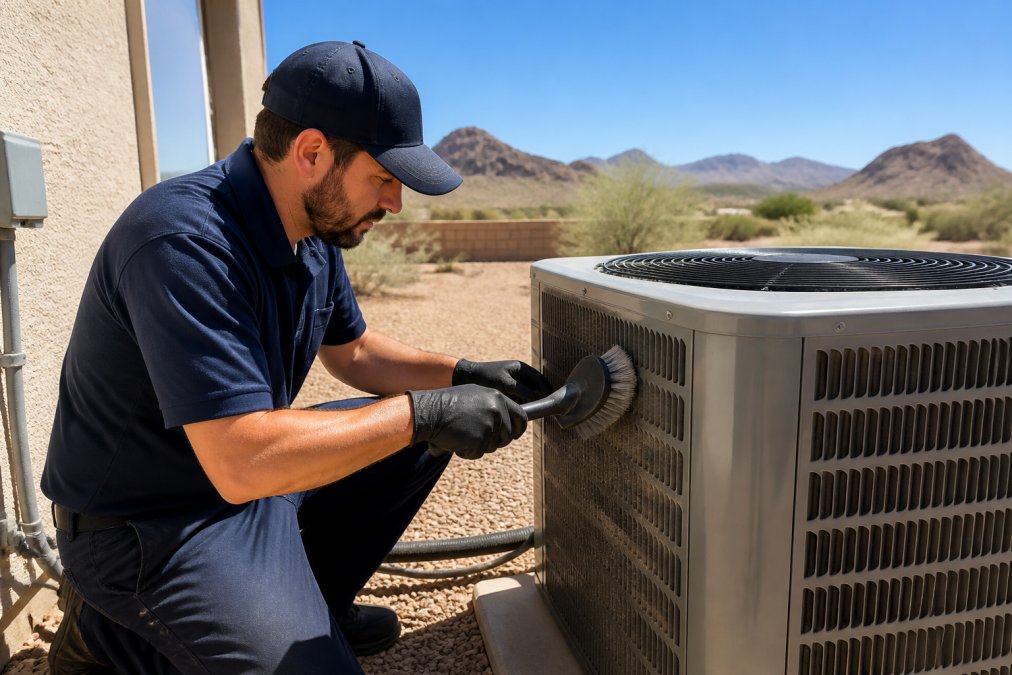
Dust is the single biggest threat to heat pump performance in dry heat, and it attacks the system in three distinct ways: it insulates the outdoor condenser coil, it clogs the indoor air filter, and it coats the blower wheel and motor. Each failure mode has a different fix and a different cadence, which is why a one-size-fits-all maintenance list underperforms in desert conditions.
A desert-specific maintenance protocol
- Filters: Check monthly, not quarterly. Replace 1-inch filters every 30 days during peak cooling season (roughly May through September) and every 60 days in shoulder months. If you run a high-MERV filter for allergies, expect a shorter interval because the denser media loads faster.
- Outdoor coil rinse: Rinse the condenser coil with a garden hose on low pressure every 2 to 4 weeks during dusty periods, and immediately after any visible dust storm or haboob. Rinse from the inside out where the panel allows, so you push debris out of the fins rather than deeper into them.
- Professional coil cleaning: Schedule a deep chemical coil cleaning once a year, ideally in early spring before the cooling season loads up. A garden hose removes surface dust; it does not remove the bonded grime that accumulates over a full summer.
- Blower and cabinet: Have the blower wheel inspected annually. Dust that bypasses the filter collects on the wheel, throws it out of balance, and reduces airflow, a problem that shows up as weak cooling rather than an obvious breakdown.
- Refrigerant charge: Verify charge annually. A system that has been running hot and long due to dirty coils is more likely to have developed a slow leak at a stressed joint.
- Clear the pad: Keep at least 2 feet of clearance around the outdoor unit and remove accumulated sand, leaves, and yard debris. Blocked airflow mimics a dirty coil.
Why longevity hinges on this routine
A heat pump in a dusty climate lives or dies by airflow. Restricted airflow raises compressor temperature, and sustained high-temperature operation is what shortens equipment life, not the calendar. A unit that receives consistent coil and filter care can reasonably reach the upper end of its expected service life, while one that runs with clogged coils and a loaded filter may fail years earlier.
Heat Pumps vs Evaporative Coolers: Desert Performance Compared
Evaporative coolers, often called swamp coolers, and heat pumps are the two dominant cooling strategies in arid climates, and they work on completely opposite principles. Understanding the mechanism explains why each one wins in different conditions.
Where each system wins
| Condition | Evaporative Cooler | Heat Pump |
|---|---|---|
| Very dry heat (low humidity) | Strong, large temperature drop | Strong, consistent output |
| Monsoon / high humidity | Weak, little evaporative effect, adds moisture indoors | Strong, dehumidifies as it cools |
| Winter heating | None, cooling only | Yes, reverses to heat |
| Indoor humidity control | Adds humidity | Removes humidity |
| Air filtration | Minimal | Multi-stage filtration |
| Upfront cost | Lower | Higher |
| Operating cost in dry heat | Often lower | Higher than swamp cooler, lower than AC-plus-furnace |
The humidity threshold that decides it
Evaporative cooling effectiveness falls as outdoor humidity rises. In the driest desert conditions, a swamp cooler can deliver a substantial temperature drop; as humidity climbs during monsoon season, that drop shrinks and the unit starts pushing moist air into the home. Many desert households end up running both, a swamp cooler for the dry shoulder season and a heat pump or AC for the humid peak.
Comfort, air quality, and health
Because a heat pump dehumidifies, it holds indoor relative humidity in a range that feels cooler at the same thermostat setting and reduces conditions that favor mold and dust mites. Evaporative coolers do the opposite, they raise indoor humidity, which can make a home feel clammy during monsoon weeks and can worsen dust-related discomfort. Heat pumps also filter and circulate indoor air continuously, which matters for households dealing with allergies and airborne dust.
The bottom line for desert homeowners
If your priority is the lowest possible operating cost during the driest months and you can tolerate humidity swings, an evaporative cooler is a legitimate choice. If you want one system that cools, dehumidifies, heats, and filters, and that performs consistently through monsoon season and winter nights, a heat pump is the stronger long-term investment. The trade-off is upfront cost and complexity versus year-round reliability and comfort.
Incentives, Thermostat Optimization, and Air Quality Benefits
Federal tax credits and utility rebates can offset a meaningful portion of heat pump installation costs. The IRS energy efficient home improvement credit provides a tax credit for qualifying heat pump installations, and many utilities add their own rebates on top. Check current program details and eligibility before you buy, since amounts and requirements change.
Frequently Asked Questions
What is the downside to a heat pump system in desert climates?
The main downsides are higher upfront cost than a standard AC and more frequent coil cleaning because dust and sand accumulate quickly on outdoor units. Performance also drops slightly during rare freezing nights when backup heat strips activate. However, modern variable-speed compressors and proper maintenance largely offset these issues, and most homeowners find the year-round efficiency and lower utility costs outweigh the drawbacks.
Will a heat pump work efficiently in 100-degree weather?
Yes. Modern heat pumps with variable-speed compressors and high SEER2 ratings are designed to cool effectively in extreme temperatures. They adjust compressor speed to maintain cooling capacity without constant on-off cycling, which reduces energy consumption and wear. In desert climates, pairing a heat pump with a smart thermostat and regular preventative maintenance keeps performance strong even during sustained triple-digit heat waves.
How do heat pumps compare to central air conditioning for desert homes?
A heat pump provides both heating and cooling in one system, while central AC only cools and requires a separate furnace. In desert climates with mild winters and cool nights, a heat pump handles both seasons efficiently. It also dehumidifies and filters air, improving indoor air quality. Central AC may cost less upfront, but a heat pump often delivers lower annual operating costs and better year-round comfort.
What maintenance does a heat pump need in dry, dusty conditions?
Desert heat pumps need more frequent preventative maintenance than units in humid climates. Clean or replace air filters every 4-6 weeks during heavy use, rinse condenser coils quarterly to remove dust accumulation, and schedule a professional tune-up twice a year. Technicians should inspect refrigerant levels, check electrical connections, and clear debris from the outdoor unit. This routine protects system longevity and keeps energy consumption low.
Desert climates punish HVAC systems that aren't built or maintained for the conditions. If you're weighing a heat pump against your current setup, or your system is struggling through another summer, RTS Comfort Cooling & Heating can help. We offer 24/7 emergency HVAC service, professional heat pump installation, smart thermostat setup, duct cleaning, and attic insulation across the Las Vegas area. Call (702) 707-4242 for a free estimate and get reliable climate control that lasts.