 how-to
What Are the Most Common Causes of AC Compressor Failure?
Last Updated: November 1, 2026
Quick Summary
Most AC compressor failure comes down to a handful of preventable problems: refrigerant loss, electrical faults, contaminated oil, dirty coils, and airflow restrictions. The compressor rarely fails on its own, it fails because something upstream was ignored for months, putting strain on it until it overheats or locks up.
- Refrigerant problems are the most common cause of compressor damage we diagnose.
- A well-maintained compressor commonly lasts 10 to 15 years.
- A technician must find the leak, repair it, and charge the system to the manufacturer's exact specification.
- A weak run capacitor or pitted contactor is one of the most common reasons a compressor hums but will not start.
- Professional maintenance once a year, before the cooling season, is a common practice.
Table of Contents
- Why AC Compressors Fail: The Short Answer
- The Most Common Causes of AC Compressor Failure
- AC Compressor Failure Signs Every Homeowner Should Recognize
- AC Compressor Troubleshooting: A Step-by-Step Diagnostic Sequence
- How Long Do AC Compressors Last, and What Shortens Their Life?
- AC Compressor Repair or Replacement: How to Decide
- Prevention, Maintenance Intervals, and What Homeowners Should Never DIY
- Schedule a Compressor Inspection Before the Next Heat Wave
- Frequently Asked Questions
Why AC Compressors Fail: The Short Answer
Most AC compressor failure comes down to a handful of preventable problems: refrigerant loss, electrical faults, contaminated oil, dirty coils, and airflow restrictions.
The compressor rarely fails on its own. It fails because something upstream was ignored for months, a slow refrigerant leak, a clogged coil, or a weak capacitor puts strain on it until it overheats or locks up.
Below, we break down each common cause of AC compressor failure, the warning signs, and the diagnostic steps a technician uses to confirm the problem.
The Most Common Causes of AC Compressor Failure
Here is the short version:
| Cause | What It Does | Early Warning Sign |
|---|---|---|
| Refrigerant loss or wrong charge | Overheats or floods the compressor | Weak cooling, ice on lines |
| Electrical faults | Prevents proper start, burns windings | Breaker trips, humming, no start |
| Contaminated oil | Destroys lubrication, causes acid buildup | Noisy operation, rising heat |
| Dirty condenser coils | Traps heat, raises system pressure | High head pressure, poor cooling |
| Suction-line problems | Starves or floods the compressor | Freezing lines, low suction pressure |
Refrigerant Loss, Undercharge, and Overcharge
Refrigerant problems are the most common cause of compressor damage we diagnose. An undercharged system loses cooling capacity and runs longer cycles, wearing the compressor down.
An overcharged system is just as bad. Too much refrigerant floods the compressor with liquid, and compressors are built to pump gas, not liquid.
A refrigerant leak is the usual culprit behind an undercharge. The fix is not to top it off and walk away.
Electrical Faults: Worn Wiring, Fuses, and Safety Controls
The compressor depends on a chain of electrical parts to start and run safely. Worn wiring, damaged fuses, and failing electrical components break that chain.
The parts we check most often:
- Worn wiring and connections that overheat and lose contact
- Damaged fuses that blow when the compressor draws too much current
- The time-delay relay, which prevents short cycling by holding the compressor off briefly between runs
Short cycling is a red flag. A system that turns on and off every few minutes never gives the compressor a proper rest, points to a control or charge problem, and shortens compressor life fast.
Contaminated Oil, Acid Buildup, and Lubrication Breakdown
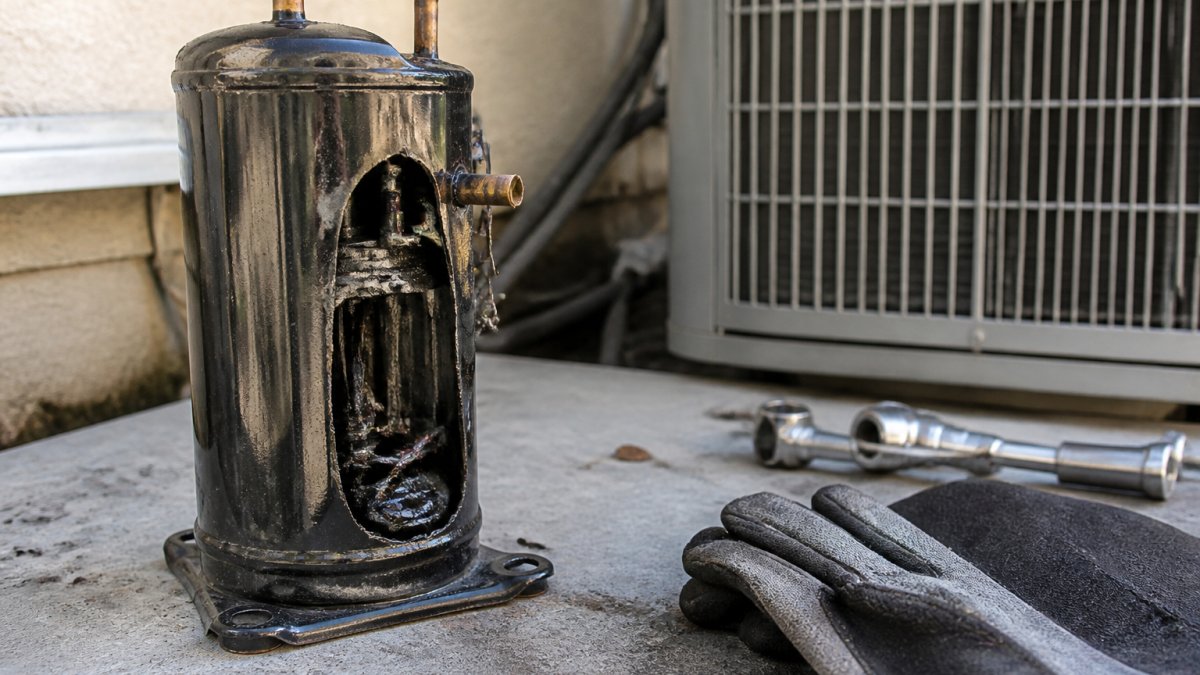
Compressor oil lubricates the moving parts and carries heat away. When the oil charge breaks down, metal grinds against metal, and moisture and air create acid buildup that eats at the compressor from the inside.
Signs of contaminated oil include unusual noise, higher operating temperatures, and poor cooling. Once acid forms, it spreads through the whole system, so a technician must flush the lines and replace the oil, not just swap the compressor.
Dirty Condenser Coils and Restricted Refrigerant Flow
The condenser coils release heat from your home to the outside air. When they are dirty, heat cannot escape, system pressure climbs, the compressor works harder, and overheating follows.
Restricted refrigerant flow causes the same problem: a clogged filter drier, kinked line, or blocked metering device starves the evaporator and forces the compressor to run hot. Dirty coils are the easiest of these to prevent and the most expensive to ignore.
Suction-Line Sizing and Blocked Suction Lines
The suction line carries low-pressure gas back to the compressor. If that line is the wrong size or blocked, the compressor gets starved of refrigerant and overheats.
A blocked suction line, often from a crimped line or stuck valve, causes a pressure drop the compressor cannot overcome. Both issues raise the workload, cut cooling performance, and are installation and service problems, not something a homeowner can fix.
AC Compressor Failure Signs Every Homeowner Should Recognize
The clearest AC compressor failure signs are weak or no cooling, a compressor that will not start, loud humming or grinding, frequent breaker trips, and short cycling. Catching these early can save the compressor.
Watch for this list:
- Warm air from the vents while the fan runs
- The outdoor unit hums but will not start
- Grinding, clicking, or rattling from the compressor
Any one of these warrants a professional look. For a focused walkthrough, see how to tell if your AC compressor is failing.
Call (702) 707-4242 for a free estimate →
AC Compressor Troubleshooting: A Step-by-Step Diagnostic Sequence
AC compressor troubleshooting follows a fixed order, and that order matters. The goal is not to confirm the compressor is bad, it is to rule out everything cheaper and safer first.
Safe checks a homeowner can do
These steps require no tools beyond a filter and a flashlight, and they never involve opening an energized or pressurized part of the system:
- Confirm the thermostat is calling for cool. Set the mode to cool, lower the setpoint several degrees below room temperature, and wait a few minutes. A dead thermostat battery or a schedule override mimics a compressor fault.
- Check the breaker. A tripped breaker at the panel or a tripped disconnect at the outdoor unit stops the compressor without any other symptom. Reset once; if it trips again, stop and call a technician, a recurring trip points to a short or a failing compressor, not a nuisance trip.
- Inspect the air filter and return airflow. A clogged filter or blocked return grille can freeze the indoor coil and make the system behave like it is low on refrigerant. Replace the filter and confirm no furniture or rugs block returns.
- Look at the outdoor unit. Clear leaves, grass clippings, and debris from the coil, and confirm the fan spins when the system runs. A fan that never turns while the compressor hums is a symptom, not a diagnosis.
- Listen and note. Humming without starting, grinding, clicking, or short on-off cycles are all worth reporting to a technician. Do not open the electrical panel to investigate further.
Do not remove panels, test capacitors, probe wiring, or add refrigerant yourself. Capacitors hold a dangerous charge after power is off, and refrigerant handling requires a license and recovery equipment. Those tasks are technician-only.
The technician's diagnostic sequence
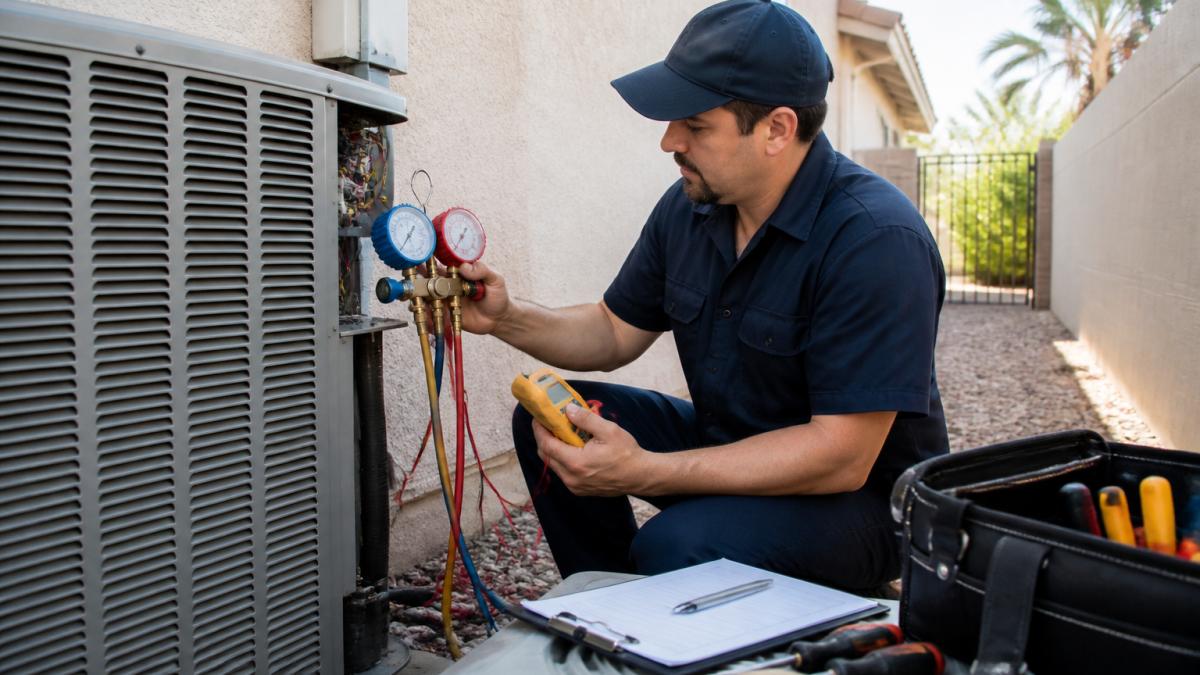
A trained technician works from the outside in, using instruments to separate a compressor failure from the faults that imitate it:
- Verify the call and power. Confirm the thermostat is calling, the low-voltage signal reaches the contactor, and the breaker and disconnect are intact.
- Test the capacitor and contactor. A weak run capacitor or a pitted contactor is one of the most common reasons a compressor hums but will not start. These are inexpensive parts, and replacing them is far cheaper than replacing a compressor.
- Check airflow and the indoor coil. A restricted evaporator coil or blower problem changes pressures and can look like a charge or compressor issue.
- Measure refrigerant pressures and superheat/subcooling. Comparing suction and head pressure against the manufacturer's charging chart distinguishes an undercharge, an overcharge, a restriction, and a failing compressor. A compressor that cannot build head pressure is a different diagnosis from one that is simply low on charge.
- Inspect electrical components. Test the time-delay relay, fuses, high-pressure and low-pressure switches, and wiring connections for damage or loose terminals.
- Test the compressor windings and running amps. Resistance checks across the windings and a running-amps reading against the nameplate tell the technician whether the compressor motor itself is failing. Open, shorted, or grounded windings confirm the compressor is the fault.
- Inspect coils, lines, and the metering device. Look for dirty condenser coils, kinked or blocked suction lines, and a clogged filter drier or metering device.
How the sequence separates compressor failure from look-alike faults
The value of the sequence is the fork it creates. If the capacitor, contactor, wiring, and charge all test good and the compressor still will not start or build pressure, the compressor is the fault. If any of those tests fail, the compressor may be fine and the real problem is upstream. Common look-alikes include:
- A failed capacitor or contactor, the compressor hums but does not start; the compressor itself is often undamaged.
- A refrigerant leak or undercharge, weak cooling and ice on the lines; the compressor may still be healthy.
- A tripped breaker or open disconnect, no operation at all, with no compressor fault.
That distinction decides whether you repair or replace, and it is why the cheap tests come first. If you are unsure where your system falls, book AC repair for a proper diagnosis.
How Long Do AC Compressors Last, and What Shortens Their Life?
A well-maintained compressor commonly lasts 10 to 15 years. The variables that shorten life are the same ones behind most failures: dirty coils, refrigerant leaks, bad electrical parts, and skipped maintenance.
Compressor age matters, but neglect matters more. A 12-year-old unit with clean coils and a correct charge often outlasts a 6-year-old unit that ran dirty and low on refrigerant.
AC Compressor Repair or Replacement: How to Decide
The repair-or-replace call comes down to three factors: the age of the system, the cost of the repair versus a new unit, and whether the failure has contaminated the rest of the system. For a deeper walkthrough, see this repair vs replace AC unit decision guide. The third factor is the one most homeowners underestimate, and it is the reason some replacement compressors fail again within a year.
Why a new compressor can fail again
A compressor is a pump, not a filter. It cannot clean up a system that damaged the old compressor. If the root cause is not corrected, the new compressor inherits the same conditions:
- Acid and contamination. When oil breaks down or moisture enters the system, acid forms and circulates. A technician must flush the lines, replace the filter drier, and confirm the oil is clean before installing a new compressor. Skipping the flush leaves acid to attack the new windings.
- Wrong charge. An overcharged system slugs the compressor with liquid; an undercharged system overheats it. Either condition will damage a new compressor just as it damaged the old one. The system must be charged to the manufacturer's specification after the leak is found and repaired.
- Restrictions. A clogged filter drier, kinked line, or blocked metering device starves or floods the compressor. Replacing the compressor without clearing the restriction repeats the failure.
A compressor replacement is only as good as the system it goes into. The correct sequence is: find the root cause, correct it, flush and dry the system if contamination is present, replace the filter drier, then install the compressor and charge to spec. A quote that skips those steps is a quote for a repeat failure.
Questions that frame the decision
- How old is the system? Past the 10 to 15 year mark, replacement usually wins, because the rest of the system is near the end of its life too.
- Did the failure contaminate the oil or lines? If acid or moisture is present, the repair must include a full flush and drier replacement, which raises the cost and complexity.
- Is the compressor the only bad part? If coils, controls, or the metering device are also failing, a compressor-only repair is poor value.
Residential versus automotive systems
Most of this guide addresses residential split systems. Automotive AC compressors fail for overlapping but distinct reasons, clutch failure, belt-driven wear, and vehicle-specific refrigerant and oil specifications, and the diagnostic and repair procedures differ. Do not transfer residential charging or electrical advice to a vehicle, or vehicle advice to a home system.
For a real diagnosis and quote, you can book AC repair with our team and get an honest read on your system.
Prevention, Maintenance Intervals, and What Homeowners Should Never DIY
Prevention is straightforward, and it is the cheapest way to protect a compressor. You can see the Las Vegas HVAC maintenance and repair services that keep a compressor healthy.
A technician typically checks refrigerant charge, cleans the condenser coils, tests electrical components, and inspects the suction line during maintenance visits.
Some tasks are safe for homeowners: filter changes, clearing yard debris, and keeping vents open. Others are not. Refrigerant handling, electrical testing, and compressor work require training and tools.
Schedule a Compressor Inspection Before the Next Heat Wave
A failing compressor rarely gives much warning before it quits for good. The smart move is to catch the warning signs early, while a repair is still simple. At RTS Comfort Cooling & Heating, we offer 24/7 emergency service and expert AC repair. We also provide duct cleaning, indoor air quality services, and smart thermostat installation. Call (702) 707-4242 for a free estimate.
Frequently Asked Questions
Can low refrigerant damage an AC compressor?
Yes. When refrigerant charge drops, suction pressure falls and the compressor loses the cool vapor it relies on for cooling. It runs hotter, oil circulation suffers, and the windings and valves wear faster. A slow leak that goes unaddressed for a season can turn a simple recharge and leak repair into a full compressor replacement. Any time you find low refrigerant, the leak itself needs to be located and fixed, not just topped off.
Can a dirty air filter cause AC compressor failure?
Indirectly, yes. A clogged filter chokes airflow across the evaporator coil, which can cause the coil to ice over and refrigerant pressures to swing outside normal range. The compressor then works harder and runs longer cycles. Filters are cheap insurance: check them monthly during heavy cooling season and swap them when they look gray. Dirty condenser coils outside cause a similar overheating problem and should be rinsed off each year.
Is it safe to keep running an AC system with a failing compressor?
No. A compressor that is short cycling, tripping breakers, or grinding is telling you something is wrong inside the system. Running it can push metal debris and acid through the refrigerant lines, which contaminates the whole system and raises the cost of repair. Shut the system off at the thermostat and call for AC compressor troubleshooting. In Las Vegas summer heat, call a 24/7 emergency line rather than waiting days for an appointment.
What is the $5,000 rule for AC systems?
Pricing depends on the system, the repair, and the age of the unit, so a quote from a technician is the best way to compare options. Compressor age, refrigerant type, and how well the rest of the system has held up all factor into AC compressor repair or replacement decisions.