 how-to
How to Tell If AC Compressor Is Failing
Table of Contents
- Signs of a Bad AC Compressor
- AC Compressor Not Turning On
- Home AC Compressor Troubleshooting
- Common Mistakes to Avoid During Diagnosis
- AC Compressor Repair or Replacement
- What to Do Right Now If You Suspect Failure
- Frequently Asked Questions
Last Updated: October 10, 2026
Signs of a Bad AC Compressor
The AC compressor is the heart of your cooling system. Learning how to tell if ac compressor is failing by recognizing early warning signs can save you from a complete breakdown during the hottest months.
Here are the most common indicators that your AC compressor is failing.
Weak or No Cooling Output
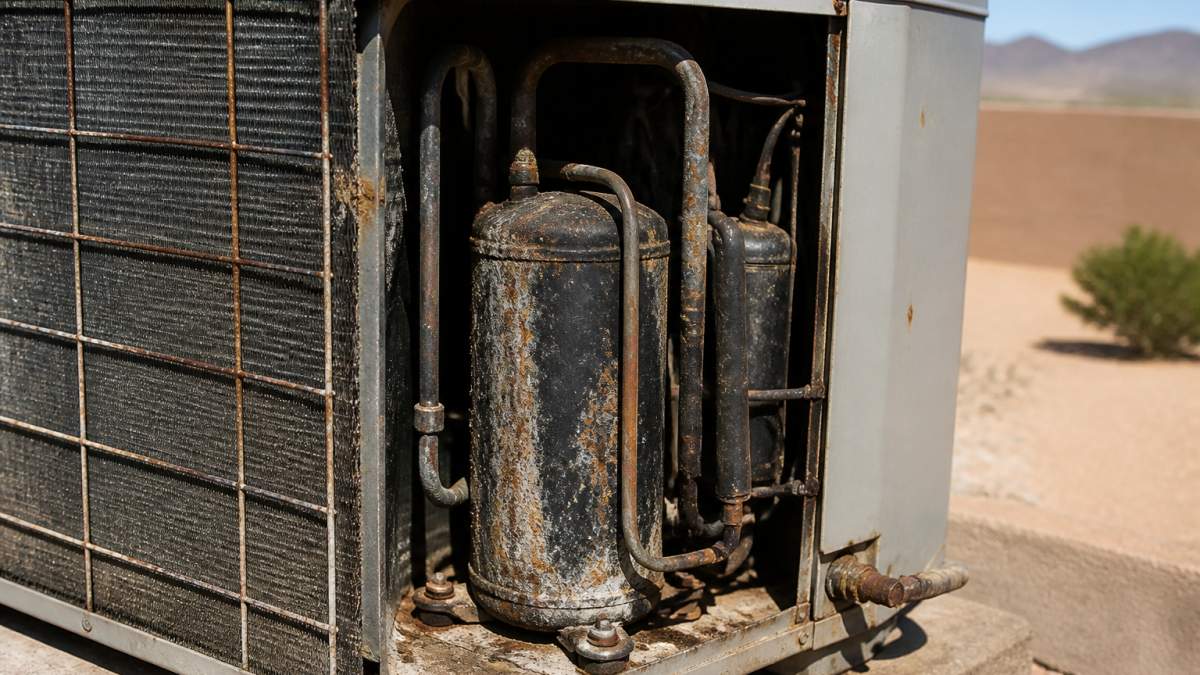
Your air conditioning blows air, but it's not cold. This is the most common sign that your AC compressor is failing. The compressor pumps refrigerant through the system to create cooling.
Check your thermostat by setting it to cool mode and lowering the temperature below room level. Feel the air from your vents after 5-10 minutes. If it stays warm or only slightly cool, your compressor may be losing its ability to pressurize refrigerant.
Unusual Noises from the Outdoor Unit
Listen to your outdoor AC unit when it runs. A healthy compressor produces a steady humming sound; strange noises indicate internal problems.
Common sounds from a failing compressor include:
- Clunking or banging (internal parts hitting the housing)
- Squealing or grinding (worn bearings or belts)
- Rattling (loose internal components)
- Growling (metal-on-metal friction)
If you hear any of these, shut the system off immediately to prevent further damage.
Hard Starts and Startup Struggles
Your AC takes longer than usual to kick in, with cool air arriving several minutes after startup. This indicates the compressor is struggling to overcome internal resistance.
Hard starts often precede complete failure. You may hear clicking sounds as the system tries to start, a clear warning that failure is imminent.
AC Compressor Not Turning On
Sometimes the compressor doesn't run at all, the outdoor unit is silent despite the thermostat showing the system is on. This indicates either electrical problems or compressor failure.
Checking the Clutch Engagement
The compressor clutch is an electromagnetic coupling that engages the compressor when cooling is needed. If it doesn't engage, the compressor won't turn on even if it's functional.
Look at your outdoor unit when the system is running. You should see a spinning shaft on the front of the compressor. If it's not spinning, the clutch isn't engaging. This could be an electrical issue or a worn clutch that needs replacement.
A failing clutch is often cheaper to replace than a full compressor, but only a technician can diagnose which component is failing.
Electrical Issues and Circuit Breaker Trips
A failing compressor often draws excessive electrical current, causing your circuit breaker to trip repeatedly.
If the breaker for your AC system keeps flipping off, don't keep resetting it. Repeated trips indicate excessive current draw, usually from compressor failure or a serious electrical fault.
Electrical problems are dangerous. Never ignore repeated breaker trips. Call a professional immediately.
Home AC Compressor Troubleshooting
Before assuming your compressor has failed, understand how to tell if ac compressor is failing by checking a few basic things. Some problems mimic compressor failure but aren't.
Testing Pressure Readings
A technician uses a pressure gauge to measure refrigerant levels on both the low-pressure (suction) and high-pressure (discharge) sides of the system.
What normal readings look like:
- Low-side pressure typically ranges from 25-40 psi during operation, depending on outdoor temperature and system design.
- High-side pressure typically ranges from 200-350 psi under the same conditions.
- The exact values vary by refrigerant type (R-410A, R-22, or newer blends), outdoor temperature, and indoor humidity.
What abnormal readings indicate:
- Low pressure on both sides suggests the compressor is not pumping effectively, or refrigerant has leaked from the system.
- High pressure on the discharge side with low suction-side pressure often points to internal compressor wear or a failed valve inside the compressor.
- High pressure on both sides may indicate a clogged condenser, restricted airflow, or an overcharge of refrigerant, not necessarily compressor failure.
A single normal pressure reading does not rule out internal compressor failure, as a compressor can fail intermittently or under load.
Do not attempt pressure testing yourself. Refrigerant handling requires EPA certification (the EPA). A licensed HVAC technician has the proper equipment and training to measure pressure safely.
Inspecting for Refrigerant Leaks
Low refrigerant causes weak cooling and is often misdiagnosed as compressor failure. A leak is usually cheaper to fix than compressor replacement.
Look for oily residue around connection points, the compressor housing, or condenser coils. Refrigerant carries oil, so leaks leave a thin, slick film.
Common leak locations include:
- Solder joints where copper tubing connects to the compressor or condenser.
- The shaft seal where the compressor's rotating shaft exits the housing.
- Valve ports on the compressor itself.
- Vibration cracks in the compressor housing (rare but possible in older units).
A professional can use electronic leak detectors to pinpoint the location. Small leaks near connection points can often be resealed; leaks inside the compressor housing require full replacement.
Checking Electrical Current Draw
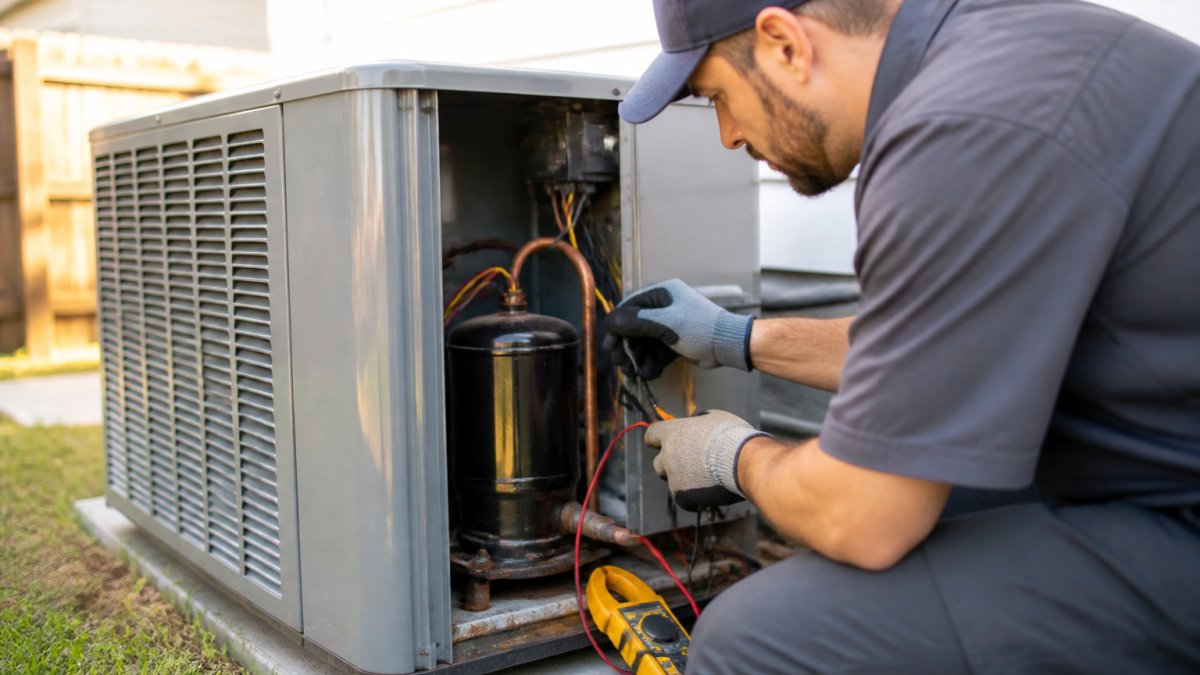
A failing compressor often draws excessive electrical current. A technician can measure amperage using a clamp meter.
What to know:
- A healthy compressor draws a steady, predictable current that matches the nameplate rating on the unit (usually 10-30 amps for residential systems).
- A compressor drawing 10-20% above its rated amperage is working harder than designed and may be failing internally.
- Amperage that spikes or fluctuates during operation suggests mechanical resistance inside the compressor.
- Amperage that is abnormally low may indicate the compressor is not running at full capacity or the motor is weak.
This check should only be performed by a licensed technician to avoid electrical hazards.
Distinguishing Compressor Failure from Similar Faults
Failed capacitor: A failed capacitor prevents the compressor from starting but the compressor itself may be fine. Symptoms include no startup, clicking sounds, and burnt smell. Replacement costs $150-$300.
Airflow problems: A dirty air filter, blocked vents, or clogged condenser coils restrict airflow. Cleaning costs $50-$200 and often restores cooling.
Faulty contactor: A failed contactor prevents the compressor from starting. Replacement costs $150-$400.
Clutch failure (automotive systems): A worn clutch prevents the compressor from engaging. Replacement costs $200-$600 versus $500-$1,200 for full compressor replacement.
Call (702) 707-4242 for a free estimate →
A professional diagnosis using pressure gauges, electrical testing, and visual inspection can distinguish these faults from true compressor failure and save you from unnecessary replacement.
Common Mistakes to Avoid During Diagnosis
Ignoring early signs allows damage to worsen. Running a failing compressor causes additional internal damage.
Don't assume any cooling problem means compressor failure. Dirty filters, blocked coils, and thermostat issues also reduce cooling. Have a professional inspect before replacement.
Don't attempt compressor repair yourself. It requires specialized tools, refrigerant certification, and deep system knowledge.
AC Compressor Repair or Replacement
Once a compressor fails, you face two options: repair or replacement. The decision depends on system age, condition, contamination risk, refrigerant type, and labor costs.
When Repair Is Still an Option
Some compressor problems are fixable without full replacement:
Worn or failed clutch (automotive systems): Clutch replacement costs $200-$600 and preserves the compressor. A technician can test compressor health before committing to replacement.
Electrical connection issues: Loose terminals, corroded contacts, or failed capacitors can prevent startup. Repair costs $150-$400 if the compressor motor is intact.
Minor refrigerant leaks near connection points: Small leaks can be resealed or the fitting replaced. Repair costs $200-$500.
Valve failure (internal): Some compressors have replaceable valve assemblies. If a valve fails, a technician may replace it without replacing the entire compressor.
Financial rule of thumb: If your system is under 10 years old, repair cost is less than 50% of replacement, and there's no history of internal damage, repair is usually better.
Signs You Need Full Replacement
Complete compressor replacement is necessary when:
Internal damage is severe: If the compressor has seized, cracked internally, or lost its ability to pressurize refrigerant, it cannot be repaired.
The compressor has burned out: Electrical overload or prolonged overheating burns out motor windings. A burnt smell or visible discoloration indicates burnout. Replacement is the only option.
Contamination is present: If metal debris, moisture, or acid has entered the refrigerant circuit, replacing only the compressor is risky. Full system flushing or unit replacement may be necessary to prevent repeated failures.
System age and remaining lifespan: If your AC is 15+ years old, the compressor has likely approached the end of its design life.
Refrigerant type mismatch: Older systems use R-22 (Freon), which is being phased out and is increasingly expensive ($50-$100 per pound). Newer systems use R-410A or R-454B.
Comparing Repair Costs to Replacement
Compressor replacement alone: $800-$1,500 (parts and labor), plus refrigerant recharge ($100-$300). Does not include system flushing if contamination is suspected.
Full outdoor unit replacement: $2,500-$5,000 for a mid-range residential system (parts and labor). Includes new compressor, condenser, and all electrical components. Comes with a 10-year manufacturer warranty on parts.
Full system replacement (indoor and outdoor units): $3,500-$7,500 for a complete air conditioning system. Recommended if the indoor coil is also aging or if contamination requires a fresh start.
Labor costs: HVAC technician labor typically runs $75-$150 per hour. A compressor replacement takes 3-5 hours; a full unit replacement takes 6-10 hours. Labor is often the largest component of the total cost.
Warranty and Long-Term Considerations
Compressor-only replacement: Usually comes with a 5-10 year warranty on the compressor itself, but the rest of your system remains on its original warranty (if still valid). If other components fail soon after, you'll face additional repair costs.
Full unit replacement: Comes with a 10-year parts warranty and often a 1-year labor warranty. This protection is valuable if you're committing to years more of cooling. New units are also 15-25% more efficient than units from 10+ years ago, lowering your energy bills.
Decision framework: If your system is under 10 years old, repair is usually the right choice.
What to Do Right Now If You Suspect Failure
Stop running your AC system if you suspect compressor failure. Each cycle causes more internal damage. Continued operation turns a repairable problem into a replacement situation.
Turn off your system at the thermostat. If you hear unusual noises, shut it down immediately. Then call a professional for diagnosis.
RTS Comfort Cooling & Heating offers 24/7 emergency service throughout the Las Vegas area. We can diagnose your AC compressor problem quickly and recommend the best solution.
Don't wait until your system fails completely during a heat wave. Early diagnosis saves money and prevents discomfort. Call us at (702) 707-4242 for a free estimate.
A failing AC compressor can leave your home unbearably hot during summer. The good news is that early detection prevents costly emergency repairs.
Frequently Asked Questions
How can I test my AC compressor?
Start by listening for the clutch to engage when you turn on the AC, a clicking sound means it's trying to engage. Check that the outdoor unit's fan runs. If you have a pressure gauge, compare high and low side readings to the manufacturer's specifications for your system. If pressures are extremely low or the compressor doesn't respond at all, you likely have a mechanical or electrical failure. For safety, always turn off power before inspecting electrical connections.
What are the signs of a failing home AC compressor?
A failing AC compressor typically shows weak or warm airflow from vents, unusual noises like clunking or squealing from the outdoor unit, the system struggling to start or cycling on and off frequently, or the circuit breaker tripping repeatedly. You may also notice the outdoor unit running but the indoor unit producing little to no cold air. These symptoms indicate internal damage, electrical faults, or refrigerant pressure problems that require professional diagnosis.
Can a bad capacitor make an AC compressor seem like it is failing?
Yes, a failing capacitor can mimic compressor failure. The capacitor provides the electrical surge needed to start the compressor motor. If it fails, the compressor won't turn on or will struggle to start, making it appear broken. However, the compressor itself may be fine. A technician can test the capacitor separately and replace it if faulty, which is much cheaper than compressor replacement and often restores full function immediately.
Should I repair or replace my AC compressor?
If your system is under 10 years old and the compressor has internal damage but no refrigerant leak, repair may be worthwhile. If the compressor is 12+ years old, has suffered catastrophic internal failure, or shows signs of electrical burnout, replacement is usually more cost-effective long-term. Consider the age of your entire system, warranty coverage, and how long you plan to stay in your home. A professional technician can assess whether repair or replacement makes sense for your specific situation.