 listicle
Common Heat Pump Problems: 2026 Troubleshooting Guide
Table of Contents
- 1. Refrigerant Leaks and Low Charge
- 2. Heat Pump Won't Turn On
- 4. Strange or Unusual Noises
- 5. Defrost Cycle Issues and Frozen Outdoor Coil
- 6. Dirty Air Filters and Airflow Problems
- 7. Short Cycling
- 8. Heat Pump Not Blowing Hot Air
- DIY vs. Professional Repair: Where to Draw the Line
- Preventative Maintenance Schedule
- Age-Related Failure Indicators
- Smart Thermostat Integration Issues
- Frequently Asked Questions
Last Updated: September 23, 2026
1. Refrigerant Leaks and Low Charge
A refrigerant leak is one of the most common heat pump problems, and it quietly drains your system's ability to heat or cool. Refrigerant is the fluid that carries heat between the indoor air handler and the outdoor coil. When the charge drops, the compressor works harder and performance falls off.
Signs Your Heat Pump Is Low on Refrigerant
Watch for ice on the outdoor coil, warm air from the vents in heating mode, a hissing or bubbling sound near the refrigerant lines, and higher-than-normal energy bills. If the reversing valve or coil frosts over on a mild day, low charge is a likely cause.
What most guides miss is that refrigerant doesn't get "used up" like fuel. If the level is low, there is a leak somewhere in the line set, coil, or connections. Adding refrigerant without finding the leak is a temporary fix at best.
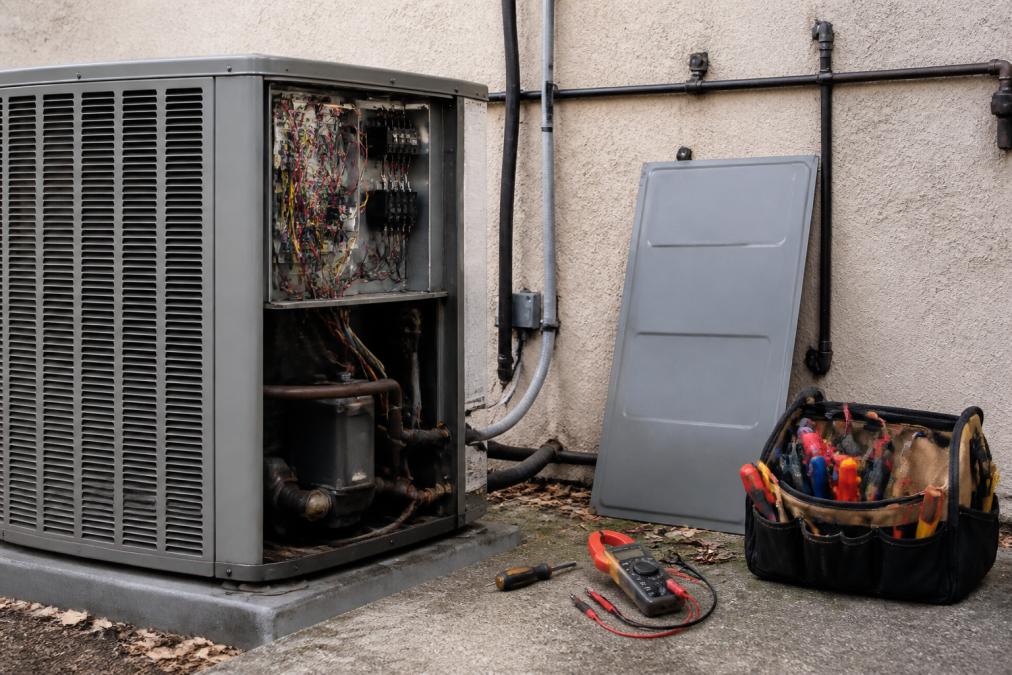
A licensed technician uses an electronic leak detector and pressure gauges to locate the source, repair it, then recharge to the manufacturer's spec. This is not a DIY job, both because of the tools required and because handling refrigerant is regulated.
2. Heat Pump Won't Turn On
A heat pump that won't turn on usually points to an electrical failure rather than a mechanical one. The most common culprits are a tripped breaker, a blown capacitor, a failed contactor, or a thermostat that has lost calibration or power.
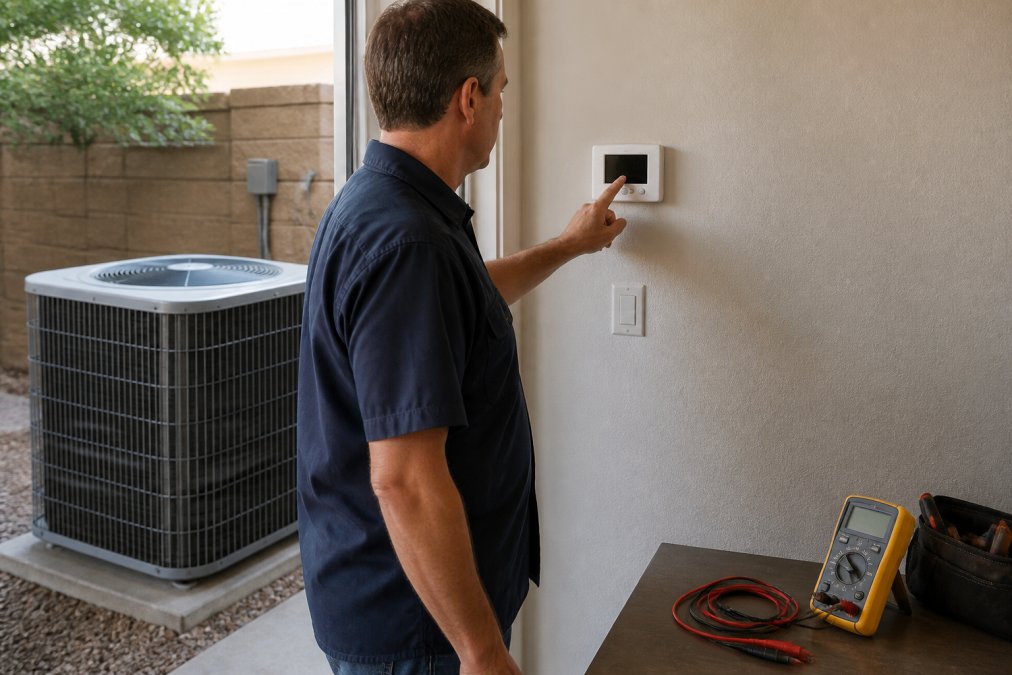
Start with the simple checks: confirm the thermostat is set to HEAT (or COOL), the batteries are good, and the breaker at the panel isn't tripped. If the outdoor unit is silent but the indoor air handler runs, the problem is often at the contactor or capacitor.
(/how-to-choose-ac-unit-size-las-vegas-home). In heating mode it usually points to auxiliary heat running when it shouldn't, or a reversing valve stuck in one position.Common causes include:
- A clogged air filter restricting airflow
- A refrigerant charge that's too low or too high
- A thermostat that's miscalibrated or set to "fan on" instead of "auto"
- A reversing valve that won't switch between heating and cooling
4. Strange or Unusual Noises
Unusual noises from a heat pump are rarely cosmetic. A grinding sound usually means a failing blower motor or compressor bearing. A screeching noise often points to a worn fan belt or motor. A rattling sound can be loose panels, debris in the outdoor unit, or a failing compressor mount.
5. Defrost Cycle Issues and Frozen Outdoor Coil
A frozen outdoor coil in winter is a classic sign that the defrost cycle has stopped working. Heat pumps pull heat from cold outdoor air, which means the outdoor coil gets cold enough to frost. The defrost cycle periodically reverses the system to melt that frost. When the cycle fails, ice builds up and blocks airflow.
6. Dirty Air Filters and Airflow Problems
A dirty air filter is the single most preventable cause of heat pump problems. When the filter clogs, airflow restriction starves the system of air, which drops efficiency, freezes the indoor coil in cooling mode, and forces the compressor to work harder than it should.
7. Short Cycling
Short cycling is when the heat pump turns on and off in rapid bursts, often running for only a few minutes at a time. It's one of the most damaging heat pump problems because every startup draws a surge of current and puts stress on the compressor, contactor, and capacitor.
8. Heat Pump Not Blowing Hot Air
A heat pump not blowing hot air is the complaint that sends most people searching for answers. The system runs, the fan blows, but the air coming out of the vents is cool or lukewarm. The cause depends on whether the outdoor unit is running.
DIY vs. Professional Repair: Where to Draw the Line
Some heat pump problems are safe to handle yourself. Others are not, and knowing the difference saves money and prevents injury.
Safe for most homeowners:
- Replacing air filters
- Clearing debris from around the outdoor unit
- Resetting a tripped breaker
- Switching the thermostat fan setting to AUTO
- Checking and replacing thermostat batteries
Call a professional:
- Anything involving refrigerant
- Capacitor, contactor, or circuit board replacement
- Reversing valve diagnosis or repair
- Compressor issues
- Defrost control board failures
- Any electrical work beyond a breaker reset
| Problem | DIY-Friendly? | Typical Fix | Urgency |
|---|---|---|---|
| Dirty filter | Yes | Replace filter | Low |
| Thermostat misconfigured | Yes | Reset to AUTO | Low |
| Tripped breaker | Yes | Reset breaker | Low |
| Frozen outdoor coil | No | Defrost cycle repair | Medium |
| Short cycling | Partly | Filter, thermostat, or technician | Medium |
| Refrigerant leak | No | Leak search and recharge | High |
| Capacitor or contactor failure | No | Part replacement | High |
| Compressor failure | No | Replacement | Critical |
Preventative Maintenance Schedule
A heat pump maintenance checklist keeps small issues from becoming emergency calls. The schedule below covers the tasks most homeowners can handle and the ones that belong to a technician.
Monthly:
- Check the air filter and replace if dirty
- Clear leaves and debris from around the outdoor unit
- Confirm the thermostat is set correctly for the season
Seasonally:
- Rinse the outdoor coil with a garden hose (power off first)
- Check the condensate drain line for clogs
- Test heating mode before the first cold snap
- Test cooling mode before the first heat wave
Annually:
- Schedule a professional tune-up
- Have refrigerant charge and pressures checked
- Have the blower motor and capacitor tested
- Have the defrost cycle verified before winter
Age-Related Failure Indicators
Heat pumps typically last 10-15 years. Past that range, repairs start to cost more than they're worth, and the system becomes less efficient with each passing season. Knowing the signs of an aging unit helps you plan a replacement instead of reacting to a breakdown.
Watch for these indicators:
- Repairs becoming more frequent or more expensive
- Refrigerant needing to be added more than once
- Rising energy bills with no change in usage habits
- The unit using R-22 refrigerant, which is phased out
- Rust, corrosion, or visible damage on the outdoor cabinet
- The compressor running louder than it used to
Smart Thermostat Integration Issues
Smart thermostats prevent some heat pump problems and cause others. The most common integration issue is a missing C-wire. Many heat pumps need a common wire to power a smart thermostat continuously; without it, the thermostat may run on batteries, lose connection, or fail to control the system properly.
Other issues include:
- Incorrect wiring during installation, which can prevent the reversing valve from switching
- Thermostat configured for a conventional system instead of a heat pump, which disables auxiliary heat or defrost control
- Software settings that lock out the compressor during cold weather
- Geofencing that turns the system off and on too aggressively, causing short cycling
Frequently Asked Questions
What is the most common reason for a heat pump to fail?
Refrigerant leaks are the most common cause of heat pump failure. A leak reduces the system's ability to transfer heat, leading to poor heating or cooling and eventually compressor damage. Other frequent issues include dirty air filters causing airflow restriction, thermostat calibration problems, and electrical failures like a bad capacitor or contactor. Regular maintenance can catch these early.
How do I know if my heat pump needs refrigerant?
Signs include the heat pump not blowing hot air, hissing or bubbling noises near the outdoor unit, and ice buildup on the outdoor coil. If you see these, call an HVAC technician. Refrigerant is not consumed like fuel; low levels indicate a leak that must be repaired before recharging. DIY refrigerant handling is illegal without EPA certification.
Can a dirty air filter cause a heat pump to stop working?
Yes. A clogged filter restricts airflow, causing the heat pump to overheat, short cycle, or freeze the indoor coil. This reduces system efficiency and can lead to compressor failure. Check your filter monthly and replace it every 1-3 months. Replacing filters regularly is a simple way to prevent airflow problems.
What is the average lifespan of a home heat pump?
Most heat pumps last 10 to 15 years with proper maintenance. Factors like regular filter changes, annual professional tune-ups, and correct system sizing affect longevity. If your unit is over 12 years old and needs frequent repairs, replacement may be more cost-effective. RTS Comfort Cooling & Heating can assess your system's condition.
How much does heat pump repair cost?
Heat pump repair cost varies by the issue: minor fixes like a capacitor replacement may be a few hundred dollars, while compressor or refrigerant leak repairs can cost significantly more. Pricing depends on parts, labor, and urgency. For an accurate quote, call RTS Comfort Cooling & Heating at (702) 707-4242 for a free estimate.
When a heat pump fails in the middle of a Las Vegas summer or on a cold winter night, you don't want to guess. You want someone who can diagnose the problem, explain the fix, and get the system running again. RTS Comfort Cooling & Heating offers 24/7 emergency service, expert heat pump repair, smart thermostat installation, and comprehensive maintenance that keeps your system running at its best. Call (702) 707-4242 for a free estimate and get your home comfortable again.