 ultimate-guide
Energy Savings from Attic Insulation 2026
Table of Contents
- How Attic Insulation Reduces Energy Consumption
- Understanding Attic Insulation R-Value Requirements
- Real Energy Savings: What You Can Expect
- Energy Efficient Home Improvement Credit 2026
- Types of Attic Insulation Materials
- Air Sealing and Thermal Performance
- DIY vs. Professional Installation
Last Updated: August 26, 2026
How Attic Insulation Reduces Energy Consumption
Attic insulation works by creating a thermal barrier that slows heat transfer between your living spaces and the outdoor environment. During winter, it traps warm air inside your home. During summer, it blocks heat from entering through the roof. This fundamental principle directly reduces the workload on your HVAC system, which means your heating and cooling equipment runs less frequently and for shorter periods.
The effectiveness of energy savings from attic insulation 2026 depends heavily on your current insulation level and your home's air sealing. Many homeowners discover they're losing substantial energy through an under-insulated attic simply because nobody ever measured it.
When insulation prevents heat loss and gain, your thermostat doesn't trigger your heating or cooling system as often. This directly translates to lower utility bills. The relationship is straightforward: better insulation means fewer hours of HVAC operation, which means less energy consumption and lower monthly costs.
Understanding Attic Insulation R-Value Requirements
R-value measures thermal resistance, the ability of insulation to resist heat flow. Higher R-values indicate better insulating performance. The R-value you need depends on your climate zone, your current insulation level, and whether you're upgrading or installing new insulation.
The federal government provides R-value recommendations based on climate zones. For most regions in the continental United States, recommended attic R-values range from R-30 to R-60, with colder climates requiring higher values (energy.gov). Your specific requirement depends on whether you're in a heating-dominated climate, a cooling-dominated climate, or a mixed climate.
Energy savings from attic insulation 2026 are maximized when your R-value meets or exceeds your climate zone's recommendation. Installing R-30 in a region that requires R-49 will provide some benefit, but you're leaving significant energy savings on the table. Conversely, installing R-60 in a mild climate may not provide enough additional benefit to justify the extra cost.
The IRC (International Residential Code) provides the baseline standard for insulation requirements across the country. These recommendations have been updated multiple times, and current guidance emphasizes higher R-values than older installations typically have. If your home was built more than 15 years ago, your attic insulation almost certainly falls below current recommendations.
Real Energy Savings: What You Can Expect
Energy savings from attic insulation 2026 vary based on your starting point, your climate, and your usage patterns. A home with minimal or no attic insulation that upgrades to recommended R-value levels typically sees noticeable reductions in heating and cooling costs. Homes in heating-dominated climates often see larger percentage savings than cooling-dominated climates, simply because heating demands are generally higher throughout the year.
The magnitude of savings depends on several factors working together. Your current insulation level is the biggest variable, upgrading from R-0 to R-49 produces far greater savings than upgrading from R-30 to R-49. Your climate zone matters significantly. Your home's age and construction quality affect how much energy is already being lost through other pathways like air leaks and poor window sealing.
Many homeowners report noticing a difference in comfort and temperature stability within the first heating or cooling season after upgrading attic insulation. This subjective improvement often matters as much as the numerical reduction in utility bills, because it means your HVAC system is working more efficiently and your home maintains more consistent temperatures throughout.
Air sealing combined with insulation produces better results than insulation alone. If your attic has significant air leaks around penetrations, ductwork, and the attic floor perimeter, upgrading insulation R-value won't achieve maximum efficiency. The combination of proper R-value plus air sealing creates a true thermal barrier that minimizes both conductive heat loss and infiltration losses.
Energy Efficient Home Improvement Credit 2026
The federal government offers tax incentives for home energy efficiency improvements, including attic insulation upgrades. As of 2026, the Energy Efficient Home Improvement Credit (Section 25C of the Internal Revenue Code) provides a tax credit for qualified energy efficiency improvements to existing homes.
According to IRS guidance on energy efficient home improvements, qualifying insulation improvements must meet specific performance requirements and be installed in your primary residence. The credit covers a percentage of the cost, subject to annual and lifetime limits. Attic insulation that meets the energy code requirements for your climate zone typically qualifies.
The exact credit amount and limitations change periodically, so verifying current rules with the IRS or a tax professional is essential before planning your upgrade. Many homeowners can claim this credit when they file their annual tax return, provided they retain documentation of the insulation type, R-value, and installation date.
Beyond the federal credit, many states and local utilities offer additional rebate programs for energy efficiency improvements. These rebates often apply directly to the cost of materials or installation, reducing your out-of-pocket expense. Some utility companies offer incentives specifically for attic insulation because they recognize the direct impact on energy consumption and peak demand reduction.
Types of Attic Insulation Materials
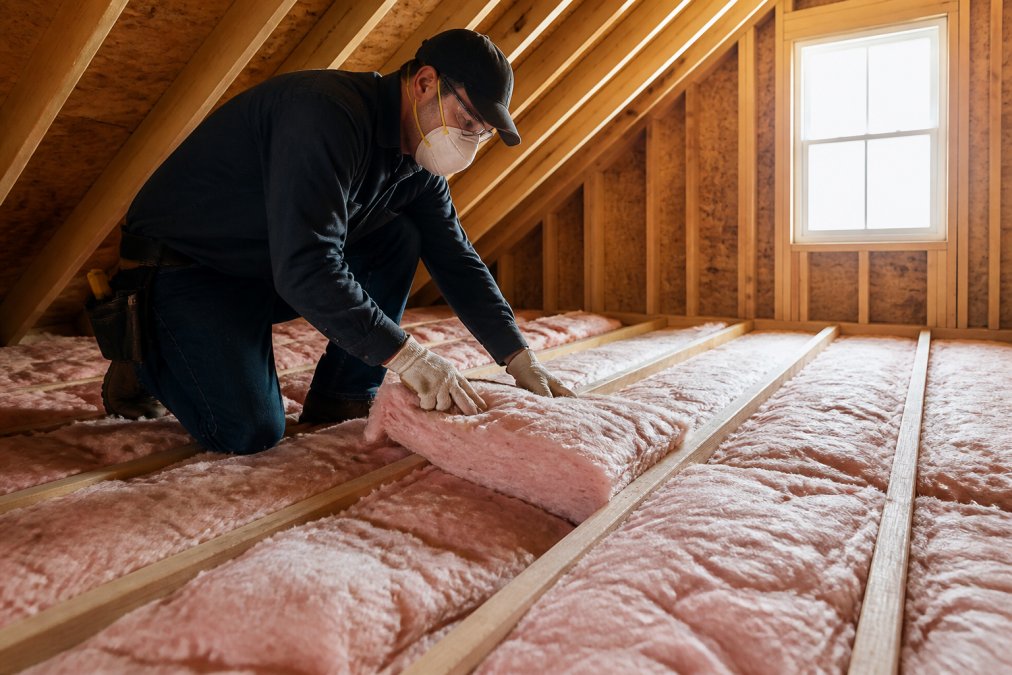
Fiberglass batts are the most common and least expensive attic insulation material. They come in standard widths designed to fit between rafters and joists. Installation is straightforward, making them popular for DIY projects. Fiberglass performs well when properly installed, but gaps, compression, and air leaks around edges reduce effectiveness.
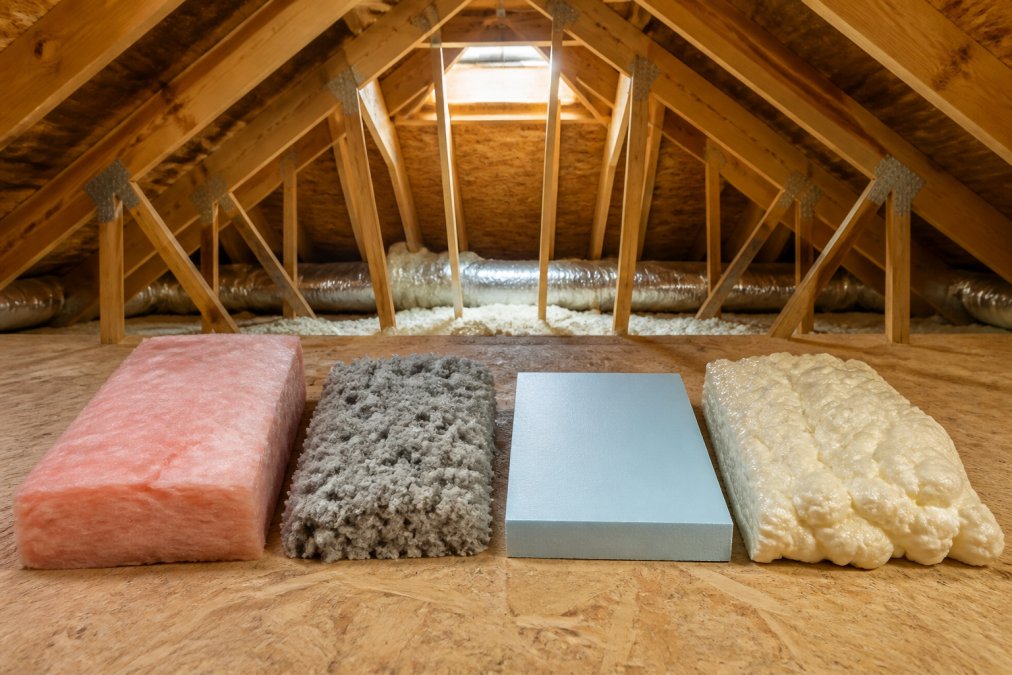
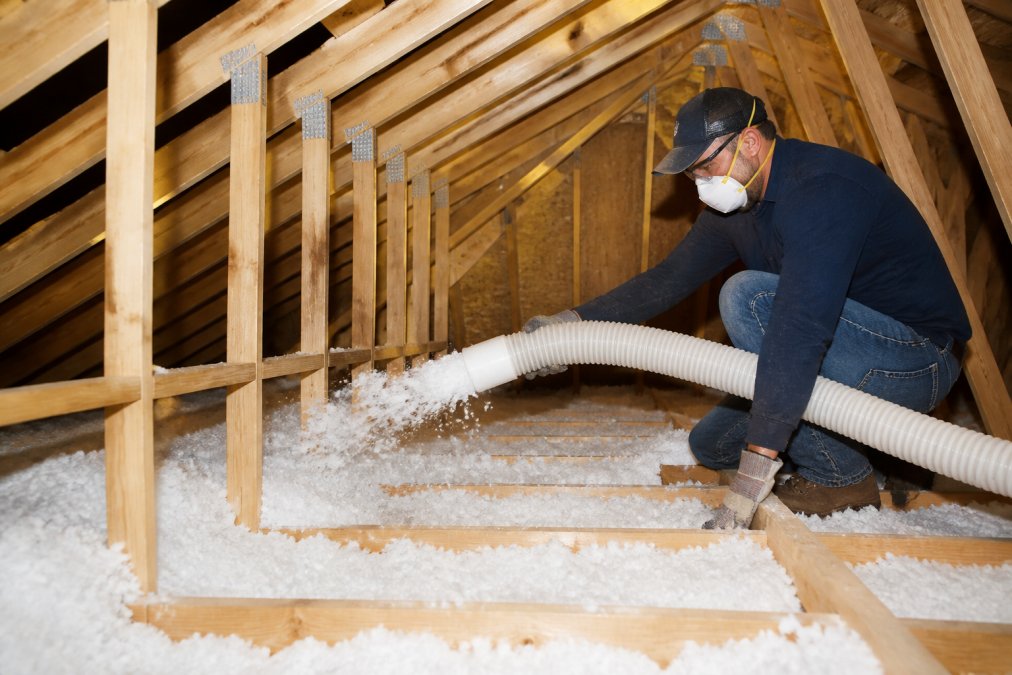
Cellulose is a blown-in insulation made from recycled paper fiber treated with fire retardant. It achieves higher R-values per inch than fiberglass batts and fills irregular spaces more completely. Cellulose requires specialized equipment for installation, making it a professional-only application. It's denser than fiberglass, which can be an advantage for air sealing but requires proper ventilation considerations.
Spray foam polyurethane creates an air-tight seal while providing insulation. It expands to fill gaps and irregular spaces, eliminating air leakage paths that traditional batts leave open. Spray foam achieves high R-values per inch and provides both insulation and air sealing in one application. The tradeoff is higher material and installation cost compared to fiberglass or cellulose.
Call (702) 707-4242 for a free estimate →
Mineral wool batts offer performance between fiberglass and spray foam. They're denser than fiberglass, provide better fire resistance, and perform well at high temperatures. Mineral wool costs more than fiberglass but less than spray foam. It's less common than fiberglass, so availability and contractor familiarity vary by region.
Each material has different installation requirements, cost profiles, and performance characteristics. The best choice depends on your budget, your climate zone's R-value requirement, your attic's configuration, and whether you're planning DIY installation or hiring professionals. Energy savings from attic insulation 2026 depend more on achieving proper R-value and air sealing than on which specific material you choose.
| Material | R-Value per Inch | Installation Type | Cost Relative | Best For |
|---|---|---|---|---|
| Fiberglass Batts | 3.2-3.8 | DIY or Professional | Low | Budget-conscious, standard cavities |
| Cellulose | 3.6-3.8 | Professional only | Medium | Irregular spaces, high density needed |
| Spray Foam | 5.5-7.0 | Professional only | High | Air sealing, complex geometry |
| Mineral Wool | 3.2-3.8 | DIY or Professional | Medium | Fire resistance, temperature stability |
Air Sealing and Thermal Performance
Air sealing addresses the infiltration losses that insulation alone cannot prevent. Even perfectly installed insulation with excellent R-value won't eliminate energy loss if air is leaking around the attic perimeter, through ductwork penetrations, or around electrical and plumbing penetrations.
Common air leak locations in attics include the attic floor perimeter where it meets exterior walls, gaps around HVAC ducts, openings where wiring enters the attic, and areas around exhaust vents. These leaks allow conditioned air from your living spaces to escape into the attic, bypassing your insulation entirely.
Air sealing typically involves sealing penetrations with caulk or foam sealant, installing baffles to maintain ventilation while preventing air movement, and ensuring the attic floor is properly sealed. When combined with adequate insulation R-value, air sealing creates a complete thermal barrier that minimizes both conductive heat transfer and infiltration losses.
The relationship between air sealing and insulation is complementary. Insulation slows conductive heat transfer through solid materials. Air sealing prevents convective heat loss through air movement. Together, they create maximum thermal resistance. Addressing one without the other leaves significant energy savings unrealized.
At RTS Comfort Cooling & Heating, we evaluate both insulation and air sealing when assessing attic energy efficiency. Many homes benefit from improving both simultaneously, which maximizes the return on your energy efficiency investment and ensures your HVAC system operates at peak efficiency.
DIY vs. Professional Installation
DIY installation of fiberglass batts is feasible for homeowners with basic carpentry skills and access to a safe attic. The material is inexpensive, and installation involves laying batts between joists or rafters. The main risks are improper coverage, gaps that reduce effectiveness, and safety hazards like falls or exposure to existing insulation containing asbestos in older homes.
Professional installation ensures proper coverage, correct R-value installation, and appropriate air sealing around penetrations. Professionals have experience identifying existing insulation types and potential hazards. They can assess whether your attic ventilation is adequate and whether additional air sealing is needed.
Spray foam and cellulose installation require specialized equipment and training. DIY application is not practical for these materials. Professional installers have the equipment to achieve proper density and coverage, and they understand ventilation requirements that affect long-term performance.
The cost difference between DIY and professional installation varies significantly. Fiberglass batts DIY installation costs substantially less than professional installation but provides no warranty and carries higher risk of improper installation. Spray foam and cellulose professional installation costs more but guarantees proper application and typically includes warranties.
Common DIY mistakes include leaving gaps between batts, compressing insulation (which reduces R-value), failing to seal air leaks around penetrations, and not addressing ventilation requirements. These mistakes reduce the energy savings you achieve and can create moisture or ventilation problems that damage attic components.
Professional installation through RTS Comfort Cooling & Heating includes proper assessment of your attic's current condition, identification of air sealing needs, selection of appropriate insulation material for your climate and configuration, and installation with quality assurance. We ensure energy savings from attic insulation 2026 are maximized through proper execution.
Attic insulation directly reduces your home's heating and cooling costs by creating a thermal barrier that minimizes energy loss. The combination of proper R-value, air sealing, and appropriate material selection maximizes efficiency and ensures your HVAC system operates at peak performance. Whether you're upgrading an older home or ensuring new construction meets current energy standards, professional guidance ensures you achieve the energy savings and comfort improvements you're investing in. Contact RTS Comfort Cooling & Heating at (702) 707-4242 for a free estimate and professional assessment of your attic's insulation needs.
Frequently Asked Questions
Q: How much will attic insulation reduce my heating and cooling bills?
A: Energy savings depend on your current insulation level, climate zone, and home size. Homes with inadequate attic insulation often see noticeable reductions in heating and cooling costs after upgrading. Older homes with little or no attic insulation may experience even greater savings. The exact amount varies based on your local climate and how well your home envelope is sealed. Contact RTS Comfort Cooling & Heating for a free energy assessment to estimate your specific savings potential.
Q: Is there a federal tax credit for attic insulation in 2026?
A: Yes. The Energy Efficient Home Improvement Credit 2026 allows homeowners to claim a tax credit for qualifying energy efficiency upgrades, including attic insulation. To qualify, insulation must meet specific thermal resistance standards and be installed in your primary residence. The credit covers a percentage of eligible costs, subject to annual and lifetime limits. Consult a tax professional to confirm your project qualifies, as requirements may vary based on insulation type and R-value.
Q: What R-value should my attic insulation have?
A: Recommended attic insulation R-value requirements vary by climate zone. Most homes benefit from R-38 to R-60, with colder climates requiring higher values. Your specific R-value depends on your location, local building codes, and whether you're in a heating-dominant or cooling-dominant climate. RTS Comfort Cooling & Heating can assess your home and recommend the appropriate R-value for your area to maximize energy efficiency and comfort.
Q: Should I hire a professional or install attic insulation myself?
A: Professional installation ensures proper coverage, correct R-value density, and compliance with building codes. DIY installation risks include gaps, compression, inadequate air sealing, and potential safety hazards in tight attic spaces. Professionals also address thermal bridging and vapor barrier placement, which significantly impact performance. While DIY may seem cost-effective initially, improper installation can reduce energy savings and create moisture problems. RTS Comfort Cooling & Heating offers professional installation with quality assurance.
This article was written using GrandRanker