 how-to
How to Prepare Your Home for Duct Cleaning: A Room-by-Room Guide
Last Updated: November 2, 2026
Quick Summary
To prepare your home for duct cleaning, clear at least two feet around every supply vent and return register, move furniture blocking vents and HVAC equipment, and provide a clear path to your furnace and air handler. Do this prep work the evening before so technicians can spend their time cleaning rather than working around clutter.
- Clear a path at least 24 inches wide to each vent so technicians can set down tools.
- Clear at least three feet in front of the furnace in a utility closet.
- Pull beds and dressers at least a foot away from wall registers.
- Don't seal or tape over vents, since technicians need them open.
- Get landlord approval in writing before booking duct cleaning in a rental.
Table of Contents
- Why Preparation Makes or Breaks Your Duct Cleaning Appointment
- The Duct Cleaning Process Step by Step (and What It Means for Your Prep)
- Room-by-Room Preparation Checklist
- Do I Have to Move Furniture for Duct Cleaning?
- Should You Leave the House During Duct Cleaning?
- How Long Does Duct Cleaning Take?
- What Not to Do Before Duct Cleaning
- Special Situations: Renters, Allergies, and Limited Access
- Frequently Asked Questions
Why Preparation Makes or Breaks Your Duct Cleaning Appointment
A little prep work before the crew arrives changes everything about how well your duct cleaning goes.
The payoff goes beyond convenience. When technicians can reach every supply vent, return register, and access panel without obstacles, they can spend more of their time on the cleaning itself.
Here's the part most guides skip: the prep you do also protects your own belongings.
The Duct Cleaning Process Step by Step (and What It Means for Your Prep)
Most professional duct cleaning follows a similar sequence, and knowing it helps you prepare each space correctly. The typical duct cleaning process step by step looks like this:
- Walkthrough and inspection. The crew checks your duct layout and locates access points.
- System shutdown. Technicians cut power to the furnace or air handler before work begins.
- Negative pressure setup. A powerful vacuum connects to the main trunk to pull debris toward it.
- Agitation. Rotary brushes and air whips loosen dust from duct surfaces.
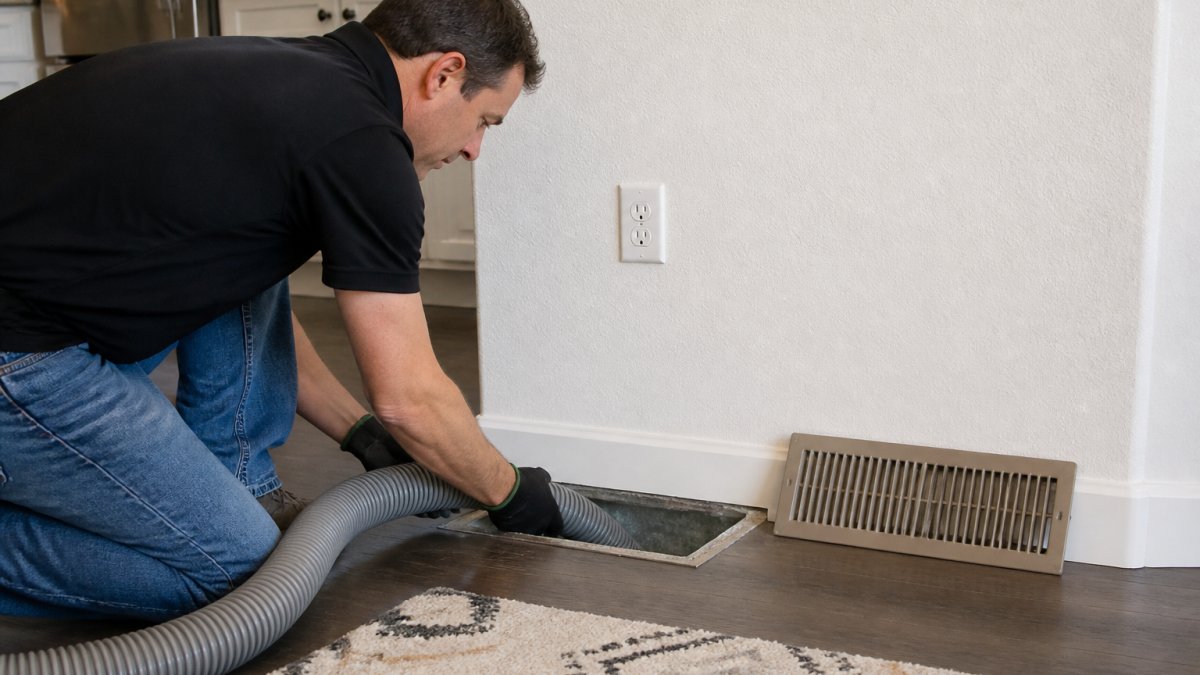
- Contact vacuum cleaning. Hand tools reach supply vents, return registers, and tight branches.
- Final check and cleanup. The crew reseals access panels and shows you the results.
Understanding this flow tells you why access matters so much. If your home has older ducts, it also helps to know how old ductwork affects energy efficiency and cleaning results. Every step depends on the technician reaching your HVAC equipment and duct openings without moving your sofa first.
Room-by-Room Preparation Checklist
Treat preparation as a room-by-room job, not one big scramble. Work through your home the evening before so nothing is rushed on appointment day.
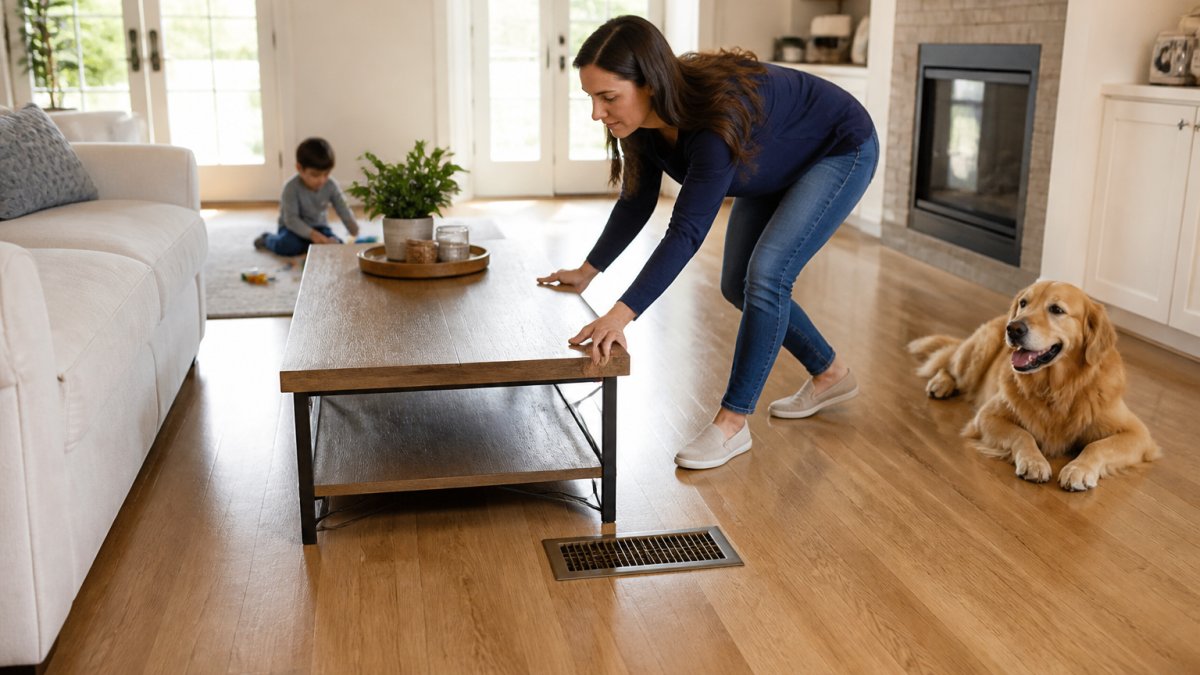
Living Areas and Bedrooms
- Clear at least two feet around every supply vent and return register.
- Move furniture off floor vents. Couches, recliners, and ottomans are the usual offenders.
- Take fragile decor off shelves and mantels near vents. A bumped vacuum hose can knock items over.
Kitchen, Bathrooms, and Utility Spaces
- Clear the path to any vent under cabinets or in closets. Kitchen toe-kick vents and bathroom ceiling fans often share duct runs with the main system.
- Move cleaning supplies and stored boxes away from the furnace closet. Many furnaces sit in a utility closet that doubles as storage; clear at least three feet in front of the unit.
- Unlock and clear utility room doors. If the furnace or air handler is behind a locked door, leave the key or unlock it before the crew arrives.
Attic, Basement, and HVAC Equipment Access
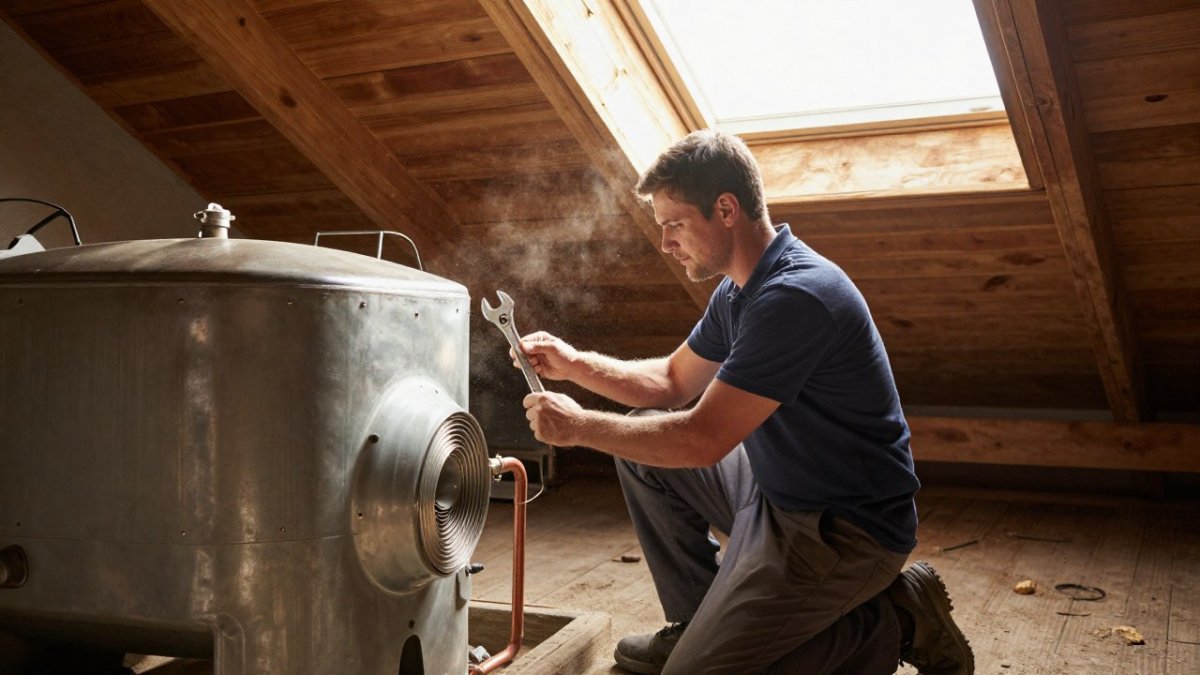
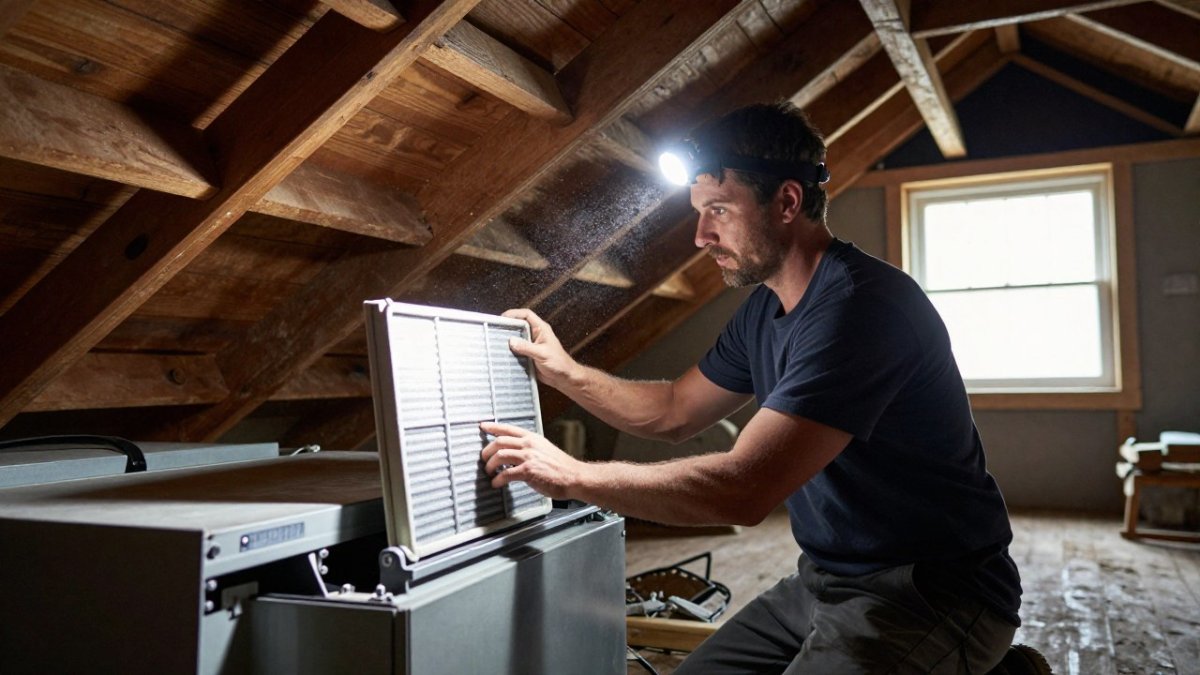
- Clear a walkway to the furnace, air handler, and air conditioner. A path at least two feet wide is enough for most crews.
- Move stored boxes away from duct access panels. Holiday decorations, luggage, and seasonal gear are common blockers.
- Make sure the attic hatch or basement door opens fully. If the hatch is painted shut or blocked by shelving, address it before the appointment.
Whole-Home Items
- Confirm the location of every return register. Many homes have one central return plus smaller returns in bedrooms; knowing where they are helps you clear them all.
- Move valuables and electronics away from access points. A laptop or television near a return grille should be relocated.
- Decide where children and pets will stay during the service. A closed bedroom or a fenced yard works; a room near the work area does not.
Watch out: don't shove clutter into the equipment closet to get it out of the way. Stacking boxes in front of the furnace or air handler blocks the exact access the crew needs and can delay the appointment.
Work through these clearances the evening before so the crew can reach every vent and piece of equipment.
| Area | What to do | Clearance or note |
|---|---|---|
| Living areas and bedrooms | Clear around supply vents and return registers | At least two feet |
| Living areas and bedrooms | Pull beds and dressers from wall registers | At least one foot |
| Living areas and bedrooms | Clear a path to each vent | At least 24 inches wide |
| Kitchen, bathrooms, utility | Clear space in front of the furnace | At least three feet |
| Attic, basement, HVAC access | Clear a walkway to furnace, air handler, AC | At least two feet wide |
| Whole-home items | Confirm location of every return register | One central plus smaller bedroom returns |
| Whole-home items | Decide where children and pets stay | Closed bedroom or fenced yard |
Do I Have to Move Furniture for Duct Cleaning?
You don't need to empty rooms, but you do need to move furniture blocking vents and equipment. Technicians can work around a couch, but they can't clean a supply vent hidden under a heavy dresser.
Large pieces stay put. Small and medium items near vents should move. You can also review duct cleaning services to see what's included and schedule your visit.
Should You Leave the House During Duct Cleaning?
You can stay home, but many homeowners step out for a few hours. The equipment is loud, and the process kicks up dust near access points.
Call (702) 707-4242 for a free estimate →
If you do stay, keep children and pets in a room away from the work area. If you leave, make sure the crew can access the furnace, air handler, and every vent on their own.
How Long Does Duct Cleaning Take?
The length of a duct cleaning appointment depends on home size and duct layout, and RTS Comfort Cooling & Heating can give you an estimate when you call for a free estimate.
Prep time is separate. If you want ongoing upkeep after the cleaning, our HVAC maintenance plans cover the routine service that keeps a system clean between deep cleans.
What Not to Do Before Duct Cleaning
A few common mistakes undo your prep work or create problems on service day:
- Don't seal or tape over vents. Technicians need them open.
- Don't run the HVAC system right before the crew arrives if you've been told to shut it down.
- Don't shove clutter into the equipment closet. It blocks access.
- Don't skip the walkthrough. Point out problem vents and any past water damage.
If you're already noticing weak airflow from some vents, our guide on fixing weak airflow from vents covers quick checks you can do before service day.
Special Situations: Renters, Allergies, and Limited Access
Most preparation guides assume you own a detached house with a wide-open attic and a furnace in the garage. Real homes are messier. Here's how to handle the situations that competitors skip.
Renters and Shared Buildings
- Get landlord approval in writing before booking. A text or email confirming the appointment protects you if the landlord later disputes the charge or the work.
- Confirm who pays. In many leases, duct cleaning is the landlord's responsibility if it's part of routine maintenance, but the lease language controls. Ask before you book.
- Coordinate access to common equipment spaces. In condos and apartment buildings, the air handler may be in a shared mechanical closet or on a rooftop. Building management may need to unlock it.
- Ask about parking and elevator use. A crew carrying a negative-pressure vacuum and hoses needs a loading zone and, in high-rises, elevator access. Confirm the building's rules before the day of service.
Allergies, Asthma, and Respiratory Sensitivity
- Tell the scheduler about sensitivities when you book.
- Plan to be away during cleaning and for a short time after. Consider leaving the home during the service, and ask the technician for their recommendation on when it is safe to return.
- Ask about post-service ventilation. Opening windows and running the system fan for a short period helps clear residual dust, but confirm the technician's recommendation first.
- Request before-and-after photos of the ducts they clean. Photos of the trunk line and a representative supply branch give you a record without promising specific health outcomes.
Limited Access and Tight Spaces
- Tight attics, finished basements, and crawlspaces need a quick conversation with the crew about what they can reach. Some access panels are too small for standard equipment, and the technician may recommend a different approach.
- If an access panel is sealed or painted shut, don't force it. Ask the technician to open it or advise on a safe alternative.
- Homes with multiple systems need each system prepared separately. A two-story house with one unit upstairs and one downstairs has two air handlers, two sets of returns, and two access points.
Verifying Scope and Legitimacy Before the Appointment
- Ask what components are included. Ask the company to confirm in writing which components are included in the cleaning and which are excluded.
- Confirm access needs in advance. Ask whether the crew needs attic, basement, or crawlspace access and how much clearance they require.
- Check credentials. Ask for proof of licensing and insurance where required, and ask for the technician's name before the visit.
- Watch for unsupported claims. Be cautious of any company that promises specific health benefits, guaranteed energy savings, or a fixed price without seeing the system.
Watch out: skipping a scope check with an unfamiliar company can leave you paying for a service that never touches your actual ducts. Ask what equipment they use before the appointment.
Frequently Asked Questions
What do I need to do before duct cleaning?
Clear the work area around every supply vent, return register, and vent cover so the cleaning crew can reach the duct openings. Move furniture and personal items away from the furnace, air handler, and any duct access panels. Arrange for children and pets to stay in a separate room or away from the home during the appointment. Turn off the HVAC system when the technicians ask, and confirm the scope of the duct cleaning service, including which vents and equipment will be cleaned, before the crew starts.
Do I have to move furniture for duct cleaning?
You do not need to empty entire rooms, but you do need to clear space around each supply vent, return register, and access panel. A good rule is to move furniture at least a few feet away from vents and remove rugs, decor, or boxes blocking the duct openings. For heavy pieces like sofas or beds, tell the company in advance so the crew can plan around them or ask you to shift them. Clearing the work area yourself speeds up the appointment and reduces the chance of damage.
Should you leave the house during duct cleaning?
Leaving is not required, but it is often the easiest choice. Duct cleaning can stir up dust and debris, and the vacuum equipment and brushes create noise, so people with allergies, asthma, or respiratory sensitivity should plan to be out of the home during the service. If you stay, keep children and pets in an unaffected room and stay clear of the work area. Ask the technicians when it is safe to return to each room, and plan to ventilate the home afterward.
How long does duct cleaning take?
Most residential duct cleaning appointments run about two to four hours, depending on the size of the home, the number of supply vents and return registers, and how accessible the duct layout and HVAC equipment are. Homes with a simple layout and clear access usually finish on the shorter end, while larger homes, multiple systems, or limited access to duct work can push the appointment longer. Confirm the expected duration when you book so you can plan for pets, children, and your own schedule.
Preparing your home for duct cleaning comes down to clearing access and protecting your belongings. It's simple work, and it makes a real difference in the result. RTS Comfort Cooling & Heating handles duct cleaning, indoor air quality, and full HVAC service with 24/7 emergency availability. Call (702) 707-4242 for a free estimate and get your system running cleaner.