 how-to
How to Spot Dangers of Burning Smell from HVAC
Last Updated: November 4, 2026
Quick Summary
A burning smell from an HVAC system can signal heated dust, overheating, or an electrical fault, and a sharp or persistent odor needs prompt attention. Turn the system off at the thermostat; if you see smoke or flames, hear crackling, or the odor rapidly worsens, leave and call 911.
- A brief dusty odor may occur when heating starts after the system has been unused.
- Keep the system off if the odor smells like burning plastic or electrical insulation.
- Do not open HVAC equipment, touch wiring, or repeatedly reset a tripped breaker.
- Tell the technician when the odor started, where it was strongest, and how long it lasted.
Table of Contents
- Dangers of Burning Smell from HVAC: What the Odor Can Signal
- Should I Turn Off AC If It Smells Burnt?
- HVAC Smells Like Burning Plastic: Identify the Warning Signs
- Burning Smell from AC Outdoor Unit: What to Check Safely
- How to Get Rid of Burning Smell from AC Vents in House
- When to Call an HVAC Technician for a Burning Smell
- Request 24/7 HVAC Help from RTS Comfort Cooling & Heating
- Frequently Asked Questions
Dangers of Burning Smell from HVAC: What the Odor Can Signal
A burning smell from an HVAC system can point to dust, overheating, or an electrical fault. This guide explains how to tell the difference and what to do safely. The dangers of burning smell from HVAC systems depend on the odor and whether it continues after shutdown.
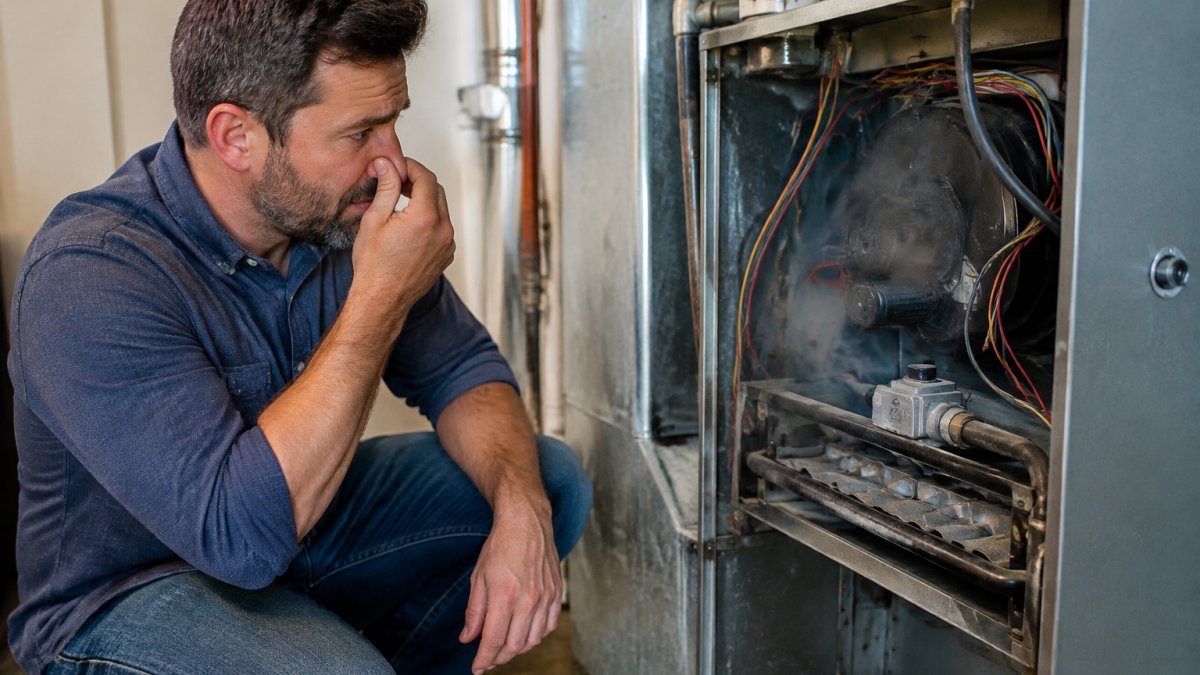
A burning smell is an odor from heated dust or parts, and it can signal a fault that needs prompt attention. A brief dusty odor at the start of heating differs from a sharp smell like burning plastic. But smell alone cannot confirm the cause.
Use this quick sensory check:
- Dry, dusty odor: May come from dust burning off after the system sits unused.
- Sharp plastic or chemical odor: Stop the system and check for signs of heat or damage.
- Fishy or acrid odor: Treat it as a possible electrical issue.
- Musty odor: Could point to moisture or mold and mildew in the system.
The [U.S. Fire Administration’s home fire safety guidance | usfa.fema.gov] advises people to take fire risks seriously. A burning odor is not a reason to open HVAC equipment or touch wiring.
Should I Turn Off AC If It Smells Burnt?
Yes. Turn the HVAC system off at the thermostat as soon as you notice a burning odor. A thermostat shutdown stops the system’s call for heating or cooling, but it does not necessarily disconnect power to the equipment. If the odor is strong, sharp, or persistent, leave the system off and consider switching off its circuit breaker only if you can reach the electrical panel safely.
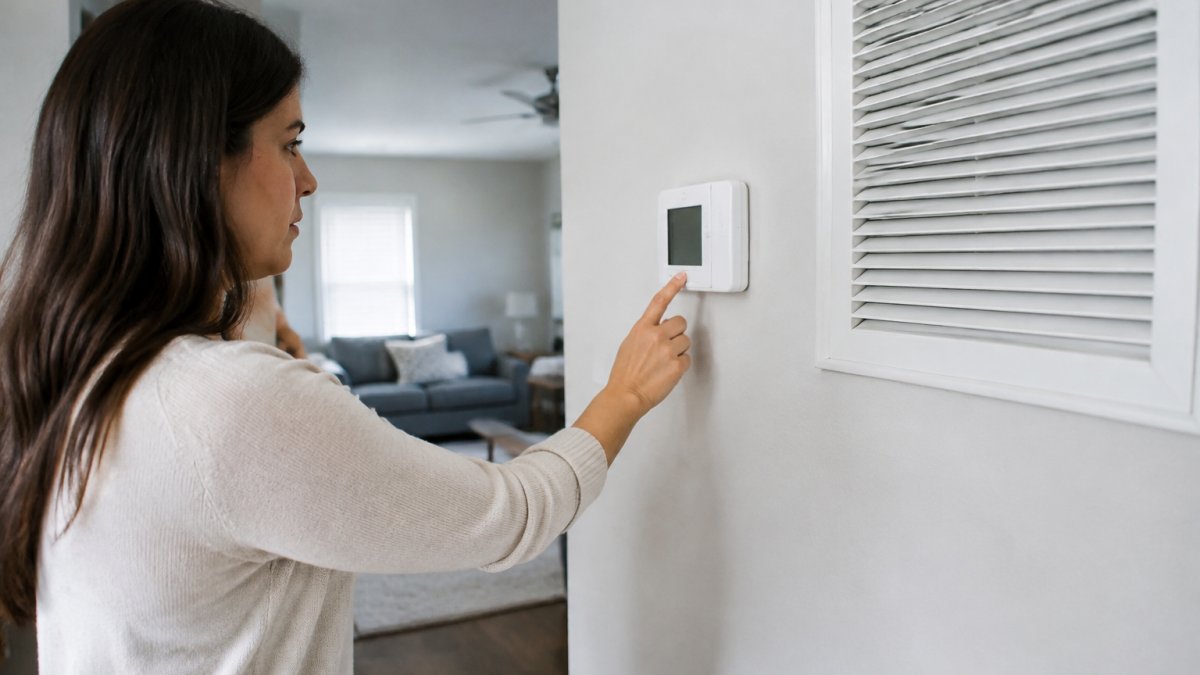
Use this emergency shutdown sequence:
- Check for immediate danger from a safe distance. If you see flames or smoke, hear crackling, or notice a rapidly worsening odor, get everyone out and call 911. Do not spend time troubleshooting or approach the equipment.
- Turn the system off at the thermostat if there is no immediate fire danger and you can do so without going near smoke, heat, or damaged equipment.
- Keep people and pets away. Do not touch the furnace, air handler, outdoor unit, outlets, or any surface that may be hot. Do not remove an access panel or try to locate the source by smell.
- Consider the breaker only if the route to the electrical panel is clear and safe. Use the panel label to identify the HVAC circuit if it is clearly marked. If the panel is hot, buzzing, smoking, or smells burnt, do not touch it; leave and call 911 if there is smoke or fire.
- Leave the system off and arrange professional inspection if the odor is like burning plastic or electrical insulation, returns after shutdown, or occurs with a tripped breaker, unusual noise, or visible damage.
A thermostat is the first control to use because it is accessible and avoids opening equipment. The breaker can cut power to a circuit, but it is not a reason to approach a hazardous panel, and turning it back on to test the system can expose a failing component to power again.
Watch out: Do not repeatedly reset a breaker that trips, and do not use an extension cord or another circuit as a workaround for an HVAC power problem.
A brief dusty smell at the start of heating may fade as accumulated dust burns off, but that possibility does not make a persistent or sharp odor safe. If the smell is accompanied by smoke, sparks, or signs of fire, leave the area and call 911 rather than waiting for an HVAC appointment.
HVAC Smells Like Burning Plastic: Identify the Warning Signs
An HVAC system that smells like burning plastic should stay off until a technician checks it. The odor can come from hot electrical components, wiring insulation, or a short circuit, so treat it as a safety warning rather than a routine nuisance.
The smell’s strength and timing offer clues, not a diagnosis. Note whether it starts with the fan, comes from one vent, or appears near the indoor or outdoor unit. Share those details with the technician.
Watch for:
- Smoke, sparks, or a hot outlet
- A circuit breaker that trips again
- A blower motor that stops or makes new noise
- Burning plastic odor that grows stronger
- Warm air when the thermostat calls for cooling
The [U.S. Consumer Product Safety Commission’s electrical fire safety advice | cpsc.gov] offers guidance on electrical hazards at home. Don’t test a suspected fault by running the HVAC system again.
Burning Smell from AC Outdoor Unit: What to Check Safely
A burning smell from an AC outdoor unit calls for a shutdown and a visual check from a safe distance. Do not remove panels or reach inside; the cause may involve electrical parts or a fan that can start unexpectedly.
Once the system is off, look for visible smoke, scorch marks, or debris near the unit. Keep clear if you see damage. Do not spray water on the equipment or try to reset a breaker repeatedly.
You can safely note:
Call (702) 707-4242 for a free estimate →
- Whether the odor is strongest outdoors or indoors
- Whether the fan was running
- Any visible leaves or debris around the unit
- Whether the breaker tripped
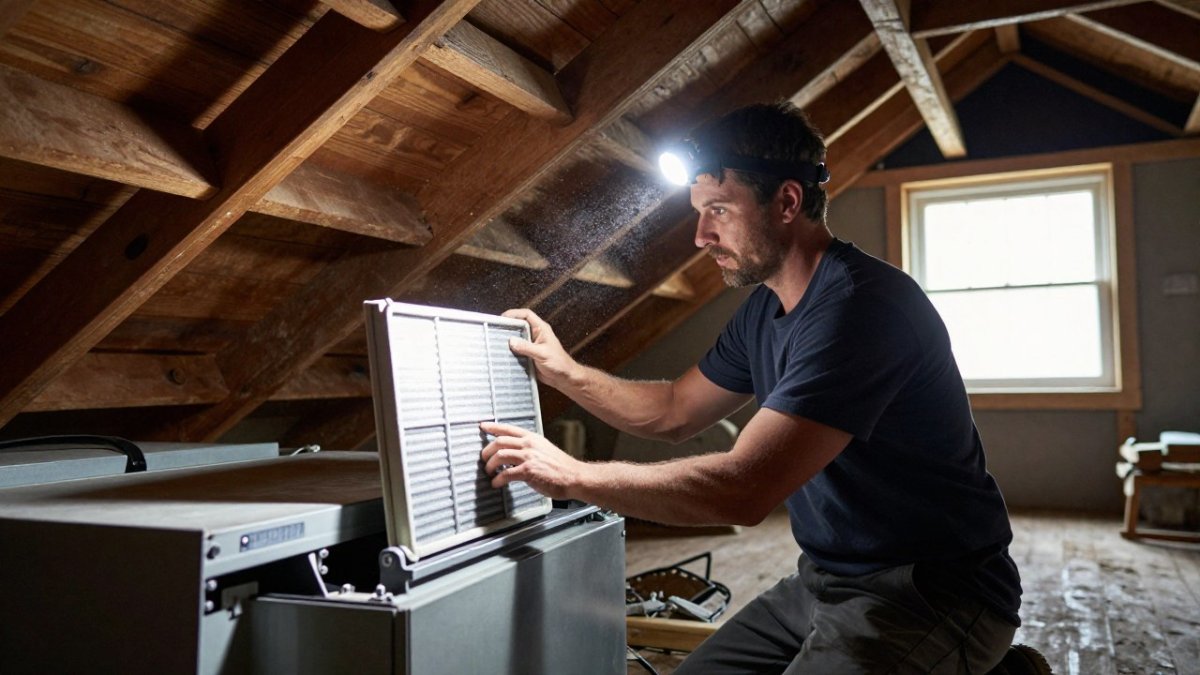
A blocked air filter can also strain airflow and contribute to overheating indoors. Check the filter only when the system is off, and replace it if it is visibly dirty and the manual allows. A filter check does not make it safe to restart a unit with a burning odor.
How to Get Rid of Burning Smell from AC Vents in House
To get rid of a burning smell from AC vents in the house, turn off the system first and identify whether the odor is brief and dusty or sharp and persistent. Replace a dirty air filter only after shutdown; call a technician if the smell returns, smells like plastic, or comes with smoke or breaker trips.
Burning dust can occur when a system starts after a long period without use. The odor should fade rather than intensify. If it does not, stop troubleshooting and arrange a system inspection.
Use this simple guide:
| What you notice | Safer next step | Avoid |
|---|---|---|
| Brief dusty odor | Check the air filter | Repeated restarts |
| Musty odor | Ask about ductwork and moisture | Masking it with fragrance |
| Sharp plastic smell | Keep system off; call a technician | Opening electrical panels |
| Smoke or sparks | Leave and call 911 | Approaching the unit |
The [ENERGY STAR air filter guidance | energystar.gov] explains why clean filters matter for HVAC upkeep. Filter care supports airflow, but it cannot fix electrical component failure.
When to Call an HVAC Technician for a Burning Smell
Call an HVAC technician before using the system again if a burning odor is sharp, persists after shutdown, returns when the system runs, or comes with unusual noise, weak airflow, smoke, or a tripped breaker. These clues can help a technician narrow down the problem, but they are not a safe basis for opening the equipment or diagnosing electrical parts yourself.
The pattern can be useful to report:
- Odor begins as the blower starts: A motor, its wiring, or another component in the air handler may be overheating. Note whether airflow is weak or the fan sounds different than usual.
- Odor is strongest near a vent and resembles hot dust: Dust on heating components can produce a brief smell after a period without use. If it grows stronger, lasts, or returns on later cycles, stop the system and request an inspection rather than assuming it is harmless.
- Sharp plastic, acrid, or fishy odor: Treat this as a possible electrical or overheated-material warning. Keep the system off and call a professional; do not restart it to see whether the smell clears.
- Breaker trips or the system stops unexpectedly: A trip can indicate an electrical fault or another problem that needs evaluation. Do not keep resetting the breaker.
- Odor is musty rather than scorched: Moisture or microbial growth may be a separate indoor-air-quality concern. Describe it accurately so the technician can investigate the right issue instead of treating every odor as an electrical fault.
Age can provide context, but it cannot establish that a unit is safe or predict a particular failure. A newer system can have a damaged connection or installation problem, while an older, maintained system may not have the symptom you are noticing. The more useful clues are the equipment’s service history, whether the odor is new, what operating mode triggers it, and whether airflow, sound, or breaker behavior has changed.
Before calling, write down when the smell started, whether the system was heating or cooling, where the odor seemed strongest, how long it lasted, and any visible warning signs. Share the model information if it is readily available without opening the unit. Keep the system off while waiting if the odor is persistent, electrical-smelling, or associated with a breaker trip.
Watch out: Do not remove panels, touch wiring, or run the system again to reproduce the smell; a technician can inspect the equipment without you increasing the risk of further overheating.
If there is active smoke or fire, leave the building and call 911. For a persistent burning odor without an active emergency, explain the specific symptoms rather than describing it only as a general bad smell.
Request 24/7 HVAC Help from RTS Comfort Cooling & Heating
A burning smell is a poor time to guess. RTS Comfort Cooling & Heating offers 24/7 emergency HVAC service, along with AC repair, heating installation, duct cleaning, and indoor air quality services. For help with a system that smells burnt, explore HVAC repair and emergency service.
If the odor comes from a heating system, the 24/7 emergency heating repair guide covers what to do next. Call (702) 707-4242 for a free estimate. Get started with RTS Comfort Cooling & Heating.
Frequently Asked Questions
Why does my HVAC smell burnt?
A brief burning-dust odor can occur when dust accumulated on a heating element burns off after the system has been idle. A persistent or sharp electrical burning smell can be a safety warning. Turn the system off if the odor continues, and avoid repeatedly restarting it.
Should I turn off AC if it smells burnt?
Yes. If the burning odor is strong, persistent, or smells like plastic or electrical wiring, turn the HVAC system off at the thermostat. If you can do so safely, switch off its circuit breaker. Do not touch exposed wiring or open equipment panels. Smoke, sparks, or visible fire call for leaving the area and contacting emergency services. Do not turn it back on while the odor persists.
Is a burning plastic smell from HVAC dangerous?
It can signal overheating or a malfunctioning electrical component, so treat an HVAC smells like burning plastic odor as a safety warning rather than ordinary dust. Shut the system down and avoid restarting it to test whether the smell returns. If you see smoke or sparks, leave the area and call emergency services. Otherwise, keep the system off.
How do I get rid of a burning smell from AC vents in my house?
First turn off the system if the odor is persistent, sharp, or plastic-like. Check the air filter only after the equipment is off, and replace it if it is dirty; a clogged filter can add operational stress but does not explain every burning odor. Do not mask the smell with sprays or keep running the AC to clear it. If the odor remains or returns, keep the system off.