 how-to
7 Steps to Troubleshoot AC Drainage Pipe Clogs
Last Updated: October 25, 2026
Quick Summary
AC drainage pipe clogs occur when condensate drain lines become blocked by algae, dirt, or mineral deposits, causing water to back up into the condensate pan instead of flowing away from your system. Start troubleshooting by locating your drain line cleanout access point, then use methods like vinegar flushing, wet/dry vacuum suction, or a drain snake to clear the blockage.
- Water pooling around your indoor AC unit or reduced cooling are the first signs of AC drainage pipe clogs
- Start with vinegar and water solution, then progress to wet/dry vacuum or drain snake if needed
- Change air filters every 1-3 months and pour vinegar down the drain monthly to prevent recurring clogs
- Ensure your drain line slopes downward at least 1/4 inch per 10 feet to prevent water pooling
- Call a professional if clearing the line yourself doesn't work or if clogs return every few weeks
Table of Contents
- Recognizing Clogged AC Drain Line Symptoms
- Where to Find Your AC Drain Line Cleanout Location
- Safety First: Turning Off Power Before You Start
- Inspecting the Condensate Drain Pan and Access Point
- How to Unclog an AC Condensate Drain Line
- Why Your AC Drain Line Keeps Clogging
- Distinguishing a Clog from Other Drainage Problems
- When to Call an HVAC Professional for Help
- Frequently Asked Questions
Recognizing Clogged AC Drain Line Symptoms
AC drainage pipe clogs are one of the most common issues homeowners face. When your air conditioner's condensate drain gets blocked, water backs up instead of flowing away from your system.
The first sign is usually water pooling around your indoor AC unit. You might notice moisture on the floor near your furnace or air handler.
Listen for your AC system running but not cooling effectively. When the drain line clogs, water can back up into the evaporator coil.
Here's what to watch out for: if water overflows from the condensate pan, it can drip into your attic or walls. This causes mold growth and structural damage fast.
Common symptoms include:
- Water pooling around the indoor unit
- Reduced cooling or system shutting off mid-cycle
- Musty or moldy odors from vents
- Visible water stains on ceilings or walls
- Hissing sounds from the AC unit
- Higher than normal humidity inside your home
Where to Find Your AC Drain Line Cleanout Location
Your AC drain line runs from the evaporator coil down and out of your home. Finding the cleanout access point is your first step toward fixing a clog.
Start by locating your indoor air handler. This is usually in your attic, basement, or utility closet.
The cleanout access point is often a T-shaped fitting or a removable cap at the lowest point of the line.
Look for a small opening with a removable plug or cap. This access point lets you clear debris without taking apart the entire line.
Mark this location before you start troubleshooting. You'll need to return to it multiple times during the cleaning process.
Safety First: Turning Off Power Before You Start
Never work on your AC system while power is running. Electrical shock is a real risk, and moving parts can cause injury.
Locate your AC system's power switch.
Don't stop there. Go to your home's main electrical panel and turn off the circuit breaker for your AC system.
Wait five minutes after shutting off power. This allows any residual electrical charge to dissipate safely.
Now test the system. Try adjusting your thermostat, nothing should happen. If the unit powers on, you missed a switch.
When you're done troubleshooting, restore power in reverse order: flip the main breaker back on, then switch the disconnect box back to ON.
Inspecting the Condensate Drain Pan and Access Point
The condensate pan sits directly below your evaporator coil.
Look inside the pan for standing water, dirt, or debris. A small amount of water is normal if your system just ran.
Check the drain opening at the pan's lowest point. This is where the drain line connects. Shine a flashlight down the opening.
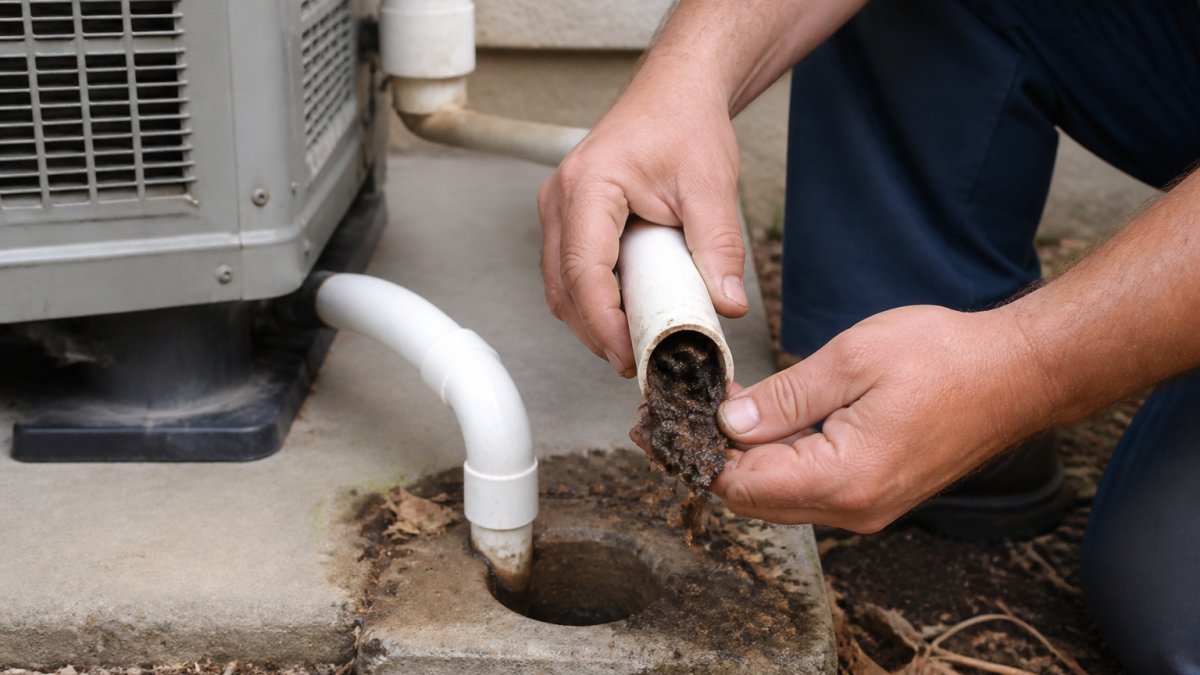
Feel around the access point with your finger (after confirming power is off). A wet, slimy coating is algae.
Look for cracks or damage in the pan itself. A cracked pan leaks water into your home even if the drain line is clear.
Check the area around the pan for water damage, mold, or wet insulation.
How to Unclog an AC Condensate Drain Line
Clearing AC drainage pipe clogs involves several methods, from simple to more intensive. Start with the easiest approach and move to the next if the first doesn't work.
Clearing Debris and Buildup
Begin by removing loose debris from the drain opening. Use a small brush or old toothbrush to gently scrub around the access point.
Mix a simple cleaning solution: one part white vinegar to two parts water. Pour this slowly down the drain opening. Vinegar dissolves mineral deposits and kills algae naturally. Let it sit for 15-20 minutes.
Follow the vinegar with warm water. Pour it slowly and watch for water flowing out the other end of the line (usually at your home's exterior). If water flows freely, the clog is cleared.
For light buildup, this method works in most cases. It's safe, inexpensive, and won't damage your system.
Using a Wet/Dry Vacuum
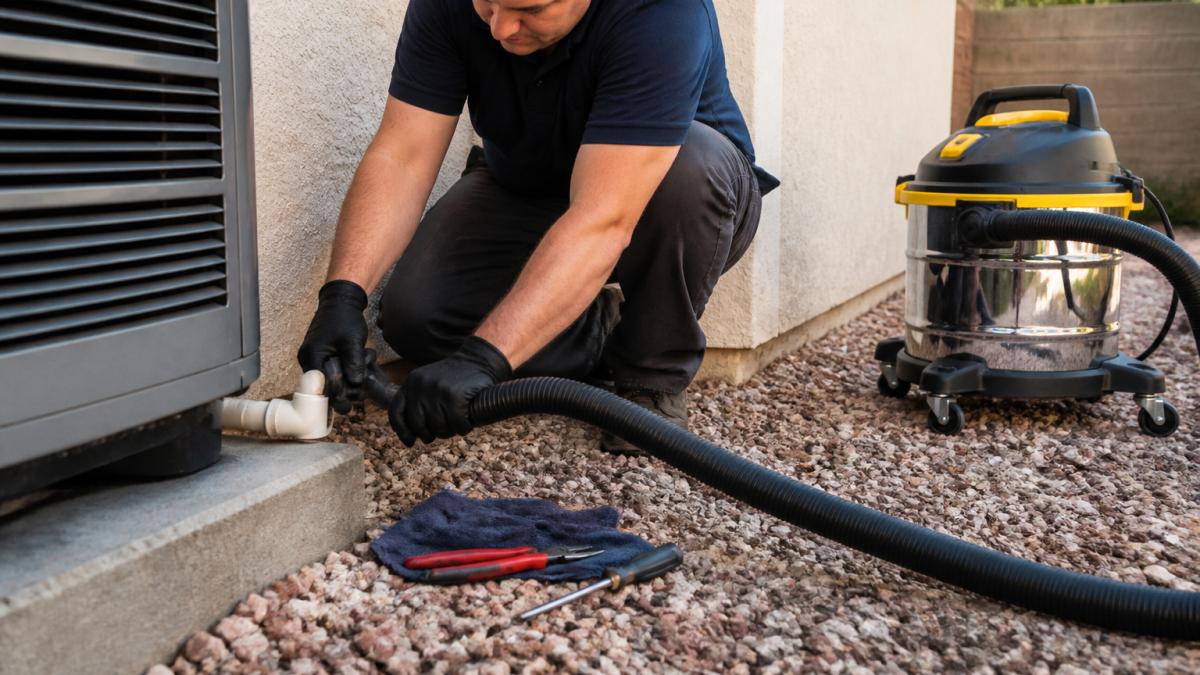
A wet/dry vacuum creates suction that can pull out blockages. This method works well for clogs made of algae, dirt, or loose debris.
Place the vacuum hose over the drain opening. If the opening is small, you may need to wrap a cloth around the hose to create a seal.
Check the vacuum canister afterward. You'll likely see dark water and debris. Empty it and repeat if needed.
This approach is effective for moderate clogs. It's also safer than forcing tools deep into the line, which can damage the pipe.
Flushing the Drain Line
Flushing with water pressure can clear stubborn blockages. Use a garden hose or a low-pressure water source. Never use a pressure washer, the force can crack PVC pipes.
Insert the hose into the drain opening. Start with low water pressure and gradually increase it. You're looking for water to flow out the other end of the line, not blast the blockage apart.
Call (702) 707-4242 for a free estimate →
If water backs up and pools, you've found the clog. Stop and try a different method rather than forcing more water through.
For persistent clogs, alternate between flushing and vacuuming. The combination often works when either method alone doesn't.
Using a Drain Snake or Flexible Brush
A plumbing snake or flexible brush can reach deeper blockages. These tools physically break up clogs that suction or water alone can't clear.
Feed the snake slowly into the drain opening. Don't force it, let it find its path through the line. When you feel resistance, you've hit the clog.
Withdraw the snake slowly. Repeat this process 2-3 times if needed.
A flexible brush works similarly. Push it down the line and pull it back out repeatedly. This scrapes the inside of the pipe and dislodges buildup.
After using a snake or brush, flush the line with water to clear loosened debris.
These methods progress from simple to more intensive, so start with the easiest approach first.
| Method | How It Works | Best For |
|---|---|---|
| Vinegar and water | Mix one part vinegar to two parts water, pour down drain, wait 15-20 minutes | Light buildup and mineral deposits |
| Wet/dry vacuum | Create suction over drain opening for 30-60 seconds to pull out debris | Moderate clogs of algae, dirt, or loose debris |
| Water flushing | Use garden hose with low pressure to flush blockage through the line | Stubborn blockages that suction alone cannot clear |
| Drain snake or brush | Feed tool into drain opening and twist gently to break up clog | Deep blockages requiring physical removal |
Why Your AC Drain Line Keeps Clogging
If your drain line clogs repeatedly, the root cause isn't just bad luck. Understanding why it keeps happening helps you prevent it.
Algae and mold grow naturally in dark, moist environments. Your condensate drain line is the perfect breeding ground.
Dirt and dust from your return air duct can travel down into the drain line.
Standing water in the condensate pan is another culprit. If the pan doesn't drain completely, bacteria and algae thrive in the stagnant water.
Poor drain line slope is a less obvious cause. If the line isn't tilted downward at least 1/4 inch per 10 feet, water pools instead of flowing.
To prevent recurring clogs:
- Change your air filter every 1-3 months
- Pour a vinegar solution down the drain monthly
- Ensure the drain line slopes downward toward the exit
- Have a professional inspect the line yearly
- Consider installing a drain line float switch (a safety device that shuts off water if the line backs up)
Distinguishing a Clog from Other Drainage Problems
Not every AC drainage issue is a simple clog. Knowing the difference helps you fix the right problem.
A true clog blocks water flow completely or nearly so. Water backs up into the pan and either pools or overflows.
A cracked or damaged drain line leaks water inside your home.
Negative pressure in your home can create drainage issues.
A kinked or pinched drain line restricts flow without a clog.
Frozen condensate lines occur in very cold climates. If your drain line runs through an unheated attic or exterior wall, ice can form during winter.
To identify which problem you have:
- Confirm water is pooling in the pan (true clog indicator)
- Check if water drips from the line itself (damage indicator)
- Look for visible kinks or crushing (obstruction indicator)
- Verify the line slopes downward (drainage design issue)
- Inspect for ice buildup in cold seasons (freezing indicator)
If you clear the line with the methods above and water still backs up, the problem isn't a clog.
When to Call an HVAC Professional for Help
Some drain line problems need professional expertise. Knowing when to call saves you time and prevents further damage.
Call a professional if clearing the line yourself doesn't solve the problem.
If you're uncomfortable working on your AC system, that's reason enough to call.
Recurring clogs every few weeks signal a systemic problem. You might have a design flaw, an undersized drain line, or severe algae growth.
Water damage in your home demands immediate professional attention. If water has leaked into walls, insulation, or structural areas, you need an expert to assess the damage and prevent mold. Explore related AC water leak issues that may stem from drainage problems to understand the full scope of potential damage.
Consider HVAC maintenance services to help prevent future drain line clogs. Regular inspections and cleaning catch problems before they cause damage.
For peace of mind and to ensure the job is done right, contact RTS Comfort Cooling & Heating for professional HVAC maintenance.
Frequently Asked Questions
How do I know if my AC drain line is clogged?
Signs of a clogged AC drain line include water pooling around your indoor unit, water dripping inside your home, a musty smell near the air handler, or your AC shutting off unexpectedly. You may also notice the condensate drain pan overflowing or standing water inside the access panel. If your HVAC system has a safety switch, it may trip when the drain backs up, stopping your cooling cycle.
Can I pour vinegar down my AC drain line?
Vinegar can help prevent algae and mold growth in your condensate drain, but use it carefully. A 50/50 mix of white vinegar and water flushed through the drain line monthly may reduce recurring clogs caused by biological buildup. However, never pour vinegar into the drain pan itself, always pour it directly into the drain line opening. If your system uses specialized cleaning solutions, check your HVAC manual first to avoid damaging the line or internal components.
Why does my AC drain line keep clogging?
Recurring clogs usually stem from algae, mold, or sludge buildup inside the condensate line, especially in humid climates. Negative pressure in the return air duct can also draw debris into the line. Poor drain slope, a kinked or sagging pipe, or a vent obstruction that prevents proper condensate flow may trap water and cause repeated blockages. If cleaning doesn't solve the problem, the line may need replacement or your HVAC system may need a professional inspection.
How often should I clean my AC drain line?
Most homeowners should inspect and clean their AC drain line every 1-2 months during cooling season, or monthly in very humid environments. A preventive monthly flush with a vinegar-water solution can reduce the risk of clogs. If you experience recurring clogs despite regular cleaning, increase to weekly inspections or contact an HVAC professional to diagnose underlying issues like poor drainage slope or negative pressure problems.
Clogged AC drain lines are fixable, and most homeowners can clear minor blockages themselves. But if the problem returns or you're unsure about any step, don't hesitate to get professional help. Water damage is expensive. Prevention and early action save money and protect your home. Start with the methods in this guide, and escalate to professional service if needed.