 how-to
Common Causes of AC Water Leaks: 7 Fixes That Work
Table of Contents
- Why Your AC Is Leaking Water: Start With Safety
- 1. Clogged Condensate Drain Line
- 2. Frozen Evaporator Coil and Ice Buildup
- 3. Dirty Air Filter and Restricted Airflow
- 4. Cracked or Rusted Drain Pan
- 5. Low Refrigerant and Coil Icing
- 6. Disconnected or Damaged Drain Line
- 7. Failed Condensate Pump
- Preventing Air Conditioner Water Leaks
- When to Call a Pro vs. DIY
- AC Water Leak Repair Cost and Urgency
- Why Choose RTS Comfort Cooling & Heating
- Frequently Asked Questions
Last Updated: October 20, 2026
Why Your AC Is Leaking Water: Start With Safety
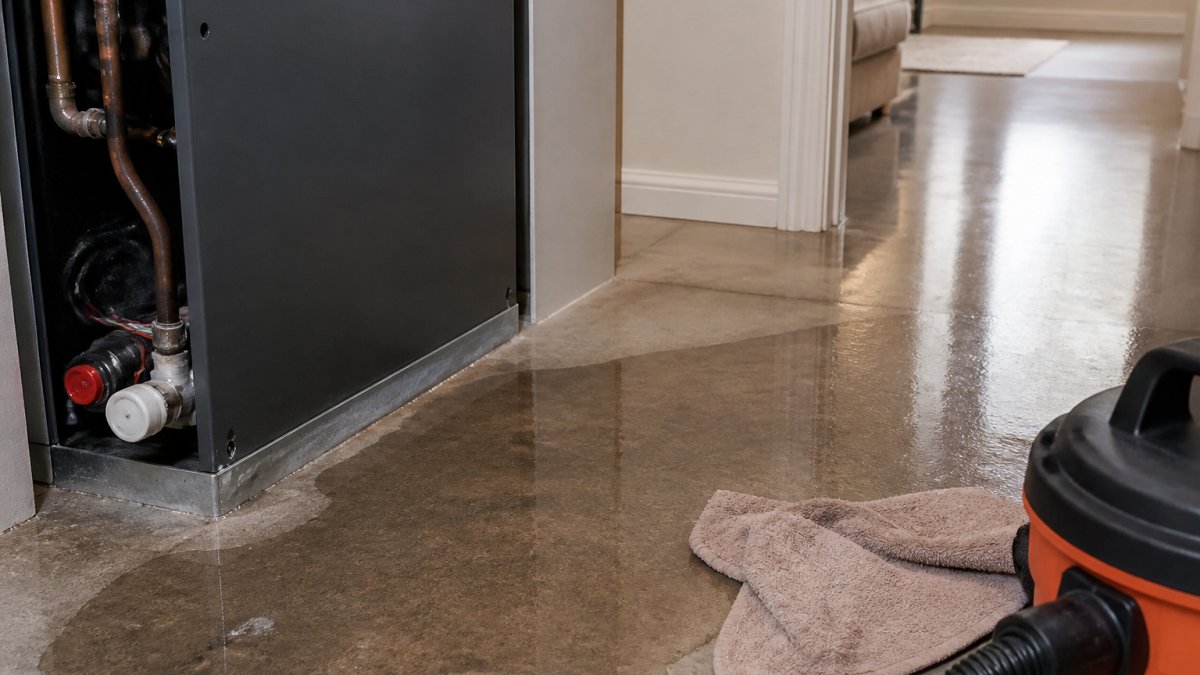
Water pooling around your air handler is one of the most common AC water leaks, and it almost always points to a drainage problem rather than a cooling failure. At RTS Comfort Cooling & Heating, we provide 24/7 emergency service for these and other repairs. The good news: most causes are findable in minutes.
But before you touch anything, kill the power.
Safety Triage: Electrical and Slip Hazards
Water and electricity share space inside every air handler. Before you inspect, do three things:
- Turn the system off at the thermostat, then at the breaker.
- Watch your footing. Wet concrete and tile get slick fast.
- Look for soaked insulation or ceiling stains. Those signal a bigger problem than a drip.
If you see water near wiring, a control board, or a motor, stop. Call a pro.
Normal Condensate vs. a Malfunction
An AC unit pulls moisture from the air. That water has to go somewhere, and normally it drains outside through a condensate line. A small amount of dripping during humid weather is normal. A steady stream, a puddle that keeps returning, or water inside the living space is not.
Here's the difference in plain terms:
| What You See | Likely Meaning | Urgency |
|---|---|---|
| Occasional drip at the outdoor drain | Normal condensate | None |
| Puddle under the indoor unit | Clog or pan issue | Fix within a day |
| Water in ceiling or walls | Overflow or line failure | Shut down and call now |
| Ice plus water together | Frozen coil melting | Shut down and call now |
That table is your first filter. Now let's walk the seven causes, in the order we check them.
1. Clogged Condensate Drain Line
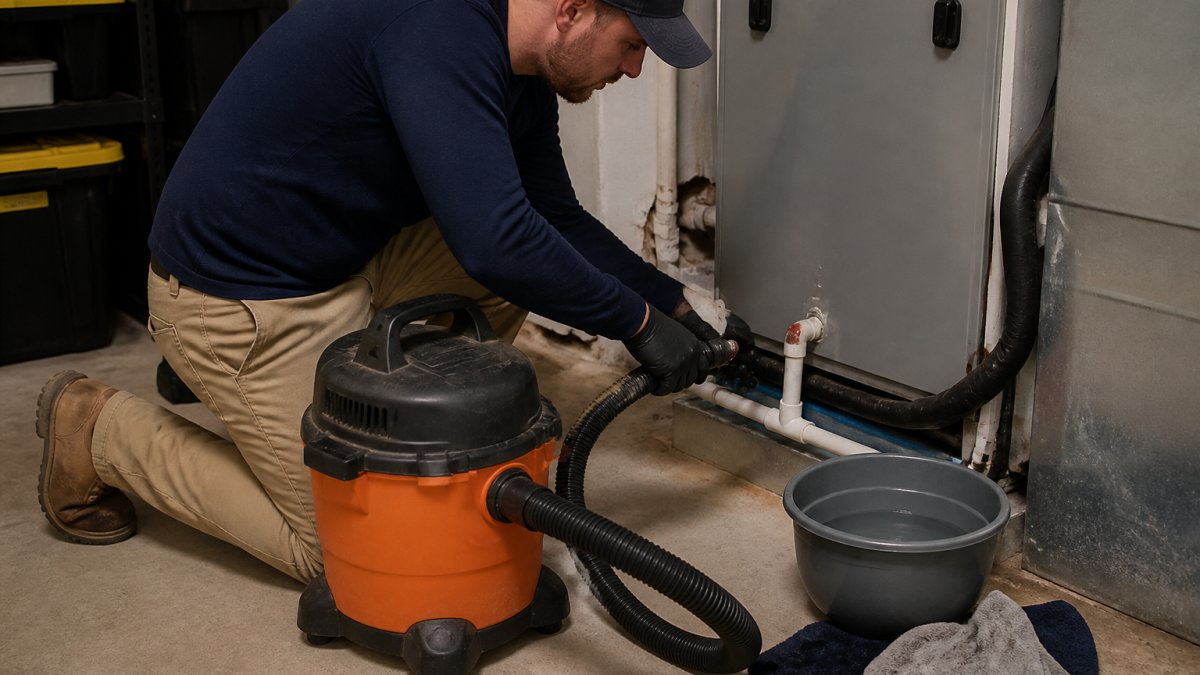
A clogged drain line is the number one cause of AC leaking water inside a home. Algae, dust, and slime build up in the pipe over months, and once it blocks, water backs up into the pan and overflows.
The fix is usually simple. Locate the drain line exit near the outdoor unit, then:
- Shut off the system.
- Find the access port or tee on the line.
- Suction the line with a wet/dry shop vacuum.
- Flush with water to confirm flow.
- Recheck the pan for standing water.
Most homeowners can handle this one. If the clog sits deep in a wall or the line won't clear, that's when to call.
2. Frozen Evaporator Coil and Ice Buildup
Ice on the evaporator coil means the coil is running below freezing, and when that ice melts, it drips. Ice buildup is a symptom, not the disease. It points to restricted airflow or low refrigerant.
Signs to check:
- Ice on the indoor coil or the refrigerant lines
- Weak airflow from the vents
- Water appearing only after the system runs a while
Turn the system off and let the coil thaw completely before you investigate further. Running it with ice on the coil can damage the compressor.
3. Dirty Air Filter and Restricted Airflow
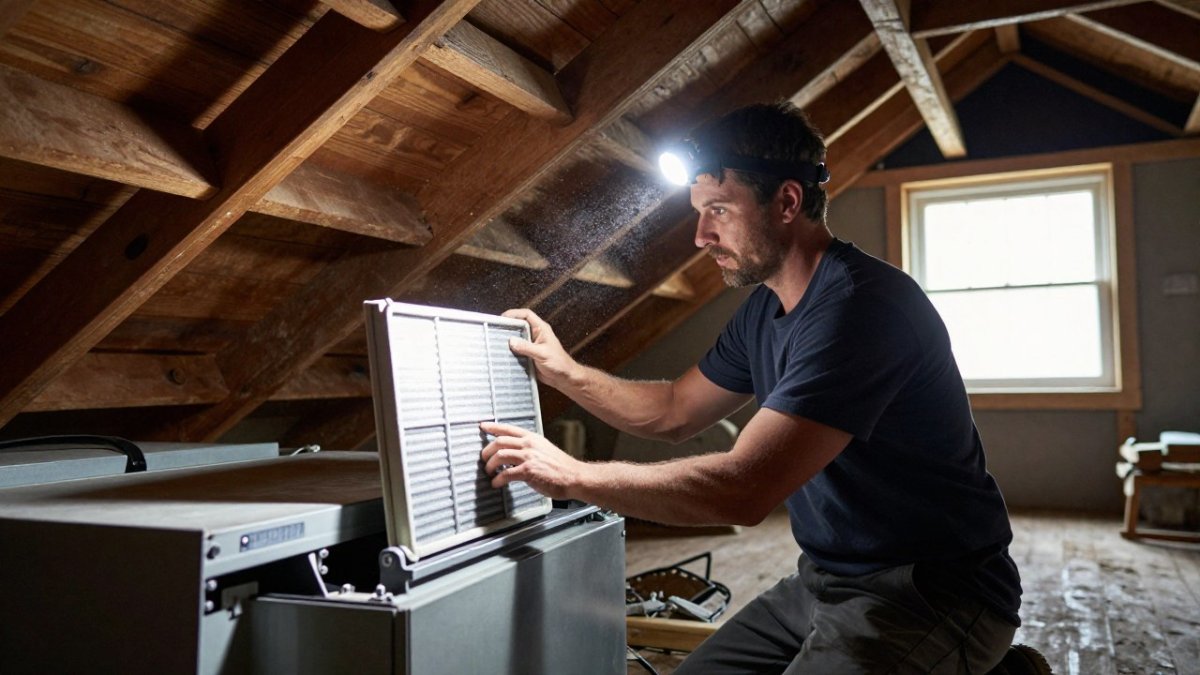
A dirty filter chokes airflow across the coil. The coil gets too cold, ice forms, and you get water where it shouldn't be. This is the easiest cause to prevent and the most common one we find on maintenance calls.
Check your filter monthly during heavy cooling season. Replace it when it looks gray or clogged. A clean filter protects airflow, and steady airflow keeps the coil from icing.
4. Cracked or Rusted Drain Pan
The drain pan sits directly under the evaporator coil and catches every drop of condensate before it reaches the drain line.
Pans fail in predictable ways depending on what they are made of:
- Galvanized steel pans rust from the inside out. Condensate sits in the pan between cycles, and the standing water eats through the seams and corners first. By the time you see a pinhole leak, the metal around it is usually thin enough that patching just moves the leak.
- Plastic pans develop hairline cracks at the drain fitting and along the molded seams. Vibration from the blower and thermal cycling open those cracks over time.
- Sloped pans can lose their pitch if the unit settles or the mounting hardware loosens, so water pools at the low end instead of draining.
Look for rust flakes, a water line ring, standing water after the system has been off for an hour, or a visible crack near the drain connection.
One detail competitors skip: many pans have a float switch or overflow switch mounted on the side.
A failed pan is also a water-damage problem, not just a comfort problem.
5. Low Refrigerant and Coil Icing
Low refrigerant drops coil pressure and temperature, so the coil ices over. When it melts, you get AC water leaks that seem to come out of nowhere. Low refrigerant also means the system is working harder and cooling less.
Call (702) 707-4242 for a free estimate →
Refrigerant doesn't get "used up." If it's low, there's a leak somewhere. A technician needs to find the leak, repair it, and recharge the system to the correct level. Adding refrigerant without fixing the leak just delays the next problem.
6. Disconnected or Damaged Drain Line
A drain line that slips off a fitting or cracks along its run dumps water wherever it ends. Vibration, age, and pest activity all cause this. Check the connection points at the pan and the outdoor exit.
Look for:
- A line hanging loose from a fitting
- Cracks or splits in the pipe
- Kinks that stop flow
Reconnecting a slipped line is often a quick fix. A cracked line running through a wall or attic needs replacement, and that's when a pro saves you from bigger water damage.
7. Failed Condensate Pump
Some systems use a condensate pump to push water to a distant drain. When the pump fails, water backs up and overflows the pan. You'll often hear the pump running without moving water, or hear nothing at all.
Check for power at the pump and listen for it kicking on. If it hums but doesn't move water, the impeller or float switch may be stuck. Pumps are replaceable parts, and a technician can swap one quickly.
Preventing Air Conditioner Water Leaks
Prevention beats repair every time. Air conditioner water leaks almost always start small, and a simple schedule stops most of them.
- Monthly: check and replace the air filter as needed.
- Monthly in summer: pour a cup of water down the drain line to confirm flow.
- Quarterly: inspect the drain pan for rust or standing water.
- Seasonally: clear debris around the outdoor unit.
- Yearly: book a professional tune-up before the heavy cooling season.
When to Call a Pro vs. DIY
Some fixes are safe for a handy homeowner. Others aren't worth the risk. Here's how we draw the line:
| Task | DIY-Friendly? | Why |
|---|---|---|
| Replace air filter | Yes | No tools, no risk |
| Flush drain line | Yes | Simple, low-risk |
| Vacuum a clog | Yes | Basic shop vac job |
| Replace drain pan | No | Requires disassembly |
| Fix refrigerant leak | No | Licensed work only |
| Replace condensate pump | Usually no | Wiring involved |
If you're unsure, call. A small leak today can mean ceiling damage and mold later.
AC Water Leak Repair Cost and Urgency
Here is an honest breakdown of what drives the price, so you can budget before you call.
What typically costs the least: a clogged drain line cleared by vacuum or flush, a filter replacement, or a slipped drain line reconnected.
What costs the most: a refrigerant leak repair and recharge, or a frozen coil that has damaged the compressor.
Factors that move the number up or down:
- Access. A unit in a closet or attic with tight clearance takes longer than one in a garage.
- Where the leak is. A drain line that exits through an exterior wall is easier than one routed through finished ceiling.
- Whether water damage is involved. Drywall, insulation, or ceiling repair adds cost beyond the HVAC work.
- Time of day. After-hours and weekend calls usually carry a premium.
- Parts availability. Common pumps and pans are stocked; odd-sized pans may need to be ordered.
We don't quote flat prices here because every system is different. Call us for a free estimate and we'll tell you exactly what's wrong before any work starts.
Can It Wait, or Do You Need Same-Day Service?
Use this triage to decide how fast to act:
- Can usually wait until the next business day: a slow drip at the indoor unit with the system still cooling, or a small puddle that stops when the system cycles off.
- Fix within 24 hours: a puddle that keeps returning, a pan that is full but not overflowing, or a system that shuts off on its own and restarts.
- Call now, same day: water in the ceiling or walls, water near the electrical panel or wiring, ice plus water together, a system that will not shut off at the thermostat, or any leak in a finished living space.
Why Choose RTS Comfort Cooling & Heating
We handle AC water leak repair across the area with 24/7 emergency service, so a midnight overflow doesn't wait until morning. Our team also covers duct cleaning, indoor air quality, attic insulation, and smart thermostat installation, so one call handles the whole system. RTS Comfort Cooling & Heating is Las Vegas's #1 rated HVAC contractor and is ready when you need us.
Frequently Asked Questions
How to fix AC water leakage at home?
Start by shutting off the AC at the thermostat to prevent more water damage. Check the air filter and replace it if it is dirty, then look for ice on the indoor coil and let it thaw completely. Inspect the drain pan and drain line for clogs or disconnections. If water is actively dripping near electrical components, turn off the breaker and call a technician. Most AC water leaks trace back to a clogged drain line, a dirty filter, or a frozen coil, so address those first before assuming a major repair.
How expensive is it to fix an AC leak?
AC water leak repair cost depends on the cause. A clogged drain line is usually the least expensive fix because it is a maintenance task, while a cracked drain pan or failed condensate pump costs more due to parts and labor. Low refrigerant requires leak detection and recharge, which adds to the bill. Pricing depends on your system, the part needed, and whether it is an emergency call. RTS Comfort Cooling & Heating can provide a free estimate for your specific situation.
Can a dirty air filter cause an AC water leak?
Yes. A dirty air filter restricts airflow across the evaporator coil, causing the coil temperature to drop below freezing. Ice builds up on the coil, and when the system cycles off, that ice melts and drips into the drain pan, often overflowing it. Changing the filter every 1 to 3 months, or more often in dusty conditions, is one of the simplest ways to prevent this type of AC water leak.
When should I call an HVAC technician for an AC water leak?
Call a technician if water is near electrical components, if you see ice on the refrigerant lines, if the drain pan is cracked or rusted through, or if the condensate pump is not running. Also call if you have unclogged the drain line and replaced the filter but the leak continues. Persistent AC water leaks can cause mold, ceiling damage, and system shutdown, so professional diagnosis is worth it when basic troubleshooting does not solve the problem.
A leaking AC is stressful, but most causes are fixable fast. If the water is spreading or you can't find the source, don't wait it out. RTS Comfort Cooling & Heating offers 24/7 emergency service, expert AC repair, and a free estimate before any work begins. Call (702) 707-4242 and get your system draining right again.