 how-to
What Happens During AC Replacement? A Homeowner's Guide
Last Updated: October 31, 2026
Quick Summary
An AC replacement is the full removal and installation of a new split system, including the outdoor condenser, indoor air handler or evaporator coil, refrigerant lines, and thermostat connection, usually completed in a single day by a licensed crew. Most AC replacements take 4 to 8 hours, stretching to 8 to 14 hours when ductwork or electrical work is involved.
- Clear a 3-foot path to the indoor unit, attic access, and outdoor condenser before the crew arrives.
- Your home will be without cooling for several hours during removal and installation.
- Ask the installer for commissioning readings, warranty paperwork, and permit information before the crew leaves.
- A proper startup includes recorded airflow, temperature split, and refrigerant readings, not just a system that turns on.
- Call the installer first if problems arise, since workmanship issues fall under their warranty.
Table of Contents
- What to Expect During AC Replacement: The Big Picture
- How Long Does AC Replacement Take?
- How to Prepare for AC Installation
- AC Installation Day: A Step-by-Step Walkthrough
- New AC System Startup and Testing
- Permits, Code Compliance, and Old Equipment Disposal
- What If Something Goes Wrong After AC Replacement?
- Scheduling Your AC Replacement with RTS Comfort Cooling & Heating
- Frequently Asked Questions
What to Expect During AC Replacement: The Big Picture
An AC replacement is a scheduled swap of your home's cooling equipment, usually completed in a single day by a licensed crew.
AC replacement is the full removal and installation of a new split system, including the outdoor condenser, indoor air handler or evaporator coil, refrigerant lines, and thermostat connection. It is different from a repair, which fixes one failed part.
A repair keeps your current system running; a replacement resets the clock on your equipment and warranty. If you're weighing the two, our repair vs replace AC unit guide lays out the decision points.
How Long Does AC Replacement Take?
Most AC replacements take 4 to 8 hours, stretching to 8 to 14 hours when ductwork or electrical work is involved.
Here's what moves the timeline:
- AC-only replacement: 4 to 8 hours
- Full system replacement with furnace or air handler: 8 to 14 hours
- Ductwork repairs or replacement: adds several hours or a second day
- Electrical upgrades: adds time for panel or disconnect work
- Attic or tight-space installs: slows the crew down
Plan to be available during the day to answer questions and let the crew in and out.
How to Prepare for AC Installation
Preparing for AC installation involves clearing access, securing pets, and moving anything fragile near the work areas.
Use this checklist:
- Clear a 3-foot path to the indoor unit, attic access, and outdoor condenser
- Move furniture, rugs, and breakables away from those areas
- Park cars so the crew can reach the side yard and driveway
- Secure pets in a closed room or send them elsewhere for the day
- Arrange for kids to be out of the work zone, especially near the outdoor unit
- Confirm someone will be home to answer questions
- Note any gate codes, alarm codes, or HOA rules for the crew
- Have your thermostat manual or app login handy
AC Installation Day: A Step-by-Step Walkthrough
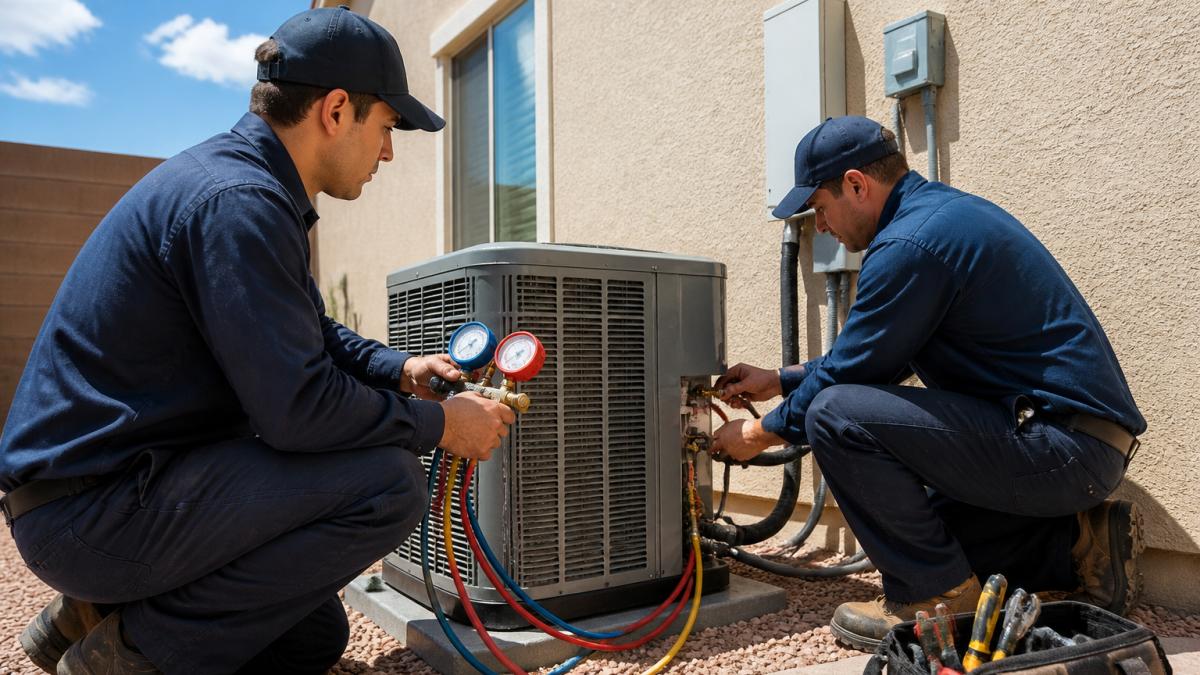
Installation day generally follows a sequence: protect the home, disconnect and remove old equipment, install the new indoor and outdoor units, then test before the crew leaves.
Before the Crew Arrives
Crews typically arrive in the morning, and the lead installer may walk the job with you before any tools come out to confirm the outdoor pad, indoor unit, thermostat spot, and crew path. This is your best window to raise questions about gate codes, parking, bathroom access, and pets.
Removing the Old Equipment
The crew shuts off power at the disconnect and then disconnects the line set, electrical, and drain lines.
Next comes removal:
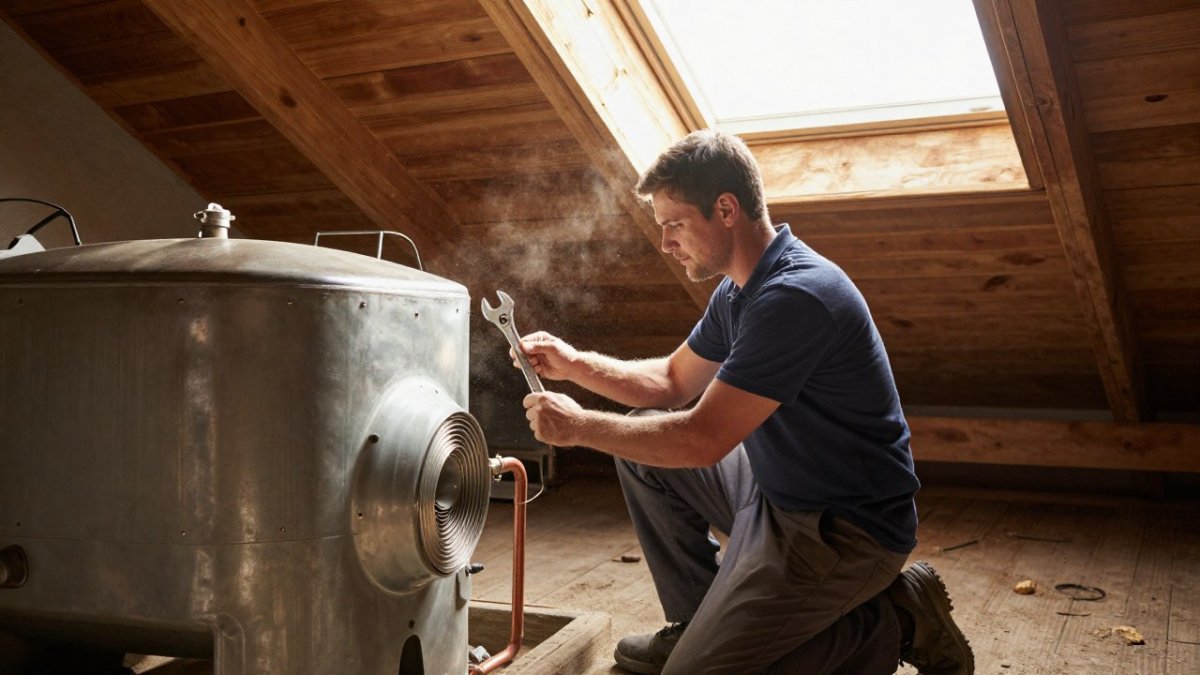
Old equipment removal is physical work. Condensers are heavy and attic air handlers are awkward to maneuver, so expect banging, scraping, and footsteps. A faint refrigerant or oil smell may appear briefly; ask the crew to ventilate if needed.
Installing the New Indoor and Outdoor Units
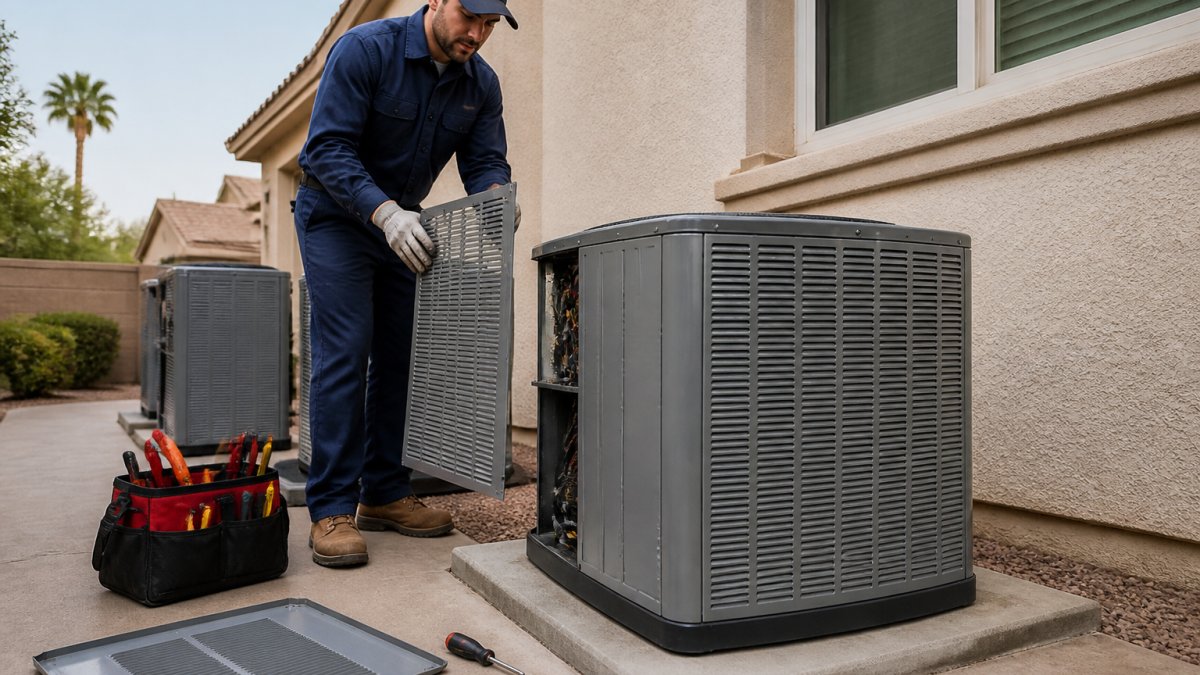
The crew sets the new outdoor condenser on a level pad with proper clearance from the house. Inside, they install the air handler or evaporator coil and connect the new line set. If you're comparing equipment options, see our variable-speed vs single-stage guide for desert climates.
Then come the connections:
- Braze or flare the refrigerant lines
- Connect the electrical disconnect
- Wire the thermostat and low-voltage controls
- Hook up the condensate drain
- Seal the plenum and duct connections
This is the longest stretch of the day. You'll hear brazing, drilling, and crew calls. The outdoor unit may start and stop a few times during checks, that's normal during setup.
Correct sizing matters: an oversized unit short-cycles and struggles to remove humidity. Our guide on how to choose AC unit size for a home explains how capacity gets matched to your square footage and duct layout.
What You May See and Hear
- Noise: drilling, banging, brazing, and the outdoor unit cycling during checks, loudest during removal and condenser set.
- Doors open: the crew moves in and out frequently. Keep pets secured and children away from the work path.
- Dust: minor dust is normal, especially around attic access and wall penetrations. Ask the crew to clean up any debris.
- Thermostat changes: the crew tests heat and cool modes, so settings may shift. That's expected.
- Power interruptions: brief outages at the disconnect or breaker may occur. Save your computer work.
When Your Home Is Without Cooling
Your home will be without cooling during removal and installation, typically several hours. In hot weather, plan to be out or in a room with a fan or window unit. Tell the crew at the start if anyone is heat-sensitive so they can prioritize the indoor unit.
Scope and Timeline Expectations
An AC-only replacement (condenser and coil, reusing the existing air handler and ductwork) is usually faster than a full system replacement. Common causes of delays include:
Call (702) 707-4242 for a free estimate →
- Access problems: a blocked attic hatch, a locked gate, or a car parked in the work area
- Electrical issues: an undersized disconnect or a panel that needs work
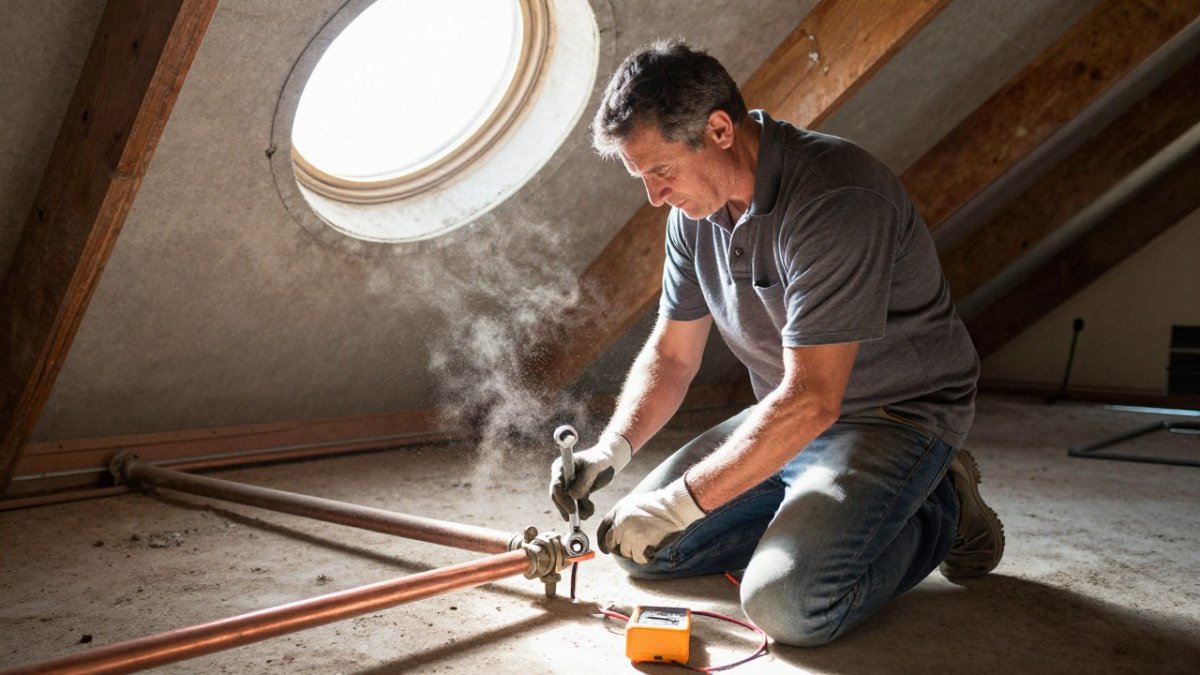
- Ductwork surprises: crushed or disconnected ducts found during removal
- Weather: rain or extreme heat can pause outdoor work
- Permit timing: if an inspection is required before startup, the schedule may shift
After the Crew Leaves
Before the crew leaves, you can ask the installer to review the job with you, including the outdoor unit placement, indoor cleanliness, thermostat settings, and the filter. It is reasonable to request commissioning readings and warranty paperwork, and to note anything unusual such as noise, weak airflow, or water near the indoor unit after the system runs.
New AC System Startup and Testing
Startup and testing is where the crew checks that the system works before they leave. The useful part is knowing what proper commissioning looks like and what to ask.
Quality-Control Checklist
Use this list during the walkthrough with the lead installer. A good crew will have most of these already documented.
- Airflow: static pressure measured and airflow confirmed across the coil and at registers
- Temperature split: return and supply temperatures recorded (a common target is roughly 15-20°F difference, but the installer should confirm the manufacturer's spec for your system)
- Thermostat operation: tested in both heat and cool modes, including fan settings and any smart features
- Refrigerant: charge verified by weight or superheat/subcooling, with readings recorded
- Condensate drainage: drain line flowing freely, trap installed correctly, and no leaks at the indoor unit
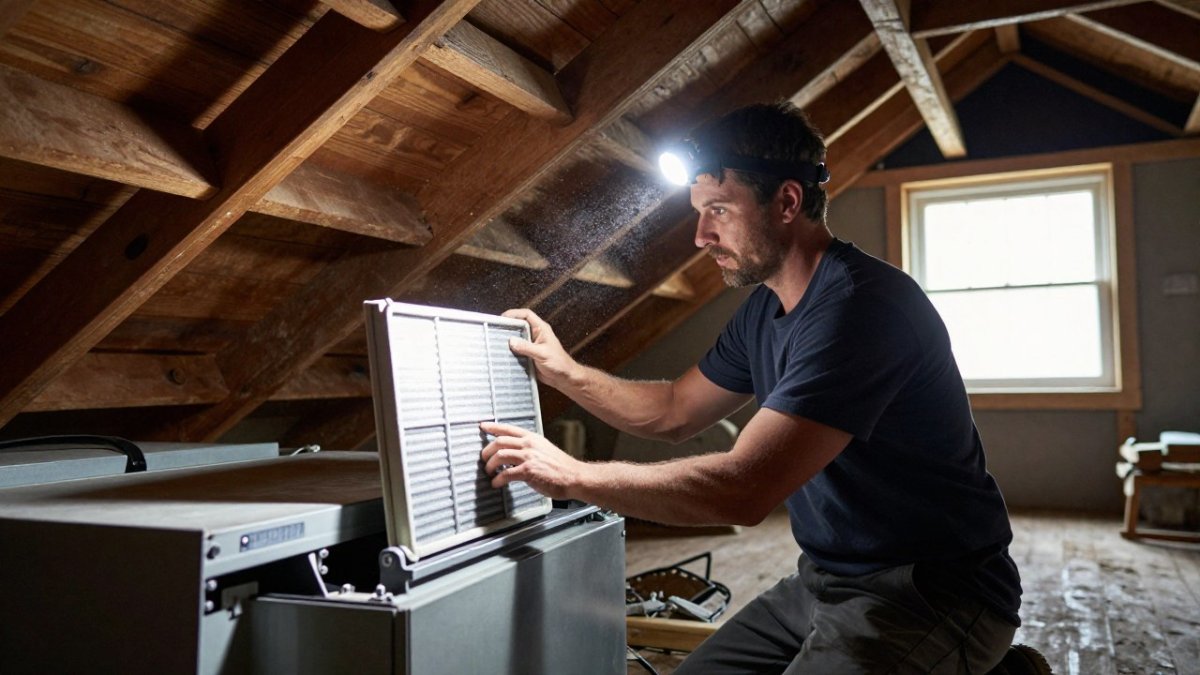
- Filter: correct size and installed, with the airflow arrow pointing the right way
- Electrical: disconnect labeled, breaker sized correctly, and no exposed wiring
- Documentation: commissioning readings, warranty registration, and permit/inspection information handed over
Permits, Code Compliance, and Inspection
Permit requirements for HVAC replacement vary by location. You may wish to ask your contractor before work starts:
- Will you pull the permit, and is it included in the quote?
- Who handles the inspection, and when does it happen?
- What happens if the inspection finds an issue?
Old Equipment Disposal and Refrigerant Recovery
Ask how old equipment and refrigerant will be handled, and whether a recovery record can be provided for your file.
What If Something Goes Wrong After AC Replacement
If problems arise after an AC replacement, contact the installer first for workmanship questions. Note the date, what you observed, and any sounds or error codes.
Common issues and what they usually mean:
| Symptom | Likely Cause | What to Do |
|---|---|---|
| Weak airflow | Clogged filter, duct leak, or blower setting | Check filter first, then call |
| System won't start | Tripped breaker or thermostat setting | Check breaker and thermostat mode |
| Warm air from vents | Charge issue or reversing valve fault | Call for service |
| Water near the indoor unit | Blocked condensate drain | Call for service |
| Loud noise on startup | Loose panel or fan issue | Call for service |
Warranty, Workmanship, and Documentation
Keep these in one folder:
- Manufacturer warranty registration confirmation
- Workmanship guarantee from the installer (ask how long it covers labor)
- Commissioning readings
- Permit and inspection paperwork
- Receipt and quote showing scope of work
If your system fails in summer heat, don't wait. Our guide on what happens if AC breaks down in summer covers emergency steps and how to protect your home while you wait.
Permits, Code Compliance, and Old Equipment Disposal
Permit and code requirements for HVAC replacement vary by location.
- Will you pull the permit, and is it included in the quote?
- Who handles the inspection, and when does it happen?
- How is the old equipment disposed of?
- Is refrigerant recovery documented?
Equipment disposal should include proper refrigerant handling and recycling of the old condenser and coil. Don't let anyone haul old equipment away without confirming how it gets handled.
What If Something Goes Wrong After AC Replacement?
Problems after AC replacement are uncommon but possible. Call the installer first, not a different company, because workmanship issues fall under their warranty.
Common issues and what they usually mean:
| Symptom | Likely Cause | What to Do |
|---|---|---|
| Weak airflow | Clogged filter, duct leak, or blower setting | Check filter first, then call |
| System won't start | Tripped breaker or thermostat setting | Check breaker and thermostat mode |
| Warm air from vents | Charge issue or reversing valve fault | Call for service |
| Water near the indoor unit | Blocked condensate drain | Call for service |
| Loud noise on startup | Loose panel or fan issue | Call for service |
If your system fails in summer heat, don't wait. Our guide on what happens if AC breaks down in summer covers emergency steps and how to protect your home while you wait.
Scheduling Your AC Replacement with RTS Comfort Cooling & Heating
Ready to move forward? RTS Comfort Cooling & Heating offers AC services in the Las Vegas area, including repair, duct cleaning, attic insulation, and smart thermostat installation. We serve the Las Vegas area with 24/7 emergency service, duct cleaning, attic insulation, and smart thermostat installation.
Call (702) 707-4242 for a free estimate, or book AC replacement service online.
Frequently Asked Questions
Do I need to be home during AC replacement?
It is helpful to be home at the start and end of the job, since technicians need access to the indoor unit, thermostat, and outdoor condenser. If you cannot stay, arrange for a trusted adult to be present and confirm access to the attic, garage, or closet where the air handler sits.
How long does AC replacement take from start to finish?
Installation timelines depend on the scope of the work, such as whether ductwork or the furnace is included, and your contractor can provide an estimate for your home.
What should I check after a new AC is installed?
After installation, you can run the system and check that cooled air reaches your rooms, that the thermostat holds the set temperature, and that there are no unusual noises or water near the indoor unit.
Will I need new ductwork when I replace my AC?
Not always. Ductwork condition and sizing should be assessed to determine whether it can be kept with a new system, and a qualified technician can advise on your home's specifics.
Replacing an aging system shouldn't feel like a gamble. Our team handles the details, from permits to final testing, so you know exactly what you're getting. Get started with RTS Comfort Cooling & Heating and get your home cooling reliably again.