 how-to
7 Signs Your AC Needs Refrigerant and What to Do
Last Updated: October 28, 2026
Quick Summary
A healthy AC never uses up its AC refrigerant because it runs in a sealed loop, so low levels always mean a leak. Watch for warm air, weak airflow, ice on the copper lines, hissing sounds, and rising energy bills. Only a licensed technician can safely measure and recharge the system.
- A cheap thermometer at the return and supply vents should show a gap of roughly 15 to 20 degrees Fahrenheit.
- A clogged air filter mimics low refrigerant by cutting airflow, so check it before assuming a leak.
- Under EPA Section 608 regulations, technicians must hold certification to buy, handle, or dispose of refrigerants.
- R-22 systems were built before 2010, and supply is limited and costly.
- R-454B cannot be mixed with older refrigerants and requires updated equipment.
Table of Contents
- How to Tell If Your AC Needs Refrigerant: Start With the Signs
- Signs of Low Refrigerant in AC You Should Never Ignore
- AC Refrigerant Leak Symptoms That Point to a Bigger Problem
- How to Check AC Refrigerant Level Without Breaking the System
- Refrigerant Types: R-22, R-410A, and R-454B Explained
- AC Refrigerant Recharge: What It Involves and What Drives the Cost
- Book a Refrigerant Check With RTS Comfort Cooling & Heating
- Frequently Asked Questions
How to Tell If Your AC Needs Refrigerant: Start With the Signs
Learning how to tell if ac needs refrigerant starts with one simple fact: a healthy system never uses it up. Refrigerant is a sealed-loop gas, so low levels always mean a leak.
Below, we'll walk through symptoms and what you can check yourself.
Signs of Low Refrigerant in AC You Should Never Ignore
The most common signs of low refrigerant in AC are warm air, weak airflow, ice on the lines, odd noises, and rising power bills. One symptom alone is a hint. Multiple symptoms can also be clues.
Watch for these signals:
- Air from the vents feels cool but not cold
- Rooms take hours to cool down
- Ice forms on the copper lines or indoor coil
- A hissing or bubbling sound near the outdoor unit
- The system runs nonstop but never satisfies the thermostat
- Energy bills climb without a change in usage
Warm Air From the Vents and Weak Airflow
The system runs, the fan blows, but the air never gets cold.
For a full breakdown of other causes, read our guide on why your AC is blowing warm air.
Ice Buildup, Hissing Sounds, and Short-Cycling
If you're seeing frost, our article on signs of frozen evaporator coils explains what happens next.
AC Refrigerant Leak Symptoms That Point to a Bigger Problem
Leak symptoms are the difference between a recharge and a repair.
- Oily residue on the copper lines or service valves
- A sweet, faint chemical smell near the unit
- Corrosion or pitting on the coil
- Frost that returns within days of a recharge
- A compressor that runs hot or trips the breaker
Leaks are also a safety issue, not just a comfort one. Our guide on why AC refrigerant leaks are dangerous covers the health and system risks in detail.
How to Check AC Refrigerant Level Without Breaking the System
You can't check refrigerant level safely without gauges, and homeowners should not open the sealed system. What you can do is gather clues that help a technician diagnose faster, and, just as important, rule out the look-alikes that mimic a low charge.
What You Can Safely Check at Home
These checks can help you observe your system:
- Set the thermostat five degrees below room temperature. Run the system for 15 minutes.
- Feel the air at a supply vent. It should feel clearly cold, not just cool.
- Measure the split. A cheap thermometer at the return and supply vents should show a gap of roughly 15 to 20 degrees Fahrenheit.
- Inspect the copper lines. Look for frost, oil stains, or corrosion.
- Listen at the outdoor unit. Note any hissing, bubbling, or clicking.
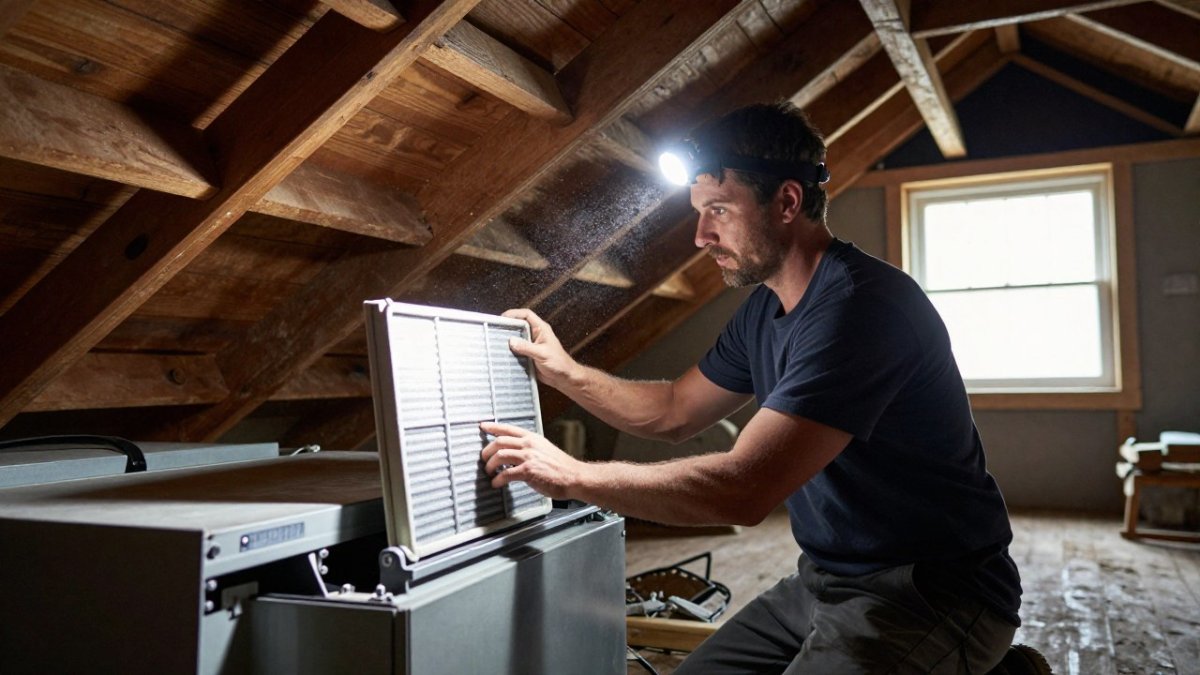
- Check the air filter. A clogged filter mimics low refrigerant by cutting airflow.
Low Refrigerant vs. the Look-Alikes: A Quick Decision Checklist
| What You See | Low Refrigerant | Dirty Filter or Coil | Failing Capacitor or Compressor |
|---|---|---|---|
| Vent air temperature | Cool but not cold | Cool but weak | Warm or room temperature |
| Airflow strength | Weak (frost blocks coil) | Noticeably weak | Normal or weak |
| Frost on copper lines | Common | Rare | Rare |
| Outdoor unit sound | Hissing or bubbling | Normal | Clicking, humming, or silent |
| Energy bill trend | Climbing | Climbing | Climbing |
| Filter condition | Normal | Loaded with dust | Normal |
| Returns after recharge | Yes, within weeks | No | No |
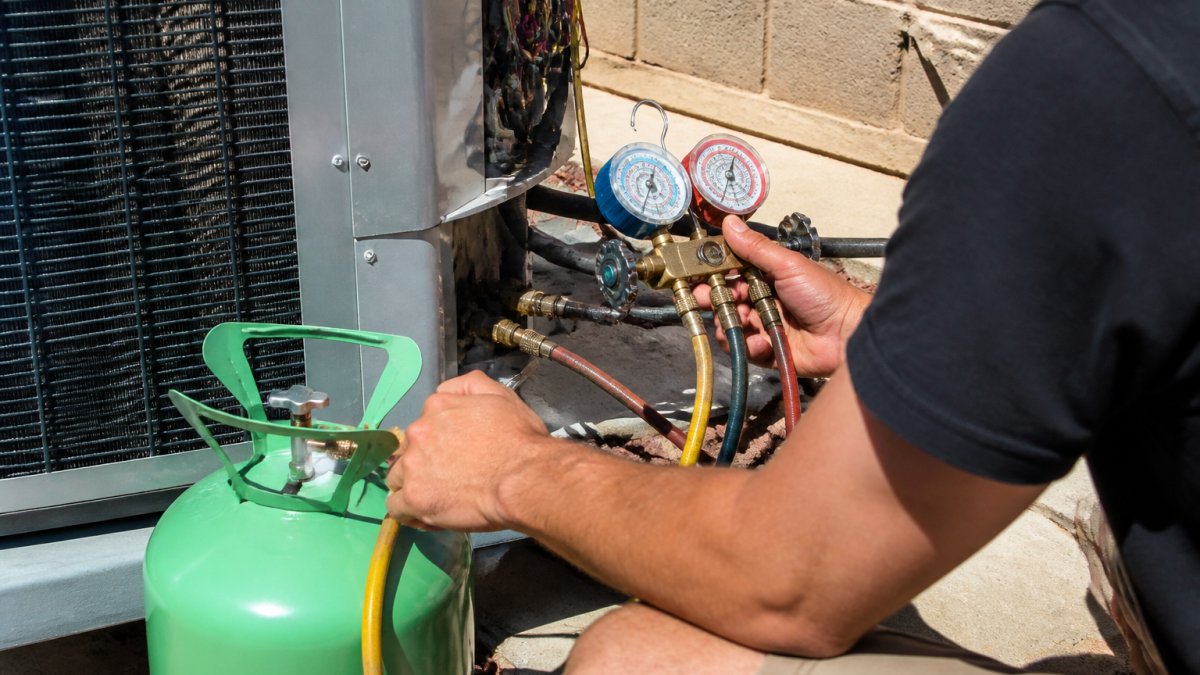
What Only a Licensed Technician Can Measure
Federal law also restricts who can handle refrigerant. Under EPA Section 608 regulations, technicians must hold certification to buy, handle, or dispose of refrigerants. That rule exists because refrigerant handling carries real safety and environmental risk.
- Static and running pressure readings
- Superheat and subcooling calculations
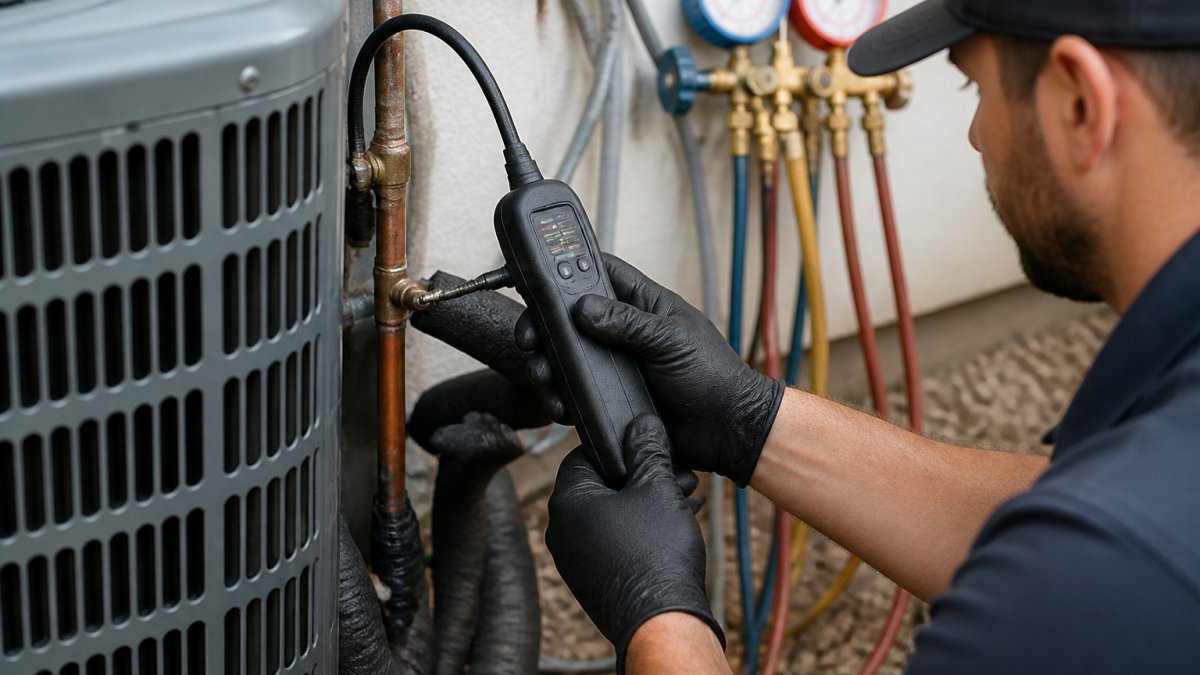
- A leak search with an electronic detector
- A visual inspection of the evaporator and condenser coils
Refrigerant Types: R-22, R-410A, and R-454B Explained
| Refrigerant | Status | Found In | What It Means for You |
|---|---|---|---|
| R-22 (Freon) | Phased out | Systems built before 2010 | Supply is limited and costly; replacement is often smarter |
| R-410A (Puron) | Current standard | Systems from 2010 to 2024 | Widely available and serviceable |
| R-454B | New standard | New systems from 2025 on | Lower global warming impact; requires updated equipment |
R-410A remains common and easy to service. R-454B is the newer option with a lower environmental impact, and it cannot be mixed with older refrigerants. The EPA phaseout timeline for ozone-depleting refrigerants explains the rules behind each transition.
AC Refrigerant Recharge: What It Involves and What Drives the Cost
- Locate the leak with an electronic detector or UV dye
- Repair or replace the failed component
- Pull a vacuum to remove moisture and air
- Recharge to the manufacturer's exact specification
- Verify pressures and vent temperature
Why Recharge Quotes Vary So Much
For repair pricing, call us for an estimate on your system.
The Environmental Reason It Has to Be Done Right
Refrigerants are potent greenhouse gases, and federal rules under the EPA's Section 608 program require certified technicians to recover them rather than vent them to the atmosphere. That is one more reason a licensed recharge is not the place to cut corners, improper handling is both illegal and harmful.
Book a Refrigerant Check With RTS Comfort Cooling & Heating
RTS Comfort Cooling & Heating offers 24/7 emergency service for sudden breakdowns, plus full AC repair and heating installation. Our services also include duct cleaning and attic insulation. We're Las Vegas's #1 rated HVAC contractor.
Call (702) 707-4242 for a free estimate.
Frequently Asked Questions
Can you add refrigerant to an AC yourself?
No. Call a professional rather than buying refrigerant online.
Can an AC lose refrigerant without a leak?
A sealed system does not consume refrigerant the way a car burns gas. If your AC refrigerant level is low, refrigerant has escaped somewhere, usually through a small leak at a joint, valve, or coil. The only exception is a poor installation that left the system undercharged from day one. Because the system is sealed, any drop in cooling capacity tied to low charge points to a leak that needs detection and repair, not a simple top-off.
What is the 3 minute rule for AC?
The 3 minute rule refers to the delay built into most compressors that prevents them from restarting within about three minutes of shutting off. This protects the compressor from short-cycling damage. If you hear your outdoor unit clicking on and off more frequently than that, or notice it starting and stopping every few minutes, low refrigerant, a failing capacitor, or a thermostat issue could be the cause. Have a technician check the system.
What should I do if my AC may be low on refrigerant?
RTS Comfort Cooling & Heating offers 24/7 emergency service at (702) 707-4242.
Summer heat doesn't wait, and neither should a failing system. If your AC is showing any of these signs, get a licensed technician on it before a small leak becomes a full replacement. Get started with RTS Comfort Cooling & Heating and get your home cooling reliably again.