 ultimate-guide
Why AC Refrigerant Leaks Are Dangerous: 2026 Guide
Table of Contents
- What Makes AC Refrigerant Leaks So Dangerous
- Signs of AC Refrigerant Leak Every Homeowner Should Know
- Refrigerant Poisoning Symptoms: When to Get Medical Help
- R-22 vs Modern Refrigerants: Why the Type Matters
- Can You Stay in the House During a Refrigerant Leak?
- What to Do If You Suspect a Refrigerant Leak
- Cost to Repair AC Refrigerant Leak: What Affects the Price
- Frequently Asked Questions
Last Updated: September 27, 2026
What Makes AC Refrigerant Leaks So Dangerous
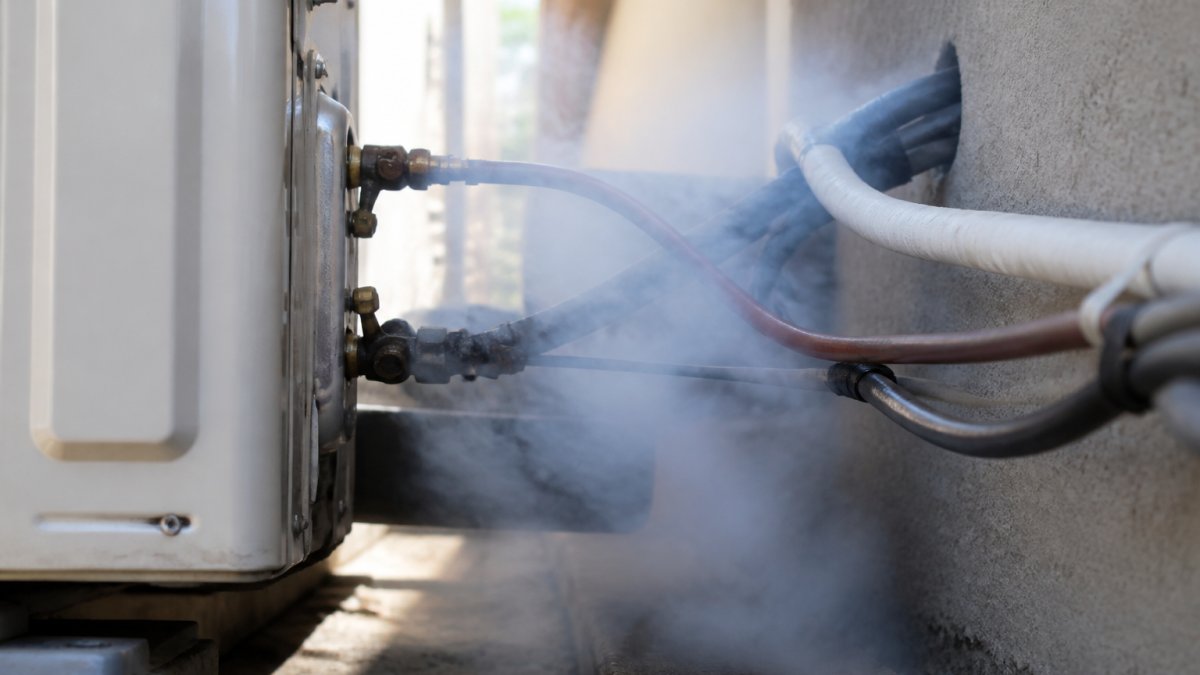
AC refrigerant leaks are dangerous because they release gases that displace oxygen, irritate the lungs, and can cause frostbite or chemical burns on skin contact. A leaking system also loses cooling capacity, overworks the compressor, and harms the environment. At RTS Comfort Cooling & Heating, we treat every suspected refrigerant leak as an urgent safety issue.
Health Risks: From Frostbite to Asphyxiation
Inhaled refrigerant can cause respiratory irritation, dizziness, headaches, nausea, and shortness of breath. In a closed room with a major leak, vapor displaces oxygen, which can lead to asphyxiation. Direct skin or eye contact with liquid refrigerant causes frostbite and chemical burns.
Environmental and System Damage
Refrigerant that escapes contributes to ozone depletion, and older chlorine-based refrigerants are the worst offenders. Inside your system, low charge means the compressor runs longer and hotter, accelerating wear and risking failure. You may notice warm air and rising energy bills long before the system quits.
Signs of AC Refrigerant Leak Every Homeowner Should Know
The most reliable signs of AC refrigerant leak are a hissing or bubbling sound near the unit, ice on the evaporator coil, warm air from the vents, and a system that runs constantly without cooling the house. A chemical odor or unexplained rise in energy bills often accompanies them.
Watch for these signals:
- Hissing, gurgling, or bubbling near refrigerant lines
- Frost or ice buildup on the indoor coil or outdoor unit
- Air from the vents that feels warm or barely cool
- The system runs nonstop but never reaches the thermostat setting
- Higher energy bills with no change in usage habits
- A faint chemical or sweet smell near the HVAC system
- Headaches, dizziness, or nausea that improve when you leave the house
Refrigerant Poisoning Symptoms: When to Get Medical Help
Refrigerant poisoning symptoms range from mild to severe, and the pattern matters as much as the individual symptom. Early exposure typically causes headaches, dizziness, nausea, and eye or throat irritation; serious exposure brings shortness of breath, chest tightness, confusion, and fainting.
R-22 vs Modern Refrigerants: Why the Type Matters
The type of refrigerant in your system changes both the health risk and your repair options. R-22, also sold as Freon, is an older hydrochlorofluorocarbon that damages the ozone layer and has been phased out of new U.S. equipment. Modern systems use blends such as R-410A, which do not deplete ozone but still carry health and pressure risks.
| Refrigerant | Ozone Impact | Common In | Health Concern |
|---|---|---|---|
| R-22 (Freon) | Depletes ozone | Pre-2010 systems | Phosgene risk with flame |
| R-410A | No ozone depletion | Modern systems | Frostbite, asphyxiation |
| R-32 | Lower global warming impact | Newer systems | Mildly flammable |
Can You Stay in the House During a Refrigerant Leak?
It depends on the size of the leak, the size of the space, and who is in it, and since you cannot measure any of those by smell or sound, the safe default is to leave until a technician clears the air. Refrigerant vapor is heavier than air, so it settles toward the floor rather than rising and dispersing as most people assume.
Why "It Smells Fine" Is Not a Safety Test
Many refrigerants are odorless or only faintly sweet, and the nose adapts to a constant low-level odor within minutes. A slow leak in a closed bedroom can build concentration overnight while occupants sleep and never trigger a noticeable smell. Oxygen displacement, not odor, drives the asphyxiation risk.
Who Should Leave First
- Infants and young children. Children breathe faster per pound of body weight than adults, so they inhale a larger dose relative to their size in the same exposure window. They also cannot reliably describe early symptoms like a headache or nausea.
- Pets, especially small ones. Dogs and cats live at floor level, exactly where heavier refrigerant vapor pools. Birds are particularly sensitive to airborne chemicals. A pet that suddenly seems lethargic, vomits, or breathes oddly during an AC event should be moved outside immediately and seen by a veterinarian.
- Anyone with asthma, COPD, or heart conditions. Refrigerant vapor is a respiratory irritant, and pre-existing lung disease lowers the threshold at which symptoms appear.
- Pregnant occupants. Out of caution, treat any confirmed leak as a reason to relocate until the space is ventilated and verified.
Low Refrigerant vs. Leaking Refrigerant
This distinction matters for the stay-or-go decision:
Call (702) 707-4242 for a free estimate →
- Low refrigerant describes a system that has lost charge, a slow seep over years, a one-time loss during a botched service call, or an active leak. Low charge is a condition, not a cause.
- Leaking refrigerant describes an active, ongoing escape right now. This is the safety event.
A system can read low on charge without actively leaking right now, but it cannot become low without a leak or service error somewhere in its history. That is why "just top it off" is never a real repair, if the charge dropped, something let it out, and it will drop again.
Practical Occupancy Rules
| Situation | Reasonable Action |
|---|---|
| Faint odor, no symptoms, well-ventilated home | Ventilate, turn system off, schedule service; keep pets and kids out of the immediate area |
| Hissing or bubbling at the unit, ice on lines | Treat as active; evacuate people and pets, then call |
| Headache, dizziness, nausea, or eye/throat irritation | Evacuate immediately; seek medical advice if symptoms persist after fresh air |
| Anyone unconscious, confused, or struggling to breathe | Evacuate and call 911 |
Once a licensed technician locates and repairs the leak, ventilate the space thoroughly before occupants return. Ask the technician to confirm the repair and note the refrigerant type and amount added on the invoice, useful if symptoms recur or you later sell the home.
What to Do If You Suspect a Refrigerant Leak
If you suspect a refrigerant leak, ventilate first, then evacuate, then call a professional. Do not hunt for the leak with a lighter or tighten fittings on a pressurized line. The steps below protect people first and property second.
Step-by-Step: The First Ten Minutes
- Turn the system off at the thermostat. This stops the compressor from pulling more refrigerant through the leaking circuit and stops the blower from circulating vapor through the house.
- Open windows and exterior doors on opposite sides of the home if you can do so safely. Cross-ventilation moves air faster than opening windows on one wall.
- Move people and pets outside to fresh air. Take pets out on a leash or in a carrier, a panicked animal may hide under furniture at floor level, where vapor concentrates.
- Do not touch hissing lines, oily residue, or frost-covered coils. Liquid refrigerant boils at extremely low temperatures and causes frostbite on contact within seconds.
- Do not flip breakers, light matches, or use a torch near the outdoor unit. Some refrigerants break down into far more toxic compounds when exposed to an open flame.
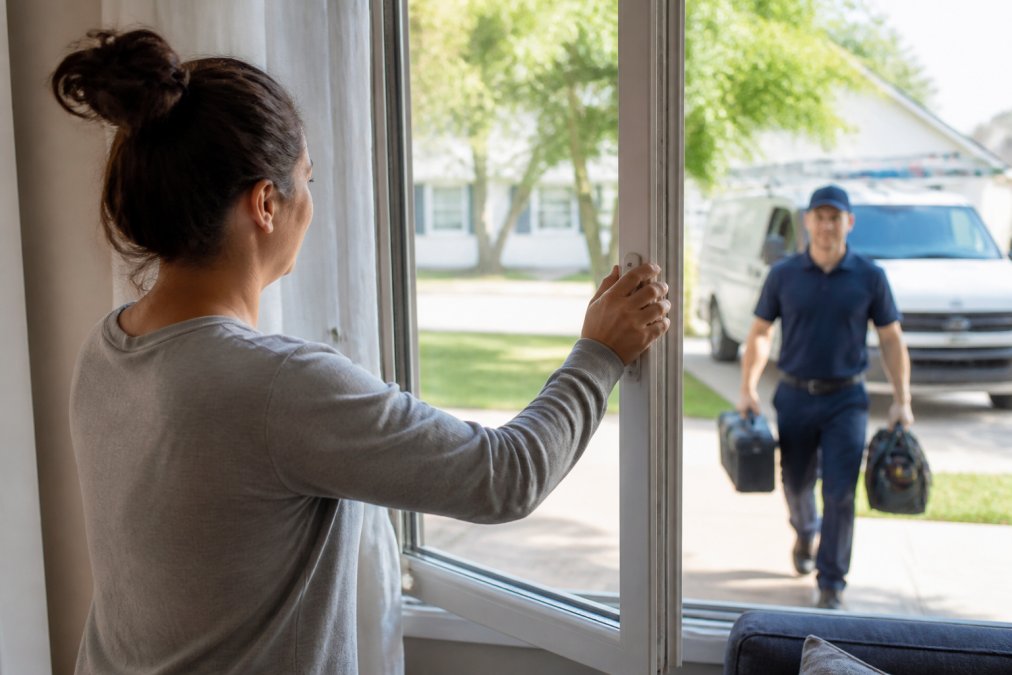
- Call a licensed HVAC technician from outside the home. Describe what you heard, smelled, or felt so the dispatcher can prioritize the call.
- If anyone has trouble breathing, is confused, or has fainted, call 911 before calling the HVAC company.
How to Confirm a Suspected Leak Without Special Tools
You do not need a refrigerant detector to gather useful information, just stay safe while doing it. Two homeowner-safe checks:
- Visual inspection of the copper lines. Look for oily residue or dark grime on the refrigerant line fittings and the indoor evaporator coil. Refrigerant carries compressor oil with it, so an oil stain at a joint is a common tell. Also look for frost or ice on the larger suction line.
- The soap bubble test. Mix a few drops of dish soap in a spray bottle of water, and with the system off and the area ventilated, spray the solution on the accessible line fittings and joints. A growing bubble indicates escaping gas. This test is only useful on fittings you can safely reach, never on a line you have to crawl behind or lean over a running unit to access.
What Not to Do
- Do not add refrigerant and call it fixed. Topping off the charge without locating the leak is a temporary patch. The charge will drop again, and the compressor will keep running hot in the meantime.
- Do not use an open flame, lighter, or torch to "sniff" for a leak.
- Do not seal a line with tape, epoxy, or a hardware-store patch kit. Refrigerant lines operate under pressure and these fixes fail, often suddenly.
- Do not run the system to "see if it gets better." Every hour of runtime on a low charge adds wear to the compressor.
What the Technician Will Do
A licensed technician typically pressurizes the system with nitrogen, uses an electronic refrigerant detector or UV dye to pinpoint the leak, repairs or replaces the failed component, evacuates the line set with a vacuum pump, and then recharges to the manufacturer's specified weight. Ask for the leak location, the refrigerant type and amount added, and whether the repair is covered by any warranty.
Cost to Repair AC Refrigerant Leak: What Affects the Price
The cost to repair AC refrigerant leak varies widely based on where the leak is, what refrigerant your system uses, and whether parts need replacing. Because pricing depends on the diagnosis, we provide a free estimate rather than a flat rate.
The biggest cost drivers are:
- Leak location: an accessible line is simpler to repair than a leak inside the evaporator coil.
- Refrigerant type: R-22 costs far more to source than modern blends.
- Repair vs. replace: a badly leaking old system may not be worth repairing.
- Labor and access: tight attic or crawlspace access adds time.
Frequently Asked Questions
Can you stay in a house with a refrigerant leak?
It depends on the severity. A slow leak may not cause immediate harm, but refrigerant displaces oxygen and can cause dizziness, nausea, and headaches. If you smell a chemical odor or experience symptoms, leave immediately and ventilate the space. For any confirmed leak, the safest approach is to evacuate until a licensed HVAC technician repairs the system and verifies safe air quality.
What happens if you breathe in R-134a refrigerant?
Inhaling R-134a can cause respiratory irritation, dizziness, headaches, and nausea. At high concentrations, it can lead to asphyxiation because it displaces oxygen in enclosed spaces. If refrigerant contacts your skin, it can cause frostbite. Seek fresh air immediately and call a medical professional if symptoms persist or worsen.
How long will an AC system last with a refrigerant leak?
A leaking system will gradually lose cooling capacity and force the compressor to work harder, which accelerates wear. Depending on leak size and system age, you may see failure within weeks to months. Continuing to run a leaking unit risks compressor failure, which is one of the most expensive HVAC repairs. Prompt leak detection and professional repair extend system life.
Is it safe to keep running an AC unit that is low on refrigerant?
No. Running an AC unit low on refrigerant strains the compressor, reduces energy efficiency, and can cause permanent damage. It also means the leak is still active, releasing refrigerant into your home or the environment. Turn off the system and call a licensed technician to find and fix the leak before restarting.