 how-to
Why Is My AC Blowing Warm Air: Troubleshooting Guide
Table of Contents
- Why Your AC Is Blowing Warm Air: Start Here
- Check Your Thermostat Settings First
- Dirty Air Filter AC Symptoms and What to Do
- AC Blowing But Not Cooling: Refrigerant and Coil Issues
- Signs of a Bad AC Compressor and Other Electrical Faults
- Heat Pump and Auxiliary Heat: Why Warm Air May Be Normal
- When to Call a Professional and What to Expect
- Maintenance and Prevention: Keep Your AC Running Cool
- Frequently Asked Questions
Last Updated: October 10, 2026
Why Your AC Is Blowing Warm Air: Start Here
When your AC blowing warm air instead of cool air occurs, something in your system has stopped working correctly.
Your AC cools air by circulating refrigerant through coils to absorb heat, while a compressor pumps the refrigerant and fans distribute cooled air.
The most common culprits are thermostat settings, dirty filters, low refrigerant, and electrical problems. This guide walks you through what to check first and when to call for help.
Check Your Thermostat Settings First
Incorrect thermostat settings are the #1 reason people think their AC is broken when it actually works fine.
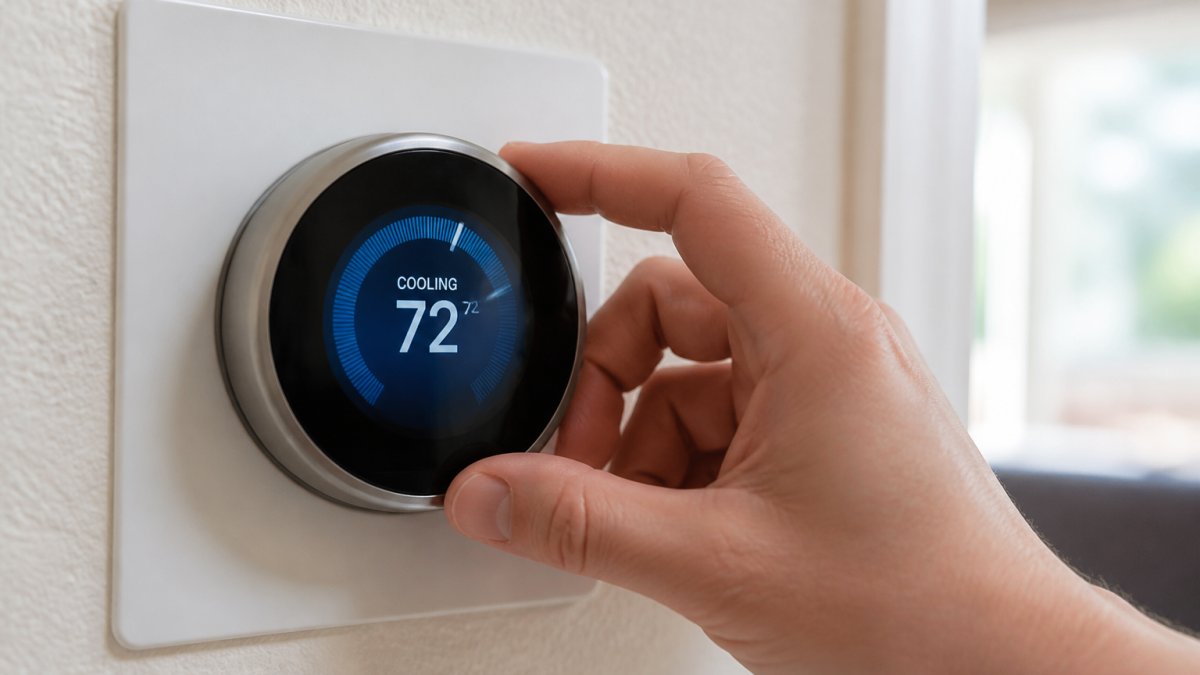
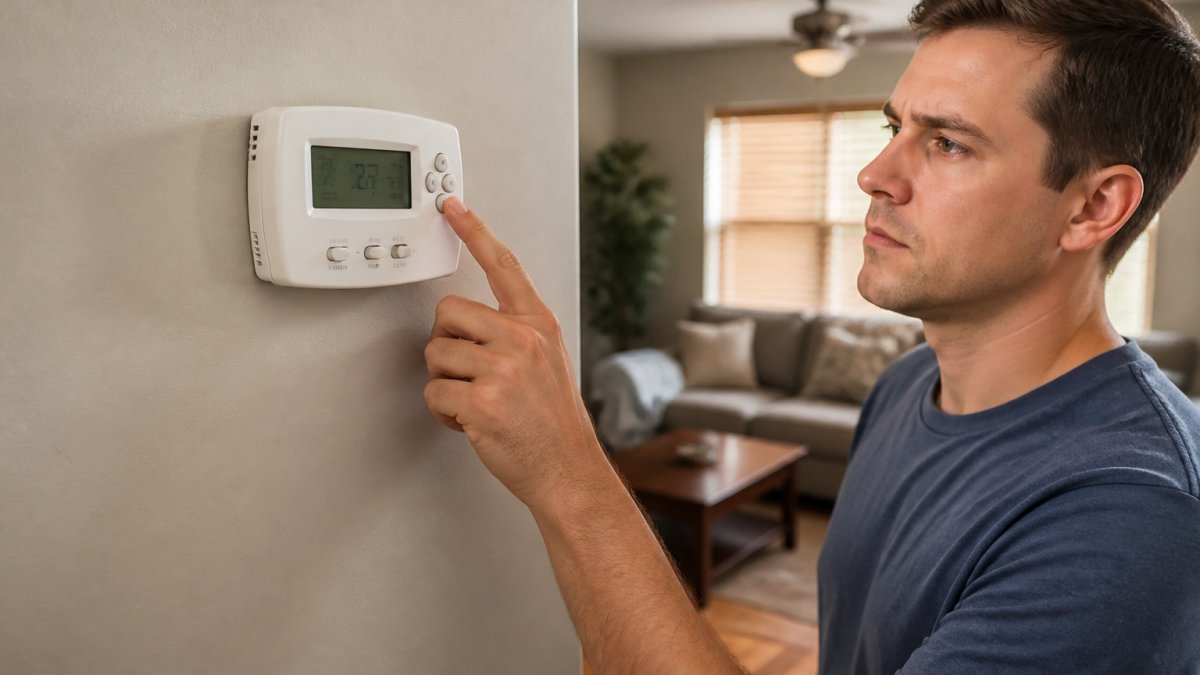
Check the temperature setting. Your thermostat should be set lower than the current room temperature.
Check the fan setting. "Auto" means the fan runs only when cooling happens; "On" means it runs constantly.
If your thermostat has a battery, replace it if the display looks dim or flickers.
Dirty Air Filter AC Symptoms and What to Do
A clogged air filter blocks airflow, causing the evaporator coil to freeze and stop cooling completely.
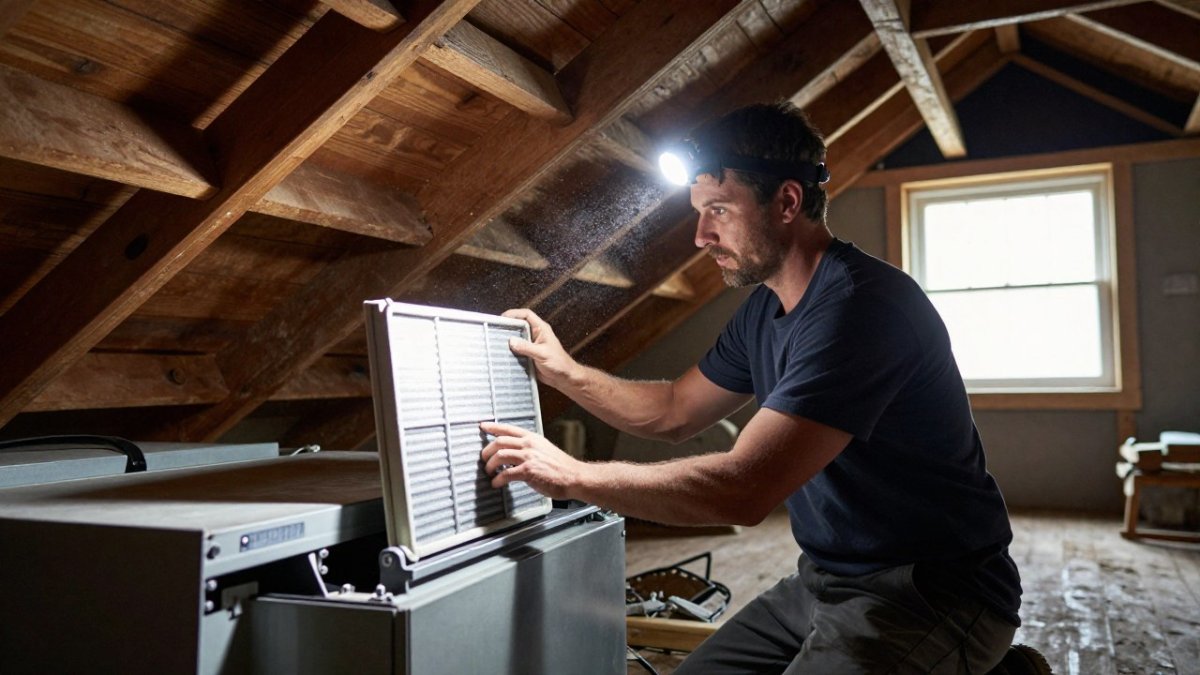
Check your air filter monthly. A clean filter looks white or light gray; a dirty filter looks dark gray or black.
To replace your filter:
- Turn off your AC system
- Locate the filter (usually in a return vent or furnace cabinet)
- Note the filter size printed on the frame
After replacing the filter, wait 30 minutes for the system to stabilize and the coil to thaw.
If you see ice on the outdoor unit, turn the system to "Fan" mode only for 2-3 hours to thaw.
AC Blowing But Not Cooling: Refrigerant and Coil Issues
If your thermostat is set correctly, your filter is clean, and the AC blowing warm air persists after 30 minutes, the problem is usually refrigerant, a coil issue, or a component failure.
How to Distinguish Refrigerant Loss from Coil Problems
Refrigerant absorbs heat from your home. Low refrigerant or a leak reduces cooling power. A frozen or dirty coil blocks heat transfer even if refrigerant levels are normal.
Use these clues to narrow down the likely cause:
Signs pointing to a refrigerant leak:
- AC blows warm air even after running continuously for 45+ minutes
- Hissing or bubbling sounds from the outdoor unit (especially when the compressor is running)
- Ice buildup on the outdoor copper refrigerant lines (not the coil housing)
Signs pointing to a frozen evaporator coil:
- Visible ice or thick frost on the indoor unit, copper lines inside the furnace/air handler, or in the return air vent
- Water pooling or dripping near the furnace or indoor unit
- Reduced airflow from vents (weak or no air coming out)
Signs pointing to a dirty (but not frozen) coil:
- Gradual decline in cooling over weeks or months (not a sudden failure)
- AC blows slightly cool air, but not as cold as it used to
- No ice visible; airflow is normal
What You Can Safely Check
Inspect the outdoor unit. Look for ice on the copper lines (suggests refrigerant problem), debris blocking coils, bent fins, or damaged insulation. Clear debris gently by hand or soft brush; do not use a pressure washer.
Listen for sounds. A steady hum is normal. Hissing or bubbling suggests a refrigerant leak; rattling or grinding suggests compressor damage. Do not attempt to repair, refrigerant handling requires EPA certification.
Check the indoor unit or furnace. If your system has an accessible indoor coil or air handler, look inside the return air vent or furnace cabinet for ice crystals or frost. If you see ice:
- Turn off the compressor immediately (switch the thermostat to "Fan" only)
- Let the system run in fan-only mode for 2-3 hours to thaw the coil
- Do not run the compressor while the coil is frozen; this can damage the system
Refrigerant Leaks: Why Homeowners Cannot Repair Them
Refrigerant handling requires EPA Section 608 certification (the EPA). A technician will locate the leak using a detector, repair it by replacing a valve, fitting, or coil, evacuate the system, and refill it. Common leak locations are solder joints, valve stems, the evaporator coil, or compressor seals.
Frozen or Dirty Evaporator Coil
The evaporator coil absorbs heat from indoor air. A frozen coil cannot absorb heat, leaving air warm. A dirty coil reduces cooling because dust blocks heat absorption.
Why coils freeze: Dirty air filter (most common), low refrigerant, thermostat set too low, or slow blower fan. Why coils get dirty: Dust and pet hair accumulation, missing or unchanged filter, or ductwork leaks.
What to do if the coil is frozen:
Call (702) 707-4242 for a free estimate →
- Switch the thermostat to "Fan" only (do not run the compressor)
- Let the system run for 2-3 hours
- Once thawed, check and replace your air filter
- Switch back to "Cool" mode and monitor for 30 minutes
- If the coil freezes again within a few days, call a technician (likely a refrigerant charge issue)
If the coil is dirty but not frozen: Professional coil cleaning can restore cooling and typically costs $150 to $400.
Signs of a Bad AC Compressor and Other Electrical Faults
The compressor pumps refrigerant through coils under high pressure. A failing compressor cannot build enough pressure to cool the air. Electrical faults, capacitor failure, breaker trips, wiring problems, can also prevent cooling.
Distinguishing a Bad Compressor from Other Electrical Problems
Compressor failure is a significant expense, so confirm the diagnosis before authorizing replacement.
Signs of a failing compressor:
- AC runs and the outdoor unit hums, but blows warm air (refrigerant is circulating, but pressure is too low)
- Loud grinding, squealing, or rattling from the outdoor unit (metal-on-metal contact inside the compressor)
- System shuts off after running for 10-15 minutes, then cools briefly when restarted (thermal overload protection kicking in)
Signs of a failed capacitor (not the compressor):
- Outdoor unit hums but the fan does not spin (capacitor starts the fan motor)
- Compressor does not start; outdoor unit is silent (capacitor starts the compressor motor)
- System worked fine yesterday but suddenly stopped; no grinding or unusual sounds
Signs of a breaker trip or electrical fault:
- AC worked, then suddenly stopped; outdoor unit is completely silent
- Circuit breaker labeled "AC" or "HVAC" is in the off position
- Breaker trips immediately when you switch it back on (short circuit or overload)
Capacitor Failure: A Common, Inexpensive Fix
A capacitor is a small cylindrical or oval electrical component that stores energy to start the compressor and fan motors.
Why capacitors fail:
- Age (typical lifespan is 5-10 years)
- Heat exposure (outdoor units in direct sun fail faster)
- Power surges (lightning, utility grid fluctuations)
Cost and repair time: Capacitor replacement is one of the least expensive AC repairs. A technician can swap a capacitor in 15-30 minutes.
What to do: Do not attempt to replace a capacitor yourself. Capacitors store electrical charge even when the system is off and can cause serious injury.
Compressor Failure: Repair Versus Replace
A failing compressor is the most expensive AC repair. Before authorizing replacement, consider the age and condition of your entire system.
Compressor replacement depends on system size, compressor type, labor rates, and whether the leak must also be repaired. A technician can usually complete it in one day.
Repair the compressor if: Your system is less than 10 years old and repair costs less than 50% of a new system. Replace the entire system if: Your system is 12+ years old, other components are failing, or repair exceeds 50% of replacement cost.
Electrical Faults and Breaker Trips
Your AC has a dedicated circuit breaker. A one-time trip from a power surge is usually safe to reset. Switch it back on and monitor. If it trips again within a few days, call a technician.
Recurring breaker trips: Call a technician immediately. Do not keep resetting the breaker; this can damage wiring or cause a fire. Recurring trips indicate a short circuit, ground fault, or compressor overload.
When to Call a Technician
Call immediately if you observe grinding, squealing, or rattling from the outdoor unit; burning smell; repeated breaker trips; complete silence; or compressor failure in a 12+ year old system.
Heat Pump and Auxiliary Heat: Why Warm Air May Be Normal
If your system is a heat pump, warm air in winter is normal. Heat pumps extract heat from outside air and pump it into your home. Check your thermostat display. If it shows "Heat," "Aux Heat," or a snowflake symbol, your system is in heating mode. Switch to "Cool" if you want air conditioning. In cooling season, set your heat pump to "Cool," not "Auto," to prevent unexpected heating.
When to Call a Professional and What to Expect
Call a technician if you've checked the thermostat, replaced the filter, and the AC still blows warm air, or if you suspect a refrigerant leak, frozen coil, bad compressor, or electrical problem. RTS Comfort Cooling & Heating offers 24/7 emergency AC repair. During a service call, the technician will check thermostat settings, inspect the filter, measure refrigerant pressure, test electrical components, inspect coils, and check the compressor.
Maintenance and Prevention: Keep Your AC Running Cool
Regular maintenance prevents most warm-air problems. Monthly: replace air filters every 30-90 days, clear debris from the outdoor unit, ensure vents are not blocked. Annually: schedule a professional tune-up, have the compressor and capacitor inspected, check refrigerant pressure, clean coils, test electrical connections, and inspect ductwork.
| Maintenance Task | Frequency | What It Prevents |
|---|---|---|
| Replace air filter | Every 30-90 days | Frozen coils, reduced airflow |
| Clear outdoor unit | Monthly | Dirty coils, overheating |
| Professional tune-up | Annually | Compressor failure, low refrigerant |
| Coil cleaning | Every 1-2 years | Dirty coil, reduced cooling |
| Duct inspection | Every 2-3 years | Air leaks, uneven cooling |
A professional tune-up costs less than an emergency repair and often catches problems early.
Frequently Asked Questions
What are the most common reasons an AC blowing warm air?
The most frequent causes are incorrect thermostat settings (fan mode instead of cool), a clogged air filter restricting airflow, low refrigerant from a leak, a frozen or dirty evaporator coil, or compressor failure. Start by checking your thermostat and replacing the air filter, these are the easiest fixes. If warm air persists, the issue likely involves refrigerant, coils, or the compressor, which require professional diagnosis and repair.
Can a dirty air filter make my AC blow warm air?
Yes. A clogged air filter blocks return airflow, forcing your AC system to work harder and sometimes shutting down to prevent damage. When the system cycles off, warm air blows through vents instead of cool air. Check your filter monthly and replace it every 1-3 months depending on household dust and pets. A clean filter restores proper airflow and cooling performance.
What are signs of a bad AC compressor?
A failing compressor often produces loud grinding, squealing, or rattling noises from the outdoor unit. You may notice warm air from vents, reduced cooling power, or the system running constantly without reaching set temperature. The compressor may also trip the circuit breaker repeatedly. Compressor failure is serious, have a technician inspect it immediately. Repair or replacement is typically necessary and should not be delayed.
Is it safe to keep running an AC that is blowing warm air?
Running a warm-air AC temporarily is safe, but extended operation stresses the system and can cause further damage. If your thermostat and filter are fine, stop using the system and call a professional. Continuing to run a system with refrigerant leaks, frozen coils, or compressor problems will worsen the fault and increase repair costs. Have it inspected and repaired promptly to avoid complete system failure.
If your AC is blowing warm air, start by checking your thermostat and air filter. Most problems are caught in these first two steps. If the issue persists, a refrigerant leak, frozen coil, or compressor fault is likely. RTS Comfort Cooling & Heating diagnoses and repairs these problems quickly with our 24/7 emergency service. Our technicians use proven methods to restore cooling and prevent future breakdowns. Call (702) 707-4242 for a free estimate and get your AC running cool again.