 how-to
How to Identify Furnace Lifespan Issues: 2026 Guide
Table of Contents
- Warning Signs Your Furnace Is Nearing the End
- What Is the Average Furnace Lifespan?
- Signs of a Cracked Heat Exchanger You Should Never Ignore
- Furnace Repair vs Replace Cost Analysis: Making the Call
- How to Inspect Your Furnace for Lifespan Issues: Step-by-Step
- Maintenance Habits That Extend Furnace Lifespan
- Frequently Asked Questions
Last Updated: September 29, 2026
Warning Signs Your Furnace Is Nearing the End
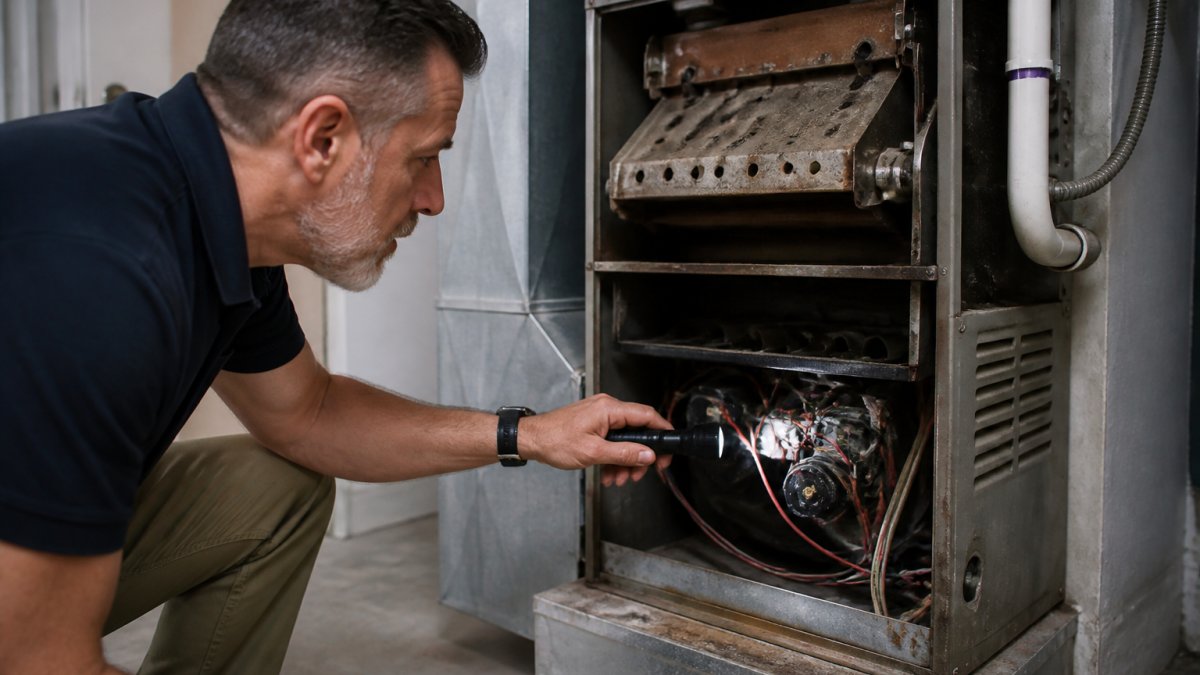
Learning how to identify furnace lifespan issues starts with listening to your system. Strange noises, odd smells, and uneven heating are the first clues that a furnace is wearing out.
The most common red flags include:
- Banging or booming when the burners ignite
- Grinding or squealing from a failing blower motor
- A burning or metallic smell that lingers after startup
- Uneven heating between rooms
- Short cycling, where the system starts and stops every few minutes
A yellow or flickering flame is another warning. A healthy gas heater burns blue. A weak flame often points to a failing hot surface ignitor or a dirty combustion chamber.
What Is the Average Furnace Lifespan?
The average furnace lifespan is 15 to 20 years for most gas furnaces, though many units start showing real problems after year 12. How long yours lasts depends on brand, installation quality, and how well it has been maintained.
Furnace lifespan is the total service life of a heating unit before repairs stop being worth the cost. A furnace that gets yearly preventative maintenance often outlasts one that gets ignored.
How System Age and Component Failure Affect Longevity
Every furnace part has its own clock. The heat exchanger, blower motor, and ignitor usually fail at different ages:
| Component | Typical Failure Window | Warning Sign |
|---|---|---|
| Hot surface ignitor | 5-10 years | No heat, no glow |
| Blower motor | 10-15 years | Grinding, weak airflow |
| Heat exchanger | 15-20 years | Cracks, CO risk |
| Circuit board | 10-18 years | Random shutdowns |
Once two or more of these parts fail close together, replacement usually makes more sense than repair.
Signs of a Cracked Heat Exchanger You Should Never Ignore
A cracked heat exchanger is the most serious furnace problem you can face. It lets carbon monoxide escape into your living space, which is a health risk, not just a repair bill. Most articles list the symptoms and stop. The part that actually keeps you safe is the protocol, what to do, in order, the moment you suspect a problem.
Symptoms to Watch For
- A flame that rolls or lifts out of the burner instead of burning steadily
- Soot streaks near the burner area or on the furnace cabinet
- A metallic or formaldehyde-like smell that lingers after startup
- Headaches, nausea, dizziness, or unusual drowsiness that improve when you leave the house
- A carbon monoxide detector going off
- Rust flakes or cracks visible on the heat exchanger surface itself
The Safety Protocol
If you suspect a cracked heat exchanger or your CO alarm sounds, do these in order:
- Get everyone outside. Do not stop to open windows or shut off the furnace first. Fresh air and distance come before anything else.
- Call 911 from outside if anyone has symptoms, headache, nausea, confusion, or loss of consciousness. CO poisoning is a medical emergency, not a repair appointment.
- Do not re-enter until emergency responders say it is safe.
- Do not run the furnace until a qualified technician has inspected the heat exchanger and cleared the system.
- Call a licensed HVAC contractor to perform a combustion analysis and heat exchanger inspection before the system is used again.
Why CO Alarms and Placement Matter
Carbon monoxide has no smell, no color, and no taste, which is why the EPA guidance on carbon monoxide treats it as a silent hazard. A working CO alarm is the only reliable early warning. Place one on every level of the home and outside each sleeping area. Test each alarm monthly using its test button, replace the batteries at least once a year (or when the unit chirps), and replace the alarm itself according to the manufacturer's expiration date, typically every 5-7 years. Combination smoke/CO alarms follow the same replacement schedule.
What a Technician Actually Checks
A proper heat exchanger inspection is not a visual glance. A qualified technician uses a combustion analyzer to measure CO levels in the flue gases, performs a visual inspection of the exchanger with a camera or mirror where accessible, and checks for flame rollout, backdrafting, and proper venting. If the exchanger is cracked, the technician will typically red-tag the furnace, meaning it should not be operated until repaired or replaced. A cracked heat exchanger is almost never a repair; it is a replacement trigger.
Every home with gas appliances should have a working CO alarm on every level. If you cannot remember the last time you tested yours, do it today.
Furnace Repair vs Replace Cost Analysis: Making the Call
The repair vs replace decision comes down to one question: is the fix worth it on a unit this old? Most articles stop there and hand you the 50% rule. That rule is a starting point, not an answer. A better approach is to calculate the cost per year of remaining life, the repair bill divided by the number of useful years you can realistically expect to get out of the unit after the fix.
Call (702) 707-4242 for a free estimate →
Here is the framework:
- Estimate remaining life. Subtract the furnace's current age from its expected service life. A 16-year-old furnace with a 15-20 year expectancy has roughly 0-4 years left. A 9-year-old unit has 6-11 years.
- Get a written repair quote. Ask the technician to list parts, labor, and any related work (for example, a new ignitor often comes with a combustion chamber cleaning).
- Divide the repair cost by remaining years. A $900 repair on a furnace with 2 years left costs $450 per year of service. The same $900 on a unit with 8 years left costs about $113 per year.
- Compare that number to the annualized cost of a new furnace. Take the installed price of a replacement, subtract any utility rebates, and divide by the new unit's expected life (typically 15-20 years). A $5,000 install over 18 years is roughly $278 per year, and that figure ignores the energy savings a new unit delivers.
When the repair's cost-per-year exceeds the replacement's cost-per-year, replacement wins on pure math. When it is close, the tiebreakers are comfort, noise, and how many more repairs the old unit is likely to need.
The 50% Rule and Financial ROI Logic
The 50% rule is a fast screen: if a repair costs more than half the price of a new furnace, replace instead. It protects you from sinking money into a system that will keep failing.
Ask your contractor for a written quote that separates equipment, labor, and any rebates so you can run these numbers yourself. Call (702) 707-4242 for a free estimate so homeowners can see the math before deciding.
How to Inspect Your Furnace for Lifespan Issues: Step-by-Step
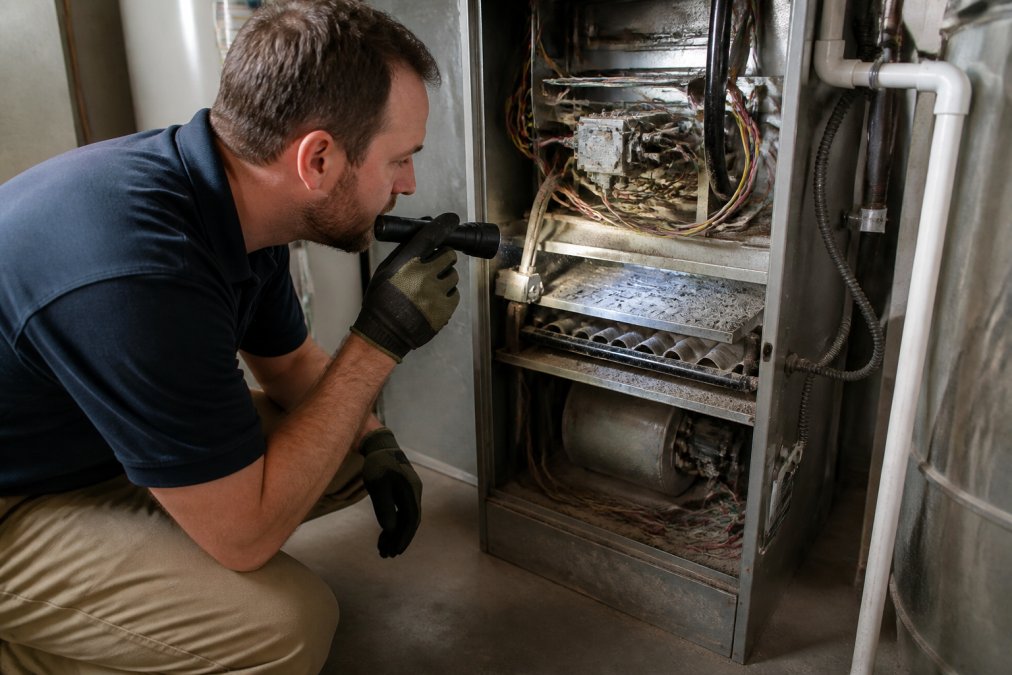
You can check several furnace lifespan issues yourself before calling a pro. This quick inspection takes about 15 minutes and needs no special tools.
What You'll Need:
- A flashlight
- A clean air filter
- Work gloves
Maintenance Habits That Extend Furnace Lifespan
Preventative maintenance is the cheapest way to add years to a furnace. A yearly tune-up catches small problems before they become expensive ones. The DOE guidance on home heating notes that regular maintenance helps heating systems run safely and efficiently.
Habits that help:
- Replace the air filter every 1-3 months
- Schedule a tune-up each fall
- Seal ductwork leaks to stop heat loss
- Keep vents clear of furniture
- Install a CO detector on every level
Frequently Asked Questions
Should a 25-year-old furnace be replaced?
A 25-year-old furnace is well past the average furnace lifespan of 15 to 20 years. At that age, heat exchanger cracks, blower motor wear, and failing hot surface ignitors become common. If repair costs exceed half the price of a new unit, or if you see signs of a cracked heat exchanger, replacement is the safer and more cost-effective choice. Schedule a professional inspection to confirm.
What are the most common signs of a failing furnace?
Watch for short cycling, yellow or flickering burner flames instead of blue, a burning smell, banging or grinding noises, and uneven heating between rooms. Rising energy bills without a change in usage also point to efficiency loss. Any of these signals, especially combined with a system age over 15 years, means it is time to call a licensed HVAC technician for a full evaluation.
How often should a furnace be inspected to prevent premature failure?
Schedule a professional inspection once a year, ideally in early fall before heating season. Between visits, check your air filter every month and replace it when dirty, typically every 1 to 3 months. Annual tune-ups catch thermostat calibration drift, ductwork leaks, and combustion chamber issues early. Consistent preventative maintenance is the single best way to extend furnace lifespan.
Is a 30-year-old furnace still safe to use?
A 30-year-old furnace is double the low end of the average furnace lifespan and carries real safety risks. Heat exchangers in units that old are prone to cracks, which can leak carbon monoxide into your home. Even if it still runs, parts availability and efficiency loss make it a poor bet. Have a technician inspect the heat exchanger and combustion chamber before another heating season.
An aging furnace rarely fails without warning. Noises, smells, flame color, and rising bills all tell you when a system is near the end. RTS Comfort Cooling & Heating offers 24/7 emergency service, expert heating installation, and smart thermostat installation to keep your home warm and safe. Call (702) 707-4242 for a free estimate and get a straight answer on repair or replace.