 how-to
Signs of Low Refrigerant in Your Home AC System
Last Updated: November 13, 2026
Quick Summary
Signs of low refrigerant include warm or lukewarm air from supply vents, weak airflow, and an AC that runs constantly without cooling the house. Ice or frost on the refrigerant lines or indoor coil, hissing or bubbling sounds, and higher electricity bills can also point to low refrigerant. One sign alone can have other causes, but several together make it much more likely.
- Warm or lukewarm air from supply vents is the most common sign of low refrigerant.
- Turn the system off and let frost melt before doing anything else.
- Refrigerant does not drop on its own, so a low level means a leak.
- Adding refrigerant without finding and fixing the leak only wastes money.
- Never open refrigerant lines or try to add refrigerant yourself.
Table of Contents
- How Low Refrigerant Affects Your Home AC
- The Main Signs of Low Refrigerant in Your AC
- What Causes Low Refrigerant in an AC System
- Problems That Can Mimic Low Refrigerant
- Immediate Action and Safe Checks You Can Do Now
- How to Fix Low Refrigerant in an AC Unit and What It Costs
- Booking a Professional Diagnosis With RTS Comfort Cooling & Heating
- Frequently Asked Questions
How Low Refrigerant Affects Your Home AC
If your air conditioner is blowing warm air, low refrigerant may be the problem. Read why ignoring a leak can harm your system, home and household before the damage grows.
Think of refrigerant as the engine of your cooling system. A low level almost always means a leak somewhere in the lines, coil or connections. Learn how these leaks develop and where they usually occur to understand why refrigerant gets low.
Here is what low refrigerant does to your home AC:
- Reduces cooling capacity. Less refrigerant means less heat is removed from your indoor air.
- Forces the system to run longer. The unit keeps cycling but never fully reaches your thermostat setting.
- Strains the compressor. The compressor can overheat when it works without enough refrigerant to cool it.
- Raises energy use. A struggling system pulls more electricity for less comfort.
Catching a low refrigerant problem early can help prevent further damage to the system.
The Main Signs of Low Refrigerant in Your AC
Most homes show a few clear warning signs before the system fails completely. Watch for these common symptoms:
- Warm or lukewarm air coming from supply vents
- Weak airflow from the vents
- The AC runs constantly but never cools the house
- Ice or frost on the refrigerant lines or indoor coil
- Higher electricity bills with no change in habits
- Hissing or bubbling sounds near the indoor or outdoor unit
- Water pooling near the indoor unit or furnace
One sign alone can have other causes. Two or more signs together make low refrigerant much more likely.
Warm Air From Supply Vents and Weak Airflow
Warm air from the vents is the most common sign of low refrigerant. The air may feel only slightly cool, or it may feel like room temperature. Airflow may also seem weaker than it was last year.
Check the vents closest to the indoor unit first. If those vents are warm while the others feel cooler, the problem is often in the system itself rather than the ductwork.
Ice or Frost on Refrigerant Lines and the Indoor Coil
When refrigerant runs too low, the indoor coil can get too cold and freeze. You may see frost on the copper refrigerant lines or on the coil near the air handler.
Turn the system off and let the ice melt before you do anything else. Running a frozen system can cause water damage and more harm to the unit.
Most homes show a few clear warning signs before the system fails completely. Here is how to recognise the most common symptoms.
| Sign | What it looks like | Why it matters |
|---|---|---|
| Warm or lukewarm air | Air from supply vents feels only slightly cool or room temperature | Most common sign of low refrigerant |
| Weak airflow | Vents blow less air than before | Can signal a refrigerant or airflow problem |
| Constant running | AC runs but never cools the house | System cannot reach thermostat setting |
| Ice or frost | Frost on refrigerant lines or indoor coil | Coil is too cold; turn off and thaw |
| Higher bills | Electricity costs rise with no habit change | Struggling system uses more power |
| Hissing or bubbling | Sound near indoor or outdoor unit | Can point to a leak |
| Water pooling | Water near indoor unit or furnace | Can come from a frozen coil |
What Causes Low Refrigerant in an AC System
Refrigerant does not drop on its own. A low level means the system has lost refrigerant through a leak. Common causes include:
- Worn or damaged copper lines from age, vibration or corrosion
- Loose or cracked flare fittings at connection points
- Pinhole leaks in the evaporator coil, often from corrosion
- Damage to the outdoor condenser coil from debris or hail
- Poor past service work, such as a rushed installation or an improper refrigerant charge
A leak is not a fix you can ignore. Adding refrigerant without finding the leak only wastes money, and the level will drop again.
Problems That Can Mimic Low Refrigerant
Several other problems produce the same warm air and poor cooling as low refrigerant. If you have ruled out refrigerant, see the full list of common reasons an AC is not cooling to narrow down the real problem.
- A dirty air filter. A clogged filter restricts airflow across the indoor coil. The air from the vents may feel slightly cool but weak, and the coil can ice over even when the refrigerant level is correct. A filter that looks gray, matted or light-blocking is overdue for replacement. Check it regularly, and more often during heavy cooling season or in homes with pets.
- A failing blower motor. If the blower moves too little air, the coil gets cold and can freeze, and the house never reaches the thermostat setting. The difference from low refrigerant is that the outdoor unit may still run normally and the refrigerant lines may not show the same frost pattern. A technician confirms this by measuring static pressure and blower amp draw.
- A dirty outdoor condenser coil. When the outdoor coil cannot release heat, head pressure rises and cooling drops. The unit may run constantly and the outdoor fan may sound strained. Rinsing debris from the coil fins and clearing at least two feet of space around the unit is a safe homeowner step; a technician can do a deeper coil cleaning.
- A faulty thermostat. A thermostat that reads the wrong temperature, loses calibration or sends bad signals can make the system short-cycle or fail to call for cooling. Check that it is set to cool, the fan is on auto, and the batteries are fresh if it uses them. A thermostat that reads a room temperature far from a separate thermometer is suspect.
- A failed capacitor. A weak run or start capacitor keeps the outdoor fan or compressor from starting properly. You may hear a hum or clicking at the outdoor unit and see the fan not spinning. Capacitors are inexpensive parts, but testing and replacing them requires a multimeter and knowledge of safe electrical work, so this is a technician job.
- Blocked or leaking ductwork. Ducts that are crushed, disconnected or leaking lose cool air before it reaches your rooms. Rooms farthest from the air handler are usually the worst. A technician can pressure-test ducts and seal leaks.
- A refrigerant leak. A true low-refrigerant problem usually shows a combination of signs: warm air, long run times, ice on the indoor coil or suction line, and sometimes hissing or bubbling at the leak point. One sign alone is not proof.
A useful rule of thumb: if the filter is clean, the thermostat is set correctly and the outdoor unit is clear, and the system still blows warm air or ices up, low refrigerant moves up the list.
Immediate Action and Safe Checks You Can Do Now
You can safely perform a few checks before calling for service:
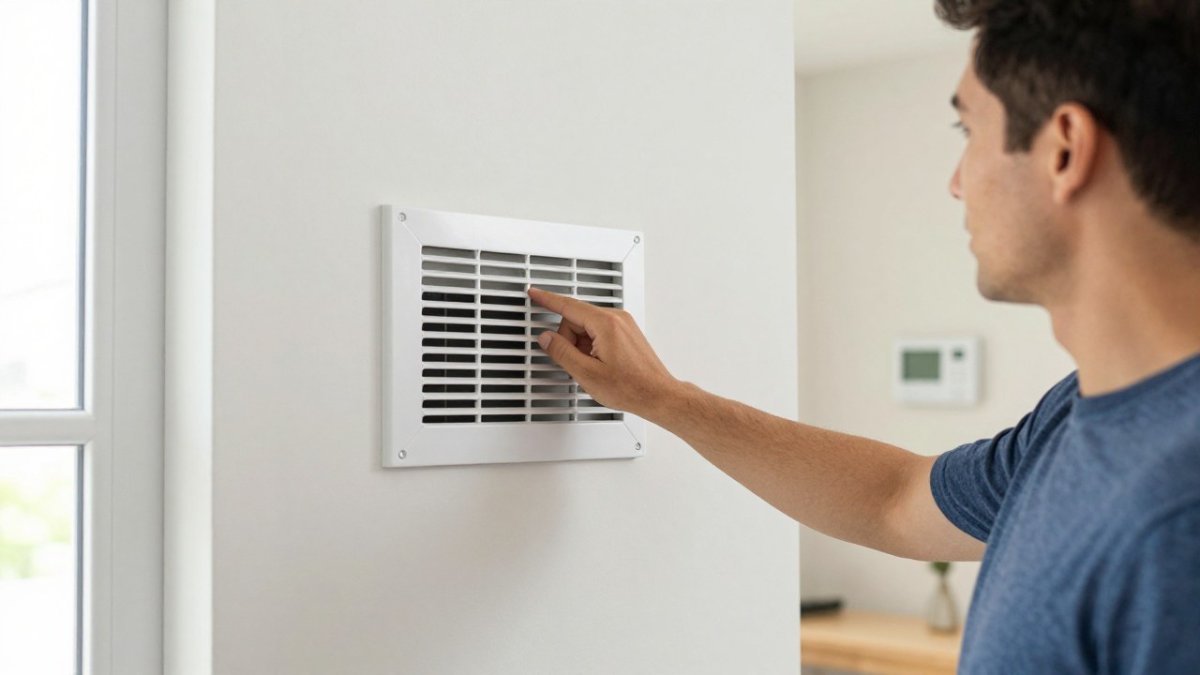
- Check the air filter. Replace it if it looks gray or clogged.
- Confirm the thermostat settings. Make sure it is set to cool and the fan is on auto.
- Look at the outdoor unit. Clear leaves, dirt and debris at least two feet from the unit.
- Look for ice. If you see frost, switch the system to fan-only mode to thaw it.
- Listen for hissing. A hissing sound near the lines can point to a leak.
Watch out: Never open refrigerant lines or try to add refrigerant yourself. Refrigerant can cause frostbite and injury.
If the system is blowing warm air, freezing or making loud hissing noises, turn it off and call a licensed HVAC technician right away. Learn which warning signs mean the situation has become an emergency needing urgent help.
How to Fix Low Refrigerant in an AC Unit and What It Costs
A low refrigerant level is not fixed by topping off the system.
Step 1: Leak detection. A technician uses one or more methods to locate the leak:
- Electronic refrigerant detectors that sense leaking refrigerant in the air near joints, coils and lines.
- UV dye added to the system, which glows under a special light at the leak point after the system runs.
- Pressure testing with nitrogen to isolate a section of the system and confirm whether it holds pressure.
- Soap bubbles at fittings and brazed joints for visible leaks.
Leak location matters. A leak at an accessible flare fitting or line set is usually a straightforward repair.
Step 2: Repair or replace the leaking component. The technician repairs the line, fitting or coil, or replaces the failed part.
What affects the cost. Repair cost depends on several factors:
- Leak location. Accessible line and fitting repairs cost far less than evaporator or condenser coil replacement.
- Refrigerant type. Systems using some older refrigerants can cost more to recharge than systems using current refrigerant blends. The nameplate on the outdoor unit lists the refrigerant type.
- System age and condition. An older system with a history of leaks may need more than one repair.
- Repair scope. A single fitting repair is a smaller job than a coil replacement plus recharge.
- Labor and access. Coils in attics, crawlspaces or tight closets take more labor to reach.
Because pricing varies by system, refrigerant type and location, ask for a written quote before work begins.
What not to do. Do not let anyone add refrigerant without finding the leak.
Booking a Professional Diagnosis With RTS Comfort Cooling & Heating
A professional diagnosis checks the refrigerant level, pressures, airflow and electrical components together. This approach finds the real cause instead of guessing.
At RTS Comfort Cooling & Heating, our team offers 24/7 emergency service for sudden breakdowns and provides a free estimate for repairs. If your AC is blowing warm air or freezing, call (702) 707-4242 for a free estimate.
Frequently Asked Questions
How do I know if my home AC needs refrigerant?
The most common signs are warm or lukewarm air from supply vents, an AC that runs constantly without reaching the thermostat setting, and ice or frost on the refrigerant lines or indoor coil. Weak cooling combined with higher electricity bills is another strong indicator. Because these symptoms can also come from airflow or electrical problems, a licensed HVAC technician should measure system pressures and check for leaks before any refrigerant is added. RTS Comfort Cooling & Heating can run that diagnosis for you, and you can call (702) 707-4242 for a free estimate.
Can I just add refrigerant to my AC?
Adding refrigerant without finding the cause is not recommended. Refrigerant is not used up during normal operation, so low levels almost always mean a leak. Topping off the system only hides the problem, and the unit will lose charge again. Refrigerant handling should be left to qualified, certified technicians. A technician should locate and repair the leak, then charge the system to the manufacturer's specification.
Can low refrigerant make an air conditioner freeze up?
Yes. When refrigerant is low, pressure and temperature inside the evaporator coil drop, and the coil can fall below freezing. Moisture from the air then turns to ice on the coil and on the refrigerant lines. Running the system while it is frozen can damage the compressor. If you see frost, turn the system off at the thermostat and let the ice melt before calling for service. Frozen coils can also come from dirty filters or poor airflow, so a professional should confirm the cause.
What does it cost to fix low refrigerant in an AC?
Costs depend on whether the problem is a simple leak repair, a recharge after the leak is fixed, or a larger component failure, along with the type of refrigerant in the system and the amount needed. RTS Comfort Cooling & Heating has not published fixed prices for this service, and pricing depends on the specific system and repair. Call (702) 707-4242 or visit the RTS Comfort Cooling & Heating website for a current quote and a free estimate before any work begins.