 how-to
How Can You Improve Home AC Airflow Fast?
Last Updated: October 27, 2026
Quick Summary
To improve AC airflow fast, start with the cheapest fixes: replace a clogged filter, unblock supply and return vents, open closed dampers, and keep interior doors open so air can return. If weak rooms persist, check ducts for leaks or crushed runs and balance branch dampers.
- Run a 15-minute walk-through: check the filter, vents, dampers, doors, thermostat fan, and outdoor unit.
- Most supply vents should read roughly 300 to 500 feet per minute at the face.
- Change filters every 1 to 3 months, leaning shorter with pets or dust.
- A door undercut gap of about 3/4 inch gives return air a path.
- Stop DIY and call a pro for ice on the coil, burning smells, or a short-cycling compressor.
Table of Contents
- Start With a Safe Diagnostic Flow for Weak AC Airflow Causes
- AC Air Filter Replacement: The Cheapest Fix You Can Make Today
- How to Increase Airflow in a Room Without Replacing the System
- How to Balance AC Airflow Across Every Room
- Check Ductwork for Leaks, Blockages, and Poor Sizing
- System-Specific Safety Limits and When to Stop DIY
- Book a Professional Airflow Inspection with RTS Comfort Cooling & Heating
- Frequently Asked Questions
Start With a Safe Diagnostic Flow for Weak AC Airflow Causes
Weak AC airflow causes almost always trace back to one of six things: a clogged filter, blocked vents, closed dampers, leaking ducts, a dirty evaporator coil, or a blower problem. Before you touch anything, run a simple diagnostic so you fix the real issue instead of guessing.
The 15-Minute Walk-Through
Work through this in order. Stop when you find the problem.
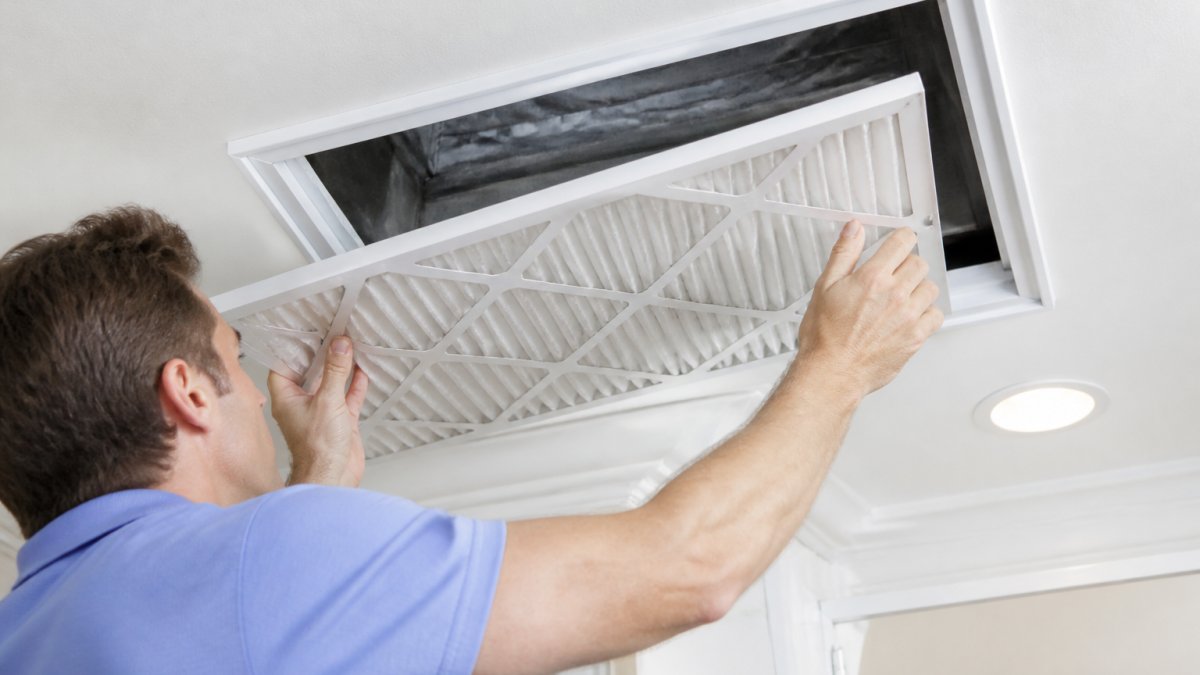
- Check the filter. Pull it out and hold it up to a light. If you can't see through it, replace it.
- Walk every room. Run your hand over each supply vent. Note which rooms feel weak.
- Look for blocked vents. Furniture, rugs, and curtains cover more vents than people realize.
- Open every interior door. Closed doors choke return air and raise room pressure.
- Test the thermostat. Set the fan to "on" and listen at the vents. Weak flow with the fan running points to ducts or the blower.
- Check the outdoor unit. Clear leaves and debris from around it.
Running the fan continuously separates an airflow problem from a cooling problem.
How to Measure Airflow and What Target Values to Expect
You don't need fancy tools to get a rough read. A cheap handheld anemometer or a tissue held at the vent tells you plenty.
- Tissue test: Flutters strongly = good flow. Barely moves = weak flow. Gets sucked in = blocked return.
- Anemometer: Most residential supply vents should read roughly 300 to 500 feet per minute at the face. Below that, airflow is likely restricted.
- Temperature split: Measure air at the return and at a supply vent. A healthy split is usually 15 to 20 degrees Fahrenheit.
These are ballpark figures, not absolutes. Vent size, distance from the blower, and duct design all shift the numbers.
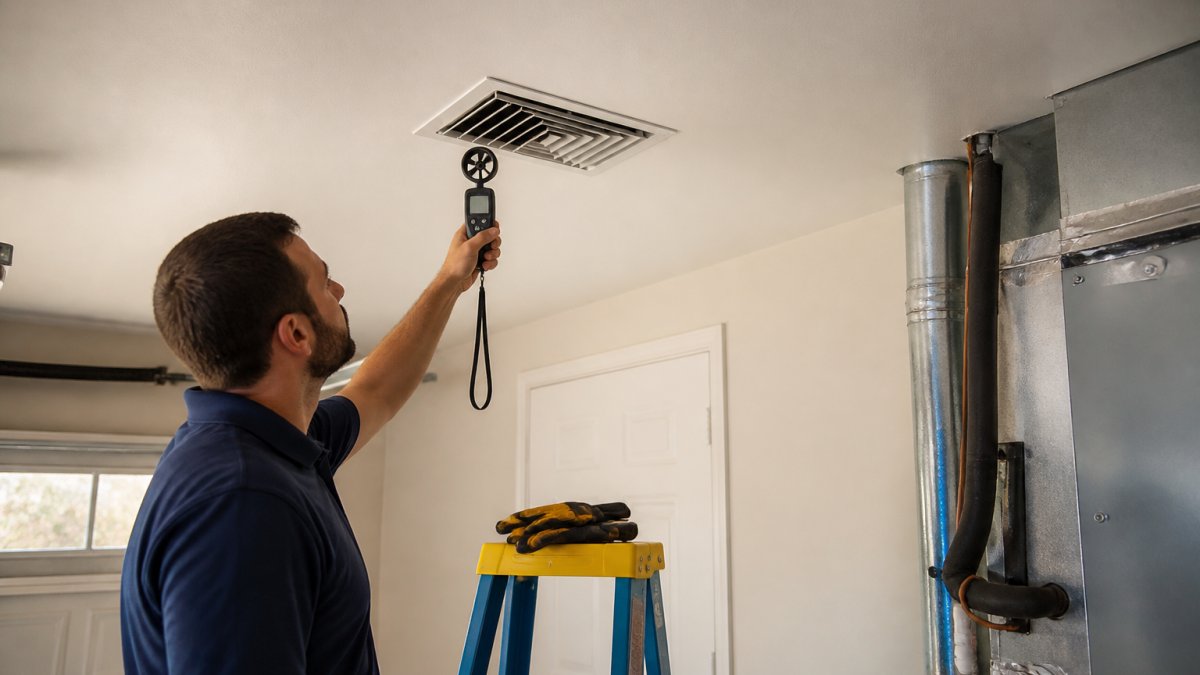
Here are the ballpark airflow readings the article says to expect when you check your vents.
| Measurement | Target value | Note |
|---|---|---|
| Supply vent face velocity | Roughly 300 to 500 feet per minute | Below that, airflow is likely restricted |
| Temperature split | Usually 15 to 20 degrees Fahrenheit | Measure at the return and a supply vent |
| Filter change interval | Every 1 to 3 months | Lean toward the shorter end with pets or dust |
| Recommended filter rating | MERV 8 to MERV 11 | Step up to MERV 13 only if system can handle it |
| Door undercut gap | About 3/4 inch | Gives return air a path |
| Diagnostic walk-through | 15 minutes | Stop when you find the problem |
AC Air Filter Replacement: The Cheapest Fix You Can Make Today
AC air filter replacement is the single highest-value airflow fix most homeowners can do themselves. A dirty filter starves the blower, and a starved blower moves less air through the whole house.
Here's the trade-off nobody explains well. A high-MERV filter catches more dust, but it also resists airflow. If your system wasn't designed for a thick pleated filter, going too high can make weak airflow worse. Most homes do fine with MERV 8 to MERV 11. Only step up to MERV 13 or higher if your system and ductwork can handle the added resistance.
Change filters every 1 to 3 months. In dusty climates and homes with pets, lean toward the shorter end.
If you want specific filter picks for dusty air and allergies, our guide to the best HVAC filters for desert dust and allergens breaks down ratings and fit.
How to Increase Airflow in a Room Without Replacing the System
To increase airflow in a room, start with the cheapest levers: clear the vents, open the dampers, and give the air a path back to the return. Most weak-room complaints are pressure problems, not equipment problems.
Fans, Vents, and Return-Air Pathways
- Unblock supply vents. Move furniture, lift drapes, and pull rugs back.
- Open the damper. Many supply vents have a small lever behind the grille. Turn it fully open.
- Keep interior doors open. A closed door turns a bedroom into a pressurized box with nowhere for air to go.
- Add a booster fan for a single stubborn room. It mounts in the duct branch and pushes more air where you need it.
- Use ceiling and box fans to mix air. They don't cool the air, but they break up stratification and make rooms feel better fast.
- Check the return grille. A blocked or undersized return is the most overlooked cause of weak supply airflow.
The Closed-Door Pressure Problem
- Undercut the door. A gap of about 3/4 inch under the door gives return air a path. Many older homes already have this; newer carpet and weatherstripping often seal it off.
- Install a transfer grille. A small grille above the door or in the wall to a common area lets air escape without sacrificing privacy. Jumper ducts do the same job through the attic.
- Add a return in the room. The most effective fix, but it requires ductwork and a pro.
A quick test: close the door, then hold a tissue at the gap under it. If the tissue flutters hard, the room is pressurized and starving for return air.
Measure Before You Add Hardware
Before buying a booster fan, confirm the room is actually short on supply air rather than short on return air. Use the tissue test at the supply vent and at the door gap:
- Strong supply, strong door-gap flutter: return problem. Fix the pathway first.
- Weak supply, weak door-gap flutter: supply problem. Check the damper, then the duct run.
- Weak supply, strong door-gap flutter: the room is pressurized and the supply is losing the fight. Return pathway is the culprit.
How to Balance AC Airflow Across Every Room
Balancing AC airflow means adjusting dampers and registers so each room gets air in proportion to its size and heat load, not just the rooms closest to the blower.
- Map your rooms. Note which run hot and which run cold.
- Find the branch dampers. They sit on the duct runs near the plenum, usually with a small lever.
- Throttle the cold rooms slightly. Close those dampers partway, not all the way.
- Open the hot rooms fully.
- Wait a day, then recheck. Air balancing is iterative. Small changes, then measure again.
For a two-story home with one unit, the upstairs-versus-downstairs gap needs a different approach. Our guide on improving airflow in a two-story house with one HVAC unit covers zoning, returns, and damper strategy in detail.
Call (702) 707-4242 for a free estimate →
Check Ductwork for Leaks, Blockages, and Poor Sizing
Duct leaks and blockages waste the airflow you already paid for.
Look for these signs:
- Torn or disconnected flex duct in the attic
- Crushed or kinked runs behind walls
- Dust streaks at duct joints
- Rooms that never get air no matter what you adjust
- Whistling at vents
A Safe Visual Inspection Route
Work from the air handler outward, and stop at anything that looks damaged.
- At the air handler. Look at the plenum connections.
- Along the trunk. Follow the main trunk line.
- At each branch. Check where branches leave the trunk.
- At the registers. Pull the grille and look at the boot.
A flashlight and a phone camera are enough for most attic and basement runs. Do not crawl through tight spaces or walk on ceiling joists without proper footing.
Judging Duct Sizing Without a Manual
- Whistling at a vent means the duct is too small for the air being pushed through it. The whistle is the sound of velocity, not volume.
- A trunk that's smaller than the plenum opening is a red flag. The trunk should be sized to carry the full airflow of the system.
Seal Small Leaks, Replace Crushed Runs
If your ducts are leaking, you'll want to weigh repair against replacement. Our breakdown of whether professional duct sealing is worth the cost walks through the decision, and if you'd rather hand it off, you can book professional duct cleaning and let a tech inspect the whole run.
System-Specific Safety Limits and When to Stop DIY
Some airflow problems are safe to fix yourself. Others aren't. Knowing the line protects both your system and your wallet.
Stop and call a pro if you see or hear:
- Ice on the indoor coil or refrigerant lines
- The blower running but no air at any vent
- Burning smells or a breaker that keeps tripping
- Water pooling near the air handler
- A compressor that short-cycles
Frozen coils and refrigerant leaks are sealed-system problems. Adding refrigerant isn't a DIY job, and it's regulated under Section 608 of the Clean Air Act. Handling refrigerant without certification is illegal.
Also, don't pull the blower assembly or open the air handler cabinet unless you've killed power at the breaker and disconnect. Capacitors hold a charge even after shutdown.
The Department of Energy's guide to home cooling is a solid reference for how these systems are meant to perform.
Book a Professional Airflow Inspection with RTS Comfort Cooling & Heating
DIY gets you most of the way. A professional inspection gets you the rest, with measurements you can't take yourself. You can book AC repair and inspection service with a local HVAC team.
Here's what you get:
- 24/7 emergency service when airflow dies in a heat wave
- Duct cleaning and sealing to recover lost airflow
- Smart thermostat installation for better fan and scheduling control
- Attic insulation to reduce the load your system fights
Our team is rated the area's top HVAC contractor.
Frequently Asked Questions
Why is my AC airflow weak in some rooms but strong in others?
Check whether supply registers in the weak rooms are open, whether furniture or rugs block them, and whether interior doors are shut.
Can a dirty air filter really reduce AC airflow?
Check the filter and replace it when it looks gray or matted.
Should I close vents in unused rooms to improve airflow?
Closing vents rarely helps and often makes things worse. Most residential systems are sized for a fixed total airflow, and shutting registers raises static pressure in the ducts, which can reduce delivery to the rooms you actually use and put extra strain on the blower. It can also create pressure imbalances that pull hot attic air in through gaps. Keep registers open and use dampers at the trunk for genuine balancing instead.
When should I call an HVAC technician about weak AC airflow?
RTS Comfort Cooling & Heating offers 24/7 emergency service at (702) 707-4242.
Weak airflow rarely fixes itself, and every week you wait runs the system harder than it should. Get started with RTS Comfort Cooling & Heating and get an honest airflow inspection with a free estimate. Call (702) 707-4242 to schedule.