 listicle
Is Professional Duct Sealing Worth the Cost in 2026?
Table of Contents
- How to Tell If Ducts Are Leaking: 7 Warning Signs
- The Benefits of Sealing Air Ducts: Comfort, Air Quality, and Energy Savings
- Average Cost of Duct Sealing: What Homeowners Actually Pay
- Is Professional Duct Sealing Worth the Cost? A Break-Even Analysis
- Duct Sealing vs. Duct Replacement: Which Does Your Home Need?
- Pre-Service Inspection Checklist: What to Verify Before You Hire
- Conclusion: Making the Right Call for Your Home
- Frequently Asked Questions
Last Updated: September 11, 2026
How to Tell If Ducts Are Leaking: 7 Warning Signs
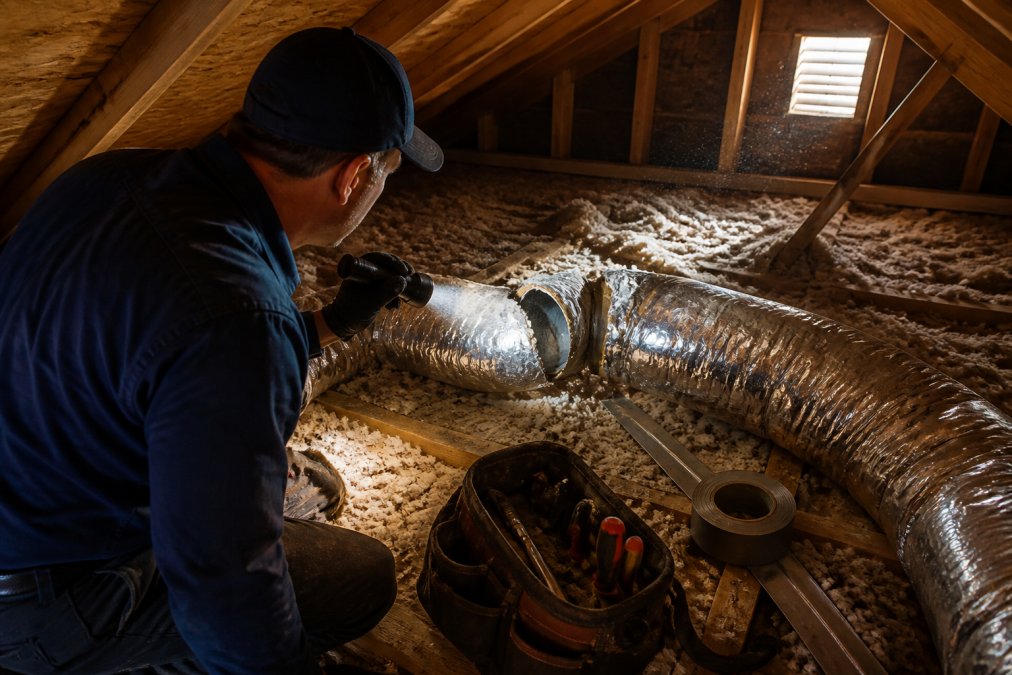
If you're asking whether professional duct sealing is worth the cost, the honest answer is: it depends on how much air your ducts are losing and whether that loss is reachable. Before you spend anything, confirm you actually have a leak problem. Duct leakage is the uncontrolled escape of conditioned air through gaps, disconnected joints, and holes in the duct network. In most homes, that loss happens in attics, crawlspaces, and wall chases where you never see it.
Here's what to look for:
- Rooms that never reach the thermostat setting, especially rooms farthest from the air handler
- Utility bills that climb without a matching change in weather or usage habits
- Whistling or rushing sounds at registers and grilles
- Visible dust streaks around supply registers
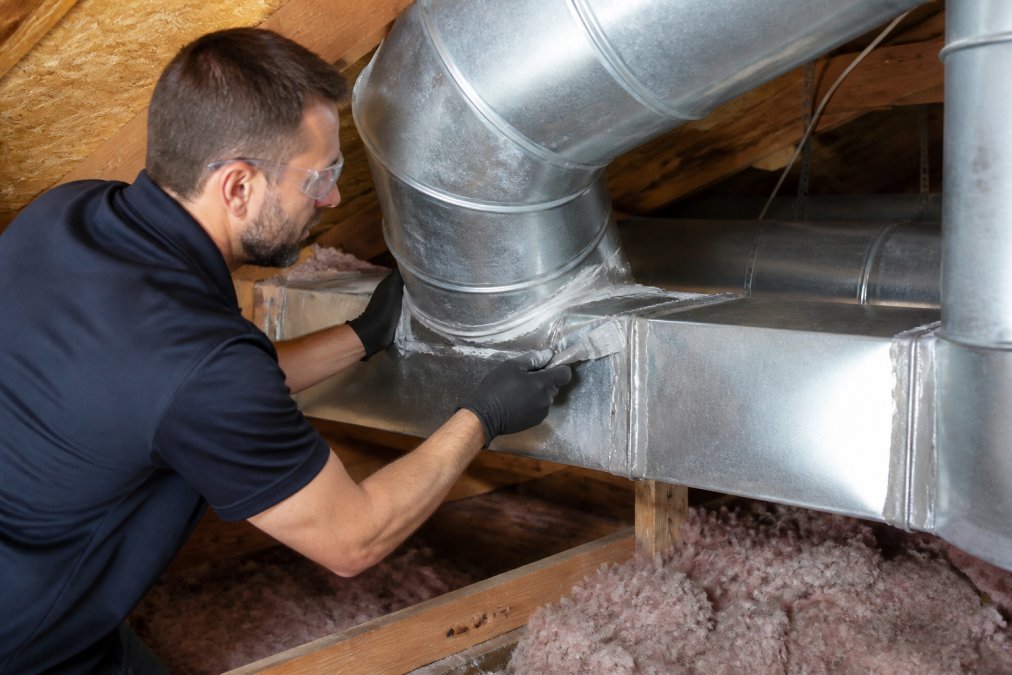
- Duct joints wrapped in gray cloth tape that has dried out and separated
- A noticeable pressure difference when you close an interior door
- Hot or cold spots that persist after balancing the vents
That last point matters more than people realize. A common mistake is chasing thermostat settings when the real issue is air distribution.
The Benefits of Sealing Air Ducts: Comfort, Air Quality, and Energy Savings
The benefits of sealing air ducts fall into three categories, and they don't all show up on your utility bill. Sealed ducts improve thermal comfort by delivering the air you already paid to cool to the rooms that need it. They reduce energy waste because the system stops conditioning attic air. And they improve indoor air quality by limiting the path that airborne dust, insulation fibers, and attic contaminants use to enter your living space.
The indoor air quality benefit gets oversold, though. Sealing ducts reduces one entry route for airborne contaminants; it does not replace filtration or duct cleaning if your system is already fouled. Homeowners dealing with allergies often need both, and a good contractor will tell you which one you actually need rather than bundling everything.
Energy-wise, the mechanism is straightforward: less leakage means lower energy consumption for the same comfort level. The U.S. Department of Energy guidance on duct sealing notes that sealing and insulating ducts can meaningfully improve HVAC performance, particularly when ducts run through unconditioned spaces.
Average Cost of Duct Sealing: What Homeowners Actually Pay
The average cost of duct sealing depends on three variables: how much leakage exists, how accessible the ductwork is, and which method is used. There is no single national number that applies to your house, and any contractor who quotes one over the phone before inspecting is guessing.
Two sealing approaches dominate the market:
| Method | How It Works | Access Needed | Best For |
|---|---|---|---|
| Manual sealing | Duct mastic and UL 181-rated foil tape applied by hand | Exposed joints in attic, basement, or crawlspace | Accessible ductwork with visible gaps |
| Aerosol-based sealing | Polymer mist injected into pressurized ducts, sealing from inside | Minimal; reaches concealed runs | Ducts inside walls, ceilings, or tight chases |
Aerosol-based systems, such as the Aeroseal process, seal leaks in ductwork you cannot physically reach. That capability is why it costs more than manual work. Manual sealing is inexpensive in materials but labor-intensive, and it can only fix what a technician can touch.
What actually drives the price
Most contractors price duct sealing using a combination of these factors, so ask which ones apply to your quote:
- Measured leakage (CFM). A duct blaster test reports leakage in cubic feet per minute at a set pressure. Higher leakage usually means more sealing material, more time, or both.
- Accessibility. Ducts in a conditioned basement are cheap to reach. Ducts buried under blown insulation in a low attic, or run through finished walls, are not.
- Linear feet of duct and number of joints. A single-story ranch with a short trunk line is a smaller job than a two-story home with a zoned system and long branch runs.
- Method. Aerosol sealing carries equipment and setup costs that manual mastic work does not, but it reaches leaks manual work cannot.
- Add-ons. Insulating ducts after sealing, replacing failed flex runs, or sealing the air handler and plenum cabinet can each add to the total.
How to sanity-check a quote
Because pricing is regional and job-specific, the useful move is not to memorize a national average but to compare quotes on the same basis. Ask each contractor to break the quote into: diagnostic testing, sealing labor and materials, any duct repair or insulation, and verification testing. A quote that lumps everything into one number is hard to compare and easy to inflate.
A common pattern is that the diagnostic and verification testing is a small share of the total, while the sealing labor and any duct repair dominate. If a quote is dramatically lower than the others, ask what is excluded, because the missing line item is usually the before-and-after testing that proves the work.
U.S. Department of Energy guidance on duct sealing and insulation
The question behind the question
Most homeowners asking about average cost are really asking whether the number they were quoted is fair. The honest answer is that fairness is measured against your leakage and your access, not against a national figure. Get the pressure test first, then compare quotes on identical scope, and the price will make sense in context.
Is Professional Duct Sealing Worth the Cost? A Break-Even Analysis
Professional duct sealing is worth the cost when your measured leakage is high, your ducts run through unconditioned space, and you plan to stay in the home long enough for energy savings to accumulate. It is not worth it when leakage is minimal or when the ducts are already failing structurally. That distinction is the whole decision.
Most articles stop there and hand you a vague percentage. This section gives you the actual formula, a worked example, and the assumptions you should challenge.
The break-even formula
Break-even period (years) = Project cost ÷ Estimated annual savings
Estimated annual savings = Annual heating and cooling spend × Realistic savings rate
Call (702) 707-4242 for a free estimate →
That second line is where most estimates go wrong. The savings rate is not a fixed number. It depends on how much of your conditioned air is leaking, how much of that leakage is in unconditioned space, and how hard your system has to work to compensate.
A worked example
Suppose a homeowner spends $1,800 a year on heating and cooling, and a contractor quotes $2,400 for aerosol sealing after a pressure test shows substantial leakage in attic ducts.
- If the realistic savings rate is 10%, annual savings are $180, and break-even is 2,400 ÷ 180 ≈ 13.3 years.
- If the realistic savings rate is 20%, annual savings are $360, and break-even is 2,400 ÷ 360 ≈ 6.7 years.
- If the realistic savings rate is 30%, annual savings are $540, and break-even is 2,400 ÷ 540 ≈ 4.4 years.
Same house, same quote, break-even ranging from about four and a half years to over thirteen. That spread is why the savings rate matters more than the sticker price, and why a contractor who promises a single number is guessing.
Choosing a realistic savings rate
Aerosol sealing manufacturers report leakage reductions up to 90% and total home energy reductions up to 30%, but those are best-case figures on high-leakage systems, not averages. A defensible way to pick a rate:
- Low leakage, ducts mostly in conditioned space: assume a low single-digit savings rate.
- Moderate leakage, some ducts in unconditioned space: assume a mid single-digit to low double-digit rate.
- High leakage, most ducts in unconditioned attic or crawlspace: a higher double-digit rate is plausible, but only if the pressure test confirms it.
If you want a conservative planning number, use the low end of the range your test supports. If the project still breaks even inside your ownership horizon at the conservative rate, the decision is easy.
The assumptions to challenge
- Utility bills are your baseline. Pull twelve months of bills, not one season, because heating and cooling loads differ.
- Rates change. If your utility has raised rates recently, savings in dollars will grow even if the percentage stays flat.
- Comfort is not in the formula. Rooms that never reached the thermostat setting may become usable space after sealing, which has value the math does not capture.
- Equipment wear is not in the formula. A system that no longer runs as long or as hard may last longer, but that benefit is hard to quantify and should not be the deciding factor.
When the math says no
If your break-even lands outside your ownership horizon, prioritize the cheaper fixes first: air sealing the attic, insulation upgrades, and a smart thermostat. Those often cost less and can be done before committing to duct sealing. Sealing later is still possible if the ducts remain sound.
Duct Sealing vs. Duct Replacement: Which Does Your Home Need?
Sealing wins when the ductwork is structurally sound but leaky. Replacement wins when the ducts are crushed, undersized, badly routed, or deteriorating. This is the fork most homeowners never get told about, and it's where budgets go sideways.
Signs you need replacement rather than sealing:
- Flexible ductwork that is kinked, collapsed, or sagging between supports
- Ducts routed through unconditioned space with no insulation left
- A system that was added onto over the years with mismatched sizing
- Visible mold growth or pest damage inside the duct runs
- Static pressure readings that stay high even after sealing
Sealing a duct system that needs replacement is money spent twice. A proper inspection measures static pressure and airflow, not just visible gaps, because a sealed system that still can't move air hasn't solved anything.
Pre-Service Inspection Checklist: What to Verify Before You Hire
Use this checklist before signing anything. It separates contractors who diagnose from contractors who sell.
- Does the company perform a pressure test or blower door test before quoting?
- Will you receive written leakage measurements, before and after?
- Are the sealing materials UL 181 listed for HVAC use?
- Does the quote specify which ducts will be sealed and which are inaccessible?
- Is the technician certified for the sealing method being used?
- Does the scope include sealing at the air handler and plenum, not just branch runs?
- Is there a written warranty on the sealing work?
- Will they check static pressure after sealing to confirm airflow improved?
Conclusion: Making the Right Call for Your Home
The decision comes down to measured leakage, not marketing. Get the test, run the break-even math, and let the numbers decide whether sealing or replacement is the right spend for your home.
RTS Comfort Cooling & Heating handles duct inspection, sealing, and the broader HVAC work that surrounds it, including duct cleaning, attic insulation, indoor air quality services, and smart thermostat installation. Our team provides free estimates and 24/7 emergency service when a system fails at the worst possible time.
Call (702) 707-4242 for a free estimate and find out what your ducts are actually costing you.
Frequently Asked Questions
How much should duct sealing cost?
Professional duct sealing costs depend on your home's size, duct accessibility, and the sealing method. The cost for different sealing methods varies. DIY materials are available for exposed joints. RTS Comfort Cooling & Heating provides free estimates to give you an accurate number for your specific setup.
How long does duct sealing last?
Professionally applied duct mastic and aerosol sealants last 10 to 20 years when installed correctly. UL 181-rated foil tape may degrade faster in extreme temperature swings. Sealant durability depends on proper surface preparation and material quality. In Las Vegas, attic temperatures regularly exceed 140°F, so using high-solids mastic or aerosol-based sealing designed for extreme heat is critical for long-term performance.
Is professional duct sealing worth the cost for older homes?
Older homes often have the most to gain because duct systems were frequently installed with loose joints and no sealant. If your ducts run through unconditioned attics or crawlspaces, leakage rates of 20-30% are common. Sealing those leaks reduces energy loss, improves air distribution, and takes pressure off your HVAC system. A blower door test or duct pressure testing can confirm whether sealing is the right investment before you commit.
Can duct sealing improve indoor air quality?
Yes. Leaky return ducts in attics or garages pull in airborne dust, insulation fibers, and other contaminants, then circulate them through your home. Sealing those leaks reduces airborne contaminants entering the system. Combined with duct cleaning and proper filtration, sealing supports better indoor air quality. If allergies are your main concern, ask for a pressure test first to confirm your ducts are actually leaking before paying for sealing.
What are the primary benefits of sealing leaky air ducts?
The main benefits of sealing air ducts include lower utility bills, more consistent room-to-room temperatures, reduced strain on your HVAC system, and better indoor air quality. Sealed ducts also help maintain proper static pressure, which improves airflow and extends HVAC lifespan. Leakage reductions and total home energy use cuts can be significant, though actual results vary by home configuration and climate.