 how-to
How to Tell If Power Outage Damaged Your AC Compressor
Last Updated: October 29, 2026
Quick Summary
Signs of ac compressor damage after a power outage include the outdoor unit staying silent, warm or weakly cool air, a loud hum without cooling, or a breaker that trips when the AC starts. Watch for these in the days after an outage.
- Wait at least 5 minutes after power returns before asking the system to cool again.
- Do not repeatedly restart a unit that hums but will not start.
- Replace or clean the air filter first, since it is the most common cause of weak cooling.
- A burning smell or scorched wiring means shutting the system off and calling for help right away.
Table of Contents
- How Power Outages and Surges Affect Your AC Compressor
- Key Signs of AC Compressor Damage After a Power Outage
- AC Not Cooling After Power Outage: Causes to Rule Out First
- AC Compressor Humming But Not Starting: What It Means
- How Long to Wait Before Restarting AC After Power Outage
- Power Surge Damage to HVAC System and Safe Checks You Can Do
- When to Shut Off Your AC and Call a Technician
- Frequently Asked Questions
How Power Outages and Surges Affect Your AC Compressor
Power outages and surges are two of the most common ways a home air conditioner gets hurt without warning. The compressor is the heart of the system. It pressurizes refrigerant so the unit can pull heat out of your home. When power drops, cuts out, or spikes, that heart can take damage, and ac compressor damage is one of the most costly results.
Storms and grid disruptions are a common cause of these problems in Las Vegas. The good news is that you can learn the warning signs and act early.
Here is what usually happens. When power comes back on, the compressor tries to start under unstable voltage. Each failed start puts stress on its electrical parts. A surge can also fry the start capacitor or the contactor, which are the components that tell the compressor when to run.
Power surges are the bigger risk. A sudden spike can overload motor windings, and that damage may not show up for days or weeks.
- Brief outages usually cause little harm
- Repeated on-and-off cycles stress the compressor
- Surges cause the most lasting electrical damage
- Surge protectors help protect the whole system
Key Signs of AC Compressor Damage After a Power Outage
Watch for these signs in the days after an outage. Any one of them is worth a closer look.
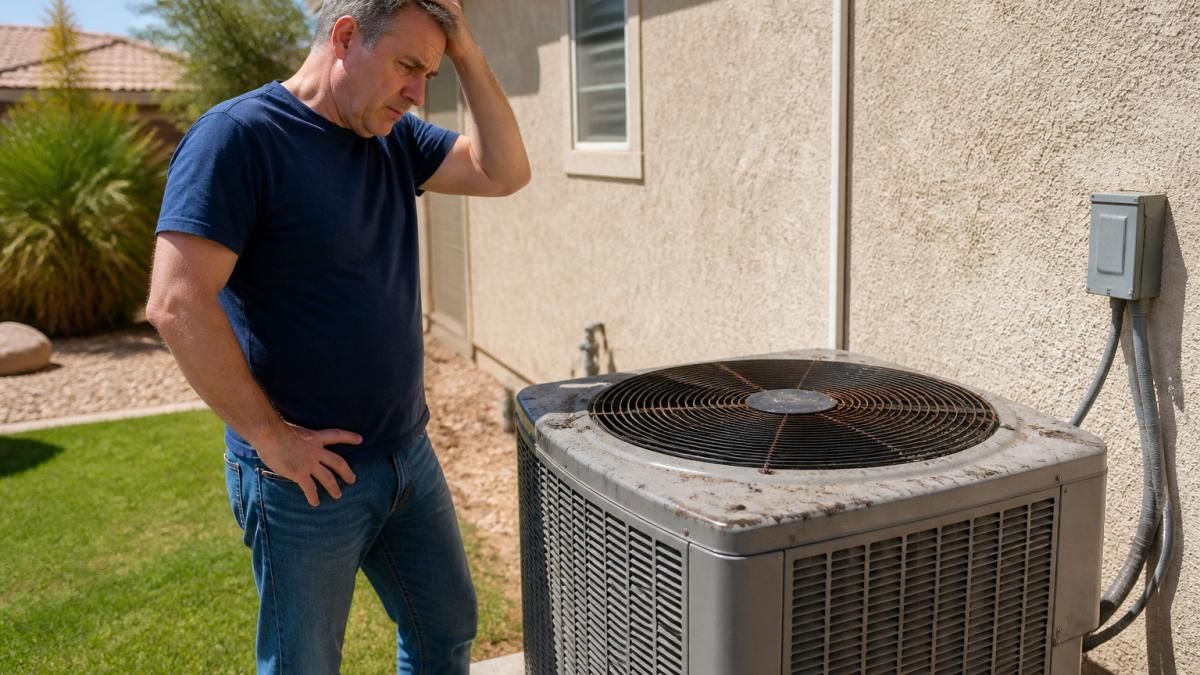
- The outdoor unit does not run at all. The indoor fan blows, but the outside unit stays silent.
- The air is warm or only slightly cool. Poor cooling often points to a compressor that cannot build pressure.
- You hear a loud hum but no cooling. The compressor may be trying to start and failing.
- The breaker trips when the AC starts. A shorted motor or bad start parts can draw too much current.
- The unit runs but ices up. Low refrigerant or airflow problems can follow compressor trouble.
Watch out: Do not keep trying to restart a unit that hums but will not start. Repeated attempts can burn out the compressor for good. Turn the system off at the thermostat and the disconnect, then call a technician.
AC Not Cooling After Power Outage: Causes to Rule Out First
Warm air after an outage does not automatically mean the compressor is dead. Check the other common causes of a non-cooling AC before assuming the worst.
| What you observe | Most likely cause | Can a homeowner fix it? |
|---|---|---|
| Indoor fan runs, outdoor unit silent, breaker tripped | Tripped breaker or open disconnect | Yes, reset once, then stop if it trips again |
| Outdoor unit hums briefly, clicks off, repeats | Failed start capacitor or weak contactor | No, technician part swap |
| Outdoor unit hums continuously, no cooling | Seized compressor or stuck rotor | No, technician diagnosis |
| Nothing runs, thermostat blank | Control board, transformer, or thermostat power | No, technician |
| Unit runs, air is cool at first then warm | Low refrigerant charge or iced coil | No, technician |
| Unit runs normally after a 5-minute wait | Normal restart delay or protection lockout | Yes, wait and retry once |
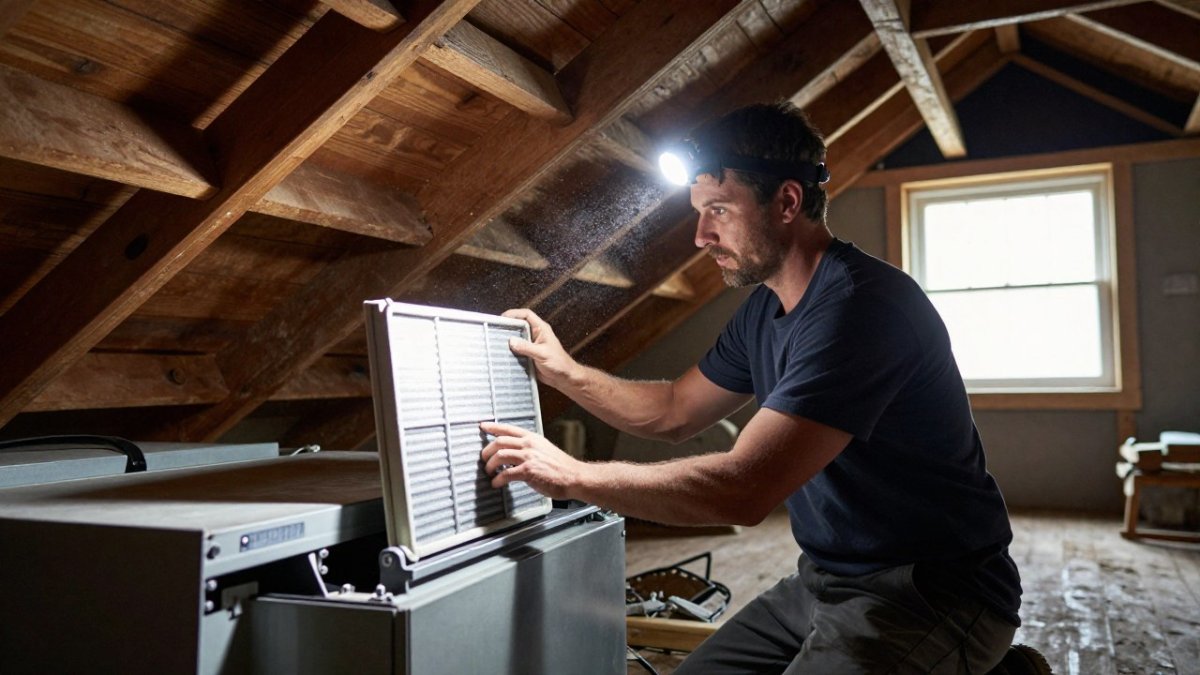
Rule out the simple causes first. A dirty air filter is the most common reason for weak cooling after an outage. Clogged filters restrict airflow, which drops coil temperature and can freeze the indoor coil. Replace or clean the filter before anything else.
Check the thermostat. Outages frequently reset programmable thermostats to a default schedule or to off. Confirm the mode is set to cool, the fan is on auto, and the setpoint is at least 3 to 5 degrees below room temperature.
Check the breakers and disconnect. Look at both the indoor air handler breaker and the outdoor condenser breaker. A single trip can be reset once.
Inspect the outdoor unit without opening it. Clear leaves, grass clippings, and debris from the cabinet. Check that the disconnect switch is fully on and that any visible cartridge fuses are intact.
Understand the restart delay. Many condensers include a 5-minute anti-short-cycle delay in the control board or a time-delay in the thermostat. If you restore power and the outdoor unit stays off for a few minutes, that can be normal.
If the basics check out and the air is still warm after a full 5-minute restart window, the problem is more likely a compressor, refrigerant, or control-board issue. That is when a professional diagnosis becomes necessary.
AC Compressor Humming But Not Starting: What It Means
A humming sound from the outdoor unit usually means the compressor is getting power but cannot turn over. The motor tries to start, stalls, and hums. This is one of the clearest signs of trouble after an outage.
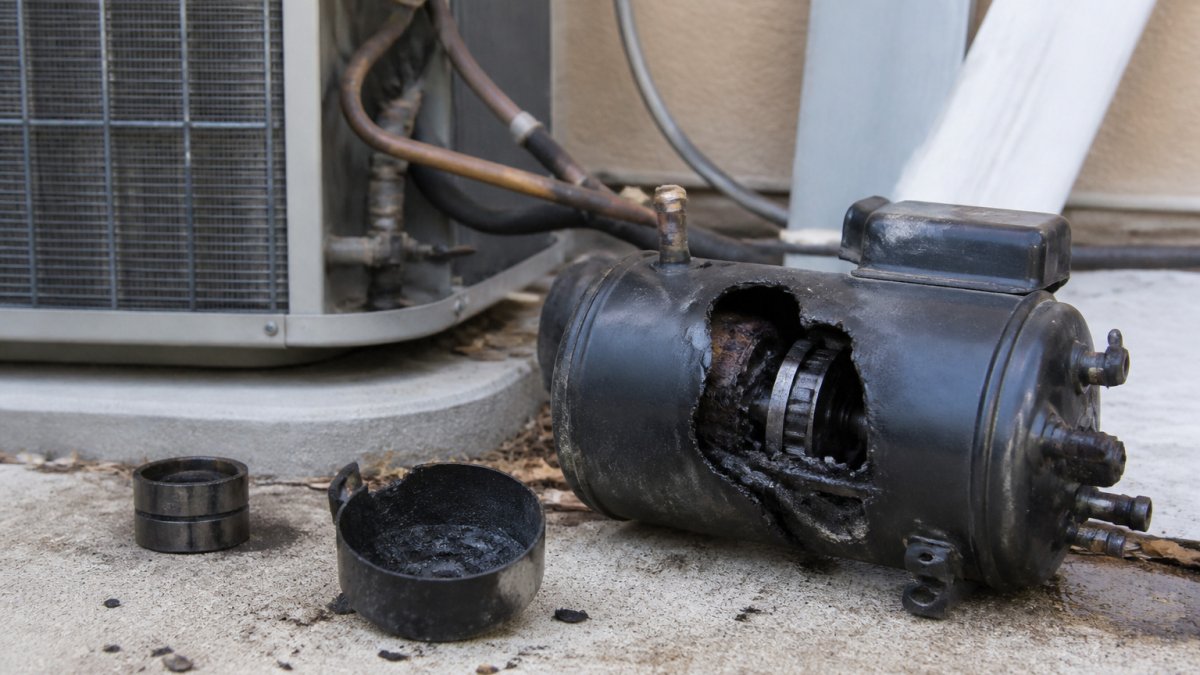
Possible causes include a failed start capacitor, a weak contactor, low voltage, or a seized compressor. Learn how to confirm whether the compressor has failed before you call for service. A capacitor is often the cheapest fix. A seized compressor is usually the most serious.
Do not let the unit keep humming. Each failed start pulls a large current spike, and that can cook the windings. See the full list of compressor failure symptoms to compare against what you're seeing.
How Long to Wait Before Restarting AC After Power Outage
Wait at least 5 minutes after power returns before you ask the system to cool again. Follow the step-by-step reset procedure to restart the unit safely. That number is not arbitrary. Compressors pump liquid refrigerant and oil, and if the unit restarts too soon after a shutdown, high head pressure can prevent the motor from turning over. The result is a locked rotor that draws locked-rotor amperage, several times normal running current, and can overheat the windings in seconds.
Call (702) 707-4242 for a free estimate →
Most residential condensers protect against this in one of two ways: a time-delay relay or anti-short-cycle timer built into the control board, or a thermostat with a built-in compressor delay. Either way, the system is designed to ignore a call for cooling for roughly 5 minutes after the last shutdown. Forcing a restart before that window closes either does nothing or defeats the protection.
Follow this restart sequence:
- Set the thermostat to off and the fan to auto.
- Confirm the outdoor disconnect is on and both breakers are set.
- Wait a full 5 minutes after utility power is restored.
- Set the thermostat to cool and lower the setpoint 3 to 5 degrees below room temperature.
- Listen at the outdoor unit. You should hear the contactor click, then the fan start, then the compressor hum to life within about a minute.
- Watch for 10 to 15 minutes. Note any breaker trip, repeated clicking, or humming without the fan.
When repeated attempts become harmful. If the unit hums but does not start, do not cycle the thermostat off and on to "try again." Each failed start pushes a current spike through the start winding and can weld contactor points or take out the capacitor. Two failed start attempts are enough, turn the system off at the thermostat and at the disconnect and call a technician.
If the system was off for an extended period. After a multi-hour outage in hot weather, the indoor space and the refrigerant circuit are both heat-soaked. Let the system run continuously rather than short-cycling it, and expect the first cooling cycle to take longer than usual. Do not set the thermostat far below normal in an attempt to cool faster; that only extends the compressor run time at maximum load.
If the unit does not start after one clean 5-minute wait, or if it starts and shuts off within a minute, stop and call a professional. A professional can identify whether the fault is electrical, mechanical, or refrigerant-related.
Power Surge Damage to HVAC System and Safe Checks You Can Do
Power surges can hurt more than the compressor. They can damage the control board, the thermostat wiring, and the blower motor. Some damage is hidden until the system fails under load.
You can safely check a few things yourself:
- Look at the breaker panel. A tripped breaker or one that feels hot can signal a problem.
- Check the outdoor disconnect. Make sure the switch is fully on and the fuses, if present, look intact.
- Inspect the thermostat. A blank screen or erratic display can point to a power issue.
- Listen and watch. Note clicks, buzzing, or the smell of burning plastic.
Never open the electrical compartment of the outdoor unit or touch wiring while the power is on. Capacitors can hold a dangerous charge even after the unit is off.
Watch out: A burning smell or scorched wiring is a fire risk. Shut the system off at the breaker and call for help right away.
Installing a whole-home surge protector or a unit-level surge device can reduce future damage. Ask a technician which option fits your system.
When to Shut Off Your AC and Call a Technician
Shut the system off and call a professional if you notice any of these:
- The compressor hums but never starts
- The breaker trips every time the unit starts
- You smell burning or see scorched wires
- The unit ices up or leaks water
- The system runs but the air stays warm after basic checks
RTS Comfort Cooling & Heating offers 24/7 emergency service for Las Vegas homeowners. Call (702) 707-4242 for a free estimate and get your cooling back on track.
Frequently Asked Questions
Can a power outage damage an AC compressor? Yes. Repeated starts during unstable power and power surges can damage the compressor, its start parts, and the control board.
Why is my AC humming but not cooling after a storm? The compressor may be trying to start with a failed capacitor, weak contactor, or low voltage. Turn the system off and call a technician.
How long should I wait before restarting my AC after an outage? Wait at least 5 minutes so the unit's protection delay can clear before it starts again.
Frequently Asked Questions
Can a power outage damage an air conditioner compressor?
Yes. A power outage on its own rarely breaks a compressor, but the moment power returns can cause trouble. Surges and voltage fluctuations during restoration can stress the compressor motor, and a compressor that is already weak may fail to start. Electrical damage to the start capacitor, contactor or control board is also common after outages. If the system does not start normally within a few minutes of power returning, shut it off and have a licensed technician inspect it before repeated restart attempts cause further damage.
Why is my AC running but not cooling after a power outage?
When the indoor fan runs but the outdoor unit does not, the compressor or its electrical components are the most likely cause. A tripped breaker, a failed contactor, a bad start capacitor or a compressor that has seized can all produce this symptom. Low refrigerant can also cause warm air, though that usually develops over time. Check the outdoor disconnect and breaker first, then stop running the system and call for service if the outdoor unit remains silent.
How can I tell if my AC compressor is damaged or just needs time to restart?
A compressor that needs time usually hums briefly, then starts after the high-pressure side equalizes, often after 5 to 10 minutes of rest. A damaged compressor typically hums continuously, clicks, trips the breaker repeatedly, or stays silent while the fan runs. If the unit has not started after waiting 15 minutes and resetting the breaker once, do not keep retrying. Repeated attempts can overheat the motor and turn a repairable fault into a compressor replacement.