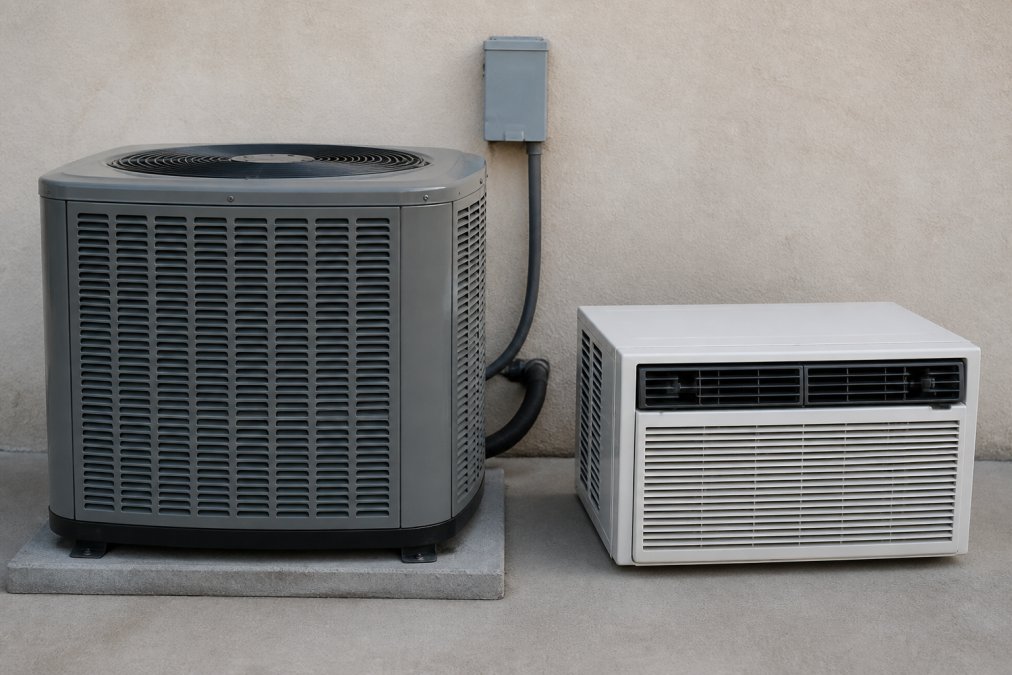
 comparison
Central Air vs Window Unit for Las Vegas Homes
Table of Contents
- Head-to-Head Comparison: Central Air vs Window Unit
- Cooling Capacity and Square Footage: What Desert Homes Need
- Cost of Central Air Installation vs Window Unit Upfront Pricing
- Energy Efficiency Upgrades for Desert Homes: SEER, Inverter Tech, and Utility Rebates
- Noise Levels, Security, and Comfort: Daily Livability
- AC Maintenance Tips for Extreme Heat: Keeping Your System Alive
- Resale Value, HOA Rules, and Long-Term Costs
- Which Cooling System Fits Your Home? A Decision Framework
- Frequently Asked Questions
Last Updated: September 24, 2026
Head-to-Head Comparison: Central Air vs Window Unit
Choosing between central air vs window unit for Las Vegas homes comes down to one hard fact: a window unit cools a room, while central air cools the whole house. That difference drives upfront cost, resale value, and how well you sleep in July. This guide from RTS Comfort Cooling & Heating breaks down capacity, cost, efficiency, noise, maintenance, and resale.
Central air is a whole-home cooling system that pushes cooled air through ductwork from a single outdoor condenser and indoor air handler. A window unit is a self-contained cooler that mounts in a window frame and conditions only the room it sits in.
Here's the short version:
| Factor | Central Air | Window Unit |
|---|---|---|
| Coverage | Whole home | Single room |
| Upfront cost | Higher | Lower |
| Operating cost | Lower per square foot | Higher per square foot |
| Noise | Quiet indoors | Noticeable in-room hum |
| Resale impact | Positive | Neutral to negative |
| Best for | Whole-home comfort | One room or backup cooling |
The five factors below decide which one actually fits your house.
Cooling Capacity and Square Footage: What Desert Homes Need
Cooling capacity is measured in BTUs, and desert homes need more of it than the same square footage in a milder climate. A window unit delivers 5,000 to 12,000 BTUs, enough for one room. Central systems scale from about 1.5 to 5 tons; one ton equals 12,000 BTUs, so a 5-ton system moves 60,000 BTUs across your floor plan.
Sizing is not guesswork. A proper load calculation weighs square footage, ceiling height, window area, insulation, and local design temperature.
Cost of Central Air Installation vs Window Unit Upfront Pricing
Upfront cost is where window units win on paper and lose over time. A window unit is a one-time purchase you install yourself, running roughly $350 to $600 depending on capacity and features. Central air costs far more upfront because it includes equipment, a load calculation, ductwork, refrigerant lines, electrical work, and professional installation.
| Cost Category | Window Unit | Central Air |
|---|---|---|
| Equipment | $350-$600 per unit | Varies by tonnage |
| Installation | DIY | Professional |
| Rooms covered | One | Whole home |
| Lifespan | Shorter | Longer |
| Utility impact | Higher per room | Lower per square foot |
Energy Efficiency Upgrades for Desert Homes: SEER, Inverter Tech, and Utility Rebates
- SEER2 rating: Compare the label number across quotes. Higher means less electricity per unit of cooling, but only if the indoor coil and ductwork match the outdoor unit.
- Variable-speed or inverter compressor: Holds temperature steadier, dehumidifies better, and reduces start-stop wear. Worth the premium in a climate with a long, brutal cooling season.
- ENERGY STAR certification: Certified models exceed the federal minimum. Confirm the model number on the ENERGY STAR product list rather than trusting a sticker.
- Duct sealing and attic insulation: These reduce the load the equipment must meet. A leaky duct system in a 140°F attic can lose a meaningful share of the air you just paid to cool before it reaches a register.
- Smart or programmable thermostat: Scheduling setbacks and pre-cooling before peak afternoon heat cuts runtime during the most expensive hours.
- Utility rebates: Efficiency programs frequently pay incentives for qualifying high-efficiency equipment, and the tier and dollar amount change yearly. Check your utility's current residential program page for the active equipment list, required SEER2 threshold, and whether a licensed contractor must perform the install. Rebates are usually paid after inspection, so confirm eligibility before signing a contract.
One more desert-specific point: efficiency ratings assume the condenser can reject heat to outdoor air. At 110°F, the condenser has less temperature difference to work with, so every system runs below its rated number. That penalty hits window units harder: their condenser is small, sits in direct sun unless shaded, and has no room for a larger coil. A central condenser has more coil surface, more refrigerant charge, and can sit on the shaded north side. Same outdoor temperature, very different real-world efficiency.
Noise Levels, Security, and Comfort: Daily Livability
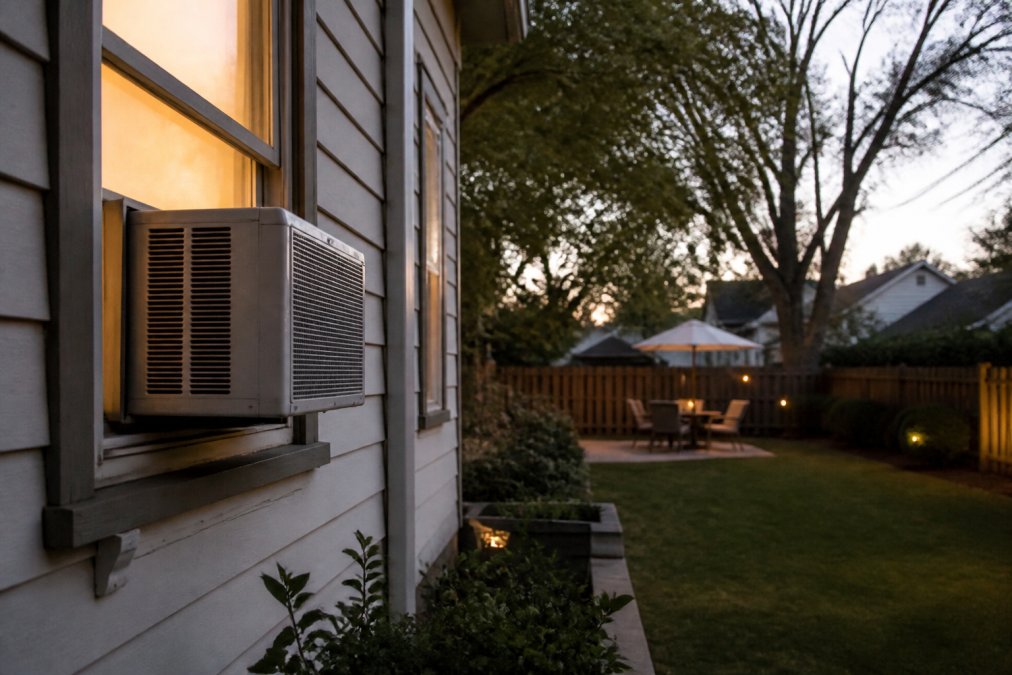
Noise and security are the factors buyers forget until they live with the consequences. A window unit puts the compressor in the room, so you hear it cycle all night. Central air keeps the condenser outside and the air handler in a closet or attic, so indoor noise drops to a whisper. Modern inverter window units run quieter than older models but cannot match central air for bedroom silence.
AC Maintenance Tips for Extreme Heat: Keeping Your System Alive
AC maintenance tips for extreme heat are less about gadgets and more about rhythm. Desert cooling systems run harder and longer than systems in milder climates, so they need more attention.
- Replace air filters monthly during peak summer.
- Keep the outdoor condenser clear of dust, debris, and shade-blocking clutter.
- Schedule preventative maintenance before summer, not during a breakdown.
- Rinse the condenser coil to remove dust that cuts efficiency.
- Have refrigerant levels and electrical connections checked annually.
Resale Value, HOA Rules, and Long-Term Costs
Three forces decide this comparison for most households here, and national guides cover none of them properly: how extreme heat shortens equipment life, what your association's rules actually allow, and how a buyer's agent reads the cooling system during a showing.
| Cost Category | Window Unit | Central Air |
|---|---|---|
| Equipment | $350-$600 per unit | Varies by tonnage and efficiency tier |
| Installation | DIY | Professional, includes load calculation and ductwork |
| Rooms covered | One | Whole home |
| Expected lifespan in extreme heat | Shorter, compressor is the weak point | Longer with annual maintenance |
| Utility impact | Higher per room, several compressors running | Lower per square foot, one system |
| Resale signal | Neutral to negative | Positive |
| HOA risk | Possible violation and fine | Generally compliant |
Which Cooling System Fits Your Home? A Decision Framework
Use this framework to decide in under five minutes:
- Cooling one room only? Choose a window unit.
- Cooling a whole house? Choose central air.
- HOA bans window units? Choose central air or ductless mini-split.
- Planning to sell within five years? Central air supports resale value.
- Ductwork already in place? Central air is the natural fit.
- No ducts and a tight budget? A ductless mini-split is worth pricing.
- Facing extreme summer heat? Size with a load calculation, not a guess.
The throughline is simple: window units solve a room, central air solves a home. Match the tool to the job, and you avoid the two most expensive mistakes, overspending on capacity you do not need and underspending on capacity you do.
Frequently Asked Questions
Is central air more energy efficient than window units for large homes?
For large homes, central air is generally more energy efficient because it cools the entire space through a single high-SEER system. Window units cool individual rooms and can be efficient for small areas, but using multiple units to cool a whole house often consumes more kilowatt-hours. In a desert climate, central air with a high SEER rating and proper insulation delivers better whole-home efficiency.
What are the maintenance requirements for central AC versus window units?
Central AC requires professional preventative maintenance at least once a year, including coil cleaning, refrigerant checks, and duct inspection. Window units need monthly filter rinses and seasonal cleaning. For extreme heat, central systems benefit from biannual tune-ups. RTS Comfort Cooling & Heating offers maintenance plans that include duct cleaning and attic insulation checks to keep efficiency high.
Can window units handle extreme desert temperatures effectively?
Window units can cool a single room in extreme heat, but they struggle when ambient temperatures exceed 100°F for prolonged periods. Their compressors may overwork, leading to higher energy consumption and shorter lifespan. Central air systems with variable-speed motors are designed to handle desert conditions more reliably. For whole-home comfort, central air is the more dependable choice.
Does installing central air increase home resale value?
Yes, central air is considered a major upgrade that can increase resale value, especially in hot markets. Buyers expect reliable cooling, and a modern high-efficiency system is a strong selling point. Window units are seen as temporary and may not add value. Upgrading to central air also improves energy efficiency, which appeals to energy-conscious buyers.
Are there rebates available for upgrading to high-efficiency central air?
Many utility companies offer rebates for installing high-efficiency central air systems with qualifying SEER ratings. These rebates can offset installation costs and are often listed on utility websites. RTS Comfort Cooling & Heating can help homeowners identify available rebates and ensure the installation meets program requirements. Contact them for a free estimate and rebate guidance.
Las Vegas summers do not negotiate, and neither should your cooling system. If you are weighing central air against window units and want a straight answer for your specific home, RTS Comfort Cooling & Heating can run a proper load calculation, install a correctly sized system, and back it with 24/7 emergency service, smart thermostat installation, and attic insulation that lowers your cooling load. Call (702) 707-4242 for a free estimate and get the right system the first time.