 blog
What Causes Loud AC Noises? A Sound-by-Sound Guide
Quick Summary
Most loud AC noises come from a part that has loosened, debris blown into the outdoor unit, or a component starting to wear out. Rattles usually mean something is loose, while bangs, buzzes, squeals, and grinding point to mounting hardware, contactors, capacitors, or bearings. Note where and when the sound occurs.
- Turn the system off at the thermostat and outdoor disconnect before checking anything.
- Clear leaves, twigs, and debris from around the outdoor unit and tighten loose access panel screws.
- Shut the system off right away for knocking or grinding from the compressor or a burning smell.
- Hissing with weak cooling can signal a refrigerant leak, so call a licensed technician.
Table of Contents
- Why Your Air Conditioner Suddenly Got Loud
- Air Conditioner Rattling Noise: Loose Parts and Debris
- Banging, Clanking, and Buzzing Sounds: What They Mean
- Squealing, Grinding, and Hissing: Motor and Bearing Warning Signs
- AC Compressor Making Noise: When to Shut the System Off
- How to Reduce Air Conditioner Noise Safely
- Booking Your Noise Diagnosis with RTS Comfort
- Frequently Asked Questions
Why Your Air Conditioner Suddenly Got Loud
Last Updated: October 29, 2026
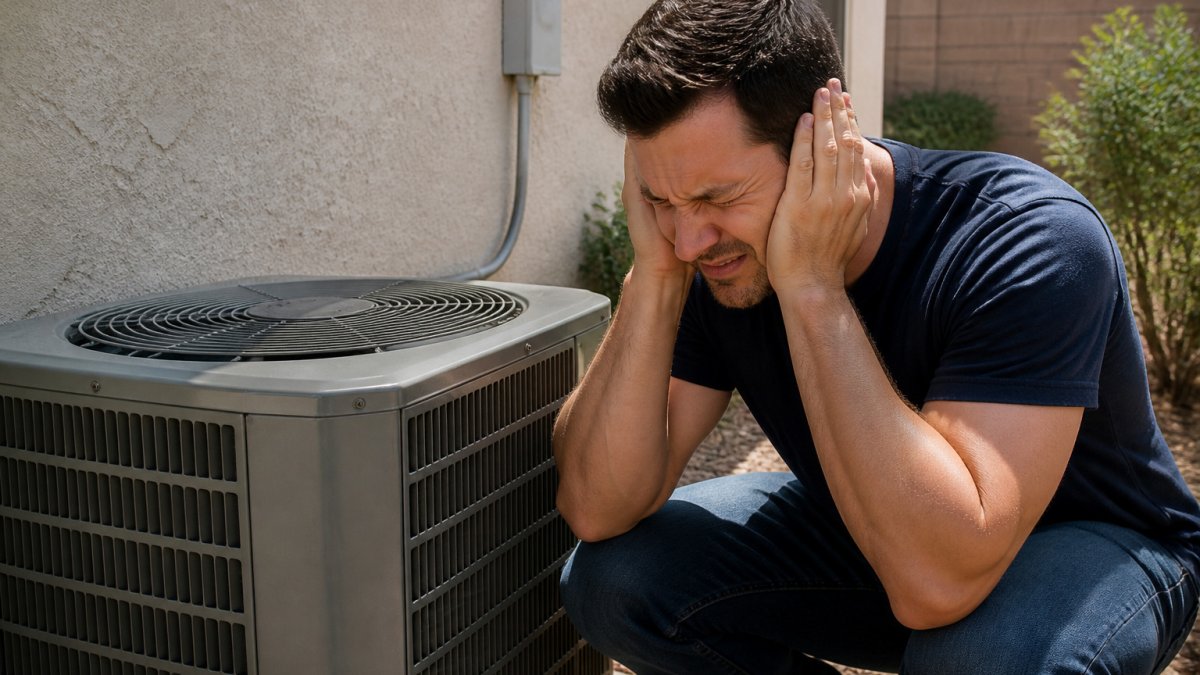
A quiet air conditioner that suddenly gets loud is rarely a random event. Most of the time, something has shifted: a part has loosened, debris has blown into the outdoor unit, or a component is starting to wear out.
This guide walks through common causes of loud AC noises, sound by sound, and explains possible causes and urgency.
Think of the sound as a clue. A rattle tells a different story than a grind, and a buzz points somewhere else entirely.
Air Conditioner Rattling Noise: Loose Parts and Debris
Rattling can have several causes. A rattle usually means something is loose and vibrating against something else. The sound can come from inside the house or from the outdoor unit, so it helps to note where you hear it.
Loose panels and fan blades
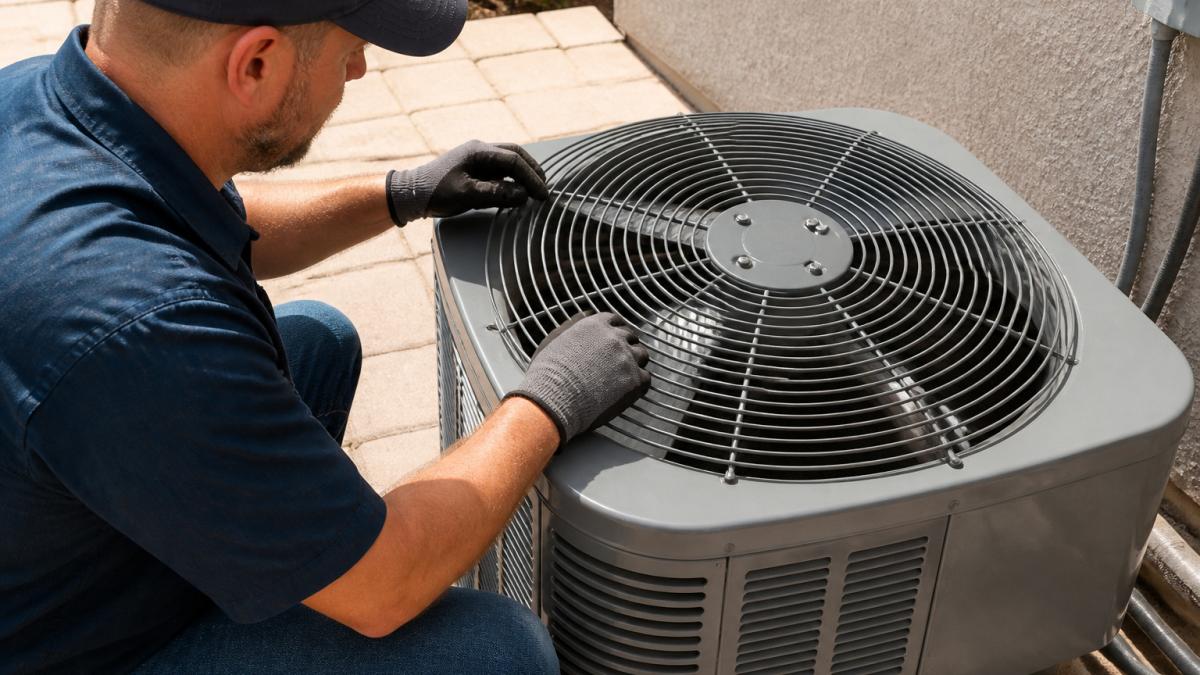
Metal panels on the outdoor unit can loosen over time. The vibration of the fan and compressor shakes them until they buzz or rattle against the frame. Fan blades can also work loose on the motor shaft.
Watch for these signs:
- A metallic rattle that changes when the fan speeds up
- Panels that shake when you lightly press on them with the system off
- A fan that wobbles or wobbles while running
What to do: With the system turned off at the thermostat and the power shut off at the disconnect, check that screws on the access panels are tight. Tighten any loose ones. If a fan blade is loose on the shaft, stop there and call a technician.
Twigs, leaves, and debris in the outdoor unit
Leaves, twigs, grass clippings, and small stones can get pulled into the outdoor unit by the fan. Once inside, they hit the fan blades or rattle around the cabinet.
Clear the area around the unit and remove any debris you can reach from outside the cabinet.
Banging, Clanking, and Buzzing Sounds: What They Mean
These sounds sit a step above a simple rattle. A bang or clank can point to a mechanical part that is striking something or has shifted out of alignment. A buzz can be electrical or hardware-related. Note where the sound comes from and when it happens.
Banging and clanking
- Loose or broken mounting hardware. The compressor and fan motor sit on rubber isolators and bolts. When those wear or back out, the assembly shifts and strikes the cabinet.
- A shifted or rubbing pipe. Copper refrigerant lines run close to the cabinet and to each other. Vibration can bring them into contact, producing a clank that tracks with the compressor cycle.
- Debris striking the fan. A twig or stone pulled into the outdoor cabinet can bang against the blades.
- Compressor internal knock. A deep, heavy knock from inside the compressor housing can indicate a problem that needs attention.
Buzzing and humming
- Contactor chatter. The contactor is the relay that switches power to the compressor and fan. A pitted or worn contactor can buzz when it pulls in.
- Capacitor failure. A failing run capacitor can cause the motor to hum without starting.
- Loose wiring or a loose panel. A wire vibrating against the cabinet, or a panel screw that has backed out, produces a lower, more mechanical buzz than an electrical component.
- Transformer hum. A steady 60 Hz hum from the indoor air handler is often normal transformer noise; a new or louder hum is the signal to check.
How urgent is it?
| Sound | Likely cause | Urgency |
|---|---|---|
| Rhythmic clank that speeds up with the fan | Debris or loose blade | Shut off, inspect from outside |
| Single bang at compressor startup | Loose mount or isolator | Schedule service soon |
| Loud chatter at startup | Worn contactor | Schedule service; shut off if it repeats |
| Hum with no fan/compressor start | Failing capacitor | Shut off now |
| Deep knock from compressor housing | Internal compressor wear | Shut off now; call for diagnosis |
Squealing, Grinding, and Hissing: Motor and Bearing Warning Signs
These sounds can have different causes and levels of urgency.
Squealing and screeching
A high-pitched squeal can have several possible sources:
- A worn blower belt (older furnaces and air handlers). A glazed or loose belt can slip and squeal.
- A dry or failing motor bearing. A blower motor or outdoor fan motor bearing problem can cause squealing.
Grinding
Grinding can indicate a problem that needs attention.
- Worn motor bearings. A grinding noise from a motor bearing warrants attention.
- A fan blade striking the shroud. A loose or bent blade can cause grinding.
- Compressor internal wear. A grinding noise from inside the compressor housing warrants professional attention.
Hissing
Hissing can have different causes.
Call (702) 707-4242 for a free estimate →
- A refrigerant leak at a line, joint, or Schrader valve. A hiss near the indoor coil or line set can have several possible causes.
- A restriction or metering-device issue. A hiss at the indoor coil can also come from a piston or TXV that is not feeding correctly.
- Air escaping a duct joint. A hiss from a supply register or duct run can have a different cause than a hiss near the refrigerant circuit.
Hissing paired with weak cooling can have several causes. Contact a qualified professional for help with refrigerant concerns.
Quick triage
| Sound | Most likely cause | What to do |
|---|---|---|
| Squeal that tracks fan speed | Motor bearing or belt | Schedule service; shut off if it worsens |
| Grind from outdoor fan | Bearing or blade contact | Shut off now |
| Grind from compressor housing | Internal compressor wear | Shut off now; call for diagnosis |
| Hiss near indoor coil or line set | Refrigerant leak | Shut off; call a licensed technician |
| Hiss at a supply register | Duct leakage | Schedule service; not an emergency |
If you hear an unusual sound, note when and where it occurs. You can read more in our guide on Signs of Frozen Evaporator Coils in AC Systems.
If you are unsure about a sound, consider having the system checked.
AC Compressor Making Noise: When to Shut the System Off
A noisy compressor can indicate a problem that needs attention.
Shut the system off right away if you notice:
- Loud knocking or clanking coming from the outdoor unit
- A grinding or screeching sound that does not stop
- Hissing along with weak cooling
- A burning smell or the system tripping its breaker
You can learn more in our article on Why AC Refrigerant Leaks Are Dangerous: 2026 Guide. If you are unsure how serious the noise is, How to Tell If AC Compressor Is Failing explains the warning signs in more detail, and 5 Signs You Need Emergency AC Repair: Act Fast lists when a noise should be treated as urgent.
When in doubt, consider contacting a professional.
How to Reduce Air Conditioner Noise Safely
Some noise problems may be addressed with basic checks.
Start with these checks:
- Turn the system off at the thermostat and at the outdoor disconnect.
- Clear leaves, grass, and debris from around the outdoor unit.
- Check that the unit sits level on its pad. A tilted unit can vibrate.
- Tighten any loose access panel screws.
- Check whether the air filter is dirty.
Keep the unit clear of plants and objects.
Avoid attempting repairs involving wiring, the motor, or refrigerant.
Booking Your Noise Diagnosis with RTS Comfort
A sound you can't explain is worth having checked. Our service covers AC repair, heating installation, duct cleaning, and 24/7 emergency service across the Las Vegas area.
To get your system checked, call (702) 707-4242 for a free estimate.
Frequently Asked Questions
Why is my AC loud all of a sudden?
A sudden change in noise can have several possible causes. Note when the sound started and what it resembles, then consider having the unit inspected.
What does a rattling noise from an air conditioner mean?
Rattling can have several possible causes. If it continues, consider having the unit inspected.
Why does my AC make a banging noise when it starts?
A bang at startup can have several possible causes. If it continues, consider having the system inspected.
How can I reduce the noise from my air conditioner?
Start by clearing visible debris from around the outdoor unit. If the noise continues, consider having the system inspected.