 how-to
Is a Heat Pump Worth It for Older Homes?
Table of Contents
- Can Heat Pumps Actually Work in Older Homes?
- How Heat Pumps Perform in Cold Weather and Older Home Conditions
- Heat Pump With Existing Ductwork: Compatibility and Installation
- Heat Pump for a House Without Ducts: Ductless Mini-Split Options
- Insulation Upgrades Before Heat Pump Installation
- Heat Pump Sizing for Older Homes: Why It Matters
- The Real Cost and Payback Timeline for Older Homes
- Conclusion: Making the Decision for Your Older Home
- Frequently Asked Questions
Last Updated: October 12, 2026
Can Heat Pumps Actually Work in Older Homes?
A heat pump can absolutely work in an older home, but it requires careful planning. The question isn't whether it's possible, it's whether it makes financial and practical sense for your specific situation.
The short answer: yes, heat pumps work in older homes. But older homes present unique challenges. Poor insulation, air leaks, outdated ductwork, and existing heating systems all factor into whether a heat pump is worth it for older homes.
Most older homes were built with single-pane windows, minimal insulation, and drafty foundations. These homes lose heat quickly in winter. A heat pump moves heat rather than generating it, so it works best when your home holds heat efficiently.
The good news is that modern heat pumps are more powerful than they were five years ago. They handle cold weather better. They work with existing heating systems as backup. And many older homes can be retrofitted without tearing out walls or replacing everything.
How Heat Pumps Perform in Cold Weather and Older Home Conditions
Heat pumps lose efficiency as outdoor temperatures drop. That's the reality. At 47°F, most air-source heat pumps operate at full capacity. Below that, they work harder to extract heat from cold air. At 32°F and below, their efficiency drops significantly.
But here's what changes the equation: modern cold-climate heat pumps are engineered differently than older models. They include improved compressors and refrigerant formulations that maintain reasonable performance even in freezing conditions. Some units now operate effectively down to 5°F or lower.
For older homes in cold climates, this matters because:
- Your home loses heat faster, Thin walls and poor insulation mean the heat pump must run longer to maintain temperature
- You may need backup heat, On the coldest days, a gas furnace or electric resistance heating kicks in automatically
- Your energy bills reflect both systems, The heat pump handles mild and moderate cold; backup heat handles extreme cold
- Hybrid heating becomes common, Most retrofits in older homes use a heat pump plus existing heating for efficiency and reliability
The coefficient of performance (COP) measures heat pump efficiency. A COP of 3 means the system delivers three units of heat for every unit of electricity consumed. In cold weather, COP drops to 1.5 or lower.
Heat Pump With Existing Ductwork: Compatibility and Installation
If your older home already has ductwork, a central air-source heat pump can often use it. This is the easiest retrofit path. You replace your furnace or air conditioning unit with a heat pump, keep the ducts, and you're mostly done.
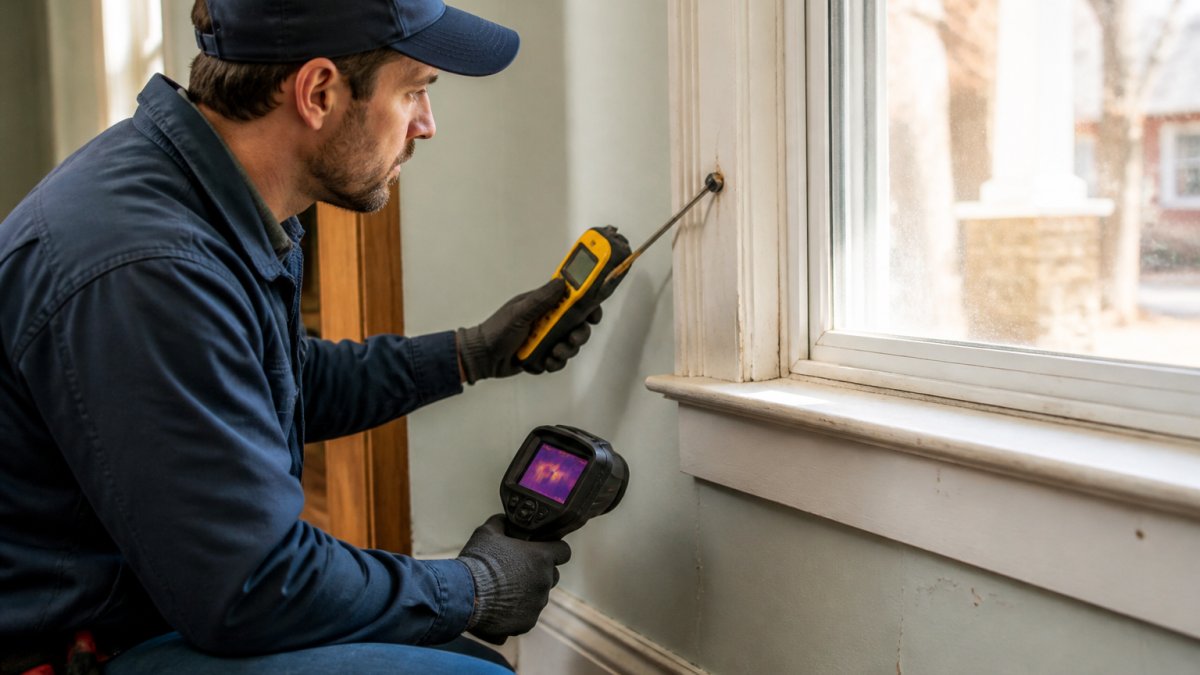
But, and this is critical, old ductwork often leaks. Ducts installed 30 or 40 years ago weren't sealed as carefully as modern ones. Leaks mean your heat pump works harder to condition air that escapes into walls or attics.
Before installing a heat pump with existing ductwork, have a professional inspect the ducts. Look for:
- Visible gaps or disconnections where ducts meet
- Holes or tears in duct material
- Flexible ducts that have collapsed or kinked
- Inadequate insulation around ducts in unconditioned spaces
If leaks are minor, sealing them before heat pump installation improves efficiency. If leaks are severe, you may need partial duct replacement. This adds cost but pays for itself through lower operating costs.
Ductwork sizing also matters. Heat pumps deliver heat at lower temperatures than furnaces. If your ducts were sized for a furnace, they may need adjustment to work optimally with a heat pump. A professional heat-loss calculation determines the right duct sizing.
Heat Pump for a House Without Ducts: Ductless Mini-Split Options
Many older homes have no ductwork at all. They use radiators, baseboard heating, or wall-mounted units. For these homes, ductless mini-split heat pumps are the answer.
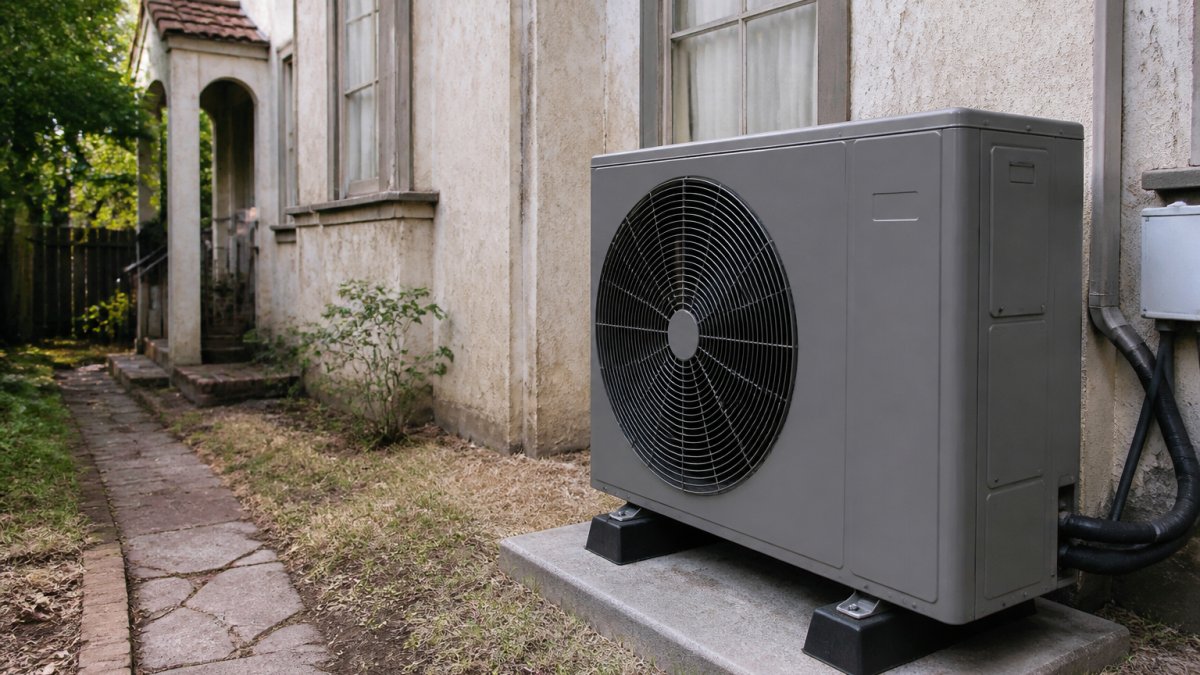
A ductless mini-split system has two parts: an outdoor unit that looks like an air conditioner, and one or more indoor units mounted on walls or ceilings inside your home. The indoor and outdoor units connect via refrigerant lines run through small holes in walls. No ductwork needed.
Ductless systems work well in older homes because:
- No ductwork required, Existing radiators or baseboard heaters stay in place or are removed
- Zone control, You can heat different rooms to different temperatures
- Easier installation, Less invasive than central system retrofits
- Works with existing heating, Radiators can provide backup heat on cold days
The tradeoff: ductless systems cost more per unit of heating capacity than central systems. If you want to heat your whole home, multiple indoor units add up. For heating just the main living areas, ductless makes strong financial sense.
Installation takes 1-2 days for most homes. A technician drills small holes through exterior walls, runs refrigerant lines and electrical wiring, and mounts indoor units. Minimal disruption compared to duct installation.
Insulation Upgrades Before Heat Pump Installation
Here's the part most people skip: upgrading insulation before installing a heat pump.
Insulation upgrades aren't optional for older homes. They're foundational. A heat pump in a poorly insulated home is like putting premium fuel in a car with a hole in the tank. You're wasting money.
Before heat pump installation, prioritize these upgrades:
- Attic insulation, Heat rises; a poorly insulated attic is the biggest source of heat loss. Bring attic insulation to R-38 or higher
- Air sealing, Seal gaps around windows, doors, electrical outlets, and foundation rim. Caulk and weatherstripping are cheap; the payoff is huge
- Basement or crawlspace, Insulate rim joists and band boards. These are often overlooked but represent significant heat loss
- Pipe insulation, If you have exposed pipes, wrap them. This protects against freezing and reduces heat loss
These upgrades reduce the heating load your heat pump must handle. Lower heating load means lower operating costs and faster payback.
Many homeowners ask: should I upgrade insulation first, then install a heat pump? Or install the heat pump and upgrade insulation later? The answer depends on your timeline and budget. Ideally, do both in the same project. Contractors can coordinate the work, and you avoid paying for two separate service calls.
Insulation upgrades typically cost less than heat pump installation but return savings year after year. A properly insulated older home with a heat pump performs dramatically better than an uninsulated home with the same heat pump.
Heat Pump Sizing for Older Homes: Why It Matters
Sizing a heat pump for an older home is not straightforward. You can't just look at your home's square footage and pick a unit.
Call (702) 707-4242 for a free estimate →
A heat-loss calculation is essential. This calculation estimates how much heat your home loses on the coldest day of the year.
Here's why this matters: if you oversize the heat pump, it cycles on and off frequently, wasting energy and reducing efficiency.
Heat-loss calculations account for:
- Insulation levels in walls, attic, and basement
- Air leakage through gaps and cracks
- Window and door performance
- Local winter design temperature
- Desired indoor temperature
For older homes, this calculation is more complex because insulation varies throughout the house. One wall might have R-11 insulation; another might have R-3. The calculation must reflect these variations.
A professional heat-loss assessment takes 1-2 hours and costs less than the mistake of choosing the wrong size. It's worth every dollar.
Proper sizing also affects your backup heating strategy. If your heat pump is correctly sized, backup heat only runs on the coldest 5-10 days of the year.
The Real Cost and Payback Timeline for Older Homes
This is where the decision gets real. Is a heat pump worth it for older homes when you factor in cost?
The answer depends on what you're replacing.
Here's the framework:
If replacing a failed heating system: A heat pump costs more than a standard furnace replacement, but you gain cooling and efficiency. Operating cost savings typically recover the extra upfront cost in 7-12 years. After that, you save money every year.
If replacing a failed cooling system: Similar math. The heat pump adds heating capability to your air conditioning replacement.
If your current system still works: You're paying for a new system before the old one fails. The payback period extends to 12-15 years or longer.
The payback calculation depends on local electricity and fuel prices. In areas where natural gas is cheap, payback takes longer.
Many older homeowners also qualify for rebates or tax credits. Check with your utility company and the federal government for current incentives.
One more consideration: hybrid heating systems. Pairing a heat pump with your existing furnace or boiler is often cheaper than replacing the entire system.
Conclusion: Making the Decision for Your Older Home
Is a heat pump worth it for older homes? The honest answer: it depends on your specific situation.
A heat pump makes sense if:
- Your current heating or cooling system needs replacement
- Your home has decent insulation or you're willing to upgrade it
- You plan to stay in your home at least 7-10 years
- You want lower operating costs and improved comfort
- You value environmental benefits and reduced carbon emissions
A heat pump is harder to justify if:
- Your current system works fine and you don't plan major upgrades
- Your home has severe insulation problems you won't address
- You're moving within 5 years
- Your utility rates are extremely high or extremely low in ways that change the economics
The best first step is a professional assessment. A technician can evaluate your home's current condition, estimate heating and cooling loads, and provide a realistic cost and payback estimate for your situation.
At RTS Comfort Cooling & Heating, we help older homeowners make this decision with clear numbers and honest advice. We assess your insulation, evaluate your existing ductwork or heating system, calculate proper sizing, and explain your options. Call (702) 707-4242 for a free estimate.
The decision about whether a heat pump is worth it for older homes ultimately rests on your budget, timeline, and comfort priorities. RTS Comfort Cooling & Heating provides professional heat pump sizing, retrofit planning, and smart thermostat installation to ensure your system performs efficiently in an older home.
| Consideration | Impact on Decision | Next Step |
|---|---|---|
| Existing system age | Failed system favors heat pump; working system extends payback | Get professional assessment |
| Home insulation level | Poor insulation requires upgrades before heat pump | Evaluate attic, walls, air sealing |
| Local utility rates | Cheap electricity favors heat pump; cheap gas favors furnace | Review past 12 months of bills |
| Years in home | 10+ years favors heat pump; under 5 years makes payback difficult | Consider long-term plans |
| Ductwork condition | Leaky ducts reduce efficiency; sealed ducts improve performance | Have ducts inspected professionally |
| Climate zone | Cold climates need proper sizing and backup heat | Confirm winter design temperature |
Frequently Asked Questions
Do heat pumps work well in older homes?
Yes, heat pumps can work effectively in older homes when three conditions are met: the home has adequate insulation, the system is sized correctly for the building's heat loss, and retrofit planning accounts for existing heating infrastructure. Many older homes successfully use air-source heat pumps or ductless mini-splits. The key is addressing air leakage and heat loss before installation so the heat pump isn't oversized or forced to work inefficiently.
Does an older home need better insulation before installing a heat pump?
Improving insulation before heat pump installation is often worthwhile but not always mandatory. If your older home has significant air leakage, missing attic insulation, or single-pane windows, upgrading the home envelope first reduces the heat pump size needed and improves efficiency. This also lowers operating costs and payback time. A professional heat-loss calculation will show whether insulation upgrades are cost-effective for your specific situation.
Can existing ductwork be used with a heat pump?
Existing ductwork can be used with a heat pump if it's in good condition and properly sized for the system. Many older homes have ductwork designed for furnaces, which may need inspection and sealing to prevent leaks. If ducts are deteriorated, blocked, or undersized, retrofitting or replacing sections may be necessary. A professional assessment determines whether your current ductwork is compatible or if a ductless mini-split would be a better fit.
How do you know what size heat pump an older home needs?
Heat pump sizing depends on a professional heat-loss calculation that accounts for insulation levels, air leakage, window quality, and climate. Older homes often have higher heat loss than newer ones, so proper sizing is critical. An oversized system wastes energy; an undersized one can't maintain comfort. A qualified HVAC contractor performs this calculation to recommend the right capacity for your home's specific conditions and heating demand.